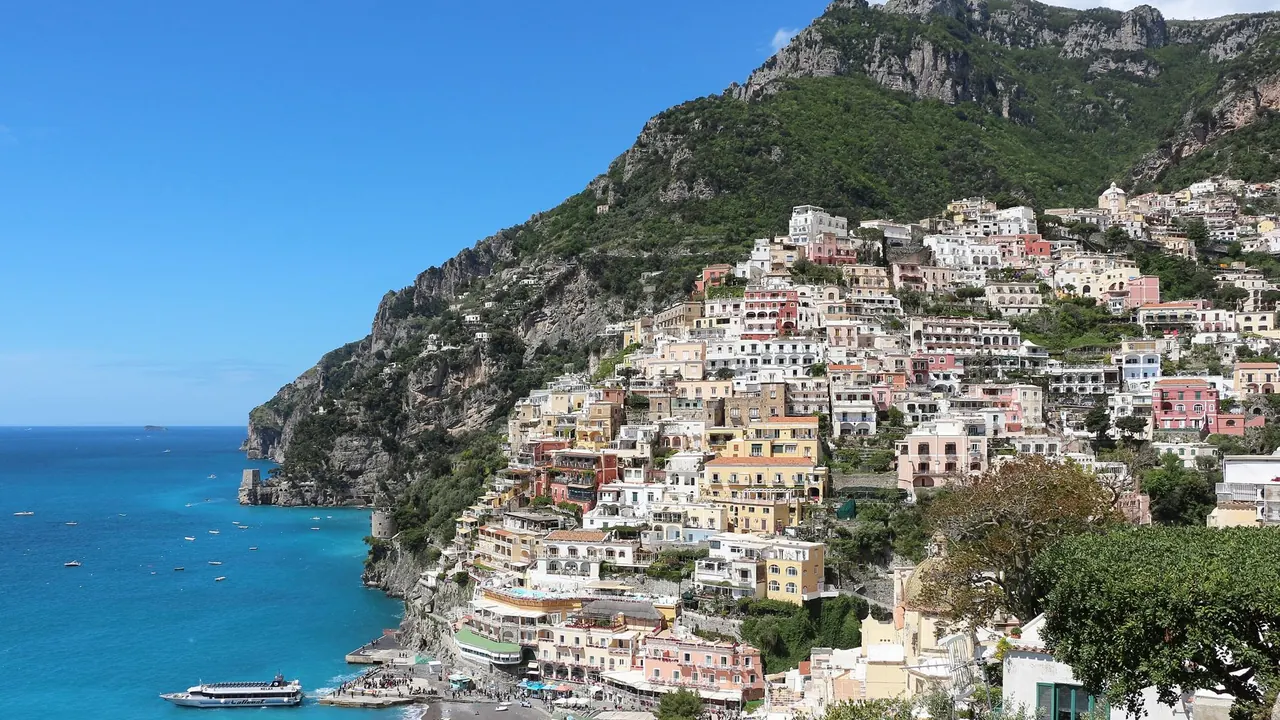
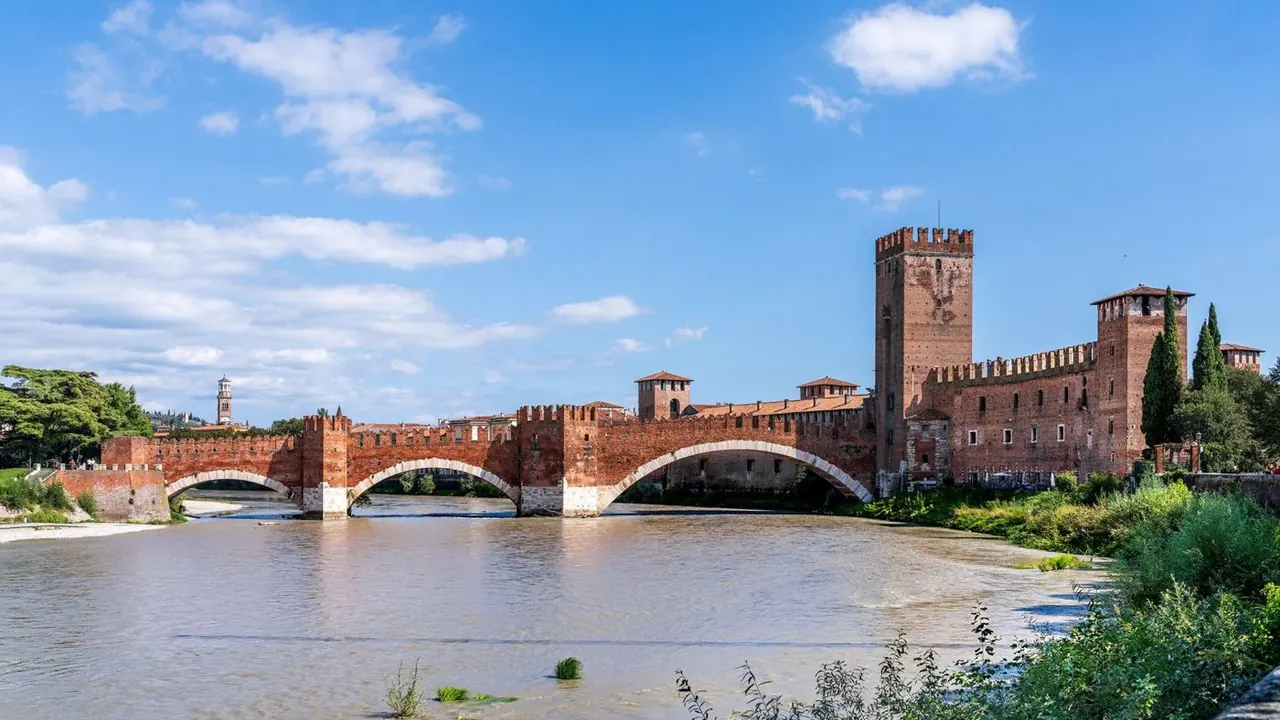
Photos: Positano by Bernard Gagnon, CC BY 4.0, cropped; Verona by NorbertNagel, CC BY-SA 4.0, cropped.
Positano or Verona?
Our verdict in twelve categories, each scored against the same fixed benchmark cities, and the climate month by month, so you can choose for your trip.
Choose Positano for
- beaches
- nature and the outdoors
Positano is the choice for a slow, scenic stay by the sea. Its days run on swimming off the steep beaches, boat trips to coves and Capri, and walks high on the cliffs above the town. It suits couples and adults who want the setting itself to be the vacation and can pay for it, and who don't need much to see or do once the sun goes down.
Choose Verona for
- culture and sights
- live music and the arts
- families
Travellers who want a real city to explore will do better in Verona. It has a Roman arena where opera plays on summer nights, Romanesque and Gothic churches, wine country just outside town and a flat, walkable centre. It costs far less than Positano and is much easier with children. Trains make Venice, Padua and the shores of Lake Garda simple outings.
Scoreboard
Twelve categories on one fixed scale from 0 to 100. The shaded stretch is the gap between the two.
Your match
Pick a travel style or drag the sliders, and both match scores follow your weighting.
Wins on beaches and nature and the outdoors with your weighting.
Wins on culture and sights and live music and the arts with your weighting.
What matters to you?
Category by category
What the scores mean for a trip.
Beaches & swimming
Positano's beaches are the point of a visit. Spiaggia Grande and Fornillo sit right below the town, and boats run to smaller coves. The open sea is clear and deep, but the dark sand and pebbles are coarse and slope steeply, so water shoes help.
Verona has no shore of its own. Swimming means half an hour out to Lake Garda's southern edge, where the water is calm with no surf, and the setting is lidos, lawns and Sirmione's flat limestone shelves. That is pleasant for a day, but it doesn't compare with stepping down to the Tyrrhenian Sea.
Food & drink
Verona offers more to eat and drink. Its osterie around Piazza delle Erbe and in Veronetta serve Amarone risotto, bigoli with duck and bollito with pearà. Valpolicella, Soave and Bardolino are made within a short drive, so the wine is as much of a draw as the food.
Positano does one thing beautifully: seafood pasta, grilled fish and lemon desserts on a terrace above the water. Menus repeat themselves, though, there is little everyday or market eating, and many kitchens close in winter.
Culture & sights
These two are far apart for sightseeing. Verona's UNESCO-listed centre layers a Roman arena and theatre, medieval squares, the Scaliger tombs, San Zeno's bronze doors and Scarpa's Castelvecchio museum. That's enough for two or three full days.
In Positano the town itself is the sight. It has the majolica dome of Santa Maria Assunta and the painted rooms of a Roman villa buried by Vesuvius under it, and then you're done. Visitors who want more head to Naples or along the coast.
Nightlife
Neither town is built for late nights, but Verona has more going on. Aperitivo spills into Piazza delle Erbe, Veronetta's student wine bars and pubs stay busy later, and opera crowds fill the streets near midnight in summer.
Positano's evenings are about a sunset drink and a long dinner. A few summer bars and a dressy cave club at the end of the main beach are about all there is, and even that fades out of season.
Nature & outdoors
Positano has the more dramatic landscape. The Lattari mountains drop straight into the sea, the Path of the Gods runs high above terraced lemon groves, and kayaks follow the cliffs out to grottoes and the Li Galli islets.
Verona's countryside is gentler and more varied. You can walk and cycle in the Valpolicella vineyards, sail and windsurf on Garda, walk the ridges of Monte Baldo or hike the Lessinia plateau, but most of that is a short journey away rather than right outside your door.
Day trips
Both make excellent bases, but the outings differ. From Positano, ferries reach Amalfi, Ravello, Capri and Sorrento, and Pompeii, Herculaneum and Paestum add the ancient world. Most boats run only in season, though, and the coast road is slow.
Verona works by rail, all year round. Venice, Vicenza, Padua and Mantua are all within about an hour, Milan and Bologna make longer days, and the Garda towns and Valpolicella cellars are close by.
Good for families
Verona is the easier choice with children. The centre is flat and largely free of traffic, the Arena tends to fire young imaginations, and Gardaland, water parks and a drive-through safari zoo are about half an hour away, though most need a car or transfer.
Positano is hard work with small children. Stairs rule out pushchairs, there are no attractions aimed at children, and the beaches drop off quickly. Older children who love boats and swimming do best.
Getting around
Getting around Verona is simple. The Arena, the piazzas, the churches and Castelvecchio are a short, level walk apart within the river loop, and trains to Venice, Milan and Lake Garda leave from Porta Nuova.
Positano is small but almost entirely vertical, so every errand means hundreds of steps. A single bus loops the upper town, coast buses crawl in summer and parking is scarce. Boats are the practical link to the next town, and mostly only in season.
Shopping & style
Verona edges ahead for shopping, with Italian fashion labels along marble-paved Via Mazzini, jewellers and shoe shops on the side streets, and Amarone, Garda olive oil and pandoro to take home.
Positano has the more distinctive look. Its lanes are full of white linen and printed resort wear, sandals are made to measure while you wait, and painted ceramics fill the rest, though it is all one style.
Affordability
Positano costs far more, and the gap starts with the room. A summer sea-view room there is a serious expense, while in Verona the main cost is a hotel inside the historic centre, and it is easy to save by staying a little way out. Getting about follows the same pattern: Positano's boats and transfers add up quickly, while Verona's walkable centre costs next to nothing.
Meals tell the same story. In Positano the terrace view is charged on every bill and on the loungers below. In Verona you pay for the view only on Piazza Bra, while Veronetta's osterie and the wine counters, where a snack comes with the glass, keep everyday eating fair. The local wines are good value too.
Live music & performing arts
Verona is in a different league here. Summer opera in the Roman Arena, with Verdi and Puccini played to thousands on the stone tiers, is a reason to plan a whole trip. Shakespeare and jazz play in the Roman theatre, and the Teatro Filarmonico runs a season through the cooler months.
Positano has only the odd summer concert. Its best evening of music is a trip along the coast to Ravello's festival.
Wellness & relaxation
The two are broadly level for rest, but in different ways. Positano's comes from cliffside hotel spas and pools and from long afternoons looking down at the sea, though July and August crowds and the stairs wear on you.
Verona leans on warm springs nearby: the spa at Sirmione facing Lake Garda, a thermal park near Lazise and the old springs at Caldiero. In town, the riverside passeggiata and the terraces of the Giardino Giusti set a gentle pace.
When should you go?
Pick your month. The climate figures are measured averages, not a forecast.
Positano in July
Verona in July
Daytime high, °C
Rainfall in the month, mm
Where the figures come from
Positano's temperatures are measured 25 km from the centre, at Capri.
Positano has no rain gauge within 25 km of the centre, so its rainfall comes from a gridded climate dataset read at the city rather than from a gauge further away.
Positano's sunshine is measured 59 km from the centre, at Grazzanise.
Temperature and rainfall are climate normals, averaged over the years shown. Positano: 2005-2025 (sunshine 1991-2020, rainfall 1991-2020) normals, Capri (25.3 km from centre). Verona: 1991-2020 normals, Verona / Villafranca (11.6 km from centre).
Positano's season follows the sea. From June to early October the water is warm enough for long swims, peaking around 26°C in August, and high summer is dry and very sunny. July and August are also hot enough to make the endless stairs and cliff paths hard work at midday, so May, June and late September suit walkers best. Rain arrives in earnest from October, with November the wettest month at about 127mm, though winter days stay mild.
Verona has a sharper inland climate. Winters are cold, with January highs near 7°C, and July and August reach about 30°C, which makes afternoon sightseeing tiring. Rain is spread through the year rather than saved for winter, and September and autumn are the dampest months. April, May, late September and early October are the most comfortable times for walking the streets. Summer is the season for opera in the Arena and swimming in Lake Garda.
Which traveller are you?
On a beach and sun trip, Positano is the obvious pick. It has clear, deep blue water right below the town, beaches and coves reached by stairway or boat, and dry, sunny summers. Verona's swimming means a trip out to Lake Garda.
For a culture and arts trip, Verona is far stronger. It has the Arena and the Roman theatre, San Zeno, the Scaliger tombs and Castelvecchio's museum, plus summer opera under the stars. Positano's sights take a couple of hours.
On a family trip with children, Verona works much better. Its flat, pedestrian centre suits pushchairs, and Gardaland and a safari zoo are about half an hour away. Positano is built of stairs, and its pebbly beaches shelve steeply.
Before you go
| Measure | Positano | Verona |
|---|---|---|
| Official language | Italian | Italian |
| Currency | Euro (EUR) | Euro (EUR) |
| Sockets | CFL230 V, 50 Hz | CFL230 V, 50 Hz |
| Driving side | Right | Right |
| Time zone | UTC+1, UTC+2 in summer | UTC+1, UTC+2 in summer |
| Emergency number | 112 | 112 |
| Elevation | 142 m | 59 m |
| Main airport | Naples International Airport (NAP)33 km from centre131 non-stop destinations | Verona Villafranca Valerio Catullo Airport (VRN)10 km from centre96 non-stop destinations |
| Public holidays this year | 13 days | 13 days |
By the numbers
| Measure | Positano | Verona |
|---|---|---|
| City population | 3,729 | 255,588 |
| People per km² | 429 | 1,285 |
| Museums within 10 km | 10 | 18 |
| UNESCO World Heritage sites within 50 km | 5 | 5 |
| Swim season, months above 21 °C | 5 months | - |
Where else could you go?
Every comparison below shares a destination with this one, so you can follow Positano or Verona somewhere new.