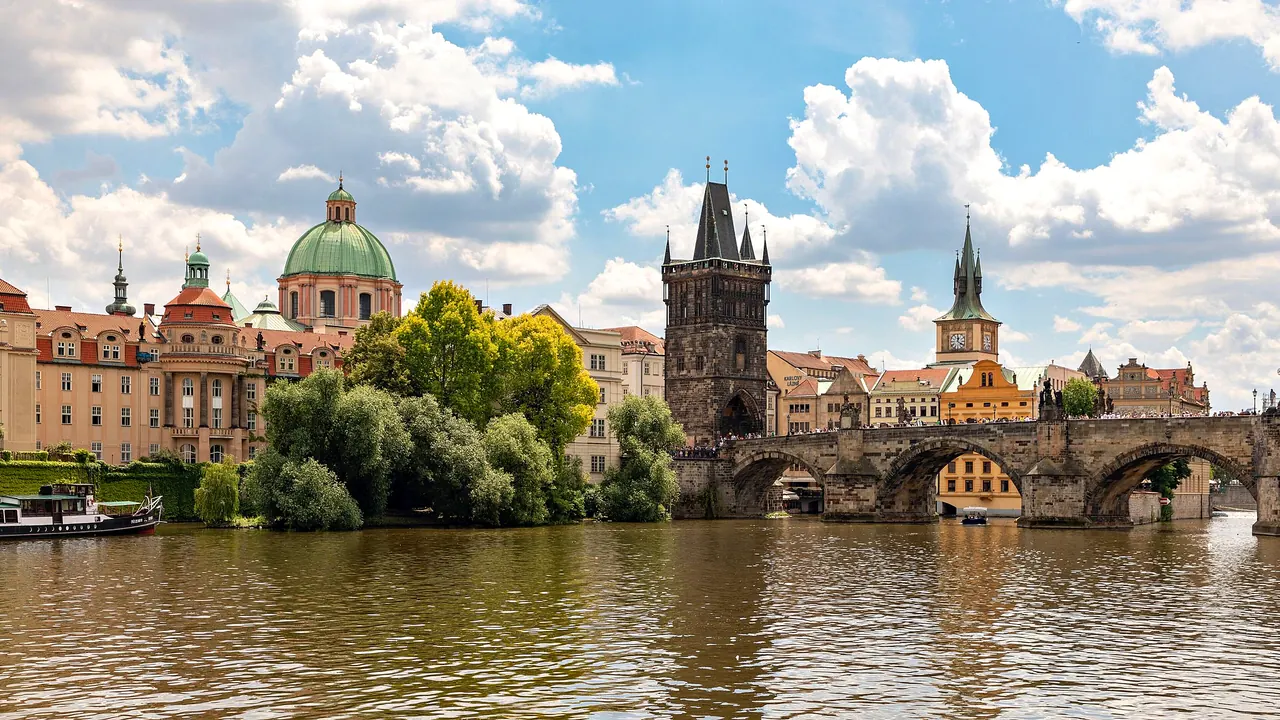
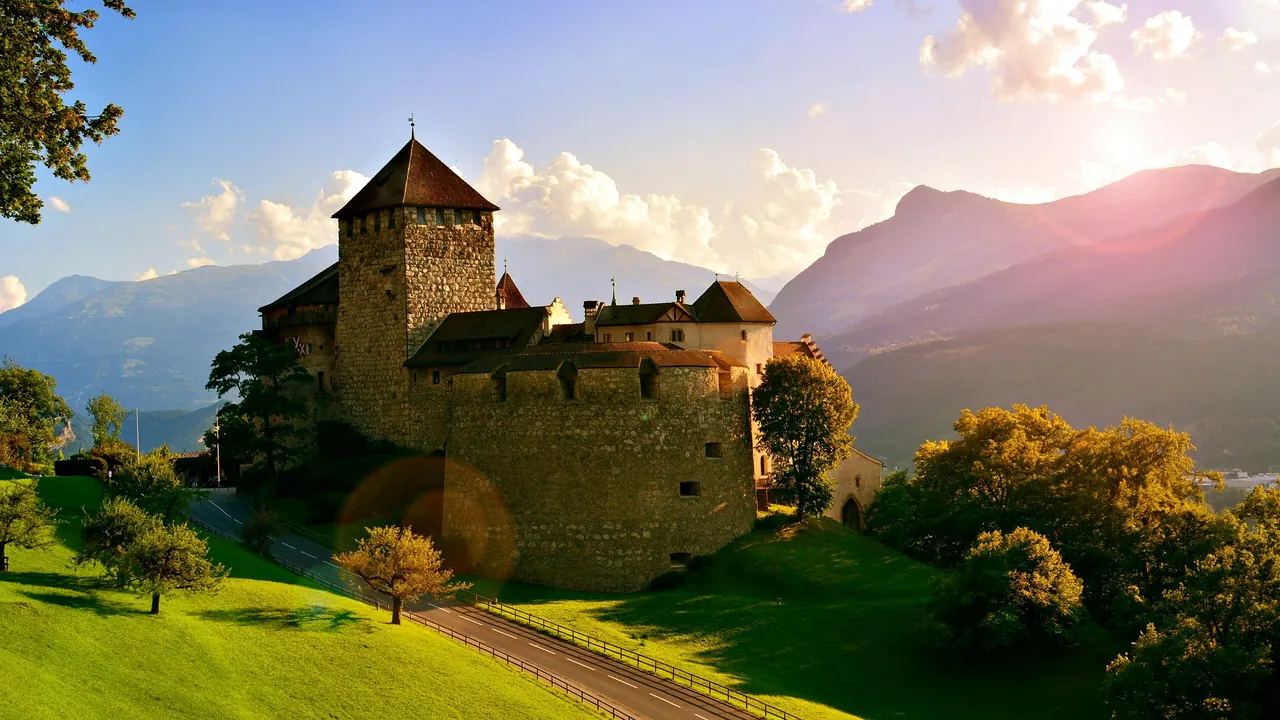
Photos: Prague by Dietmar Rabich, CC BY-SA 4.0, cropped; Vaduz by Justin LaBerge, CC BY 2.0, cropped.
Prague or Vaduz?
Our verdict in twelve categories, each scored against the same fixed benchmark cities, and the climate month by month, so you can choose for your trip.
Choose Prague for
- nightlife
- prices
- culture and sights
Prague is the choice for a full city trip. Its UNESCO-listed centre rewards days of walking, from the Castle to the Jewish Quarter. Evenings can mean opera at the Estates Theatre, a long session in a Zizkov pub or techno in Holesovice. It costs far less than Vaduz, and the trams mean you never need a car.
Choose Vaduz for
- nature and the outdoors
- beaches
- wellness
Vaduz suits a traveller who wants mountains on the doorstep and quiet evenings. Trails leave from the edge of town, and Malbun and the Rätikon peaks are half an hour up the road. Feldkirch, St Gallen and Lake Constance are all close. Come to walk, ski and see two fine modern art collections, and accept high prices and early nights.
Scoreboard
Twelve categories on one fixed scale from 0 to 100. The shaded stretch is the gap between the two.
Your match
Pick a travel style or drag the sliders, and both match scores follow your weighting.
Wins on nightlife and prices with your weighting.
Wins on nature and the outdoors and beaches with your weighting.
What matters to you?
Category by category
What the scores mean for a trip.
Beaches & swimming
Neither is a place for a beach, and the swimming is about equally modest. Vaduz has the better scenery for it: the Walensee lies beneath steep mountain walls about half an hour away, and Lake Constance is under an hour. Prague offers the Dzban reservoir in the Sarka valley and the wooded shores of Slapy, about an hour south, both with a more local, cabin-country feel.
Food & drink
Prague gives you more to eat and drink. Its pubs pour unpasteurised lager from the tank alongside svickova, goulash and roast pork with dumplings. Vinohrady, Karlin and Letna add cafés, Moravian wine bars and a modest modern restaurant scene, as long as you avoid the menus around Old Town Square.
Vaduz has a handful of hotel dining rooms and village inns serving Käsknöpfle, rösti and game in autumn. The cooking is solid, but there is little choice. Its one real distinction is wine, with Pinot Noir from the prince's own estate on the slopes below the castle.
Culture & sights
Prague has far more to see. Its whole centre is a preserved historic city: St Vitus Cathedral and Golden Lane on the castle hill, the Baroque palaces of Mala Strana, the statues of the Charles Bridge, and Josefov's synagogues and crowded old cemetery. Art Nouveau facades and rare Cubist buildings add to the medieval core. The museums are good rather than great, though the National Gallery's modern holdings in the Trade Fair Palace are worth a morning. Three or four days covers only the essentials.
Vaduz takes a single unhurried day. Its draw is the pair of cubes in the centre, the Kunstmuseum and the Hilti Art Foundation, whose modern and contemporary art is surprisingly strong for so small a place. The National Museum, the stamp museum, St Florin and the Red House among the vines fill out a short list, and the castle is the prince's home, seen only from outside.
Nightlife
Prague is a proper place for a night out. There are long beer-hall tables, plain student pubs in Zizkov, wine bars in Vinohrady, summer beer gardens on Letna, and a techno and alternative circuit in Holesovice's old industrial spaces.
Vaduz has a few wine bars and hotel lounges on the Städtle that close early. Young locals cross to Feldkirch or go to Zurich for a night out. Here an evening means dinner, then bed before an early start in the mountains.
Nature & outdoors
Vaduz is much better for the outdoors. Paths climb through vines and beech forest from the edge of town, and Malbun and the Rätikon offer high ridge walks within half an hour. Winter brings skiing at Malbun and in the larger Swiss resorts nearby, and the Rhine dam path is good for flat cycling.
Prague's green spaces are pleasant: Petrin Hill, Stromovka and the rocky gorge of Divoka Sarka. Its best hiking, among the sandstone towers of Bohemian Switzerland, is about two hours away, and there are no mountains.
Day trips
Prague is the stronger base, because the Bohemian countryside around it is castle country with real depth. Kutna Hora's Gothic St Barbara's Cathedral and the bone-decorated Sedlec Ossuary fill a day about an hour out, Karlstejn stands above its wooded valley even closer, and Terezin, the former fortress town and Nazi ghetto, is a sobering visit to the north. Further afield come the vineyards of Melnik where the Vltava meets the Elbe, Dresden's Baroque centre and great galleries, and the spa colonnades of Karlovy Vary.
Vaduz has fewer landmark visits but more changes of scene, since an hour's radius reaches into Switzerland, Austria and Germany. Feldkirch's castle and arcaded lanes are about twenty minutes away, and St Gallen's baroque abbey library and Appenzell's painted house fronts are each around an hour. Bregenz and the island town of Lindau sit on Lake Constance, while Chur and the vineyard villages of the Bündner Herrschaft lie to the south, with Zurich close enough for a city day.
Good for families
Prague gives children more to see and do. The castle, its armour and the astronomical clock's moving apostles hold their attention, and Troja zoo, with its chairlift, is one of Europe's best. The price is cobbles, steep stairs and summer crowds that make pushchairs hard work.
Vaduz is calmer and flat underfoot, but nothing there is aimed at children. Families spend their time at the open-air pools, on gentle walks above Triesenberg or on Malbun's beginner slopes, which suits older children who like walking far more than toddlers.
Getting around
Both centres are easy on foot. Prague, though, has a full transport network to back it up: three metro lines, trams through the night and one ticket for everything, including the Petrin funicular. Expect cobbles, and watch for pickpockets on the tourist tram lines.
Vaduz's centre is one short, flat pedestrian street, and buses reach every village and climb to Malbun. Going any further means a change of train across the border, which is why many visitors hire a car.
Shopping & style
Prague is the better place to shop, though not a reason to visit in itself. Parizska Street has the luxury labels and Wenceslas Square has the chains. The distinctive buys are Bohemian crystal, garnets and marionettes, and the better small design and vintage shops are in Vinohrady and Holesovice.
Vaduz has a few watch, jewellery and souvenir shops on the Städtle. Liechtenstein stamps or a bottle of local wine are the keepsakes worth taking home, and anyone serious about shopping goes to Zurich.
Affordability
Prague is far kinder to a budget. Pub meals, beer and the trams stay cheap, and only hotels in the historic core and restaurants with river views charge visitor prices.
Vaduz charges Swiss prices for everything from a room to a simple lunch, and it has few hotels to choose from. The usual way to save is to sleep across the border in Austria and come in by bus.
Live music & performing arts
This is one of Prague's great strengths. It has three opera houses, including the Estates Theatre where Don Giovanni had its premiere, and the Czech Philharmonic plays at the Rudolfinum. The Prague Spring festival, black-light theatre and marionette shows also need no Czech.
Liechtenstein's stage is in neighbouring Schaan, and its orchestra plays a short season. Vaduz adds a summer classical festival. You will find something to attend over a week, but you would not plan a trip around it.
Wellness & relaxation
The two are broadly level, but they offer rest of different kinds. Vaduz offers real thermal bathing: Bad Ragaz's spring-fed public baths are about twenty-five minutes away, and the town itself is quiet with mountain views. Prague's rest is urban, in grand old coffee houses, the terraced gardens below the castle and the benches of Kampa and Vysehrad. Its beer spas are more a novelty than a cure.
When should you go?
Pick your month. The climate figures are measured averages, not a forecast.
Prague in July
Vaduz in July
Daytime high, °C
Rainfall in the month, mm
Where the figures come from
Vaduz's temperatures are measured 51 km from the centre, at Sigmarszell-Zeisertsweiler.
Vaduz has no rain gauge within 25 km of the centre, so its rainfall comes from a gridded climate dataset read at the destination rather than from a gauge further away.
Temperature and rainfall are climate normals, averaged over the years shown. Prague: 1991-2020 normals, Praha-Libus (8.1 km from centre). Vaduz: 1991-2020 normals, Sigmarszell-Zeisertsweiler (51.3 km from centre).
The two share a short warm season. From June to August afternoons reach about 24 to 25°C, which is warm enough for a lake or reservoir swim and never too hot for walking. May and September are milder, the best months for sightseeing in Prague and for hiking above Vaduz. Winters are cold in both. Prague is the harsher of the two, with January highs near 2°C and very little sun, though it stays fairly dry.
Rain is the real difference. Vaduz is wet all year and wettest in high summer, with about 126mm in August. That means a walking week there should leave room for wet days. Prague's summer rain peaks nearer 80mm and its winters are much drier. Prague also gets a little more sunshine in summer, while Vaduz has slightly more in the depths of winter.
Which traveller are you?
For a culture and arts trip, Prague wins easily. The Castle, Mala Strana's Baroque churches and the Cubist and Art Nouveau buildings fill several days, and three opera stages and the Rudolfinum fill the evenings. Vaduz offers one good day of museums.
On an outdoors trip, Vaduz is the better base. Vineyard and forest trails start in town, and the high Rätikon walks and the Fürstensteig are half an hour away. In winter there is skiing at Malbun. Prague's green hills and sandstone country are gentler and further out.
On a trip with a tight budget, choose Prague. Beer, pub lunches and the trams stay cheap, and a room a few stops from the centre keeps costs down. Vaduz charges Swiss prices for everything and has few cheaper hotels.
Before you go
| Measure | Prague | Vaduz |
|---|---|---|
| Official language | Czech | German |
| Currency | Czech Koruna (CZK) | Swiss Franc (CHF) |
| Sockets | CE230 V, 50 Hz | CJ230 V, 50 Hz |
| Driving side | Right | Right |
| Time zone | UTC+1, UTC+2 in summer | UTC+1, UTC+2 in summer |
| Emergency number | 112 | 112 |
| Elevation | 235 m | 455 m |
| Main airport | Václav Havel Airport Prague (PRG)12 km from centre184 non-stop destinations | Zürich Airport (ZRH)81 km from centre226 non-stop destinations |
| Public holidays this year | 13 days | 21 days |
By the numbers
| Measure | Prague | Vaduz |
|---|---|---|
| Population | 1,397,880 | 5,668 |
| People per km² | 2,817 | 328 |
| Museums within 10 km | 88 | 7 |
| UNESCO World Heritage sites within 50 km | 1 | 3 |
Where else could you go?
Every comparison below shares a destination with this one, so you can follow Prague or Vaduz somewhere new.