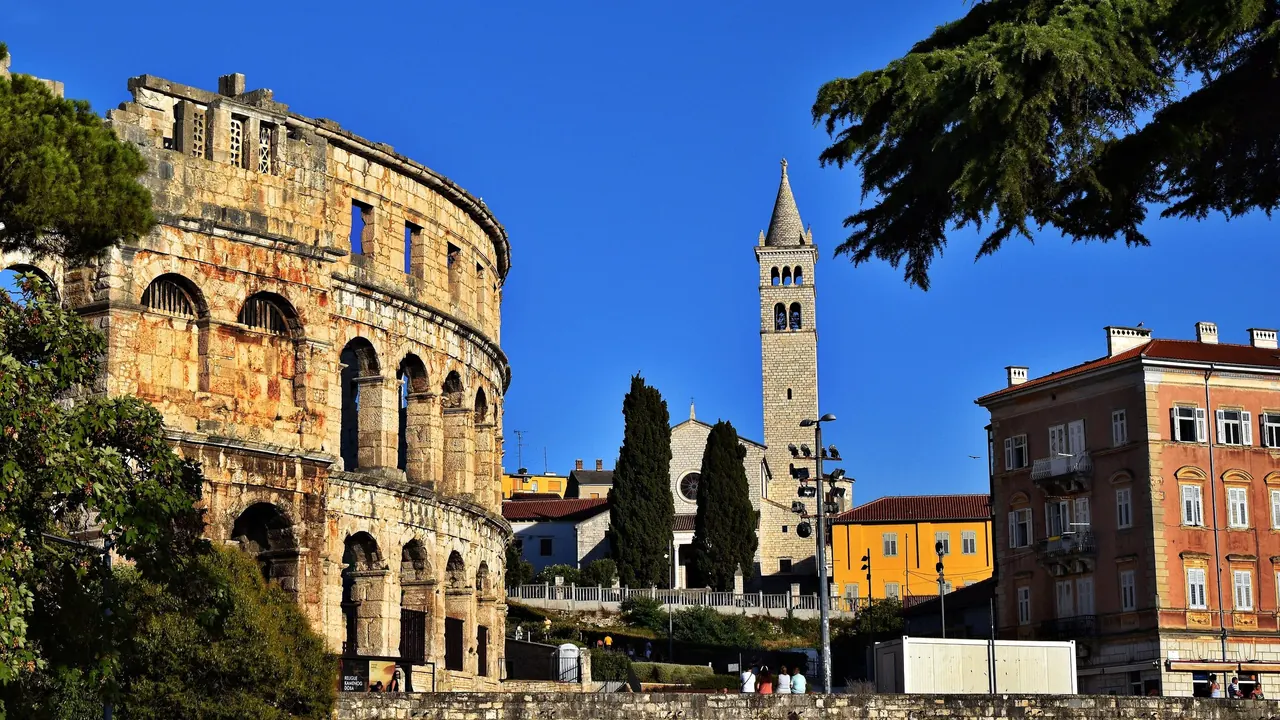
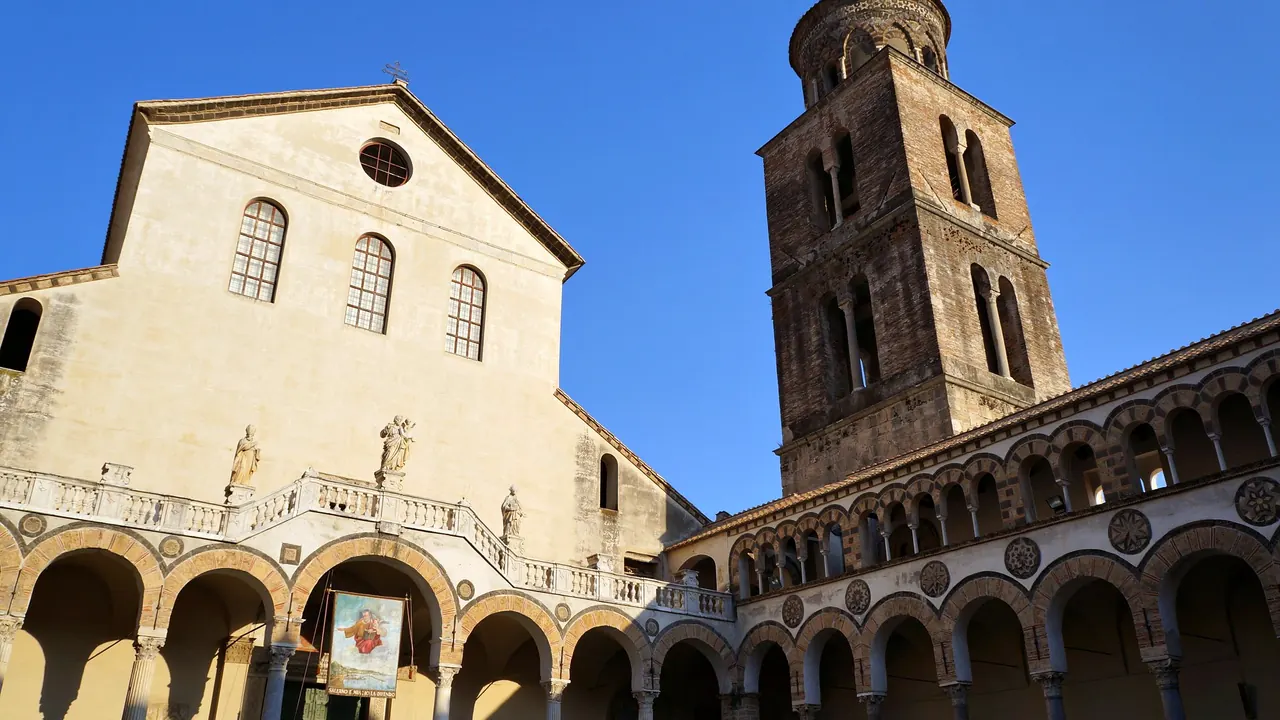
Photos: Pula by Miroslav.vajdic, CC BY-SA 4.0, cropped; Salerno by Leandro Neumann Ciuffo, CC BY 2.0, cropped.
Pula or Salerno?
Our verdict in twelve categories, each scored against the same fixed benchmark cities, and the climate month by month, so you can choose for your trip.
Choose Pula for
- culture and sights
- beaches
- families
Pula suits travellers who want clear water and a Roman town they can take in on foot. The Arena and the Forum sit a few minutes from the harbour, and the rocky coves of Verudela and Cape Kamenjak have some of the cleanest swimming on this stretch of the Adriatic. With a car, the town also makes an easy base for Rovinj, the hill towns and the truffle country of inland Istria. It is the calmer choice of the two, best for a sea-and-sights trip at an unhurried pace.
Choose Salerno for
- day trips
- getting around
- shopping
If you want to spend your days going out from your base, Salerno is the better pick. Paestum and Pompeii are a short train ride away, ferries cross to Amalfi and Positano, and Naples is close enough for an afternoon. Back in town the cooking is more generous, everyday prices are lower, and the coast and mountains around it are far more dramatic. Its own beaches and sights matter less than what lies within reach.
Scoreboard
Twelve categories on one fixed scale from 0 to 100. The shaded stretch is the gap between the two.
Your match
Pick a travel style or drag the sliders, and both match scores follow your weighting.
Wins on culture and sights and beaches with your weighting.
Wins on day trips and getting around with your weighting.
What matters to you?
Category by category
What the scores mean for a trip.
Beaches & swimming
Pula has the better swimming. There is no sand, but the rocky platforms and pebble coves of Verudela and Stoja have very clear water, with pine shade almost down to the sea. Cape Kamenjak, a short drive south, adds dozens of wild inlets. Bring water shoes for the urchins.
Salerno's own seafront beaches are grey sand and handy for a quick dip, but the water near the port is cloudier. The real beach days mean a trip, either south to the long sandy lidos towards Paestum or west to the clear pebble coves of the Amalfi Coast.
Food & drink
Salerno eats better day to day. The old town is full of trattorias, friggitorie and pastry shops, buffalo mozzarella arrives fresh from the plain towards Paestum, and Cetara's colatura and the coast's lemons show up on ordinary menus.
Pula's Istrian kitchen is just as distinctive, with fuži with truffle, scampi buzara, Malvazija and Teran. The city has fewer good tables, though, and those around the Arena lean towards tourist menus. The best meals are in the konobas of the hinterland villages.
Culture & sights
Pula has more to see within the city. The Arena still stands to its full height above the harbour, the Temple of Augustus is intact on the Forum, and Roman gates, mosaics and the Arch of the Sergii lie within a few streets. Habsburg naval forts add a second layer.
Salerno's heritage is medieval and on a smaller scale. The Norman cathedral holds the relics of Saint Matthew, and the Giardino della Minerva recalls Europe's first medical school. Both cities can be covered in a day or two, but Salerno's greatest ancient sites lie outside the city.
Nightlife
Both are quiet places to go out, and the difference is mostly in rhythm. Pula comes alive only in summer, with terraces on the Forum and beach bars on Verudela and around Medulin, and goes quiet once the season ends.
Salerno's nights centre on the old town all year. On weekends young locals drink outside the wine bars around Largo Campo and Via dei Mercanti, and anyone who wants proper clubs heads to Naples.
Nature & outdoors
Salerno has much grander scenery on its doorstep. Limestone cliffs, terraced lemon groves and old mule tracks across the Lattari mountains make for serious walks, and the Cilento national park adds wooded hills, river gorges and the headlands around Palinuro.
Pula's landscape is low and gentle by comparison, with macchia, olive groves and the car-free headland of Kamenjak, good for easy cycling, kayaking and wreck diving. For real hills you have to drive about an hour and a half to Učka.
Day trips
Salerno is one of the best bases in southern Italy. Paestum's Greek temples and Pompeii are each about half an hour by train, ferries run to Amalfi and Positano, and Naples, Herculaneum and Caserta are easy days out without a car.
Pula's excursions are good but need more effort. Venetian Rovinj, the mosaics at Poreč, the hill towns of Motovun and Grožnjan and the Brijuni islands make a fine circuit of Istria, but with limited buses most of it means driving.
Good for families
The two are fairly even with children, but they suit different kinds of day. Pula has more to do: the aquarium inside a Habsburg fort, the passages under the Arena and the shallow bays at Medulin. Rocky shores near town and a reliance on cars take some of the ease away.
Salerno is about strolling. Its flat, car-free promenade has playgrounds and gelato, and the sandy beaches to the south shelve gently. There is no aquarium or zoo, though, and the stepped old town is hard work with a pram.
Getting around
Salerno is easier to manage without a car. The station, the shopping street, the seafront and the old town lie in one walkable strip. Direct trains run to Naples, Pompeii and Paestum, and in season ferries do the Amalfi Coast better than any road.
Pula's centre is small and flat, and city buses reach Verudela. Beyond town, slow trains and sparse regional buses mean that Kamenjak, the hill towns and most of the coast are far easier with a car or scooter.
Shopping & style
Neither is a shopping destination, but Salerno offers more. Corso Vittorio Emanuele is a long pedestrian street of Italian chains that fills at passeggiata time, and hand-painted Vietri majolica makes a real souvenir. Pula's best buys are almost all edible: olive oil, truffle products, rakija and pršut from the market hall.
Affordability
Salerno is the cheaper stay. As a working city it charges local prices in its pizzerias and bakeries, and its hotels cost far less than the cliff villages nearby. Beach lidos, ferries and the archaeological sites' entry fees are the costs that add up.
Pula is mid-priced and good value in spring and autumn. In July and August, though, rooms cost about as much as on Western Europe's coasts, and car hire for the excursions adds a regular cost.
Live music & performing arts
Salerno has more going on through the year. The gilded Teatro Verdi stages a proper season of opera, concerts and ballet, and in summer the Ravello Festival's cliff-top concerts are close by.
Pula has one great setting, the Arena on a summer night, with touring concerts and the Pula Film Festival under Roman arches. Outside the season there is little beyond Croatian-language drama at the Istrian National Theatre.
Wellness & relaxation
Neither has a spa tradition, so in both cities a spa means a hotel spa. Salerno does have the open-air sulphur pools of Contursi Terme about an hour inland, but its port traffic and noisy main roads make the city itself less restful.
Pula is the quieter place to slow down, with pine-shaded coastal paths, resort-hotel spas on Verudela and in Medulin, and a calm pace once high summer is over.
When should you go?
Pick your month. The climate figures are measured averages, not a forecast.
Pula in July
Salerno in July
Daytime high, °C
Rainfall in the month, mm
Where the figures come from
Pula's temperatures are measured 87 km from the centre, at Trieste.
Pula has no rain gauge within 25 km of the centre, so its rainfall comes from a gridded climate dataset read at the city rather than from a gauge further away.
Salerno's temperatures are measured 71 km from the centre, at Grazzanise.
Salerno has no rain gauge within 25 km of the centre, so its rainfall comes from a gridded climate dataset read at the city rather than from a gauge further away.
Temperature and rainfall are climate normals, averaged over the years shown. Pula: 1991-2020 normals, Trieste (87 km from centre). Salerno: 1991-2020 normals, Grazzanise (71.3 km from centre).
Pula has a warm, gentle summer. The sea is fine for swimming from June to September and reaches about 25°C in August, while daytime highs of around 29°C rarely make the old town too hot to walk. Rain builds through autumn and is heaviest in November. Winters are cool and grey at about 10°C, so spring and early autumn are the times for walking and cycling.
Salerno runs hotter and sunnier through the year. July and August reach 31°C, which makes midday at Pompeii or on the coastal paths hard going, but they are also almost dry. The sea stays warm enough to swim well into October. Winters are milder than Pula's but much wetter, with around 154mm in November, so late spring and September are the most comfortable months for combining beaches with sightseeing.
Which traveller are you?
For a beach and sun trip, Pula has the edge. Its coves on Verudela and the wild inlets of Cape Kamenjak have very clear water close to town. Salerno's city beaches sit near the port, and the better sand needs a trip south.
On an outdoors trip, Salerno wins. The Path of the Gods and the Valle delle Ferriere above the Amalfi Coast, and the gorges of the Cilento, are on a bigger scale than Pula's low headlands and cycling lanes through farmland.
On a tight budget, Salerno stretches the money further. Trattorias and pizzerias charge local prices, and cheap regional trains reach Pompeii and Paestum. Pula costs more in summer, and most of its excursions depend on hiring a car.
Before you go
| Measure | Pula | Salerno |
|---|---|---|
| Official language | Croatian | Italian |
| Currency | Euro (EUR) | Euro (EUR) |
| Sockets | CF230 V, 50 Hz | CFL230 V, 50 Hz |
| Driving side | Right | Right |
| Time zone | UTC+1, UTC+2 in summer | UTC+1, UTC+2 in summer |
| Emergency number | 112 | 112 |
| Elevation | 5 m | 4 m |
| Main airport | Pula Airport (PUY)7 km from centre34 non-stop destinations | Naples International Airport (NAP)46 km from centre131 non-stop destinations |
| Public holidays this year | 14 days | 13 days |
By the numbers
| Measure | Pula | Salerno |
|---|---|---|
| City population | 52,220 | 127,186 |
| People per km² | 971 | 2,123 |
| Museums within 10 km | 4 | 9 |
| UNESCO World Heritage sites within 50 km | 1 | 5 |
| Swim season, months above 21 °C | 4 months | 5 months |
Where else could you go?
Every comparison below shares a destination with this one, so you can follow Pula or Salerno somewhere new.