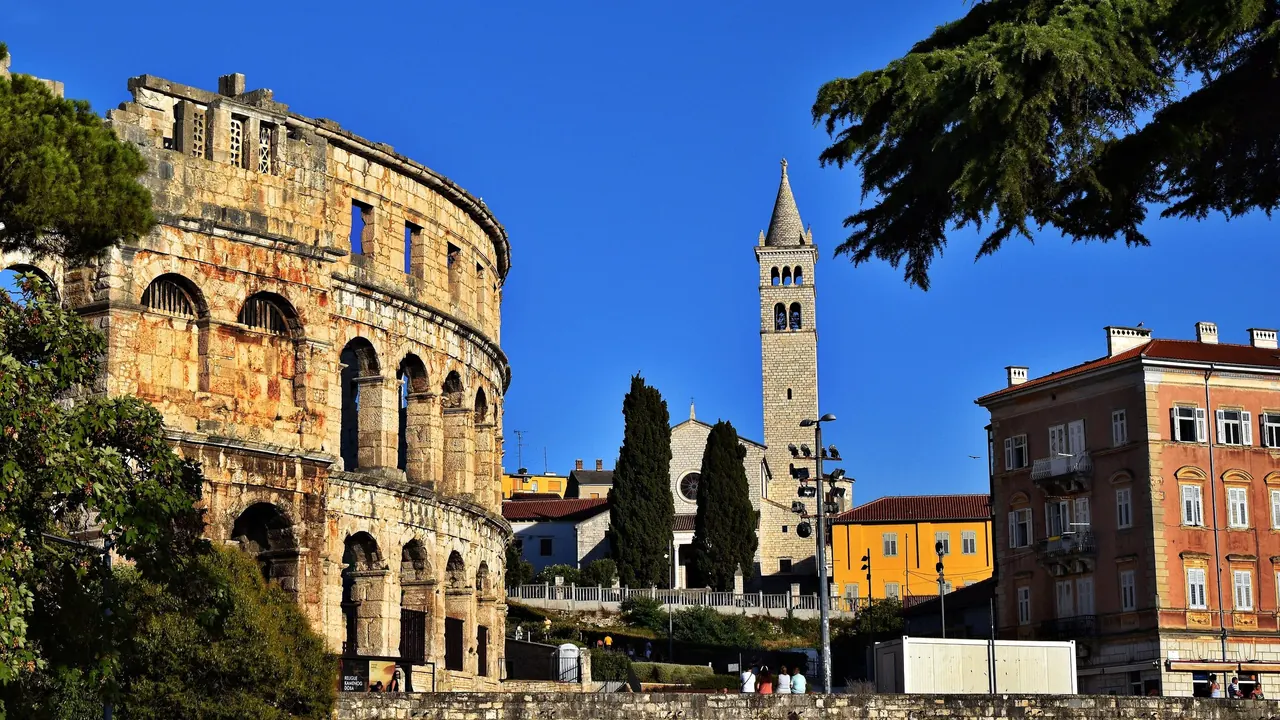
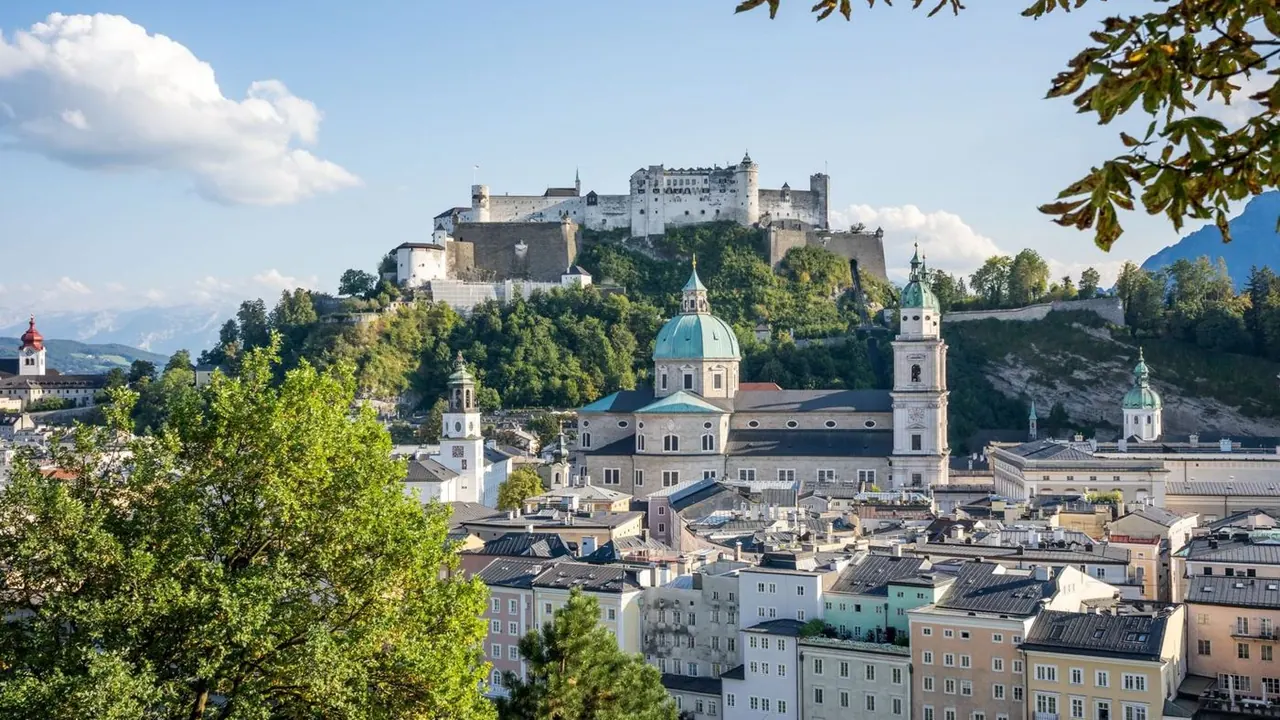
Photos: Pula by Miroslav.vajdic, CC BY-SA 4.0, cropped; Salzburg by Leonhard Niederwimmer, Pexels License.
Pula or Salzburg?
Our verdict in twelve categories, each scored against the same fixed benchmark cities, and the climate month by month, so you can choose for your trip.
Choose Pula for
- beaches
- prices
- nightlife
Pula suits a summer trip built around the sea. You get clear water off rocks and pine-shaded coves, a Roman amphitheatre and forum you can see in a day, and Istrian truffles, olive oil and Malvazija. It also costs less than Salzburg. It works best with a hire car, which lets you combine Kamenjak, Rovinj and the hill towns of the interior.
Choose Salzburg for
- live music and the arts
- wellness
- nature and the outdoors
Choose Salzburg if music, Baroque architecture and mountains matter more to you than swimming. Pula has nothing to match its festivals and nightly concerts, the Alps and the Salzkammergut lakes start at the edge of town, and you can manage the compact centre without a car. Expect higher prices and a wetter summer in return.
Scoreboard
Twelve categories on one fixed scale from 0 to 100. The shaded stretch is the gap between the two.
Your match
Pick a travel style or drag the sliders, and both match scores follow your weighting.
Wins on beaches and prices with your weighting.
Wins on live music and the arts and wellness with your weighting.
What matters to you?
Category by category
What the scores mean for a trip.
Beaches & swimming
Pula has proper sea swimming, in clear Adriatic water off rocks, concrete platforms and pebble coves around Verudela and Stoja. The wild inlets of Kamenjak are the best of it, and the sheltered bays of Medulin suit small children. There is no sand, so pack water shoes.
Salzburg has no coast at all. People swim in the Salzkammergut lakes, half an hour or more away, getting in from lawns and wooden jetties during a short summer season. It makes a pleasant afternoon, but it is not a reason to book.
Food & drink
Thanks to Istria, Pula has the more distinctive food. Expect truffle pasta, scampi buzara, pršut, and olive oil and Malvazija from estates nearby. The best meals are in village konobas and harbour taverns rather than near the Arena.
Salzburg's cooking is hearty Austrian, with schnitzel, dumplings and the Salzburger Nockerl. Its real strengths are the coffee houses and the Augustiner monastery beer garden in Mülln. Both old towns have their share of tourist menus, but Salzburg's choice is narrower and a few days covers it.
Culture & sights
Pula's Roman heritage is outstanding in one respect: the Arena is among the best-preserved amphitheatres anywhere. The Temple of Augustus, the Arch of the Sergii and the Venetian fortress make up a day or two of sightseeing.
Salzburg has more depth. The whole Baroque old town of the prince-archbishops is UNESCO-listed, with the cathedral, the Residenz, Hohensalzburg on its cliff, Mirabell, the Mozart houses and the St Peter catacombs, and there is modern art on the Mönchsberg. It fills two or three unhurried days, while you see Pula sooner.
Nightlife
Neither city is made for a big night out, but Pula has more going on in summer. Evenings start with drinks on terraces around the Forum, then move to beach and cocktail bars on Verudela and in Medulin, which stay open late at weekends, and a few small clubs fill up.
In Salzburg an evening usually means a concert and then a beer hall, and the old town is quiet by midnight. Out of season Pula goes just as quiet, so the gap matters mainly in summer.
Nature & outdoors
Pula's outdoors is gentle and coastal. There is low stony coast with pine and olive groves, and the car-free headland of Kamenjak for walking, cycling, kayaking around the islets and diving on wrecks. The nearest real high ground is Učka, an hour and a half away.
Salzburg has the Alps at its edge. Wooded ridges rise inside the city, and the Untersberg cable car takes you up to ridge walks at about 1,800m. The Salzkammergut lakes, Berchtesgaden National Park and the ski areas are all within about an hour. For hiking, there is no contest.
Day trips
Both make excellent bases, but the trips are different in character. From Pula they are Adriatic and Venetian: Rovinj on its peninsula, the Byzantine mosaics of Poreč, the hill towns of Motovun and Hum with their truffle estates, and the boat to Brijuni.
From Salzburg they are alpine and imperial: Hallstatt and the quieter lake villages, the salt mines at Hallein and Berchtesgaden, the clifftop fortress at Werfen, and Munich by train. Salzburg's rail links help for the cities, while from Pula you need a car for almost everything.
Good for families
Both cities are safe and easy with children, and the choice comes down to what your children enjoy. In Pula you spend the days by the sea, in the shallow bays at Medulin and Premantura. Add the aquarium in a Verudela fort and climbing around the Arena, with a water park and a dinosaur park about an hour away.
Salzburg means sights and short outings: Hellbrunn's trick fountains and the zoo, the hands-on Haus der Natur, the marionettes and the wooden slides in the salt mines. The car-free centre helps, but the cobbles and steep lanes are hard work with a pushchair.
Getting around
You can walk around the historic core of either city, but Salzburg is much easier without a car. Trolleybuses reach Hellbrunn and the Untersberg cable car, the riverside paths suit cycling, and trains run to Munich, Vienna and Hallein.
Pula's flat centre takes minutes to cross, and city buses go out to Verudela. Beyond that, you really need a car or scooter for Kamenjak and the hill towns. Salzburg's lake villages are also easier by car, but Pula depends on one far more.
Shopping & style
In Pula the best things to buy are edible: olive oil, truffle products, wine, rakija and pršut from the market hall and from producers inland. The main old-town street has little beyond chains and souvenirs.
Salzburg has more to browse, starting with Getreidegasse and its wrought-iron guild signs. Tracht workshops make dirndls and loden jackets to measure, there is a farmers' market by the Andräkirche, and in Advent the Christmas market fills Domplatz. Neither city has much luxury shopping.
Affordability
Pula is the cheaper stay. Private apartments and simple konobas keep costs reasonable, especially in spring and autumn. In July and August, though, rooms and meals near the Arena cost tourist prices, and car hire and boat trips add up.
Salzburg is expensive all year, and even more so during the summer festival and the Advent markets. To save money, stay across the river or in the suburbs, eat in the inns of the outer districts and buy a city card.
Live music & performing arts
Pula's one great musical asset is the Arena in summer, when concerts and film screenings under the Roman arches make a memorable night. The rest of the year offers little beyond the Istrian National Theatre.
Salzburg is worth travelling to for the music alone. The Salzburg Festival brings opera and leading orchestras to the Festspielhaus and the Felsenreitschule, and Mozart Week and the Easter Festival add two more seasons. The rest of the year, the Mozarteum, the Landestheater and the Marionette Theatre keep a steady programme going, and there are chamber concerts at Mirabell nearly every evening.
Wellness & relaxation
In Pula, relaxing mostly means the slower pace outside high summer: coffee on the Forum, coastal paths under the pines, and the spas of the resort hotels on Verudela and in Medulin.
Salzburg has more to offer. The Paracelsus Bad has saunas and a pool in the city park, the brine baths of Bad Reichenhall are about twenty minutes away, and the radon springs and Belle Époque hotels of the Gastein valley make a longer outing. The quiet Mirabell gardens and the coffee houses do the rest.
When should you go?
Pick your month. The climate figures are measured averages, not a forecast.
Pula in July
Salzburg in July
Daytime high, °C
Rainfall in the month, mm
Where the figures come from
Pula's temperatures are measured 87 km from the centre, at Trieste.
Pula has no rain gauge within 25 km of the centre, so its rainfall comes from a gridded climate dataset read at the city rather than from a gauge further away.
Temperature and rainfall are climate normals, averaged over the years shown. Pula: 1991-2020 normals, Trieste (87 km from centre). Salzburg: 1991-2020 normals, Salzburg (3.4 km from centre).
Pula is at its best in warm weather. The sea is warm enough for long swims from June to late September and reaches about 25°C in August. July is the sunniest month, with long dry days and highs near 29°C, which makes midday sightseeing hard work. May and early October are the most comfortable months for walking the Roman sites and touring Istria. Rain increases from September and peaks in November. Winters are mild but grey.
Salzburg is cooler, and unusually it is wettest in summer, with about 168mm of rain in June and similar amounts in July and August. The mild days still suit the old town and the hills, but expect showers. May and September are only a little less wet. The drier months are April and October, when highs are in the mid-teens, which is comfortable for walking around the city and on the ridges. Winter is cold, with highs around 3°C in January, and snow often reaches the town, so it suits indoor sights more than outdoor plans.
Which traveller are you?
For a beach and sun trip, Pula is the clear choice. It has clear Adriatic water, rocky coves around Verudela and the wild inlets of Kamenjak. In Salzburg, swimming means a lake dip in the Salzkammergut on a hot afternoon.
On a culture and arts trip, Salzburg is the better choice. Its Baroque old town, fortress and Mozart houses come with festival opera, the Mozarteum and chamber concerts almost every night. Pula has its superb Arena but little music beyond summer concerts.
For an outdoors trip, Salzburg has the Alps on its doorstep: the Untersberg cable car, the Gaisberg trails, the Salzkammergut lakes and Berchtesgaden National Park. Pula's Kamenjak is lovely for cycling and kayaking, but the country there is low and gentle.
Before you go
| Measure | Pula | Salzburg |
|---|---|---|
| Official language | Croatian | German, Austrian Sign Language |
| Currency | Euro (EUR) | Euro (EUR) |
| Sockets | CF230 V, 50 Hz | CF230 V, 50 Hz |
| Driving side | Right | Right |
| Time zone | UTC+1, UTC+2 in summer | UTC+1, UTC+2 in summer |
| Emergency number | 112 | 112 |
| Elevation | 5 m | 424 m |
| Main airport | Pula Airport (PUY)7 km from centre34 non-stop destinations | Salzburg Airport (SZG)3 km from centre64 non-stop destinations |
| Public holidays this year | 14 days | 16 days |
By the numbers
| Measure | Pula | Salzburg |
|---|---|---|
| City population | 52,220 | 155,021 |
| People per km² | 971 | 2,360 |
| Museums within 10 km | 4 | 38 |
| UNESCO World Heritage sites within 50 km | 1 | 3 |
| Swim season, months above 21 °C | 4 months | - |
Where else could you go?
Every comparison below shares a destination with this one, so you can follow Pula or Salzburg somewhere new.