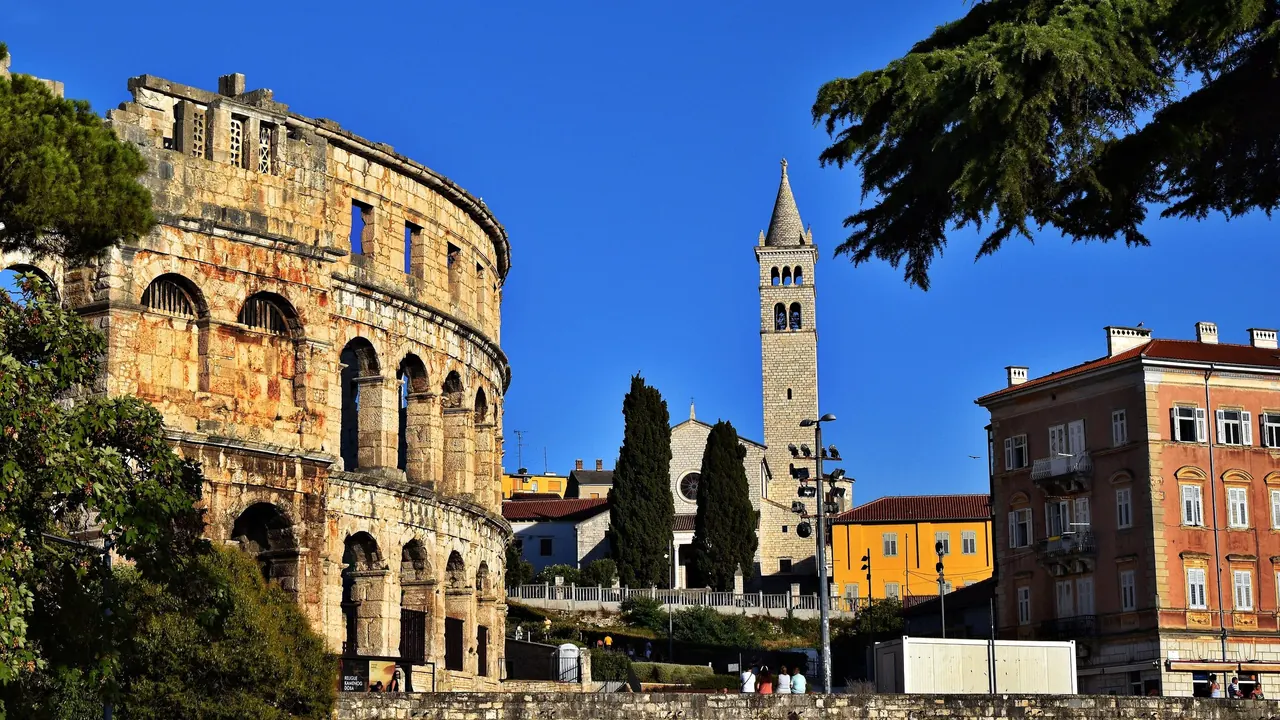
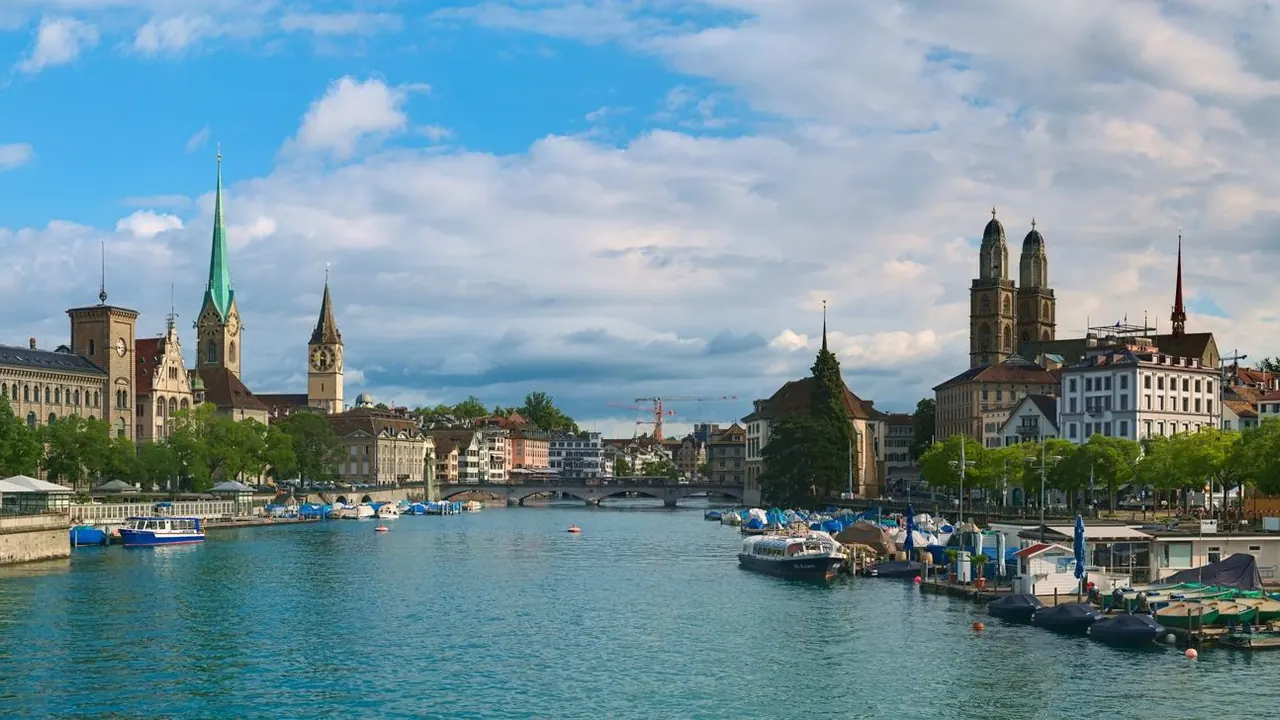
Photos: Pula by Miroslav.vajdic, CC BY-SA 4.0, cropped; Zurich by Daniel Kraft, CC BY-SA 3.0, cropped.
Pula or Zurich?
Our verdict in twelve categories, each scored against the same fixed benchmark cities, and the climate month by month, so you can choose for your trip.
Choose Pula for
- prices
- beaches
- food and drink
Pula suits a summer vacation built around the sea: clear water off rocks and pine-shaded coves, a Roman amphitheatre at the end of the street, and a hire car for the hill towns and wine estates of Istria. It also costs far less, especially in spring and autumn, so a longer stay is easy to afford.
Choose Zurich for
- getting around
- shopping
- live music and the arts
For a trip where everything works without a car, Zurich is the better pick. Trams and trains reach Lucerne, Bern and the Alps easily, and evenings can mean opera, the Tonhalle or a techno club in Kreis 5. Families, walkers and anyone on a short break will find it smoother, as long as the bill is not a worry.
Scoreboard
Twelve categories on one fixed scale from 0 to 100. The shaded stretch is the gap between the two.
Your match
Pick a travel style or drag the sliders, and both match scores follow your weighting.
Wins on prices and beaches with your weighting.
Wins on getting around and shopping with your weighting.
What matters to you?
Category by category
What the scores mean for a trip.
Beaches & swimming
Pula has the real sea. It has no sand, but there is very clear Adriatic water off rocks, platforms and pebble coves on Verudela and Stoja. The wild inlets of Cape Kamenjak are the best swimming, and the season runs into late September. Water shoes are wise because of urchins and sharp rock.
Zurich swims too, but in a lake and a river. You go in from the lawns and wooden bathing houses at Utoquai or Mythenquai, or float down the Limmat at Letten. It makes a fine dip after sightseeing in a short summer, but it is not a beach vacation.
Food & drink
The two are about even, but the cooking could hardly be more different. Pula's strength is Istrian produce: truffle pasta, scampi buzara, pršut, Malvazija and Teran. The best meals are in hinterland taverns and harbour konobas rather than around the Arena.
Zurich is polished city dining. Expect veal with rösti in guild houses, fondue in winter and international places around Langstrasse, and the chocolate and Paradeplatz confectionery are the real highlight. It has fewer markets than Pula, and every meal costs considerably more.
Culture & sights
Both cities fill a day or two well, but in different ways. In Pula the history is out in the open. You can walk from the Arena to the Temple of Augustus on the Forum and through the Arch of the Sergii, with Roman mosaics tucked into the backstreets and Habsburg naval forts around the coast.
Zurich's strengths are indoors and in its churches. The Kunsthaus, the National Museum and the Rietberg's world art lead the way, alongside the Grossmünster of the Reformation and the Chagall windows of the Fraumünster.
Nightlife
Zurich is far livelier after dark. Electronic music runs deep there, with clubs in Kreis 4, Kreis 5 and Zurich West open until morning at weekends, Langstrasse busy late and the Street Parade every August. Its one brake is the price of a round.
Pula's evenings are gentler and mostly seasonal. Think terrace drinks below the fortress, beach bars on Verudela and around Medulin, and a few small clubs on summer weekends. Out of season the city is quiet early.
Nature & outdoors
Zurich has the bigger outdoors. The Uetliberg ridge is a short train ride away, and Rigi, Pilatus and the Glarus valleys are within about an hour for high-mountain hiking, with ski slopes such as Flumserberg in reach in winter.
Pula's landscape is low and coastal. It is best at the car-free Kamenjak headland, which suits walking, cycling, kayaking among the islets and diving on naval wrecks. The nearest real mountains, on Učka, are about an hour and a half's drive away.
Day trips
Both are good bases, but Zurich makes touring effortless. Lucerne is under an hour by train, and Bern, Basel, St Gallen and the Rhine Falls are about as easy, all without a car.
Pula's range is just as attractive: Rovinj, the Byzantine mosaics of Poreč, the hill towns of Motovun and Grožnjan, and the Brijuni islands by boat. With thin bus links, though, most of these really need a hire car.
Good for families
Zurich is the easier city with children. Highlights include the zoo's Madagascar rainforest hall, shallow lake lidos with lawns, the Technorama a short train ride away and trams that take buggies without fuss.
Pula works well for a seaside family trip. The shallow bays around Medulin and Premantura, the aquarium in an old fort and the Arena's underground passages all appeal. However, rocky shores, summer heat and a reliance on the car make it more effort.
Getting around
Zurich is about as easy as cities get. Trams, S-Bahn trains, funiculars and lake boats share one ticket, and the airport is a short train ride from the centre. A car is more trouble than it is worth.
In Pula, the flat centre around the Arena and the Forum is easy on foot, and city buses reach Verudela. Beyond that, buses are sparse and the train is of little use, so Kamenjak and the hill towns call for a car or scooter.
Shopping & style
Zurich is the shopping city here, with Bahnhofstrasse's watchmakers, jewellers and department stores, Altstadt antiques and the design shops in the old viaduct arches.
In Pula, what is worth carrying home is mostly edible: olive oil, truffle products, Malvazija, honey and pršut from the market hall or straight from the producers.
Affordability
Pula is by far the cheaper choice. Apartments and simple konobas keep costs moderate, especially in spring and autumn, although rooms in July and August and meals near the Arena cost more.
In Zurich, high prices shape the whole trip, from a simple hotel room to a lunch or a drink. Supermarket picnics, the free lidos and a combined transport and museum card help only a little.
Live music & performing arts
Zurich has a year-round stage: the Opernhaus for opera and ballet, the Tonhalle Orchestra, the Schauspielhaus, and indie and jazz at the Rote Fabrik.
Pula's moment is summer in the Arena, when concerts and film festival screenings take place under Roman arches. For the rest of the year there is little beyond Croatian-language theatre.
Wellness & relaxation
Zurich has more real bathing. There are thermal pools in the vaults of an old brewery, winter saunas in the wooden lake and river bathing houses with cold plunges between sessions, and Roman hot springs at Baden.
In Pula, relaxing means resort hotel spas on Verudela and in Medulin, long coffees on the Forum and pine-shaded coastal walks outside high summer.
When should you go?
Pick your month. The climate figures are measured averages, not a forecast.
Pula in July
Zurich in July
Daytime high, °C
Rainfall in the month, mm
Where the figures come from
Pula's temperatures are measured 87 km from the centre, at Trieste.
Pula has no rain gauge within 25 km of the centre, so its rainfall comes from a gridded climate dataset read at the city rather than from a gauge further away.
Temperature and rainfall are climate normals, averaged over the years shown. Pula: 1991-2020 normals, Trieste (87 km from centre). Zurich: 1991-2020 normals, Zurich Town / Ville. (2.2 km from centre).
Pula has the longer and warmer season. From June to September the days are hot and the sea is warm enough for long swims, reaching about 25°C in August. July and August are the sunniest months, but also the hardest for midday sightseeing. Rain comes in autumn and is heaviest in November, at about 107mm. Winters are mild but grey. June and early September give the best balance, with the sea at about 22°C, mostly dry weather and heat that still allows walking. May is pleasant for walking around the town, but the water is still cool.
Zurich is cooler all year. Summer highs are around 24°C, which is pleasant for walking, and the lake is warm enough to swim in from June to early September. However, its warmest months are also its wettest, with about 126mm of rain in July, often in showers and thunderstorms. Winters are properly cold, and November and December are dim and often foggy over the lake. That suits the bathing-house saunas and the ski slopes better than walking round the city. Spring and early autumn are the most comfortable times for exploring on foot.
Which traveller are you?
On a beach and sun trip, Pula is the clear choice. It has real sea swimming from June to late September, with wild coves at Kamenjak and sheltered bays around Medulin. Zurich's lidos offer only a short summer of lake dips from lawns and decks.
For a trip on a tight budget, go to Pula. Private apartments, simple konobas and cheap city buses keep costs reasonable, especially outside high summer. Zurich is one of the most expensive places in Europe, where even a casual lunch is a significant cost.
For a short city break, Zurich works better. You can walk the compact Altstadt and lake shore, and one ticket covers trams, trains and boats, so you need no car. Add strong museums, opera and late clubs, and two or three days fill themselves.
Before you go
| Measure | Pula | Zurich |
|---|---|---|
| Official language | Croatian | French, German, Italian, Romansh |
| Currency | Euro (EUR) | Swiss Franc (CHF) |
| Sockets | CF230 V, 50 Hz | CJ230 V, 50 Hz |
| Driving side | Right | Right |
| Time zone | UTC+1, UTC+2 in summer | UTC+1, UTC+2 in summer |
| Emergency number | 112 | 112 |
| Elevation | 5 m | 408 m |
| Main airport | Pula Airport (PUY)7 km from centre34 non-stop destinations | Zürich Airport (ZRH)9 km from centre226 non-stop destinations |
| Public holidays this year | 14 days | 10 days |
By the numbers
| Measure | Pula | Zurich |
|---|---|---|
| City population | 52,220 | 440,935 |
| People per km² | 971 | 5,016 |
| Museums within 10 km | 4 | 63 |
| UNESCO World Heritage sites within 50 km | 1 | 1 |
| Swim season, months above 21 °C | 4 months | - |
Where else could you go?
Every comparison below shares a destination with this one, so you can follow Pula or Zurich somewhere new.