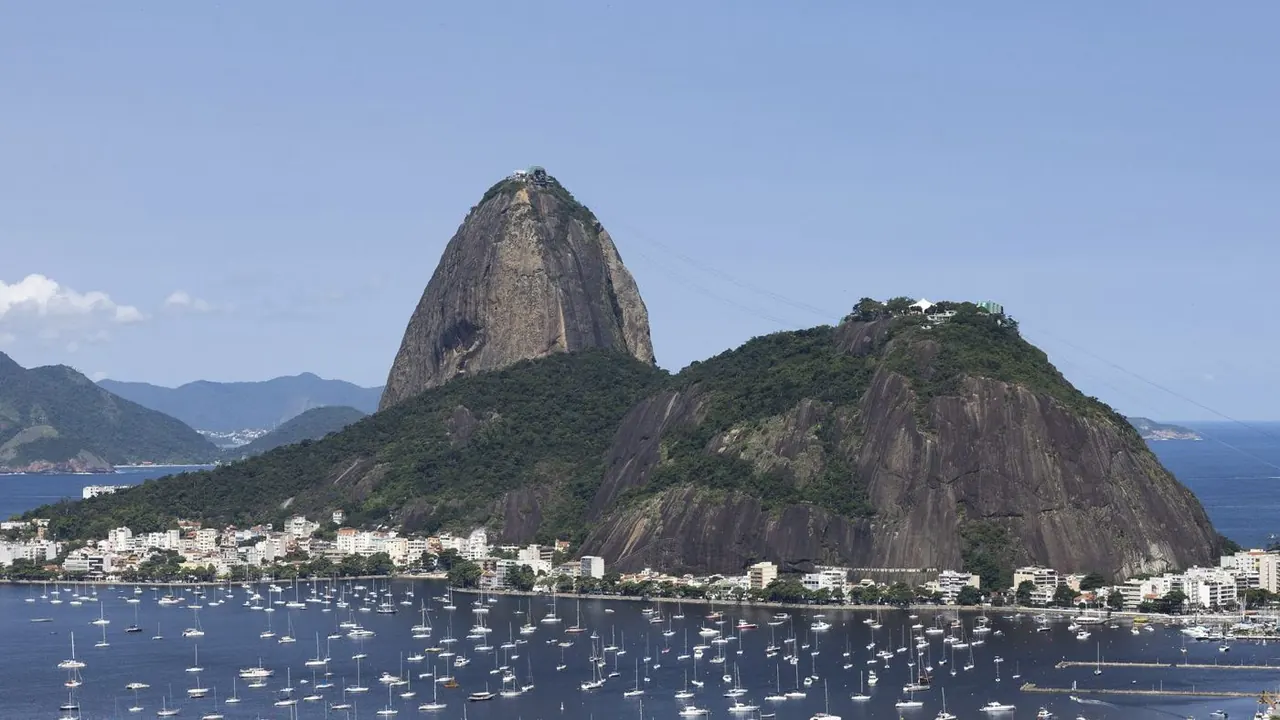
Photos: Rio de Janeiro by Arne Müseler, CC BY-SA 3.0 DE, cropped.
Punta del Este or Rio de Janeiro?
Our verdict in twelve categories, each scored against the same fixed benchmark cities, and the climate month by month, so you can choose for your trip.
Choose Punta del Este for
- families
- wellness
Punta del Este suits a summer beach stay with a polished, well-heeled edge. You get calm estuary water at Playa Mansa, surf on Playa Brava, late nights in La Barra in January and long lunches among the vineyards around Garzón. It is for travellers who want little more than sand, wine and quiet pine-shaded streets, and who accept a high bill and a short season in return.
Choose Rio de Janeiro for
- culture and sights
- live music and the arts
- prices
For almost any active or curious traveller, Rio de Janeiro gives far more for the same week. The sea is warmer, a forest-covered mountain range rises in the middle of the city, there is samba most nights, and the sights run from Corcovado to the gilded churches of the old centre. Day to day it also costs much less. The trade-offs are heat, noise, traffic and the need to keep an eye on your belongings.
Scoreboard
Twelve categories on one fixed scale from 0 to 100. The shaded stretch is the gap between the two.
Your match
Pick a travel style or drag the sliders, and both match scores follow your weighting.
Wins on families and wellness with your weighting.
Wins on culture and sights and live music and the arts with your weighting.
What matters to you?
Category by category
What the scores mean for a trip.
Beaches & swimming
Both cities face the Atlantic, but swimming feels very different in each. Punta del Este offers a choice between the calm, shallow estuary water of Playa Mansa and the surf and currents of Playa Brava, with long sandy beaches running east past La Barra to José Ignacio. Its sea is refreshing at best, and warm enough only in a short summer season.
Rio makes the beach the centre of city life. Copacabana, Ipanema and Leblon are a short walk from the main hotels, the water is comfortable for swimming much of the year, and the wilder sands of Prainha and Grumari add space and surf. Swim from the ocean beaches rather than those facing the bay.
Food & drink
Punta del Este eats the Uruguayan way: beef and lamb from the parrilla, chivito sandwiches and fish from the port stalls, plus polished beachfront dining in La Barra and José Ignacio in summer. The range is narrow and much of it closes after the season, though a winery lunch among the Albariño and Tannat vines near Garzón is a real pleasure.
Rio offers more variety and keeps it going all year. Botecos serve ice-cold chopp with shared plates of pastéis and bolinhos de bacalhau, Saturday brings feijoada, and juice bars sit on almost every Zona Sul corner. Leblon and Botafogo have the more interesting modern kitchens.
Culture & sights
This category is no contest. Punta del Este is a 20th-century resort, and its sights fit into a single day: Casapueblo on the cliffs at Punta Ballena, the hand on Playa Brava and the lighthouse.
Rio has Christ the Redeemer and Sugarloaf, plus the São Bento monastery, the Paço Imperial and the Theatro Municipal in the old centre. Add the Museu do Amanhã by the port and Santa Teresa's mansions above the Selarón steps, and its sights fill several full days even though the museums are modest.
Nightlife
Punta del Este goes out hard but only briefly. From Christmas to late January the clubs of La Barra stay open past sunrise and beach clubs throw afternoon parties for a young, dressed-up crowd. By March the town has gone quiet.
Rio's nightlife lasts all year and happens on the street. At weekends Lapa fills up under the aqueduct arches, Botafogo's pavement bars spill from one corner to the next, Leblon is smarter, and before Carnival the blocos take over whole districts. After dark, take taxis between neighbourhoods.
Nature & outdoors
Punta del Este's outdoors is gentle and coastal: dunes, pine woods and the lagoons around José Ignacio for kitesurfing and birdwatching. There are boat trips to the sea lions of Isla de Lobos, and whales pass offshore in spring. Hikes are modest and the wind rarely lets up.
Rio is in another league. Tijuca National Park covers the mountains in the middle of the city, and Dois Irmãos and Pedra da Gávea are short, steep climbs above the beaches. Hang-gliders land on the sand at São Conrado, and the Serra dos Órgãos inland has serious multi-day hiking. In summer, start early to beat the heat.
Day trips
Neither city has a long list of outings within easy reach, and the best trips from both work better with a night away. From Punta del Este the outings are short and coastal or rural: Piriápolis is under an hour away, José Ignacio is along the shore, Garzón has wineries and a restored village, and Montevideo is two hours west.
Rio's outings lean towards history and hills. There is imperial Petrópolis with its museum and cool air, the ferry to Niterói for the Niemeyer museum, and the coffee towns of the Paraíba valley. Paraty, Búzios and Ilha Grande are superb but each is three hours or more away.
Good for families
Both cities suit a family trip built around the beach, and neither has much made for children. Punta del Este is the calmer, easier option. The Mansa side has shallow water, the neighbourhoods are safe and green, and plenty of Uruguayan and Argentine families visit, with sea lion boat trips and the arboretum for a change of scene.
Rio has more to do, with the Sugarloaf cable car, the Corcovado train, AquaRio and the BioParque zoo. It asks more of parents, though, through heat, heavy traffic, uneven pavements and the need to watch belongings.
Getting around
Punta del Este is easy on foot only on the peninsula itself. The resort stretches a long way along the shore, and the places that make a stay here, from La Barra's beach clubs to José Ignacio, really call for a car or taxis, with a slow coast road in high summer.
Rio is the easier of the two without a car. Its metro runs straight through the districts visitors use most, from the centre to Copacabana, Ipanema and Leblon, and the promenade makes those beachfront stretches a pleasure to walk. Taxis or ride-hailing cover the hills, the forest and the western beaches.
Shopping & style
Punta del Este shops to the rhythm of its season. Designer boutiques and small linen and homeware shops in La Barra and José Ignacio open in summer for second-home owners, and much of it closes when they leave. Leather goods and mate gourds from the craft market make the most local souvenirs.
Rio has the edge because its shopping runs all year and suits every budget. Brazilian swimwear and resort fashion from Ipanema and Leblon are the things to buy, while the Sunday fair in Ipanema and the crowded downtown market streets add crafts, cheap fabric and Carnival costumes. Big international luxury names are scarce and expensive.
Affordability
This is the sharpest practical difference between the two. Punta del Este is priced for wealthy Argentines, Brazilians and Uruguayans, and in January its rooms, rentals and beach-club loungers are very expensive. Groceries, buses and a simple parrilla are the only relief, and the cheaper shoulder months come with fewer places open.
Rio is far kinder to a foreign wallet. Kilo lunches, boteco snacks, juices, the metro and the beaches cost little. Only seafront hotels, smart Leblon restaurants and the weeks around Carnival and New Year push costs up sharply.
Live music & performing arts
Punta del Este's performances are mostly in January: a long-established jazz festival on a country estate, chamber concerts around José Ignacio and casino shows. There is little for the rest of the year.
Rio has live samba most nights, from choro bands in Lapa's old houses and rodas gathered around a table of musicians to samba school rehearsals before Carnival. Bossa nova still has small venues of its own, and the Theatro Municipal stages opera and ballet.
Wellness & relaxation
Neither city has a bathing tradition, and in both the spa offer comes down to the larger hotels and some yoga. The real difference is the pace. Outside the January crush, Punta del Este is quiet, with pine-shaded streets and the slow lagoon country beyond José Ignacio.
In Rio you relax on the sand or with an evening walk along the promenade or the lagoon. The city itself is loud, hot and demanding, though, and real calm means heading up to Santa Teresa or out to the mountain towns.
When should you go?
Pick your month. The climate figures are measured averages, not a forecast.
Punta del Este in July
Rio de Janeiro in July
Daytime high, °C
Rainfall in the month, mm
Where the figures come from
Punta del Este's temperatures are measured 79 km from the centre, at Rocha.
Punta del Este has no rain gauge within 25 km of the centre, so its rainfall comes from a gridded climate dataset read at the city rather than from a gauge further away.
Rio de Janeiro has no weather station within reach, so its figures come from a gridded climate model rather than a measured record, and read a broad area rather than the city itself.
Temperature and rainfall are climate normals, averaged over the years shown. Punta del Este: 1991-2020 normals, Rocha (78.5 km from centre). Rio de Janeiro: 2001-2020 normals, NASA POWER reanalysis grid, no weather station within 90 km.
Punta del Este has a short, clear season. From late December to March the days are warm and the sea is at its mildest, peaking near 23°C in February, which is bracing rather than balmy. December and January are also its sunniest months. After April it cools quickly, and by July daytime highs are around 15°C with a cold sea, fine for a windy beach walk but not for swimming. Rain is spread fairly evenly through the year, with a little more in winter.
Rio is warm in every month, and the sea stays near 25°C through summer and early autumn, so swimming works for much of the year. Its seasons are about rain. November to March is hot, humid and wet, with around 232mm in December. June to August is much drier, near 45mm a month, and far more pleasant for hiking and for walking the old centre. Both cities are hot in January, but in July only Rio is still a beach destination.
Which traveller are you?
For a culture and arts trip, Rio is the clear choice. Christ the Redeemer, the São Bento monastery, the Real Gabinete reading room and nightly samba and choro in Lapa fill several days. Punta del Este's sights, led by Casapueblo, take one afternoon.
On a trip on a tight budget, Rio stretches money much further. Kilo lunches, boteco snacks, the metro and the beaches themselves cost little. Punta del Este is priced for wealthy summer visitors, and in its cheaper shoulder months many restaurants and shops are closed.
On a relaxing and wellness trip, Punta del Este has the edge. Neither city has spas worth travelling for, but the lagoon country around José Ignacio and the empty shoulder-season beaches are restful in a way Rio's loud, hot streets rarely are.
Before you go
| Measure | Punta del Este | Rio de Janeiro |
|---|---|---|
| Official language | - | Portuguese |
| Currency | Peso Uruguayo (UYU) | Brazilian Real (BRL) |
| Sockets | CFIL230 V, 50 Hz | CN60 Hz |
| Driving side | Right | Right |
| Time zone | UTC-3 | UTC-3 |
| Emergency number | 911 | Police 190, ambulance 192, fire 193 |
| Elevation | 11 m | 31 m |
| Main airport | Capitan Corbeta CA Curbelo International Airport (PDP)18 km from centre6 non-stop destinations | Rio de Janeiro Galeão – Tom Jobim International Airport (GIG)12 km from centre54 non-stop destinations |
| Public holidays this year | 15 days | 14 days |
By the numbers
| Measure | Punta del Este | Rio de Janeiro |
|---|---|---|
| City population | 9,277 | 6,211,223 |
| People per km² | 455 | 4,930 |
| Museums within 10 km | 5 | 69 |
| UNESCO World Heritage sites within 50 km | 0 | 3 |
| Swim season, months above 21 °C | 3 months | 12 months |
Where else could you go?
Every comparison below shares a destination with this one, so you can follow Punta del Este or Rio de Janeiro somewhere new.