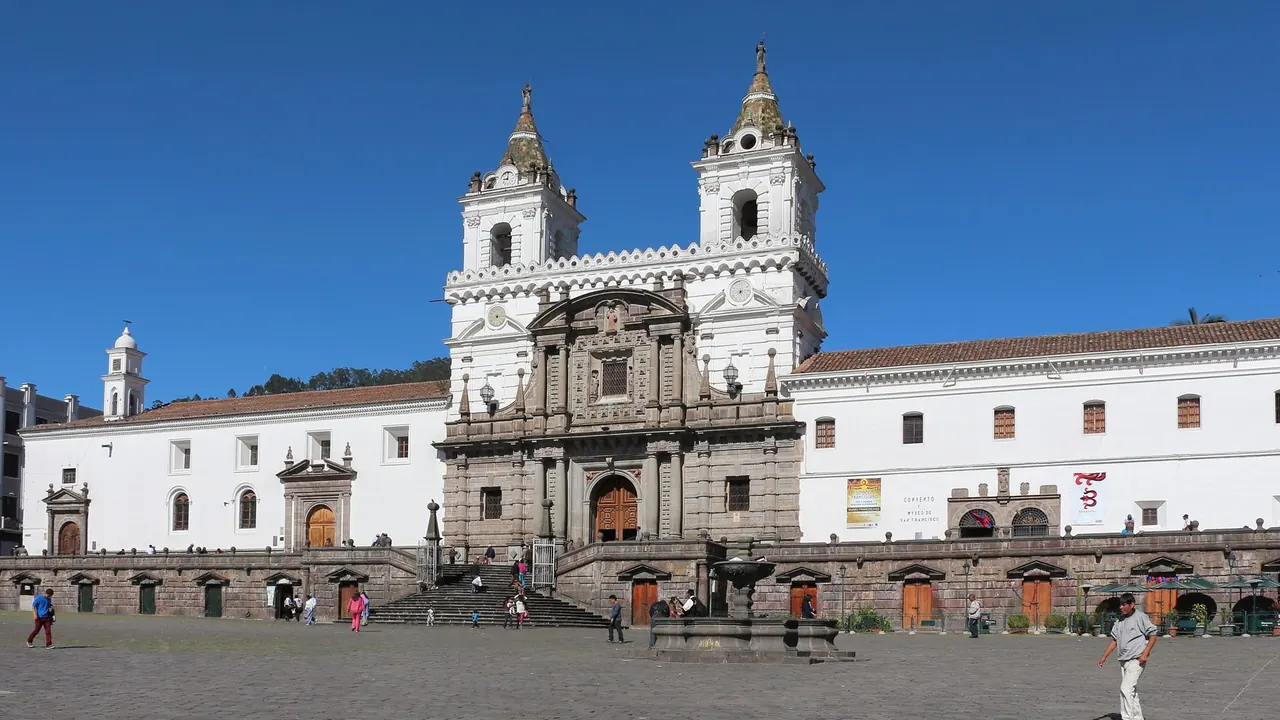
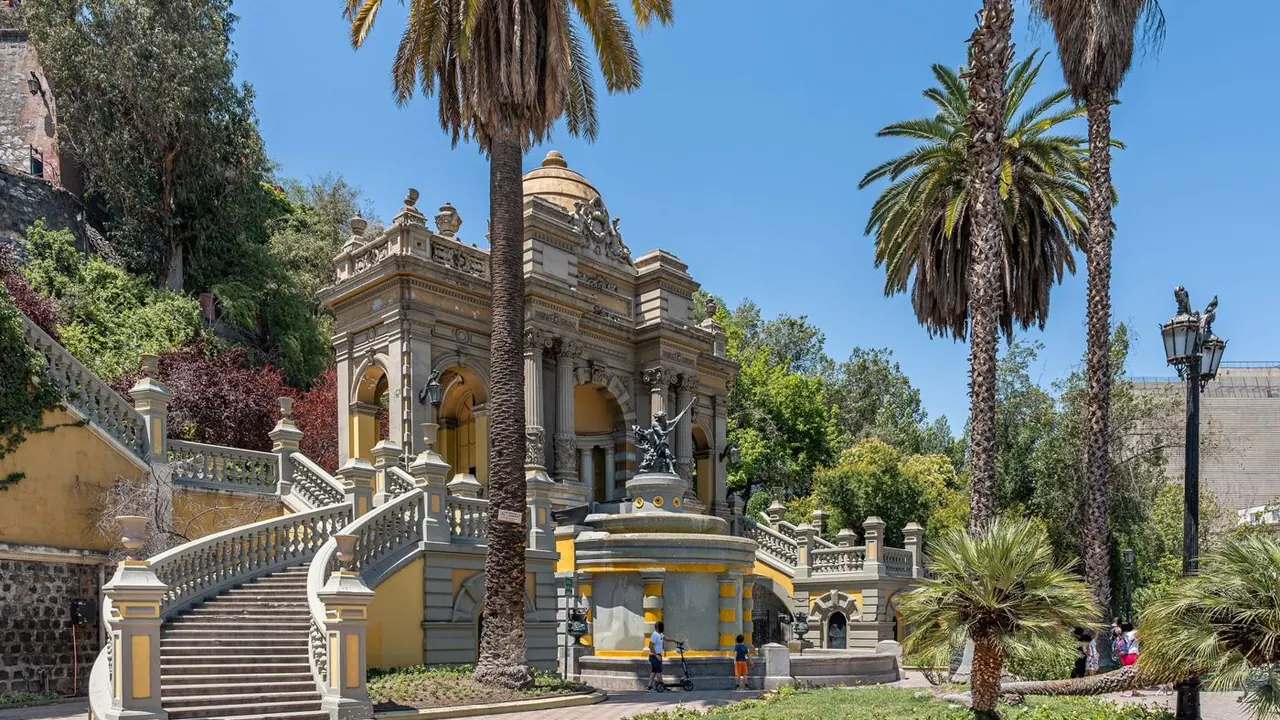
Photos: Quito by Bernard Gagnon, CC BY-SA 3.0, cropped; Santiago by Rjcastillo, CC BY-SA 4.0, cropped.
Quito or Santiago?
Our verdict in twelve categories, each scored against the same fixed benchmark cities, and the climate month by month, so you can choose for your trip.
Choose Quito for
- culture and sights
- prices
- wellness
Quito is the choice for travellers who want history and mountains in the same trip. Its colonial centre is far richer than anything Santiago kept through its earthquakes, the volcanoes and cloud forest start at the city's edge, and daily costs stay low. The price is the altitude, which makes the first days tiring, and a thin evening scene, so it suits curious adults happy to be in bed early and up for a hike.
Choose Santiago for
- families
- getting around
- nightlife
Santiago works better for a rounded city stay with good wine, late nights and an easy metro. It is the stronger pick for families, for anyone who wants Valparaíso or a winery on a free day, and for winter skiers, since the slopes are close. Its sights are fewer, so most people see the centre in a few days and spend the rest in the valleys, on the coast or in the mountains.
Scoreboard
Twelve categories on one fixed scale from 0 to 100. The shaded stretch is the gap between the two.
Your match
Pick a travel style or drag the sliders, and both match scores follow your weighting.
Wins on culture and sights and prices with your weighting.
Wins on families and getting around with your weighting.
What matters to you?
Category by category
What the scores mean for a trip.
Beaches & swimming
Neither city has any beach life, and anyone after sand should plan a separate stay elsewhere. Quito is the more cut off: the Pacific is a long day's drive or a flight away, so swimming means a hotel pool or the warm municipal pools in the valleys below town.
Santiago at least puts the coast within a day out, with Viña del Mar and the small central-coast towns under two hours away. The cold Humboldt Current keeps the water chilly even in summer, though, so most people paddle, and in the city the big pools in the Parque Metropolitano do the job on hot days.
Food & drink
Both cities serve hearty home cooking, but Santiago has a little more to explore. Quito's highland food is potato and corn soups, roast pork and sugared empanadas, best eaten as a set lunch or in the Mercado Central, with excellent cacao and coffee as its strongest suit and a fairly narrow range beyond them.
Santiago adds two things Quito cannot match: Pacific seafood such as sea urchins and machas clams, and wine from the valleys on its doorstep. Lastarria, Barrio Italia and Bellavista also hold more modern restaurants, though the choice thins quickly elsewhere.
Culture & sights
This is where Quito clearly leads. Its historic centre was among the first places listed by UNESCO and survives largely intact, from the gold-covered La Compañía and the San Francisco monastery to the streets of convents around the Plaza Grande, backed by Casa del Alabado and the Guayasamín collection.
Santiago lost much of its colonial fabric to earthquakes, so its sights cluster around the Plaza de Armas and La Moneda. The pre-Columbian museum and the Museum of Memory are excellent, but most visitors finish the essentials in a few days, while Quito's old town rewards much longer wandering.
Nightlife
Santiago is the better city to go out in. Dinner is late, bars fill after eleven and clubs run until morning at weekends, with Bellavista loud and student-heavy and Lastarria and Barrio Italia offering calmer wine bars.
Quito's night centres on Plaza Foch in La Mariscal, with salsa clubs and backpacker bars busy from Thursday to Saturday and quiet midweek. La Ronda suits a canelazo and a stroll rather than a late night, and moving between areas after dark means a taxi.
Nature & outdoors
Both cities sit right under big mountains, and the difference is in what you do there. Quito offers volcanoes and altitude: the TelefériQo to around 4,000m and the hike up Rucu Pichincha, Cotopaxi's glacier two hours south, and the cloud forest at Mindo with its extraordinary birdlife.
Santiago's Andes are about rafting, glacier trails in the Cajón del Maipo and, in winter, skiing at Valle Nevado and its neighbours within a day's reach. Its drawbacks are the sprawl you cross to reach them, winter smog and few buses to trailheads.
Day trips
Santiago has the stronger choice of days out. Valparaíso, a UNESCO-listed port of hills, funiculars and street art, is easy to pair with Viña del Mar, and the Maipo and Casablanca wine estates are close enough for an afternoon.
Quito's best outing is the Saturday market at Otavalo with the weaving villages around it, and the equator at Mitad del Mundo is close by. After that, the trips worth making are mostly into the mountains and cloud forest rather than to other towns.
Good for families
With children, the difference shows in how many days a family can fill comfortably. Quito has a handful of good outings: the hands-on Yaku water museum above the old town, and Parque La Carolina in the north, where pedal boats, a vivarium and playgrounds take care of an afternoon. Ecuadorians make a fuss of children, but most families use the city as a short stop on the way to the coast, the cloud forest or the Galápagos.
Santiago keeps a family busy for longer. There is a traditional amusement park in Parque O'Higgins, Buin Zoo on the southern edge of the city, and the lawns, lagoons and playgrounds of Parque Bicentenario in Vitacura, and children are welcome at restaurant tables late into the evening. Hot summer afternoons and winter smog are the things to plan around, and the eastern districts make the easiest base.
Getting around
Santiago is noticeably simpler to move around. Its modern metro reaches the districts visitors use, with one card for trains and buses, and the Centro, Lastarria and Providencia are linked by pleasant walks.
Quito is a long, narrow city with one metro line and crowded bus corridors where pickpockets work at rush hour. Its old town is walkable but steep and breathless at altitude, so most visitors rely on taxis and ride-hailing.
Shopping & style
Santiago has more range, from the big eastern malls and luxury streets of Vitacura to the independent design and vintage shops of Barrio Italia, and Pueblito Los Dominicos sells copper, lapis lazuli and Mapuche silver.
Quito's appeal is narrower but very much its own: genuine toquilla-straw Panama hats, bean-to-bar chocolate, alpaca and tagua carvings from the La Mariscal artisan market. Serious buyers save themselves for Otavalo.
Affordability
Quito is the cheaper city by a clear margin. Set lunches, market juices, buses and taxis cost very little, and guesthouses in old colonial houses are good value, with costs climbing only for upmarket northern hotels, volcano tours and anything involving the Galápagos.
Santiago is closer to a mid-range southern European city. Lunch menus, empanadas and local wine are fair value and museums are cheap, but the hotels in Providencia and Las Condes, skiing and private day tours push a trip's budget up.
Live music & performing arts
Santiago offers the fuller programme. The Teatro Municipal has its own opera season, ballet and philharmonic, GAM and the university theatres add contemporary work, and the Santiago a Mil festival in January fills the city with companies, though most spoken theatre is in Spanish.
Quito's stage centres on the Teatro Nacional Sucre and the national symphony, and its most distinctive offer is folk ballet in Andean costume. Add baroque concerts in old-town churches and it makes a good evening rather than a reason to visit.
Wellness & relaxation
Quito has the edge, though in both cities the calm lies outside town. The misty thermal pools of Papallacta, across the Andes, are a real weekend spa culture, and simpler pools like El Tingo sit in the valleys below, although the altitude makes the first days tiring rather than restful.
Santiago's springs are more rustic, from the basic pools at Baños Morales in the Cajón del Maipo to Termas de Colina on the city's edge. In town, Parque Forestal and the gardens of Cerro San Cristóbal are the quiet places.
When should you go?
Pick your month. The climate figures are measured averages, not a forecast.
Quito in July
Santiago in July
Daytime high, °C
Rainfall in the month, mm
Where the figures come from
Quito's station stands 208 m above the city centre, so the centre is likely a little warmer than the figures say.
Temperature and rainfall are climate normals, averaged over the years shown. Quito: 1961-1990 normals, Izobamba-Santa Catalina (16.8 km from centre). Santiago: 1991-2020 normals, Santiago Q. Normal (3.1 km from centre).
Quito barely changes temperature through the year. Daytime highs sit around 18°C in every month, so the streets are pleasant to walk all year, but evenings are cool and you need a layer. The year is divided by rain instead. The wettest stretch runs from February to May, peaking near 195mm in April, while June to August is the dry season and also has the most sunshine, which makes it the best time for volcano hikes and clear views.
Santiago has real seasons. The summer months from December to February are hot and almost rainless, with highs near 28°C and long sunny days, which is fine for the pools but warm for walking the centre at midday. Winter, from June to August, is cool, around 15°C, and brings most of the year's rain, about 87mm in June, along with grey days. Spring and autumn are the most comfortable for both city walks and hiking, and winter is the time to come for snow.
Which traveller are you?
For a culture and arts trip, Quito is the better city. Its gilded churches, convents and Quito-school altarpieces form one of the finest colonial centres in the Americas, while Santiago has a strong programme on stage but far fewer historic sights.
On a food and nightlife trip, Santiago comes out ahead. Seafood, Chilean wine and pisco fill late dinners, and Bellavista, Lastarria and Barrio Italia keep going until the early hours at weekends, where Quito's night is mostly confined to La Mariscal.
On a family trip with children, Santiago is much easier. The Parque Metropolitano, the hands-on Mirador museum and an easy metro help, and children face no altitude problems, whereas Quito's thin air, steep streets and heavy traffic wear young travellers out quickly.
Before you go
| Measure | Quito | Santiago |
|---|---|---|
| Official language | Spanish, Shuar, Northern Quichua | Spanish |
| Currency | US Dollar (USD) | Chilean Peso (CLP) |
| Sockets | AB120 V, 60 Hz | CL220 V, 50 Hz |
| Driving side | Right | Right |
| Time zone | UTC-5 | UTC-4, UTC-3 in summer |
| Emergency number | 911 | Police 133/134, ambulance 131, fire 132 |
| Elevation | 2,850 m | 575 m |
| Main airport | Mariscal Sucre International Airport (UIO)20 km from centre22 non-stop destinations | Comodoro Arturo Merino Benítez International Airport (SCL)14 km from centre67 non-stop destinations |
| Public holidays this year | 11 days | 16 days |
By the numbers
| Measure | Quito | Santiago |
|---|---|---|
| City population | 1,763,275 | 6,257,516 |
| People per km² | 4,735 | 7,468 |
| Museums within 10 km | 16 | 54 |
| UNESCO World Heritage sites within 50 km | 2 | 0 |
Where else could you go?
Every comparison below shares a destination with this one, so you can follow Quito or Santiago somewhere new.