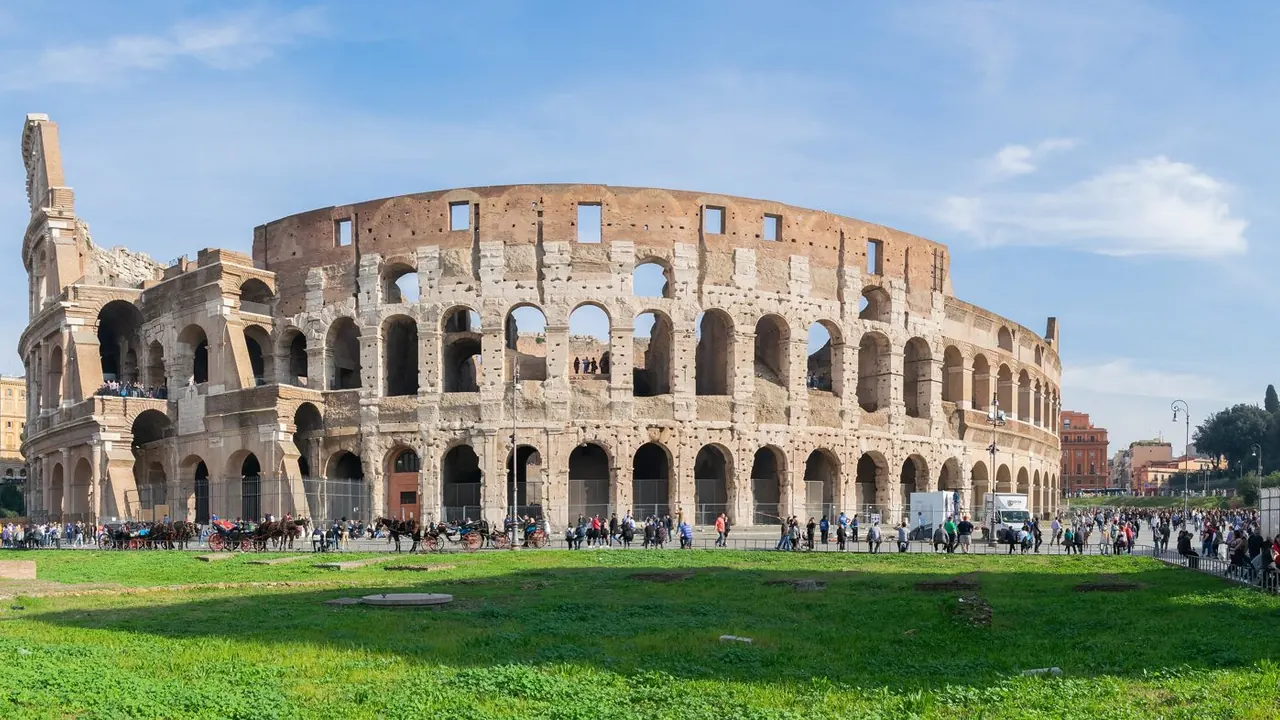
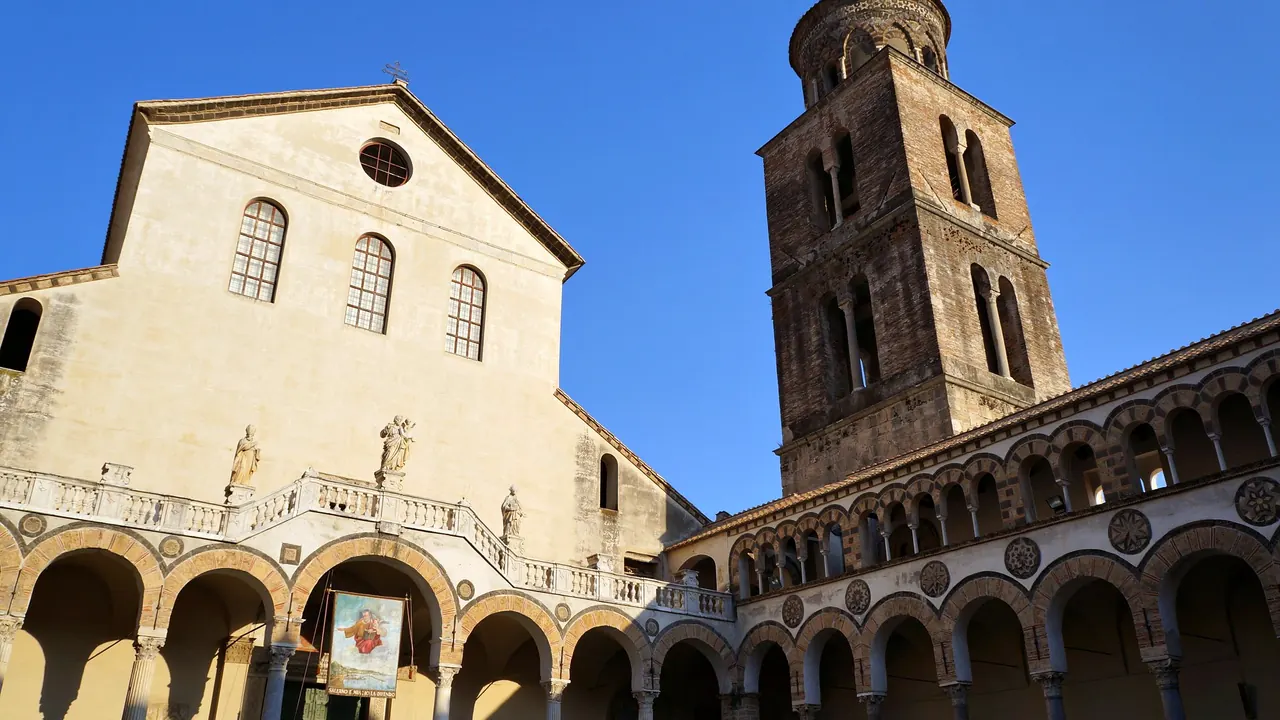
Photos: Rome by Tournasol7, CC BY-SA 4.0, cropped; Salerno by Leandro Neumann Ciuffo, CC BY 2.0, cropped.
Rome or Salerno?
Our verdict in twelve categories, each scored against the same fixed benchmark cities, and the climate month by month, so you can choose for your trip.
Choose Rome for
- culture and sights
- shopping
- live music and the arts
Rome is the choice when the trip is about history, art and eating well. Ancient ruins, the Vatican, Baroque churches and great museums fill every day, the trattorias of Trastevere, Monti and Testaccio fill every evening, and opera, concerts and smart shopping round it out. It costs more, the sea is an afterthought and the centre is loud, but nowhere in Italy gives a first-time visitor more to see.
Choose Salerno for
- prices
- nature and the outdoors
- beaches
Salerno suits travellers who want southern Italy's coast and countryside without paying cliff-village prices. The city itself takes a day or two, but it sits between the Amalfi Coast and the Cilento, with Paestum and Pompeii a short train ride away, real beaches nearby and mountain paths above the sea. Pick it for a slower, outdoors-minded stay where the sights are mostly out of town.
Scoreboard
Twelve categories on one fixed scale from 0 to 100. The shaded stretch is the gap between the two.
Your match
Pick a travel style or drag the sliders, and both match scores follow your weighting.
Wins on culture and sights and shopping with your weighting.
Wins on prices and nature and the outdoors with your weighting.
What matters to you?
Category by category
What the scores mean for a trip.
Beaches & swimming
Salerno is the better choice if you want to swim. Its own grey-sand beaches are a walk from the centre, the long sandy shore towards Paestum makes a full day by the sea, and a ferry takes you to the clear water off the Amalfi Coast's pebbly coves.
From Rome the sea means a suburban train to the volcanic sand at Ostia or Fregene, where the beaches are crowded, divided into lidos and the water is rarely clear. Swimming there is a break from the heat, not a reason to go.
Food & drink
Rome eats better, and in a style all its own: carbonara and cacio e pepe, Jewish-style artichokes in the Ghetto, Testaccio's offal dishes and pizza al taglio, with whole neighbourhoods of good trattorias once you leave the tourist menus around the big sights.
Salerno's strength is Campanian produce eaten close to the source. Buffalo mozzarella comes from the plain towards Paestum, colatura from Cetara, and seafood, wood-fired pizza and lemon pastries are the daily fare. It is honest and good rather than a reason to travel, though its local wines beat Rome's modest Frascati.
Culture & sights
This is where the two are furthest apart. Rome holds ancient, Christian, Renaissance and Baroque layers in one centre, from the Pantheon and Palatine to Caravaggios in side chapels and the Sistine Chapel, and a week is not enough.
Salerno has a fine Norman cathedral with Saint Matthew's relics, the medicinal garden linked to Europe's first medical school and the Arechi Castle above the gulf, all covered in a day or two. Its great ancient sites, Paestum and Pompeii, are outside the city.
Nightlife
Rome offers more choice after dark. Trastevere's crowded wine bars, Monti's cocktail bars, student San Lorenzo and arty Pigneto give different kinds of evening, even if serious clubbing is limited.
Salerno's going out is concentrated in a few old-town squares around Largo Campo, plus the seafront passeggiata. It is friendly and relaxed, but anyone wanting a bigger night has to go to Naples.
Nature & outdoors
Salerno sits at the edge of one of Europe's great coastlines, with limestone cliffs, terraced lemon groves, old mule tracks through the Lattari mountains and the wilder Cilento national park to the south. Boat trips and kayaking make summer days out.
Rome's green spaces are its villa parks and the Appian Way, a superb ride past tombs and aqueducts, with the crater lakes of the Alban Hills nearby. The Apennines, with hiking and some winter skiing, are about ninety minutes away and take more effort to reach.
Day trips
Both are excellent bases, with different destinations. From Rome you reach Ostia Antica, Tivoli's Villa d'Este and Hadrian's Villa, Etruscan tombs, Orvieto and Civita di Bagnoregio, while fast trains bring Florence and Naples within easy reach.
Salerno's day trips are the ones Rome can only manage with a long day: Paestum's Greek temples and Pompeii are each about half an hour away, ferries cross to Amalfi and Positano, and Ravello, Herculaneum and Caserta are all straightforward outings.
Good for families
Neither city is set up for children, and they suit families about equally. Rome has the Bioparco zoo, rowing boats in Villa Borghese and stories of gladiators and catacombs, but long queues, cobbles and traffic make sightseeing tiring.
Salerno has no zoo or theme park, but its flat, car-free seafront with playgrounds and the shallow sandy beaches to the south make easy days. Its steep, stepped old town and winding coast roads are the drawbacks.
Getting around
Getting around is about equally easy in both, for different reasons. Rome's historic centre is a walking city, from the Colosseum to Piazza Navona and Trastevere, but its few metro lines skirt the core and buses get stuck in traffic.
Salerno is smaller, a walkable strip from station to seafront to old town, with direct regional trains to Naples, Pompeii and Paestum. Its real transport is the sea: in summer, ferries are far better than the crowded coastal buses for reaching Amalfi.
Shopping & style
Rome is far better for shopping. The fashion houses on Via Condotti, Monti's independent designers and vintage shops, antique dealers around Via dei Coronari and the huge Porta Portese flea market cover every taste.
Salerno is mostly chain stores along Corso Vittorio Emanuele. Its best buys are local: Vietri's painted majolica, limoncello and Cetara's colatura. For more than that, locals go to Naples.
Affordability
Salerno is the cheaper stay by some way. Hotels cost much less than in the Amalfi villages it serves as a base for, and food and local transport are priced for residents, though ferries and lido sunbeds add up in high summer.
In Rome the main cost is accommodation, with small, expensive rooms in the centre, plus substantial fees at the Vatican, Colosseum and Borghese. Standing espresso, pizza al taglio, free drinking fountains and churches full of art help keep daily costs down.
Live music & performing arts
Rome has the deeper programme. The Teatro dell'Opera moves to the Baths of Caracalla in summer, the Santa Cecilia orchestra plays at Renzo Piano's Auditorium, which also hosts jazz and world music, and churches hold frequent concerts.
Salerno's performing arts centre on the gilded Teatro Verdi and its respectable season of opera and ballet. Its best special evening is a short trip away, at the Ravello Festival's cliff-top concerts.
Wellness & relaxation
Neither city is a place for a spa retreat, and the closest thermal water is out of town in both cases. From Rome, the Acque Albule pools at Bagni di Tivoli and the free hot springs around Viterbo are within reach. From Salerno, Contursi Terme is about an hour inland.
What differs is how each city lets you slow down. Rome offers the Aventine and the villa gardens away from the scooters. Salerno has its long palm-lined seafront, made for slow walks at sunset.
When should you go?
Pick your month. The climate figures are measured averages, not a forecast.
Rome in July
Salerno in July
Daytime high, °C
Rainfall in the month, mm
Where the figures come from
Rome's sunshine is measured 31 km from the centre, at Vigna Di Valle.
Salerno's temperatures are measured 71 km from the centre, at Grazzanise.
Salerno has no rain gauge within 25 km of the centre, so its rainfall comes from a gridded climate dataset read at the city rather than from a gauge further away.
Temperature and rainfall are climate normals, averaged over the years shown. Rome: 1991-2020 normals, Roma / Ciampino (15.1 km from centre). Salerno: 1991-2020 normals, Grazzanise (71.3 km from centre).
The two cities share a calendar for heat: both reach 31°C in July and August, too hot for long afternoons on foot, and both are pleasant for walking in May, late September and October. For swimming, June to September works in both, with the sea at about 25°C at its peak, though in Rome that means a train to Ostia while in Salerno the water is on the doorstep. Rome gets slightly more summer sunshine, but the difference is small.
The real gap is the wet season. Salerno's winters are noticeably rainier, with about 154mm in November and heavy rain on through January, while Rome is wettest in late autumn and drier after New Year. For a winter or early spring city break Rome is the safer bet, while Salerno is at its best from May to early October.
Which traveller are you?
On a culture and arts trip, Rome is the clear pick. The Colosseum, the Forum, the Vatican Museums and the Borghese Gallery are in town, and evenings can bring opera at the Baths of Caracalla. Salerno's cathedral and old town take a day.
For an outdoors trip, Salerno wins. The Path of the Gods, the Valle delle Ferriere, kayaking along the Amalfi cliffs and the Cilento's gorges and headlands are all close. Rome's outdoors means villa parks, the Appian Way and the Alban Hills.
On a trip with a tight budget, Salerno makes the money go further. Rooms cost far less than in central Rome or the coast villages, trattorias charge local prices and trains are cheap. Rome's high hotel prices and entry fees mount up quickly.
Before you go
| Measure | Rome | Salerno |
|---|---|---|
| Official language | Italian | Italian |
| Currency | Euro (EUR) | Euro (EUR) |
| Sockets | CFL230 V, 50 Hz | CFL230 V, 50 Hz |
| Driving side | Right | Right |
| Time zone | UTC+1, UTC+2 in summer | UTC+1, UTC+2 in summer |
| Emergency number | 112 | 112 |
| Elevation | 21 m | 4 m |
| Main airport | Rome–Fiumicino Leonardo da Vinci International Airport (FCO)23 km from centre242 non-stop destinations | Naples International Airport (NAP)46 km from centre131 non-stop destinations |
| Public holidays this year | 13 days | 13 days |
By the numbers
| Measure | Rome | Salerno |
|---|---|---|
| City population | 2,748,109 | 127,186 |
| People per km² | 2,135 | 2,123 |
| Museums within 10 km | 178 | 9 |
| UNESCO World Heritage sites within 50 km | 7 | 5 |
| Swim season, months above 21 °C | 5 months | 5 months |
Where else could you go?
Every comparison below shares a destination with this one, so you can follow Rome or Salerno somewhere new.