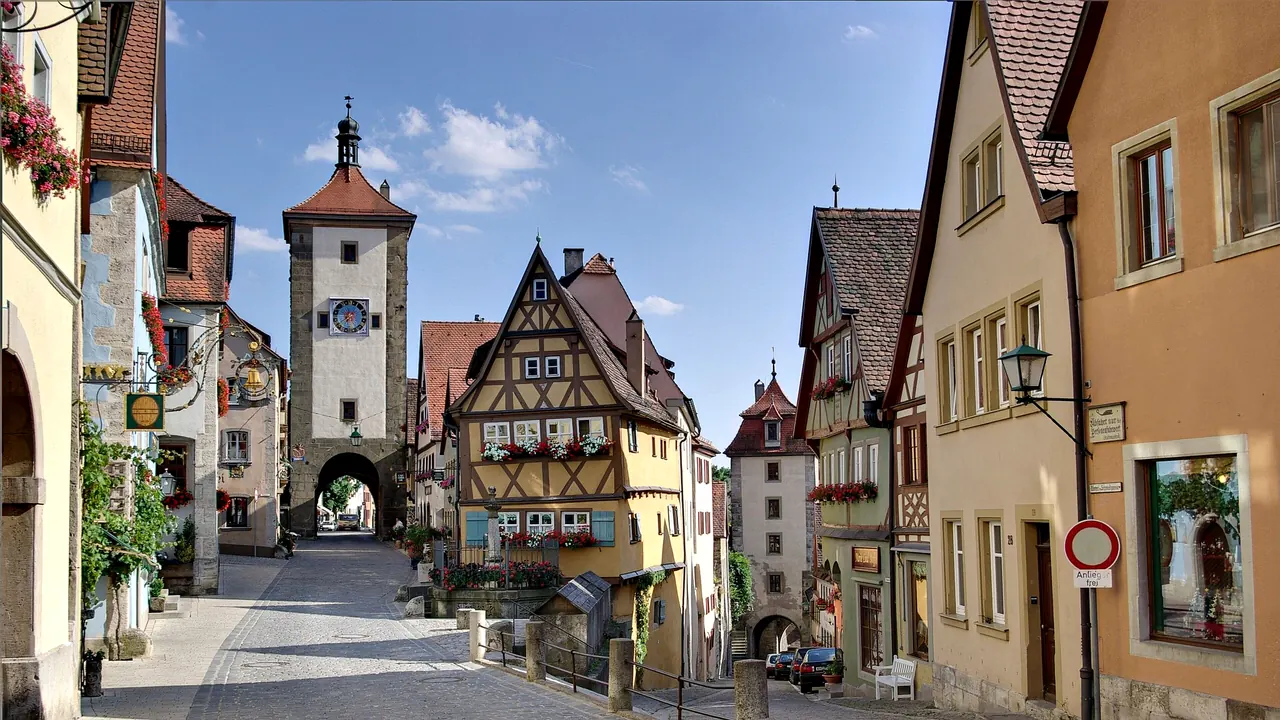
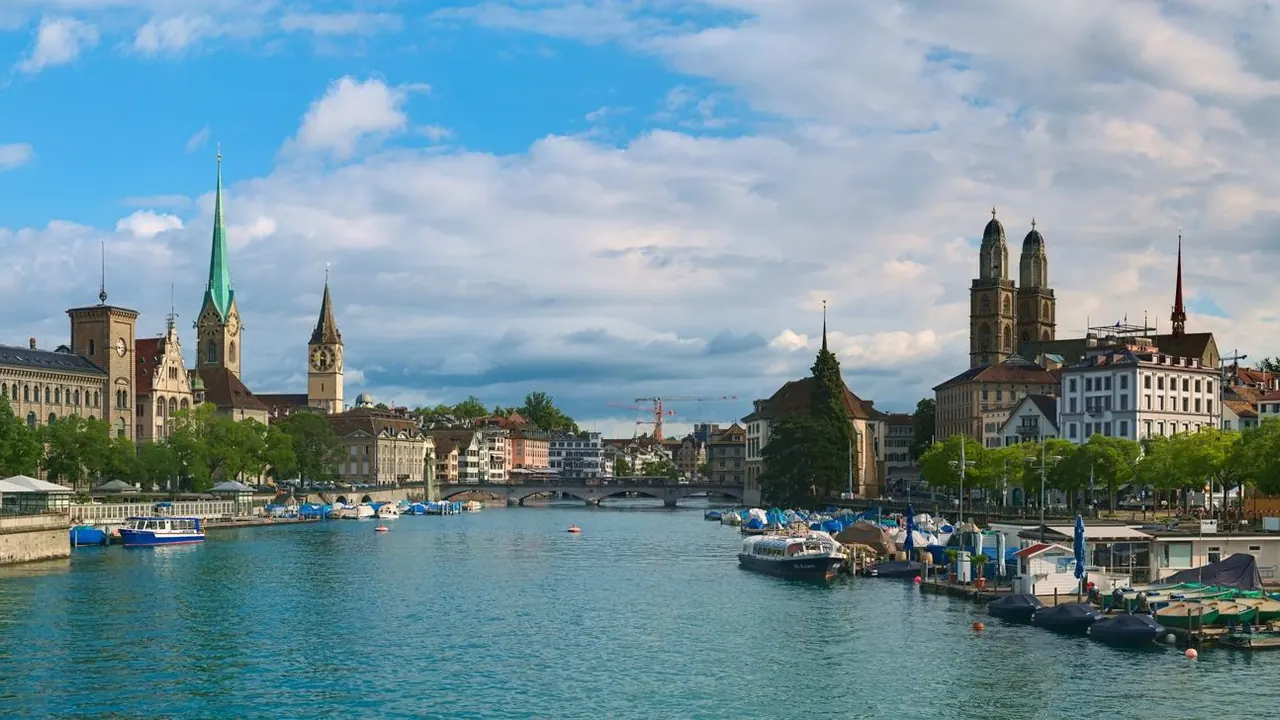
Photos: Rothenburg ob der Tauber by Berthold Werner, Public domain; Zurich by Daniel Kraft, CC BY-SA 3.0, cropped.
Rothenburg ob der Tauber or Zurich?
Our verdict in twelve categories, each scored against the same fixed benchmark cities, and the climate month by month, so you can choose for your trip.
Choose Rothenburg ob der Tauber for
- prices
- culture and sights
Rothenburg ob der Tauber suits a slower, smaller trip built around one remarkable place. It is a walled medieval town you can walk from end to end, with Riemenschneider's altar, the walk along the ramparts and the Romantic Road towns beyond. It works best if you have a car, enjoy Franconian inns and quiet evenings, and have a budget that would struggle with Swiss prices.
Choose Zurich for
- nightlife
- live music and the arts
- nature and the outdoors
Travellers who want more from each day will be happier in Zurich. It has lake swimming in summer and the Alps within an hour. At night there is opera or techno, and trains reach half of Switzerland without a car. The catch is cost, because almost everything is far dearer than in Franconia.
Scoreboard
Twelve categories on one fixed scale from 0 to 100. The shaded stretch is the gap between the two.
Your match
Pick a travel style or drag the sliders, and both match scores follow your weighting.
Wins on prices and culture and sights with your weighting.
Wins on nightlife and live music and the arts with your weighting.
What matters to you?
Category by category
What the scores mean for a trip.
Beaches & swimming
Neither city has a coast, but Zurich makes much more of its water. From June to early September people swim at the lake lidos at Utoquai, Mythenquai and Tiefenbrunnen and at the Limmat river baths, in clear water. You swim from lawns and wooden decks rather than sand.
In Rothenburg a swim means the town's outdoor pool, or about an hour's drive to the grassy bathing areas on the Franconian lakes such as the Altmühlsee. It fills a hot afternoon, but it is not a reason to go.
Food & drink
Zurich has the broader and more polished table. There is veal Geschnetzeltes with rösti, fondue in guild-house dining rooms, serious chocolate and the old tea rooms on Paradeplatz, plus international and fine dining around Kreis 4 and 5. All of it costs a great deal.
Rothenburg's cooking is hearty but limited: Schäufele, bratwurst and dumplings with Silvaner or a local beer. Many of the places around the Marktplatz cater to coach parties. The better meals are in family-run guesthouses and the wine taverns serving Tauber valley wines, and the Schneeball is best treated as a photo rather than a dessert.
Culture & sights
The two are close here, but they offer different things. In Rothenburg the town itself is the main sight: walls you can walk along, the Plönlein, the view from the Rathaus tower and Riemenschneider's Holy Blood Altar in St Jakob's. The Medieval Crime Museum is its one substantial collection.
Zurich is the city for museums, with the Kunsthaus, the Swiss National Museum and the Rietberg, around a compact old town where the Grossmünster and the Chagall windows in the Fraumünster stand out. Choose Rothenburg for atmosphere and Zurich for collections.
Nightlife
Zurich has a real night out, and Rothenburg barely has one. Zurich's clubs in Kreis 4 and 5 and Zurich West run until morning at weekends, and Langstrasse stays loud until late. In summer, evenings move to bars in the lake bathing houses, though the price of a round keeps nights shorter than they might be.
In Rothenburg the evening is a meal, a glass of Franconian wine and the night watchman's tour, and the lanes are quiet by eleven.
Nature & outdoors
Zurich is far stronger outdoors. There is the lake with the Glarus Alps at its far end and the Uetliberg ridge a short train ride away. Rigi, Pilatus and ski slopes such as Flumserberg are within about an hour, so you can choose anything from a lakeside stroll to a high-mountain hike.
Rothenburg's countryside is gentle. Paths drop from the walls into the Tauber valley, the riverside cycle path runs through vineyards, and the rolling Frankenhöhe lies beyond. It is lovely in spring blossom or autumn colour, but there are no mountains or wild country.
Day trips
Rothenburg is a good base, but Zurich is a better one. Rothenburg's strength is the Romantic Road: Dinkelsbühl, Nördlingen inside its meteorite crater, Schwäbisch Hall and Würzburg's Residenz are all about an hour or less by car. The branch line makes the train awkward.
From Zurich, Lucerne, Bern, Basel, St Gallen and the Rhine Falls are each about an hour or less by train. You can fill a varied week without ever needing a car.
Good for families
Zurich is much easier with children. It has the zoo with its Madagascar rainforest hall, shallow lake lidos, boat trips, the Technorama in Winterthur, and trams that take pushchairs.
Rothenburg is like a storybook for a day or two. Children can walk the ramparts, climb the Rathaus tower and follow the night watchman's lantern, and older ones enjoy the grisly exhibits in the Medieval Crime Museum. After that, the cobbles, steep paths and lack of attractions for children send families off on excursions.
Getting around
Both centres are easy to walk, but beyond them the gap is wide. You can cross Rothenburg's old town in fifteen minutes on cobbles, with a steep climb back up from the valley. Anything further means a change of train at Steinach or, more practically, a car.
In Zurich, the trams, S-Bahn trains, funiculars and lake boats all use one ticket, and the airport is a short train ride away. A car would be more of a burden than a help.
Shopping & style
Zurich has far more to offer, all at high prices. There are the watchmakers, jewellers and department stores of Bahnhofstrasse, boutiques and antique shops in the Niederdorf, and design shops under the viaduct arches in Zurich West.
Rothenburg's shops on the Herrngasse and Schmiedgasse sell Christmas ornaments, nutcrackers, cuckoo clocks and Schneeballen all year round, and the town holds one of Germany's most atmospheric Christmas markets. For fashion or everyday shopping there is next to nothing.
Affordability
Rothenburg is much easier on the wallet, even with the tourist premium on rooms inside the walls and meals around the Marktplatz. Sleeping outside the walls or in a nearby village cuts costs further, and walking the town is free.
Zurich is one of the most expensive cities anywhere to visit, from hotel rooms to a casual lunch. Supermarket picnics by the lake, the free lidos and a transport pass help, but only a little.
Live music & performing arts
In Rothenburg, a show usually means history. The costumed Meistertrunk play retells the wine-drinking feat said to have saved the town in the Thirty Years' War, a small open-air theatre runs in summer, and St Jakob's holds organ and choral concerts. On most evenings there is nothing on, and the evening is spent over dinner.
Zurich offers a proper season. The Opernhaus on the lake shore stages opera and ballet, the Tonhalle Orchestra plays in its restored nineteenth-century hall, and the Schauspielhaus is one of the leading German-language theatres. For something less formal, the Rote Fabrik and the venues of Kreis 4 and 5 put on jazz, indie and electronic acts.
Wellness & relaxation
Rothenburg's calm mostly depends on when you go out. In the early morning and after the coach groups leave, the walls and valley paths are almost empty. For proper thermal bathing you drive about an hour to the salt-water pool at Bad Windsheim or to Bad Mergentheim.
Zurich gives you more ways to unwind, and you don't need a car for any of them. Thermal pools fill the stone vaults of the old Hürlimann brewery, and in the colder months the bathing houses on the lake and the Limmat open as saunas, with cold dips between sessions. Baden's hot springs are twenty minutes away by train.
When should you go?
Pick your month. The climate figures are measured averages, not a forecast.
Rothenburg ob der Tauber in July
Zurich in July
Daytime high, °C
Rainfall in the month, mm
Where the figures come from
Rothenburg ob der Tauber's sunshine is measured 27 km from the centre, at Feuchtwangen-heilbronn.
Temperature and rainfall are climate normals, averaged over the years shown. Rothenburg ob der Tauber: 1991-2020 normals, Rothenburg ob der Tauber (0.9 km from centre). Zurich: 1991-2020 normals, Zurich Town / Ville. (2.2 km from centre).
Rothenburg ob der Tauber and Zurich have almost the same temperatures through the year. Daytime highs are around 4°C in December and January, spring and autumn are mild, and both peak at about 25°C in July and August. Neither ever gets too hot for walking. Both are cold in winter with short, grey days, which suits wandering the cobbles or museums in a warm coat.
The real difference is rain. Rothenburg is fairly dry all year, while Zurich is wettest in summer, with 120mm or more a month from May to August, roughly twice Rothenburg's. July and August are still Zurich's swimming months, when the lake lidos are at their best, but expect some wet days. In Rothenburg, May to September is reliably pleasant for walking the walls and the Tauber valley, with the sunniest weather in July. In Zurich, September is the most comfortable time for long walks, once the heavy summer rain has eased.
Which traveller are you?
On a trip on a tight budget, Rothenburg ob der Tauber is the realistic choice. Rooms and meals carry a tourist premium, but nothing like Zurich's prices. Staying in a nearby village, drinking local beer and walking the walls for free keep costs down.
For a food and nightlife trip, Zurich wins clearly. In Kreis 4 and 5 you find international restaurants and clubs that run until morning, and the guild houses serve fondue and Geschnetzeltes. Summer nights continue at lake bars, while Rothenburg is quiet by eleven.
On an outdoors trip, pick Zurich. Lake paths and swimming, the Uetliberg ridge, and Alpine hiking or skiing at Rigi, Pilatus and Flumserberg are all within easy reach of the city. Rothenburg has gentle valley walks and cycling, but no mountains.
Before you go
| Measure | Rothenburg ob der Tauber | Zurich |
|---|---|---|
| Official language | German | French, German, Italian, Romansh |
| Currency | Euro (EUR) | Swiss Franc (CHF) |
| Sockets | CF230 V, 50 Hz | CJ230 V, 50 Hz |
| Driving side | Right | Right |
| Time zone | UTC+1, UTC+2 in summer | UTC+1, UTC+2 in summer |
| Emergency number | 112 | 112 |
| Elevation | 430 m | 408 m |
| Main airport | Nuremberg Airport (NUE)66 km from centre56 non-stop destinations | Zürich Airport (ZRH)9 km from centre226 non-stop destinations |
| Public holidays this year | 12 days | 10 days |
By the numbers
| Measure | Rothenburg ob der Tauber | Zurich |
|---|---|---|
| City population | 11,331 | 440,935 |
| People per km² | 272 | 5,016 |
| Museums within 10 km | 6 | 63 |
| UNESCO World Heritage sites within 50 km | 2 | 1 |
Where else could you go?
Every comparison below shares a destination with this one, so you can follow Rothenburg ob der Tauber or Zurich somewhere new.
- Lucernevs Zurich
- Nurembergvs Rothenburg ob der Tauber
- Baselvs Zurich
- Bambergvs Rothenburg ob der Tauber
- Freiburgvs Zurich
- Interlakenvs Zurich