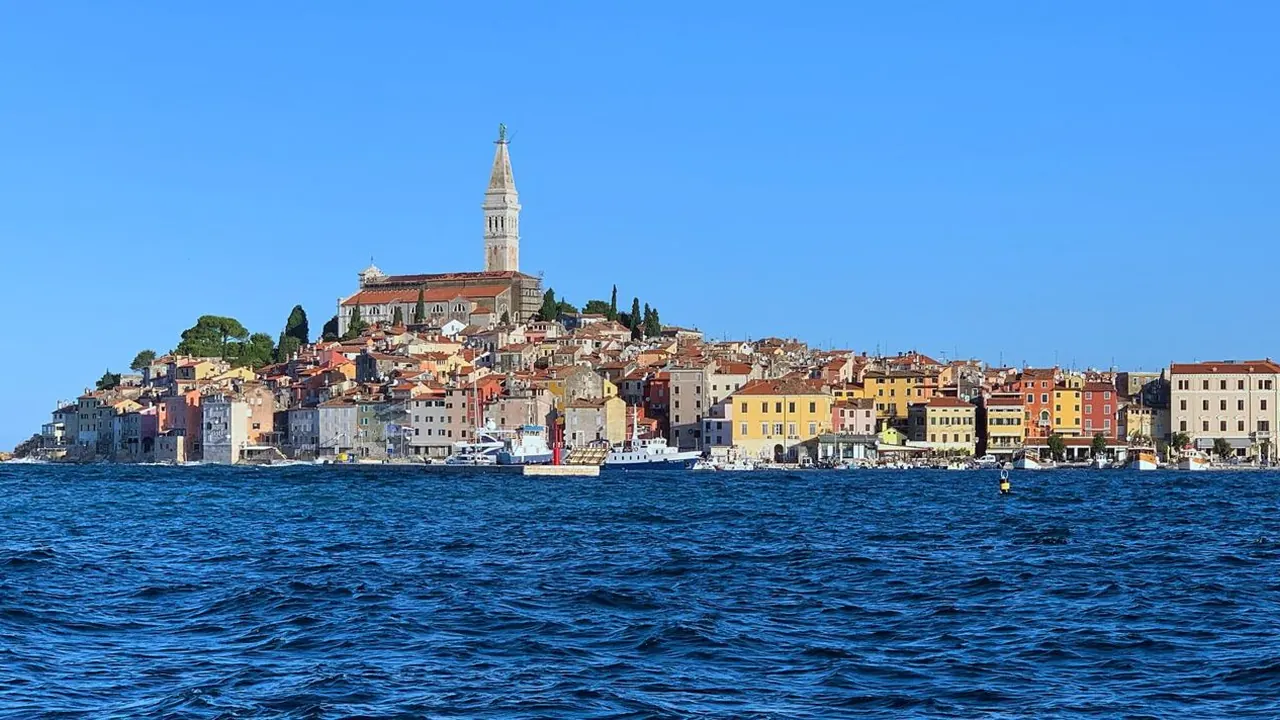
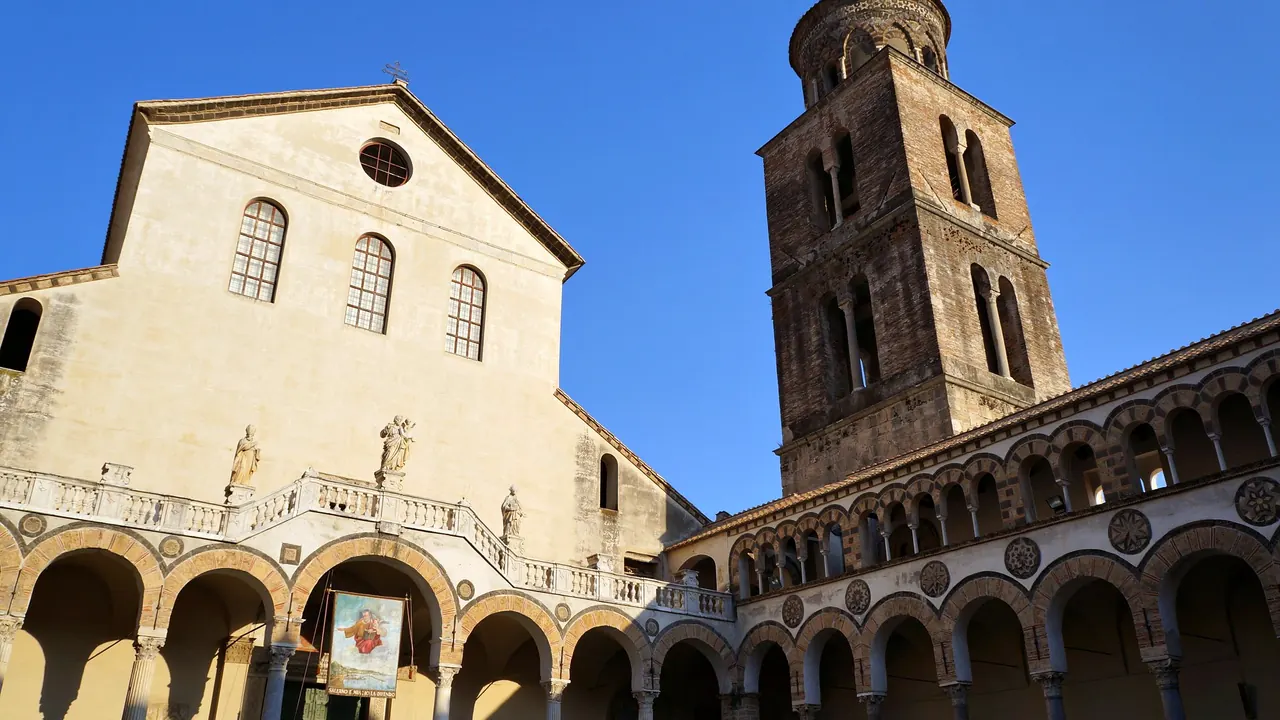
Photos: Rovinj by Vyacheslav Bukharov, CC BY-SA 4.0, cropped; Salerno by Leandro Neumann Ciuffo, CC BY 2.0, cropped.
Rovinj or Salerno?
Our verdict in twelve categories, each scored against the same fixed benchmark cities, and the climate month by month, so you can choose for your trip.
Choose Rovinj for
- wellness
- beaches
Rovinj suits a slow, compact vacation by clear water. Couples and families who want to walk out of a car-free old town onto the swimming rocks, spend afternoons in the pines of the Golden Cape and finish with a long dinner on the harbour will find it easier to settle into. It is quieter, prettier at close range and better for doing very little, though it costs more in summer and you need a car to see the rest of Istria.
Choose Salerno for
- live music and the arts
- day trips
- prices
Salerno is the better base for travellers who want to see a lot. Pompeii, Paestum, Naples and the Amalfi Coast are all within reach by train or ferry. The city also eats better, stays livelier in the evening, has a real opera house and is noticeably cheaper to stay in. Its own seafront swimming is ordinary, but that matters less when the region around it is this full.
Scoreboard
Twelve categories on one fixed scale from 0 to 100. The shaded stretch is the gap between the two.
Your match
Pick a travel style or drag the sliders, and both match scores follow your weighting.
Wins on wellness and beaches with your weighting.
Wins on live music and the arts and day trips with your weighting.
What matters to you?
Category by category
What the scores mean for a trip.
Beaches & swimming
Rovinj has the better swimming on the doorstep. Very clear water runs past kilometres of limestone ledges, pebble coves and bathing platforms through the Golden Cape park, and people step in straight off the stones below the old town walls. Taxi boats reach quieter coves on St Catherine and Red Island. The price is that there is no sand, and water shoes are a must.
Salerno's town beaches are grey sand, fine for a quick dip but in murkier water near the port. Its best beaches take an outing: the long sandy lidos towards Paestum, or the bright pebbly coves of the Amalfi Coast. If you want sand, choose Salerno. If you want clear sea a few steps from your room, Rovinj is better.
Food & drink
Salerno eats better, especially day to day. Buffalo mozzarella comes in fresh from the plain towards Paestum, colatura comes from Cetara next door, and the old town lanes are full of friggitorie, wood-fired pizza and sfogliatelle at prices locals pay.
Rovinj's Istrian cooking is good: truffle pasta, scampi buzara, peppery olive oil and Malvazija. The harbour menus, though, are written for visitors and there is little cheap everyday food. Its best meals are often a drive away in the hinterland konobas.
Culture & sights
Neither town is a heavyweight, but Salerno has more substance. Its Norman cathedral holds the relics of Saint Matthew in an ornate crypt, the Giardino della Minerva recalls Europe's first medical school, and the Arechi Castle overlooks the gulf. Seeing it all fills a day or two.
In Rovinj the sight is the townscape itself. Pastel Venetian houses climb to St Euphemia, whose bell tower you can climb, and the Batana House tells the story of the local fishing boats. An afternoon covers it.
Nightlife
Salerno has more going on after dark. On weekends and all summer, young locals fill the squares around Largo Campo and Via dei Mercanti until late, and the seafront carries the evening passeggiata. Clubbing still means the coast or Naples.
A night in Rovinj is a long dinner and a drink on the rocks at sunset, with a few waterfront bars and the odd late venue in high season. The old town is mostly quiet by midnight, and outside summer it goes very still.
Nature & outdoors
Salerno has the grander landscape. The Amalfi Coast's cliffs and lemon terraces begin just west of the city, and old mule tracks such as the Path of the Gods and the Valle delle Ferriere make serious walking. To the south, the Cilento adds river gorges and wild headlands.
Rovinj's outdoors is gentler and closer to hand: flat gravel paths through the Golden Cape, kayaking and diving around the low islands, boats up the green Lim Fjord and quiet vineyard roads inland. It suits cyclists and easy walkers, not mountain hikers.
Day trips
Salerno is one of the best bases in southern Italy for day trips. Paestum's Greek temples and Pompeii are each about half an hour away by train, and ferries reach Amalfi and Positano. Naples, Herculaneum, Caserta and Vietri's ceramic workshops are all easy days out without a car.
Rovinj has a good list too: Pula's Roman amphitheatre, Porec's mosaic basilica, the hill towns of Motovun and Groznjan, and even Piran and Trieste across the border. But almost all of it needs a car, and there are fewer famous names.
Good for families
The two are about level for children, but the vacations look different. Rovinj suits a resort-style stay, with campsites and hotels that have pools and playgrounds and shaded, pushchair-friendly paths in the Golden Cape. On the other hand, the shore is rock and the old town is steep, slippery cobbles.
Salerno's strengths are its flat, car-free promenade with playgrounds, and the shallow sandy beaches south of town that suit small swimmers. Its weak points are an old town of steps, winding coast roads that test carsick children, and no zoo or aquarium.
Getting around
Salerno is easier once you leave town. The station, seafront, shopping street and old town make one walkable strip, regional trains run direct to Naples, Pompeii and Paestum, and summer ferries handle the Amalfi Coast, so most visitors never need a car.
Rovinj is even simpler within the town, where the car-free old town and shore path put everything within walking distance. But there is no railway, and the hill towns, wineries and much of the coast are realistically reached only by driving.
Shopping & style
Salerno offers more to browse. Corso Vittorio Emanuele is a long pedestrian street of Italian clothing stores that is at its busiest during the evening stroll, and hand-painted majolica from nearby Vietri makes a distinctive thing to take home.
Rovinj has no fashion streets at all. Its charm is the lane of Grisia, lined with small galleries and artists' studios, plus regional produce such as truffles, olive oil and lavender. Choice thins out once summer ends.
Affordability
Salerno is the cheaper stay. Its hotels cost far less than the cliff villages along the coast, and trains, buses and everyday meals are priced for residents. The extras that add up are ferries, sunbeds at the lidos and entry to the big archaeological sites.
Rovinj ranks among the dearer stops on the Croatian coast, especially in July and August, when old town rooms and harbourside fish sold by weight push costs up. Private apartments, campsites and travelling in late spring or September keep it manageable.
Live music & performing arts
Salerno has a real performing arts life in the gilded Teatro Verdi, which stages opera, concerts and ballet through its season. In summer, the Ravello Festival's cliff-top concerts are close enough for a special evening.
Rovinj offers little beyond the summer: some classical concerts in St Euphemia, music on the squares and the occasional performance of bitinada, the local unaccompanied singing. Bigger summer concerts mean a drive to Pula's arena.
Wellness & relaxation
Rovinj is the more restful choice. The resort hotels along the Golden Cape have well-equipped spas that outside guests can use, and in May, June and September the town settles into a gentle routine of pines, long lunches and late swims. High summer crowds are the drawback.
Salerno has hotel spas and the sulphur pools of Contursi Terme an hour inland. Its calm comes from sunset walks on the palm-lined promenade, but traffic and port noise mean it is never really a retreat.
When should you go?
Pick your month. The climate figures are measured averages, not a forecast.
Rovinj in July
Salerno in July
Daytime high, °C
Rainfall in the month, mm
Where the figures come from
Rovinj's temperatures are measured 64 km from the centre, at Trieste.
Rovinj has no rain gauge within 25 km of the centre, so its rainfall comes from a gridded climate dataset read at the city rather than from a gauge further away.
Salerno's temperatures are measured 71 km from the centre, at Grazzanise.
Salerno has no rain gauge within 25 km of the centre, so its rainfall comes from a gridded climate dataset read at the city rather than from a gauge further away.
Temperature and rainfall are climate normals, averaged over the years shown. Rovinj: 1991-2020 normals, Trieste (63.7 km from centre). Salerno: 1991-2020 normals, Grazzanise (71.3 km from centre).
Both towns are at their best for the sea from June to September. In Rovinj, high summer brings warm, sunny days and the Adriatic reaches about 26°C in August. Rain is spread fairly evenly through the year, then builds through autumn to a wet November of around 102mm. Winters are cool and grey, so outside the warm months it is a place for quiet walks rather than swimming.
Salerno runs hotter and sunnier. July and August reach about 31°C with almost no rain, which is good for the beach but heavy going at Pompeii or Paestum at midday. The sea stays warm longer than in Rovinj, still around 22°C in October, but the rain comes back hard that month and peaks at about 154mm in November. Winters are milder than in Istria but wet. For sightseeing on foot, late April to early June and the end of September suit Salerno best. Rovinj is most pleasant in May, June and September.
Which traveller are you?
On a culture and arts trip, Salerno is the clear choice. The Norman cathedral and the Teatro Verdi are in town, and Pompeii, Paestum, Herculaneum and Naples are easy train rides away. Rovinj offers a lovely old town but little more to fill the days.
For a trip on a tight budget, Salerno works out cheaper. Rooms cost what a working city charges, pizzerias and bakeries charge what locals pay, and regional trains reach the big sights without a hire car. Rovinj in summer prices like a sought-after resort.
On a relaxing and wellness trip, Rovinj makes it easier to unwind. You can take an early swim off the rocks, walk through the pine shade of the Golden Cape and use the well-equipped resort hotel spas, all close by. Salerno's traffic and port noise make it a less restful base.
Before you go
| Measure | Rovinj | Salerno |
|---|---|---|
| Official language | Croatian | Italian |
| Currency | Euro (EUR) | Euro (EUR) |
| Sockets | CF230 V, 50 Hz | CFL230 V, 50 Hz |
| Driving side | Right | Right |
| Time zone | UTC+1, UTC+2 in summer | UTC+1, UTC+2 in summer |
| Emergency number | 112 | 112 |
| Elevation | 0 m | 4 m |
| Main airport | Pula Airport (PUY)31 km from centre34 non-stop destinations | Naples International Airport (NAP)46 km from centre131 non-stop destinations |
| Public holidays this year | 14 days | 13 days |
By the numbers
| Measure | Rovinj | Salerno |
|---|---|---|
| City population | 12,968 | 127,186 |
| People per km² | - | 2,123 |
| Museums within 10 km | 1 | 9 |
| UNESCO World Heritage sites within 50 km | 1 | 5 |
| Swim season, months above 21 °C | 4 months | 5 months |
Where else could you go?
Every comparison below shares a destination with this one, so you can follow Rovinj or Salerno somewhere new.