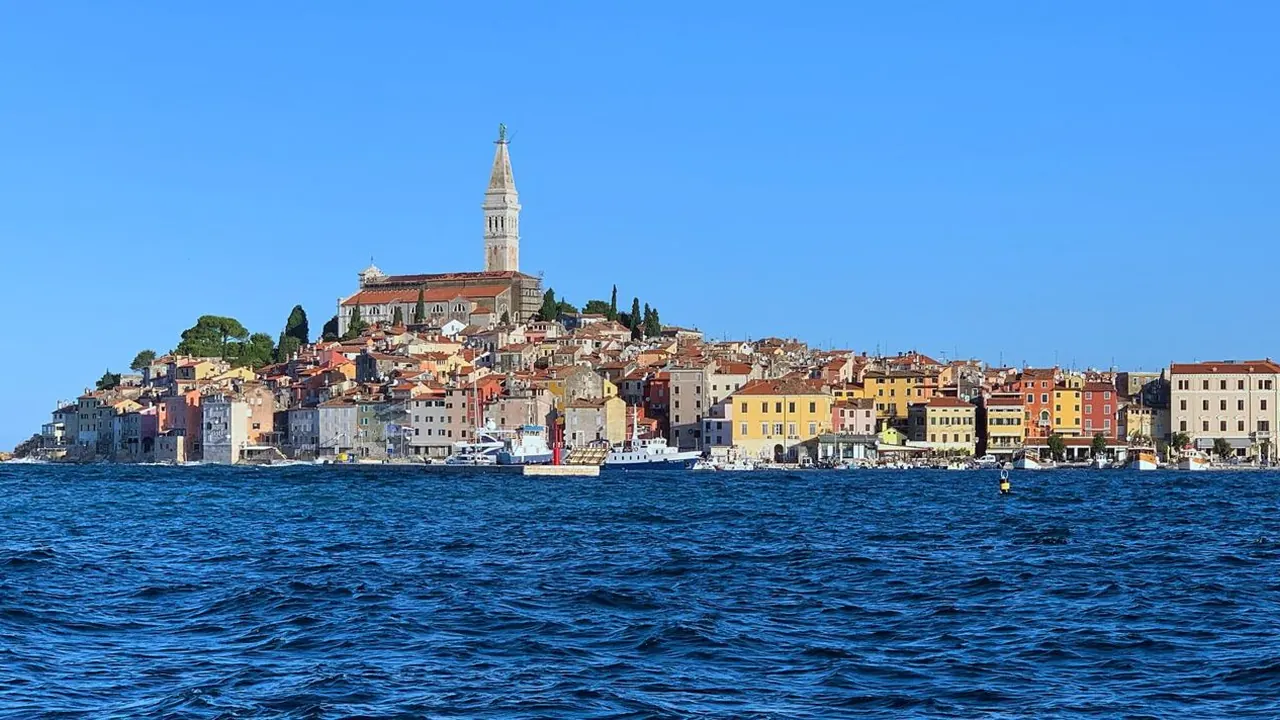
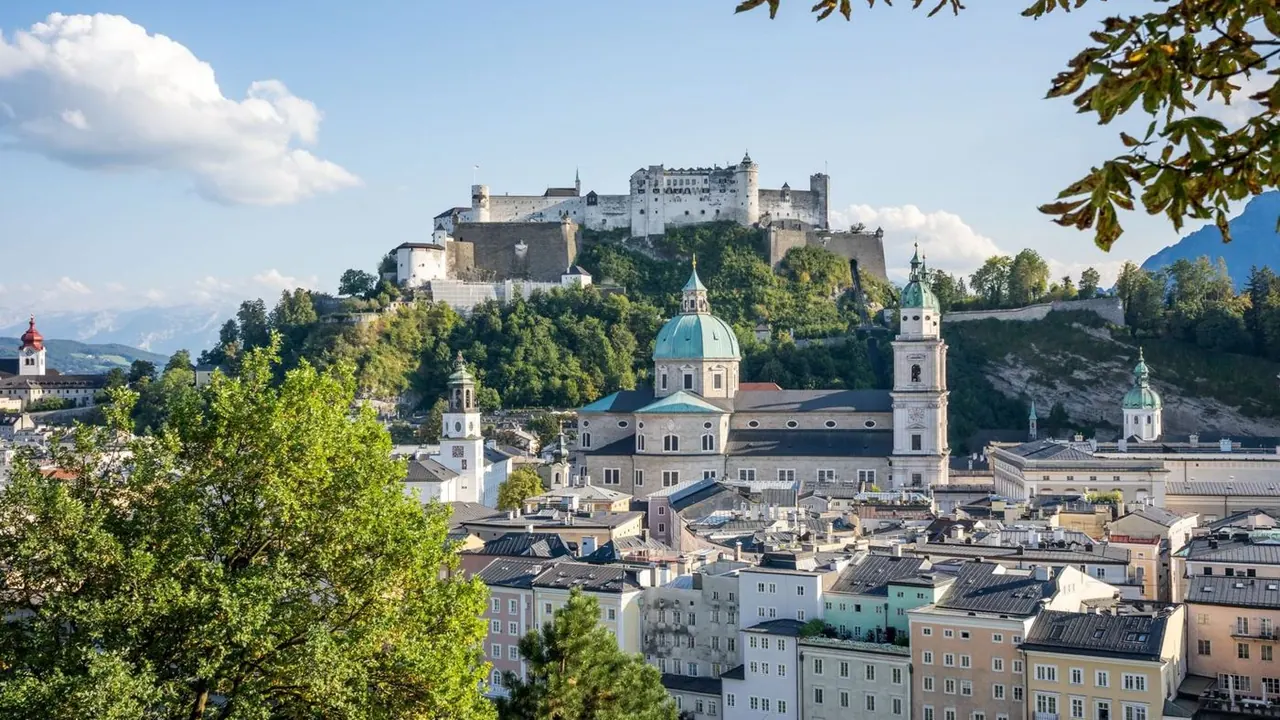
Photos: Rovinj by Vyacheslav Bukharov, CC BY-SA 4.0, cropped; Salzburg by Leonhard Niederwimmer, Pexels License.
Rovinj or Salzburg?
Our verdict in twelve categories, each scored against the same fixed benchmark cities, and the climate month by month, so you can choose for your trip.
Choose Rovinj for
- beaches
- food and drink
- prices
Rovinj is the choice for a summer by the sea. Expect a week of swimming off clear limestone ledges, long fish dinners on the harbour and evenings in the pines of the Golden Cape. It suits couples and anyone who wants a slow vacation of swims, lunches and sunsets, with Roman Pula and the Istrian hill towns for a change of scene if you have a car.
Choose Salzburg for
- live music and the arts
- culture and sights
- nature and the outdoors
Pick Salzburg if you want more to do each day. Its Baroque old town, fortress and Mozart houses give it the sights Rovinj lacks, and its festivals and nightly concerts make it a serious place for music. The Alps, the Salzkammergut lakes and Berchtesgaden start almost at the edge of town. It is also easier with children and without a car, though swimming means a lake rather than the sea.
Scoreboard
Twelve categories on one fixed scale from 0 to 100. The shaded stretch is the gap between the two.
Your match
Pick a travel style or drag the sliders, and both match scores follow your weighting.
Wins on beaches and food and drink with your weighting.
Wins on live music and the arts and culture and sights with your weighting.
What matters to you?
Category by category
What the scores mean for a trip.
Beaches & swimming
Rovinj has the sea on its doorstep. Clear Adriatic water laps limestone ledges and pebble coves along the Golden Cape park, and taxi boats run to quieter coves on St Catherine and Red Island. It is rock rather than sand, so pack water shoes.
Salzburg has no sea, and its river is too cold to swim in, so bathing means a trip to Fuschlsee, Wolfgangsee or Mondsee, where you get in from lawns and jetties. That makes a nice outing on a hot day, whereas in Rovinj swimming shapes the whole day.
Food & drink
Neither has a wide range of food, but they eat very differently. Rovinj means fish and shellfish, scampi buzara, truffle pasta and Istrian olive oil and wine, and the best meals are often at family konobas out in the countryside.
Salzburg's cooking is heavier and Alpine: schnitzel, Kasnocken and the peaked Salzburger Nockerl. Its strengths are the coffee houses and the chestnut-shaded garden of the monastery brewery in Mülln. In both towns, skip the old-town menus aimed at passing visitors.
Culture & sights
Rovinj's old town is lovely to wander. It fills a former island and climbs to St Euphemia, but once you have seen the bell tower and the Batana House, a slow afternoon covers it.
Salzburg offers far more: a UNESCO-listed Baroque centre with the cathedral and the Residenz, the Hohensalzburg fortress, Mirabell, the Mozart houses, the catacombs of St Peter and the trick fountains of Hellbrunn. It takes two or three days rather than an afternoon.
Nightlife
Both towns are quiet by midnight, and neither is for clubbing. In Rovinj, evenings mean a drink on the rocks at sunset and a few waterfront cocktail and wine bars in summer, and the town largely shuts down outside the season.
Salzburg's best nights are in the beer halls, at long wooden tables shared with locals, with student pubs along Rudolfskai during term. Clubbers from Salzburg head to Munich, and those from Rovinj to the bigger party spots along the coast.
Nature & outdoors
Rovinj's outdoors is gentle. There are cedar and pine paths in the Golden Cape, kayaking and diving among the low islands, and the steep green channel of the Lim Fjord a short drive north.
Salzburg sits at the foot of the Alps. It has wooded ridges inside the city, a cable car up the Untersberg to about 1,800m, paragliding on the Gaisberg and the Königssee half an hour away. For mountain hiking, big views and winter skiing, it is in another league.
Day trips
Both make good bases. From Rovinj you can reach Pula's Roman amphitheatre, the mosaics of the basilica in Porec and the hill towns of Motovun and Groznjan, with Piran and Trieste further away, but almost all of it needs a car.
Salzburg has the edge in range and access. Hallstatt and the Salzkammergut lake villages, the salt mines of Hallein and Berchtesgaden and the clifftop fortress at Werfen are all within reach. Munich and Linz are a train ride away, so visitors without a car still have plenty of choice.
Good for families
Rovinj works as a relaxed resort stay with children. There are boat trips to the islands, pools and playgrounds at the big campsites, and flat, shady paths in the Golden Cape. On the other hand, the rocky shore needs water shoes and close watching, and there is little in town made for children.
Salzburg has more to fill the days: the trick fountains at Hellbrunn with the zoo beside them, the hands-on Haus der Natur, the fortress funicular and the marionettes, plus salt mines with miners' slides just outside town. In both towns, steep cobbles make hard work of a pushchair.
Getting around
Both centres are compact and largely car-free, so you can walk everywhere in town. Rovinj stops there: there is no railway, so the hill towns, wineries and much of the coast mean hiring a car.
Salzburg adds trolleybuses across the city, flat riverside cycle paths and direct trains to Munich and Vienna. Only the lake villages really call for a car.
Shopping & style
Rovinj's shopping is mostly truffles, olive oil, wine and lavender, plus the artists' studios and small galleries along Grisia, and little beyond that.
Salzburg has more substance. There is Getreidegasse with its wrought-iron guild signs, Tracht workshops making dirndls and loden jackets to measure, the farmers' market by the Andräkirche and the old Christmas market on Domplatz. Neither is a place for fashion or luxury shopping.
Affordability
Neither is cheap, but the costs fall at different times. Rovinj is expensive mainly in July and August, when harbour restaurants and old-town rooms charge for the view. Late spring, September, private apartments and the big campsites all bring the cost down.
Salzburg is expensive all year and tightest around the summer festival and the Advent markets. The ways to save are staying across the river, eating in the inns of the outer districts and using the city card for museums and transport.
Live music & performing arts
Rovinj has summer concerts in St Euphemia, music on the squares and the occasional bitinada singing, and almost nothing the rest of the year. For a big show, you drive to the arena in Pula.
Salzburg takes music as seriously as any city in Europe. The Salzburg Festival fills the Festspielhaus and the Felsenreitschule each summer, Mozart Week and the Easter Festival add two more seasons, and the Mozarteum, the Landestheater, the Marionette Theatre and the chamber concerts at Mirabell keep the rest of the year busy.
Wellness & relaxation
Rovinj relaxes you through its pace: long lunches, late swims and evening walks in the pines in May, June and September, plus spa areas at the resort hotels. In high summer, though, you have to leave the centre to find calm.
Salzburg offers quiet walks on the Mönchsberg and in the Mirabell gardens, the Paracelsus Bad in the city park, and a real bathing culture close by, in the brine baths of Bad Reichenhall and the thermal springs of the Gastein valley.
When should you go?
Pick your month. The climate figures are measured averages, not a forecast.
Rovinj in July
Salzburg in July
Daytime high, °C
Rainfall in the month, mm
Where the figures come from
Rovinj's temperatures are measured 64 km from the centre, at Trieste.
Rovinj has no rain gauge within 25 km of the centre, so its rainfall comes from a gridded climate dataset read at the city rather than from a gauge further away.
Temperature and rainfall are climate normals, averaged over the years shown. Rovinj: 1991-2020 normals, Trieste (63.7 km from centre). Salzburg: 1991-2020 normals, Salzburg (3.4 km from centre).
Rovinj's beach season runs from June to September. In high summer afternoons reach about 29°C, the sea warms to 26°C by August, and July and August are the sunniest months, with July only slightly ahead. September is still good for swimming, but rain picks up from then on, and November is the wettest month at 102mm. Winter is mild enough for walking the lanes but grey and quiet.
Salzburg's year runs the other way. Summer is pleasantly warm for walking and hiking, but June to August are also its wettest months, with about 168mm in June, so expect showers in the hills. May and September are the most comfortable months for the city and the trails. Winter is properly cold, with highs near 3°C in January and snow often reaching the town. In October, when Rovinj turns damp, Salzburg is barely the drier of the two.
Which traveller are you?
For a beach and sun trip, Rovinj is the clear winner. You can swim in clear Adriatic water from the rocks and coves of the Golden Cape and the islands, and the summers are long and sunny. In Salzburg, swimming means a drive to the lakes for a short season.
On a culture and arts trip, Salzburg is the obvious choice. The prince-archbishops' Baroque old town, Hohensalzburg and the Mozart houses fill two or three days. The festival, the opera and the evening concerts add a music life that Rovinj cannot come close to.
For an outdoors trip, Salzburg has the bigger landscape: the Untersberg cable car, hikes on the Gaisberg, Berchtesgaden and the Salzkammergut lakes. Rovinj suits gentler activity, such as forest paths, sea kayaking and diving around the archipelago, but it has no mountains.
Before you go
| Measure | Rovinj | Salzburg |
|---|---|---|
| Official language | Croatian | German, Austrian Sign Language |
| Currency | Euro (EUR) | Euro (EUR) |
| Sockets | CF230 V, 50 Hz | CF230 V, 50 Hz |
| Driving side | Right | Right |
| Time zone | UTC+1, UTC+2 in summer | UTC+1, UTC+2 in summer |
| Emergency number | 112 | 112 |
| Elevation | 0 m | 424 m |
| Main airport | Pula Airport (PUY)31 km from centre34 non-stop destinations | Salzburg Airport (SZG)3 km from centre64 non-stop destinations |
| Public holidays this year | 14 days | 16 days |
By the numbers
| Measure | Rovinj | Salzburg |
|---|---|---|
| City population | 12,968 | 155,021 |
| People per km² | - | 2,360 |
| Museums within 10 km | 1 | 38 |
| UNESCO World Heritage sites within 50 km | 1 | 3 |
| Swim season, months above 21 °C | 4 months | - |
Where else could you go?
Every comparison below shares a destination with this one, so you can follow Rovinj or Salzburg somewhere new.