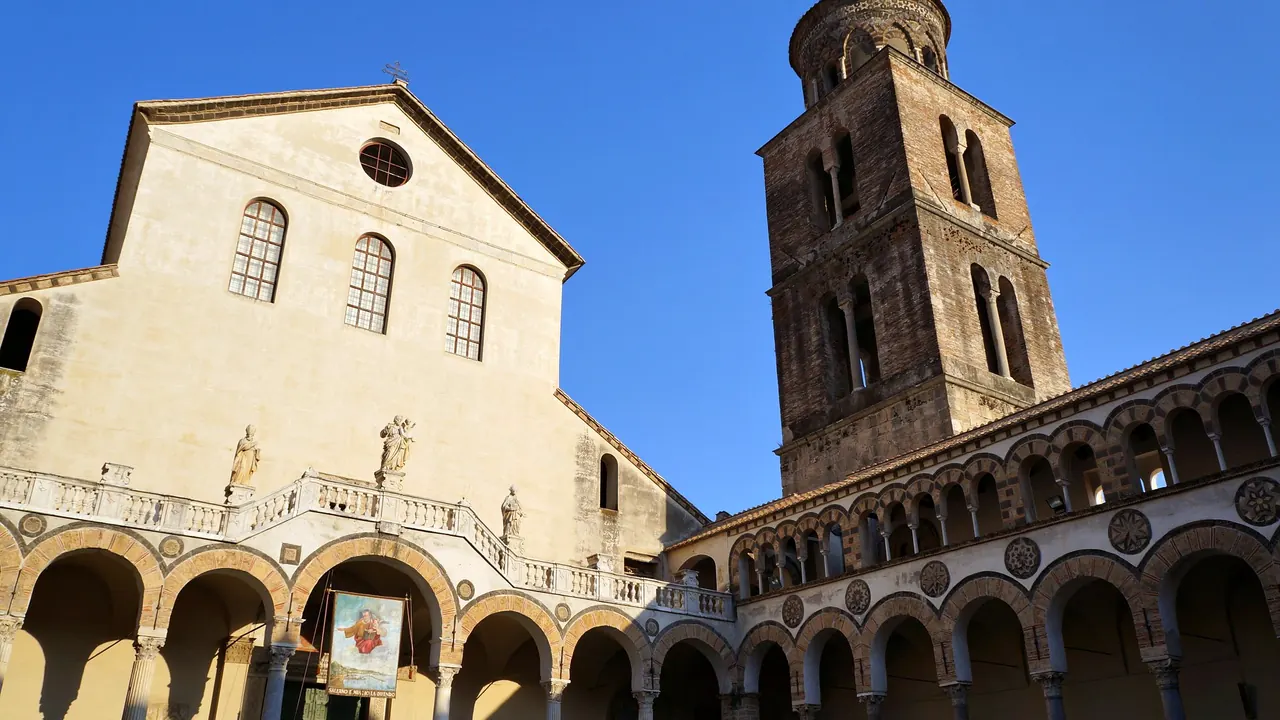
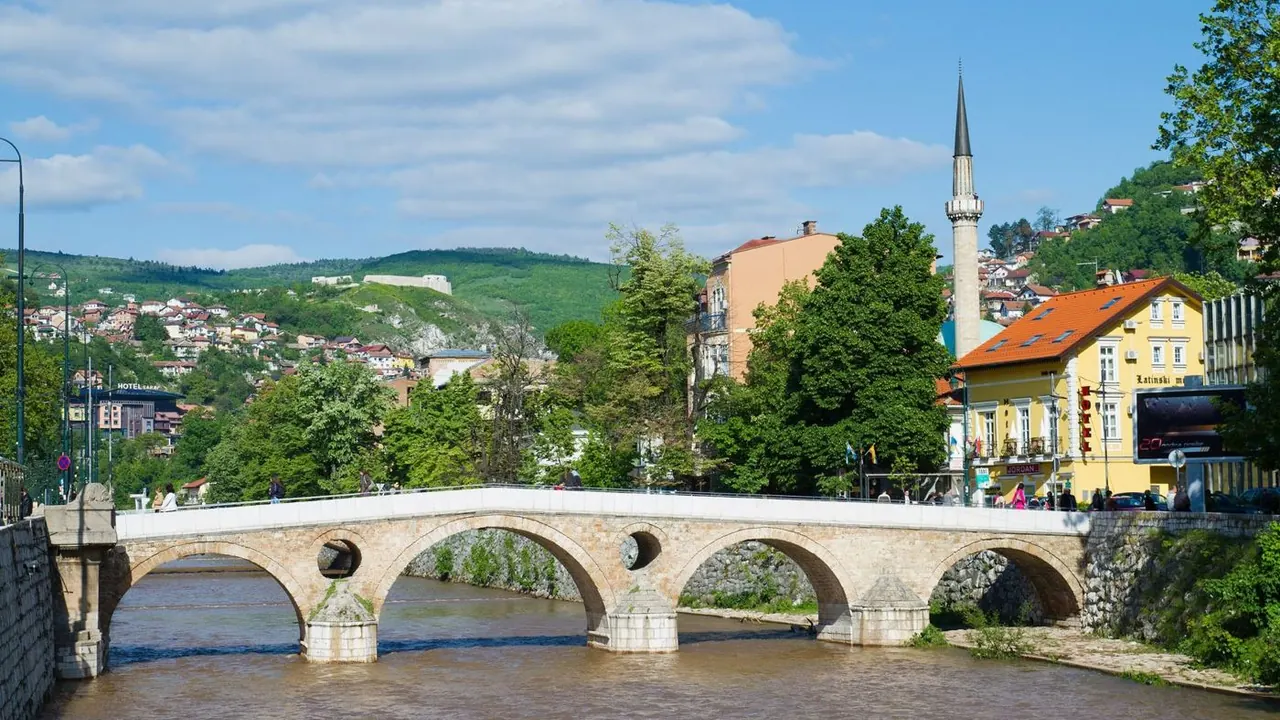
Photos: Salerno by Leandro Neumann Ciuffo, CC BY 2.0, cropped; Sarajevo by Tumi-1983, CC0.
Salerno or Sarajevo?
Our verdict in twelve categories, each scored against the same fixed benchmark cities, and the climate month by month, so you can choose for your trip.
Choose Salerno for
- beaches
- day trips
- families
Salerno suits a summer trip that mixes the sea with sightseeing. Trains and ferries put the Amalfi Coast, Pompeii and the temples of Paestum within easy reach. There are sandy beaches to the south and a flat seafront promenade that works for children, and the city is a much cheaper base than the cliff villages along the coast.
Choose Sarajevo for
- prices
- culture and sights
- wellness
Sarajevo is for travellers who want the city itself to be the story. The Ottoman bazaar, the Austro-Hungarian avenues and the places tied to 1914 and the 1990s siege all lie within a short walk, the Olympic mountains rise straight behind, and money goes a long way. It suits curious adults better than beach lovers or young families, because there is no sea within a day's reach.
Scoreboard
Twelve categories on one fixed scale from 0 to 100. The shaded stretch is the gap between the two.
Your match
Pick a travel style or drag the sliders, and both match scores follow your weighting.
Wins on beaches and day trips with your weighting.
Wins on prices and culture and sights with your weighting.
What matters to you?
Category by category
What the scores mean for a trip.
Beaches & swimming
Salerno is a seaside city. Its own grey-sand beaches stretch east of the centre for a quick swim, and the wide sandy shore towards Paestum and the clear pebbly coves of the Amalfi Coast are a short trip away.
Sarajevo sits in an inland mountain valley, and the coast is too far for a day out. Swimming there means cold rivers, Jablanica lake or a pool. If the sea matters to your trip, Salerno is the only real choice of the two.
Food & drink
Both cities eat well, but the food is very different. Salerno has Campanian cooking built on the sea and the land around it: pasta with clams, fried seafood, wood-fired pizza, buffalo mozzarella made that morning and Cetara's colatura, with Fiano and Aglianico in the glass.
Sarajevo's food is Ottoman-Balkan comfort food: ćevapi in somun bread, burek sold by weight, slow-cooked lamb, and Bosnian coffee taken slowly with rahat lokum. It is distinctive but narrower, and Salerno gives you more variety over a week.
Culture & sights
Sarajevo has more to see within the city itself. In a few streets you pass from the mosques and covered markets of Baščaršija to Austro-Hungarian avenues with Orthodox and Catholic cathedrals and the Old Synagogue. The Latin Bridge, the Tunnel of Hope and the War Childhood Museum add a history that stays with you.
Salerno's own heritage is medieval and modest: the Norman cathedral with Saint Matthew's crypt, the Giardino della Minerva and the castle above the gulf. It takes a day or two. The great ancient sites lie outside the city.
Nightlife
Neither city is built for clubbing, and evenings in both are sociable rather than wild. In Salerno, young locals fill the old town squares around Largo Campo with wine bars and pubs, and the seafront passeggiata with gelato sets the pace. For bigger nights you head to the coastal clubs in summer or to Naples.
Sarajevo starts earlier, in café-bars that get louder through the afternoon. At weekends a student crowd keeps the cellar bars and small clubs going late. Drinks there are cheaper, and the night often ends over rakija.
Nature & outdoors
Salerno's outdoors runs down to the sea, while Sarajevo's climbs into the mountains. From Salerno you reach the Amalfi Coast's limestone cliffs and lemon terraces, walks such as the Path of the Gods, and boat and kayak trips along the shore. The Cilento's gorges and headlands lie to the south.
Sarajevo is ringed by peaks. A cable car climbs Trebević straight from the Old Town, and the Olympic mountains of Jahorina and Bjelašnica have winter skiing and summer ridge walks, with the shepherds' village of Lukomir above the Rakitnica canyon. Pick Salerno for coast and water, Sarajevo for snow and high meadows.
Day trips
Day trips are Salerno's greatest strength. Paestum's Greek temples and Pompeii are each about half an hour away by train, ferries reach Amalfi and Positano in season, and Naples, Herculaneum and Caserta are all easy days out. Most of it needs no car.
Sarajevo has one outstanding trip: the scenic train along the Neretva gorge to Mostar, which you can combine with Blagaj and Počitelj. Travnik and the bridge at Višegrad are rewarding too, but the roads are slow, and most outings work best by car or tour.
Good for families
Salerno is the easier city with children. Its long car-free promenade has playgrounds and gardens, the sandy beaches to the south are shallow, and the Luci d'Artista lights make a December visit special. The steps of the old town and the winding Amalfi roads are the main drawbacks.
Sarajevo welcomes children warmly, and the Trebević cable car, the carriages to Vrelo Bosne and the small zoo make good outings. But its main sights are about history and war, and the grill smoke and winter smog are hard on small lungs.
Getting around
Salerno's station, shopping street, seafront and old town make up one strip you can walk end to end, and the trips that matter leave from it. Regional trains run direct to Naples, Pompeii and Paestum, and in summer the ferries beat the crowded coastal buses.
Sarajevo's sights follow the valley floor, and a tram dating back to the nineteenth century runs from Baščaršija west to Ilidža, with cheap taxis for everything else. Away from that line the buses and the steep hillside streets are harder to manage, and the airport and the mountains are best reached by taxi or tour.
Shopping & style
Neither city is a shopping destination, but each has something worth taking home. In Salerno you browse Italian chains along Corso Vittorio Emanuele, and the best buys come from nearby: Vietri's painted majolica, limoncello from the coast and colatura from Cetara.
Sarajevo's shopping is mostly in its bazaar. Coppersmiths on Kazandžiluk hammer out coffee sets, and the Bezistan sells kilims and filigree. Much of it is souvenir stock, so it pays to look closely.
Affordability
Sarajevo is the cheaper of the two by some way. Street food, sit-down meals, museum tickets, trams and central hotels all cost well below Western European levels.
Salerno is good value for this part of Italy, with local prices in its trattorias and rooms much cheaper than in the coastal villages. In high summer, though, ferries, lido sunbeds and entry to the archaeological sites push costs up.
Live music & performing arts
Each city has one handsome historic stage and a small programme around it. Salerno's gilded Teatro Verdi puts on opera, concerts and ballet, and in summer the Ravello Festival's cliff-top concerts make a special evening out.
Sarajevo's National Theatre and Philharmonic play through the season, and the city livens up during its festivals, with MESS theatre in autumn and jazz in November. Listen out for sevdah, Bosnia's own slow and melancholy love songs, in traditional restaurants and small clubs.
Wellness & relaxation
Sarajevo has a slight edge here, because the thermal springs at Ilidža, used since Roman times, are at the end of the tram line. The shady streams of Vrelo Bosne are close by, and the long Bosnian coffee habit slows the day down, though winter smog spoils the calm.
Salerno's nearest thermal pools are about an hour inland at Contursi Terme. Its restful side is the palm-lined seafront at sunset and the quiet upper lanes of the old town in the morning.
When should you go?
Pick your month. The climate figures are measured averages, not a forecast.
Salerno in July
Sarajevo in July
Daytime high, °C
Rainfall in the month, mm
Where the figures come from
Salerno's temperatures are measured 71 km from the centre, at Grazzanise.
Salerno has no rain gauge within 25 km of the centre, so its rainfall comes from a gridded climate dataset read at the city rather than from a gauge further away.
Temperature and rainfall are climate normals, averaged over the years shown. Salerno: 1991-2020 normals, Grazzanise (71.3 km from centre). Sarajevo: 1991-2020 normals, Sarajevo-Bejelave (2 km from centre).
Salerno is driest from June to August, when there is almost no rain, the days are long and sunny, and the sea warms to about 25°C. Midsummer highs of 31°C make Pompeii and the coastal paths hard going, so May and late September suit sightseeing and hiking better. September still has warm water for swimming, but it turns wetter, and from October to December the rain is heavy, peaking at about 154mm in November. Winters are mild but grey.
Sarajevo has a mountain climate with proper seasons. Highs of around 4°C in December and January make the streets cold for walking, but that is the ski season on Jahorina and Bjelašnica. Summer peaks at about 28°C, which is comfortable for exploring the town. Unlike Salerno, there is no dry season, and rain falls steadily all year. May, June and September are the easiest months.
Which traveller are you?
For a beach and sun trip, Salerno is the clear choice. The long sandy beaches towards Paestum and the clear coves of the Amalfi Coast are close by, while Sarajevo is inland and the Adriatic is about three hours away by road.
On a trip on a tight budget, Sarajevo makes your money go much further. Ćevapi, pastries, coffee, trams, taxis and central guesthouses all cost very little. Salerno is reasonable for Italy, but summer ferries, lido sunbeds and archaeological site tickets add up.
On a family trip with children, Salerno is easier. It has a car-free seafront with playgrounds and shallow sandy beaches for younger swimmers. Sarajevo has a cable car and a small zoo, but most of its sights are about history and war, and winter smog fills the valley.
Before you go
| Measure | Salerno | Sarajevo |
|---|---|---|
| Official language | Italian | Croatian, Serbian, Bosnian |
| Currency | Euro (EUR) | Convertible Mark (BAM) |
| Sockets | CFL230 V, 50 Hz | CF230 V, 50 Hz |
| Driving side | Right | Right |
| Time zone | UTC+1, UTC+2 in summer | UTC+1, UTC+2 in summer |
| Emergency number | 112 | 112 |
| Elevation | 4 m | 518 m |
| Main airport | Naples International Airport (NAP)46 km from centre131 non-stop destinations | Sarajevo International Airport (SJJ)7 km from centre38 non-stop destinations |
| Public holidays this year | 13 days | 8 days |
By the numbers
| Measure | Salerno | Sarajevo |
|---|---|---|
| City population | 127,186 | 275,524 |
| People per km² | 2,123 | 1,947 |
| Museums within 10 km | 9 | 25 |
| UNESCO World Heritage sites within 50 km | 5 | 1 |
| Swim season, months above 21 °C | 5 months | - |
Where else could you go?
Every comparison below shares a destination with this one, so you can follow Salerno or Sarajevo somewhere new.