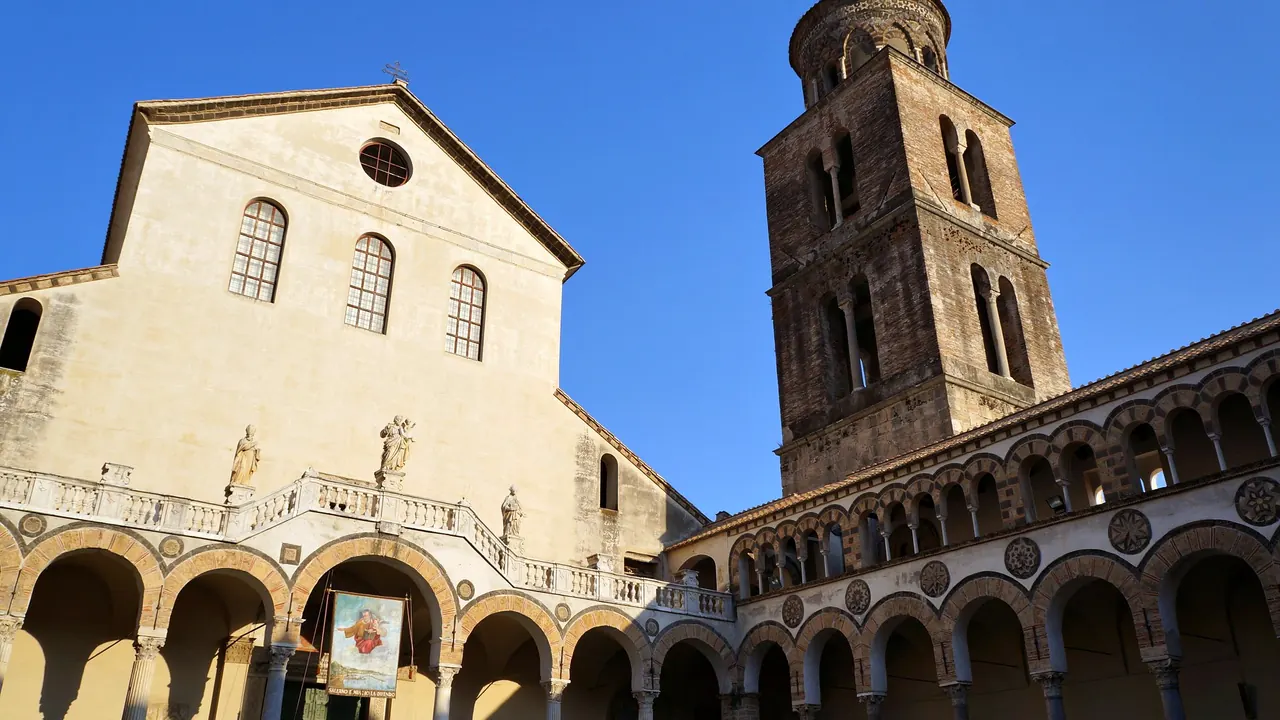
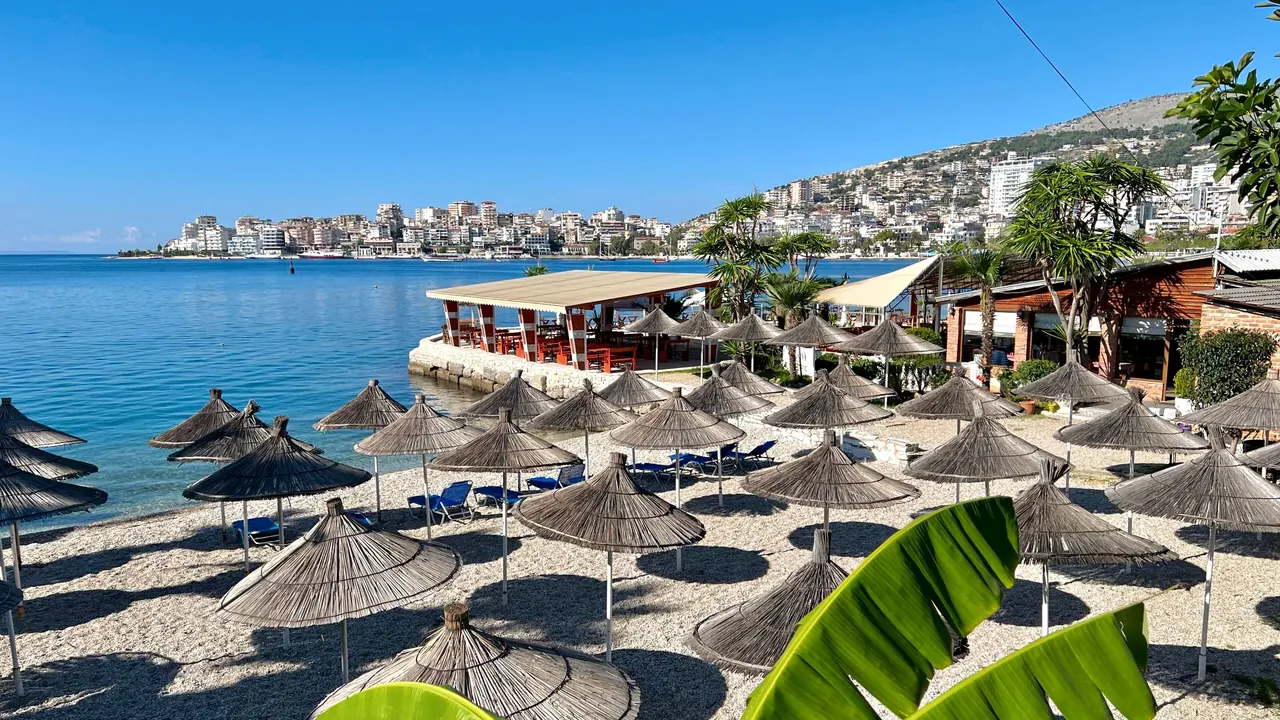
Photos: Salerno by Leandro Neumann Ciuffo, CC BY 2.0, cropped; Saranda by Sharon Hahn Darlin, CC BY 2.0, cropped.
Salerno or Saranda?
Our verdict in twelve categories, each scored against the same fixed benchmark cities, and the climate month by month, so you can choose for your trip.
Choose Salerno for
- live music and the arts
- shopping
- food and drink
Salerno suits a traveller who wants a comfortable base in one of Italy's richest corners. Paestum, Pompeii, the Amalfi Coast and Naples are all within easy reach by train or ferry, and the walkable centre means you rarely need a car. Good Campanian food, the Teatro Verdi and the Norman cathedral give your evenings and rest days some substance.
Choose Saranda for
- beaches
- prices
Choose Saranda if the sea is the point of the trip and the budget matters. The coves at Ksamil and the quieter bays up the Albanian Riviera give clearer water than anything at Salerno's door, and rooms and meals cost less. Butrint and a ferry to Corfu add a day or two of history. Expect a simpler town with little culture of its own, and a hire car or taxi for most outings.
Scoreboard
Twelve categories on one fixed scale from 0 to 100. The shaded stretch is the gap between the two.
Your match
Pick a travel style or drag the sliders, and both match scores follow your weighting.
Wins on live music and the arts and shopping with your weighting.
Wins on beaches and prices with your weighting.
What matters to you?
Category by category
What the scores mean for a trip.
Beaches & swimming
Saranda is the better beach destination. About 20 minutes south, Ksamil has pale coves and offshore islets in strikingly clear Ionian water, and the Riviera to the north adds longer, quieter pebble bays such as Lukova and Borsh. The catch is August, when sunbeds are packed close together on the nearest shores.
Salerno's own beaches are grey sand east of the centre. They are handy for a dip, but the water is murky near the port. Its real strengths are the wide sandy lidos towards Paestum, which are good for a full day, and the clear coves of the Amalfi Coast by ferry. Swimming there usually fits around sightseeing rather than driving the whole trip.
Food & drink
Salerno eats noticeably better. Buffalo mozzarella made that morning on the Paestum plain, colatura from Cetara, wood-fired pizza and pastry shops selling sfogliatelle give it real depth of local produce. Fiano, Aglianico and Falanghina from Campania's own vineyards fill the glass.
Saranda's cooking is honest but narrow: Butrint lagoon mussels, grilled fish, byrek and salads drenched in olive oil. The back-street taverns cook better than the promenade terraces. Coffee and wine culture is thin, and raki fills the gap.
Culture & sights
Salerno has a real medieval core to explore. There is the Norman cathedral with Saint Matthew's crypt, the Giardino della Minerva linked to Europe's earliest medical school, the Arechi Castle above the gulf and a warren of stepped lanes. Together they fill one or two days.
Saranda is a modern town. The synagogue mosaics, the fragments of old wall and Lekuresi Castle's view to Corfu take a morning at most, and its real history lies outside town.
Nightlife
Neither town is a clubbing destination, and the evenings differ more in kind than in scale. In Salerno a night out means wine bars and pubs spilling into the squares around Largo Campo, busy at weekends all year, with Naples close by for anything bigger.
Saranda is louder and more seasonal. In July and August cocktail bars on the promenade play music past midnight and beach clubs at Ksamil bring in DJs, but out of season a night out comes down to a quiet drink by the water.
Nature & outdoors
Salerno has the more dramatic outdoors. The Amalfi Coast's cliffs and lemon terraces, the Path of the Gods and the Valle delle Ferriere give some of Europe's best-known coastal walking on old mule tracks. The Cilento park to the south adds river gorges and wild headlands.
Saranda's landscapes are gentler and less tamed. There are Butrint's lagoon and reed beds for birdwatching, the Blue Eye spring inland, and sea kayaking to caves along the Riviera. Its mountain trails are mostly unmarked, so walkers need to be more self-reliant.
Day trips
Salerno is one of the finest bases for day trips in southern Italy. Paestum's temples and Pompeii are each about half an hour away by train, and ferries reach Amalfi and Positano. Naples, Herculaneum, Caserta and Sorrento are all easy days out, mostly without a car.
Saranda's list is shorter but strong: Butrint's layered ancient city, the stone tower houses of Gjirokaster and a ferry hop to Corfu. Gjirokaster and the Riviera villages are much simpler with a car or an organised trip.
Good for families
Salerno is the easier choice with children. The long, flat, car-free seafront with its playgrounds and gardens gives them room to run, the shallow sands south of the city suit small swimmers, and the Luci d'Artista lights make a winter visit fun. The downsides are the steps in the old town and the winding coast roads.
Saranda's calm coves at Ksamil are lovely for young swimmers. But steep streets, patchy pavements and summer traffic make the town harder work, and families do best with a pool hotel in June or September.
Getting around
Salerno is simpler to get around. The station, the shopping street, the seafront and the old town lie in one walkable strip. Regional trains run direct to Naples, Pompeii and Paestum, and summer ferries handle the Amalfi Coast, so a car is rarely needed.
In Saranda the promenade is walkable, but many hotels sit up steep slopes. Buses to Ksamil and Butrint run without printed timetables. The Blue Eye, Gjirokaster and the Riviera are far easier by hire car or taxi, on narrow roads that jam in summer.
Shopping & style
Neither is a shopping destination, but Salerno has more to offer. Corso Vittorio Emanuele is a proper pedestrian high street of Italian clothing stores. Vietri's hand-painted majolica, limoncello from the coast and colatura from Cetara make good things to take home.
Saranda's shops stop at beachwear and souvenirs. The worthwhile buys are olive oil, mountain honey and herbs from market stalls, and the bazaar in Gjirokaster is better for crafts.
Affordability
Saranda costs less almost across the board. Meals of byrek or grilled fish, buses, taxis and family hotels off the seafront are cheap by European standards, and Butrint's entrance fee is modest. Only July and August push up the price of sunbeds and seafront rooms.
Salerno is good value for its region and far cheaper to sleep in than the Amalfi cliff villages, with trattorias and trains at local prices. Over a summer stay, though, ferries, lido sunbeds and the entry fees at Pompeii and Paestum add up.
Live music & performing arts
Salerno is clearly ahead here. The gilded Teatro Verdi, modelled on the San Carlo in Naples, stages a season of opera, concerts and ballet, and in summer the Ravello Festival's cliff-top concerts are within reach.
Saranda has no theatre or concert hall. There are occasional seafront concerts, the odd performance in Butrint's ancient theatre and live Albanian music in some restaurants. To hear traditional polyphonic singing, look inland around Gjirokaster.
Wellness & relaxation
Salerno is the easier place to slow down, though its calm comes from its pace rather than from spas. The palm-lined seafront is made for sunset walks, lunches run long and the upper lanes of the old town are quiet in the morning, in any season. For thermal water, the open-air sulphur pools at Contursi Terme are about an hour inland. Traffic noise along the port roads means it is no retreat.
Saranda's restfulness depends on the month. In May, June and late September it settles into quiet terraces and evening walks by the bay. July and August are loud with music and traffic into the night, and spa treatments mean a hotel spa or a massage at a beach resort.
When should you go?
Pick your month. The climate figures are measured averages, not a forecast.
Salerno in July
Saranda in July
Daytime high, °C
Rainfall in the month, mm
Where the figures come from
Salerno's temperatures are measured 71 km from the centre, at Grazzanise.
Salerno has no rain gauge within 25 km of the centre, so its rainfall comes from a gridded climate dataset read at the destination rather than from a gauge further away.
Saranda's temperatures are measured 30 km from the centre, at Kerkyra Airport.
Saranda has no rain gauge within 25 km of the centre, so its rainfall comes from a gridded climate dataset read at the destination rather than from a gauge further away.
Temperature and rainfall are climate normals, averaged over the years shown. Salerno: 1991-2020 normals, Grazzanise (71.3 km from centre). Saranda: 1991-2020 normals, Kerkyra Airport (29.8 km from centre).
Both towns follow the same Mediterranean pattern: warm and dry from June to September, and wet through the winter. Highs reach about 31°C in Salerno and 32°C in Saranda in July and August, which makes midday sightseeing at Pompeii or Gjirokaster hard work. May and late September are the better months for walking and hiking. In both towns the sea is warm enough for proper swimming from June into October, and off Salerno it peaks at around 26°C in August.
The difference shows at the edges of the year. Saranda gets more sunshine in high summer and even less rain in July, but its winters are far wetter, with over 230mm in December against Salerno's 126mm. That makes Salerno the more dependable choice between November and March, when its old town and cathedral can carry a short stay. Saranda is best kept for May to early October.
Which traveller are you?
On a beach and sun trip, Saranda wins. Ksamil's pale coves and islets and the long bays at Lukova and Borsh give clear water close by. Salerno's own beaches are grey sand near the port, and its best swimming needs a ferry or train.
For a culture and arts trip, Salerno is far richer. The Norman cathedral and the Teatro Verdi are in town, Paestum, Pompeii and Herculaneum are short train rides away, and the Ravello Festival is close. Saranda has Butrint and little else.
On a trip on a tight budget, Saranda stretches money further. Family hotels, byrek, grilled fish and local buses cost little outside July and August. Salerno is cheap for Italy, but ferry fares, lido sunbeds and fees at the big sites add up.
Before you go
| Measure | Salerno | Saranda |
|---|---|---|
| Official language | Italian | Albanian |
| Currency | Euro (EUR) | Lek (ALL) |
| Sockets | CFL230 V, 50 Hz | CF220 V, 50 Hz |
| Driving side | Right | Right |
| Time zone | UTC+1, UTC+2 in summer | UTC+1, UTC+2 in summer |
| Emergency number | 112 | 112 |
| Elevation | 4 m | 0 m |
| Main airport | Naples International Airport (NAP)46 km from centre131 non-stop destinations | Corfu Ioannis Kapodistrias International Airport (CFU)32 km from centre88 non-stop destinations |
| Public holidays this year | 13 days | 14 days |
By the numbers
| Measure | Salerno | Saranda |
|---|---|---|
| Population | 127,186 | 22,613 |
| People per km² | 2,123 | 383 |
| Museums within 10 km | 9 | 0 |
| UNESCO World Heritage sites within 50 km | 5 | 3 |
| Swim season, months above 21 °C | 5 months | 5 months |
Where else could you go?
Every comparison below shares a destination with this one, so you can follow Salerno or Saranda somewhere new.
- Amalfivs Salerno
- Positanovs Salerno
- Corfuvs Saranda
- Sorrentovs Salerno
- Naplesvs Salerno
- Kalambakavs Saranda