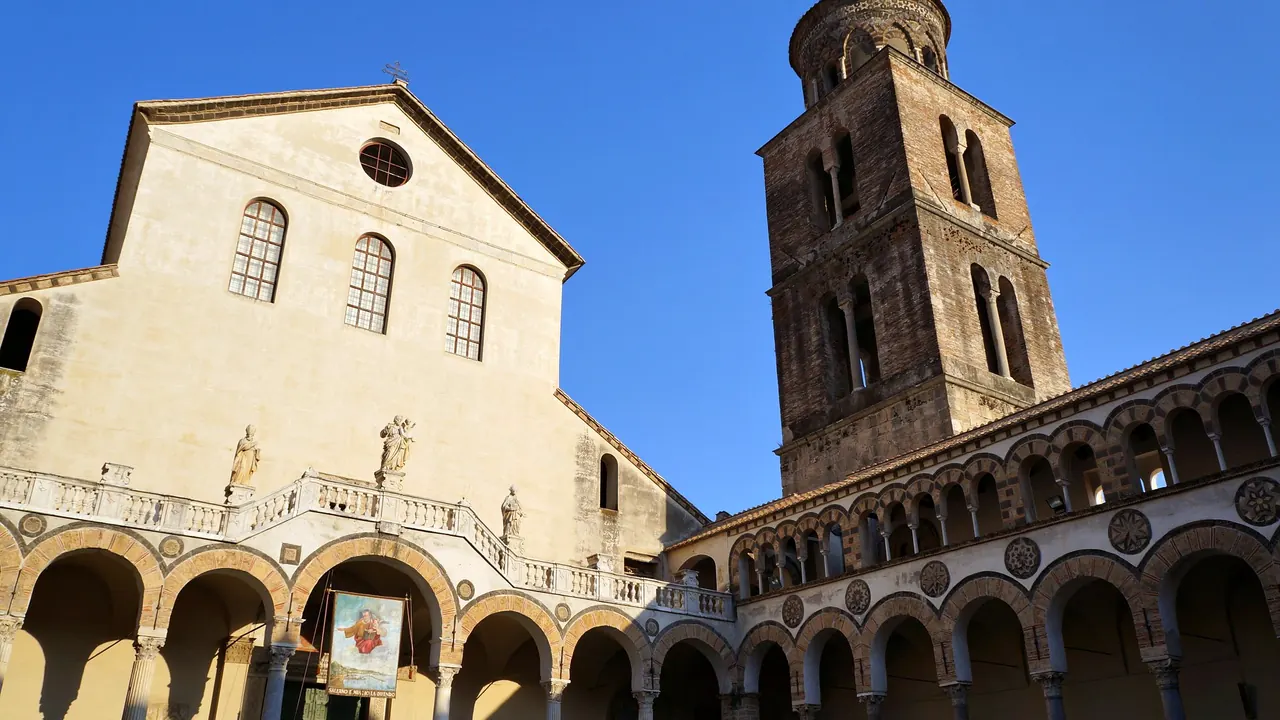
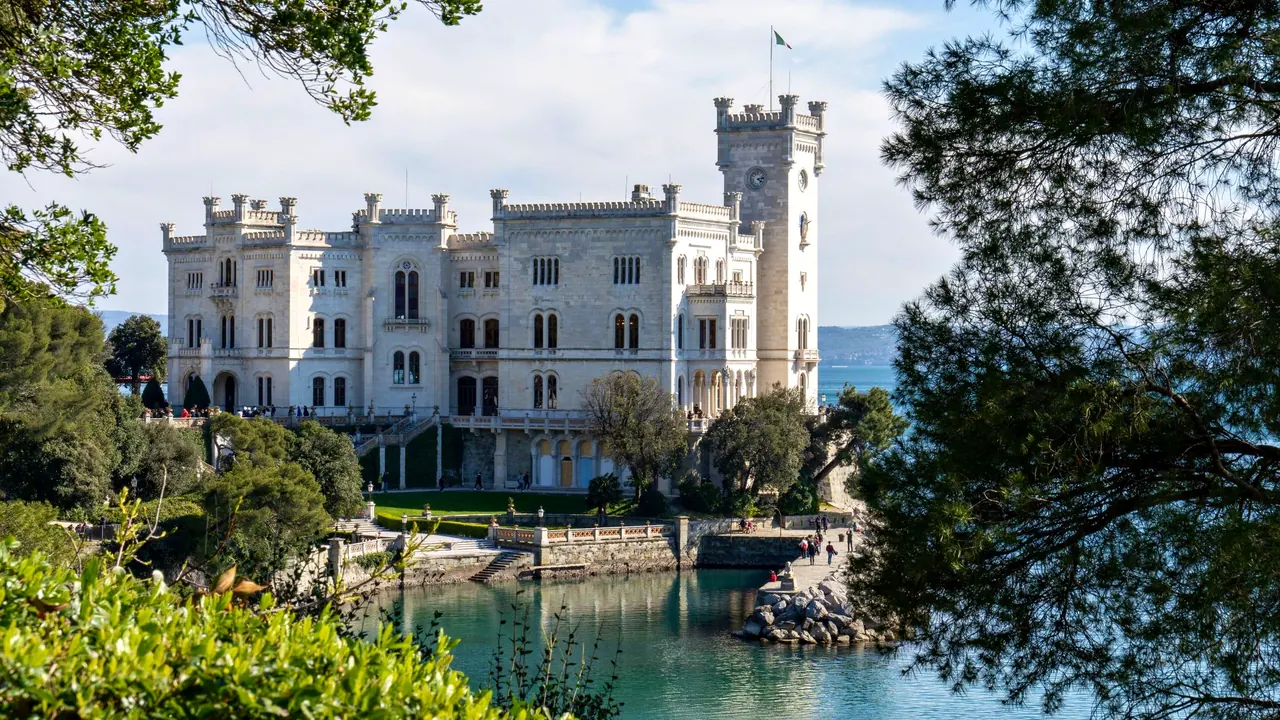
Photos: Salerno by Leandro Neumann Ciuffo, CC BY 2.0, cropped; Trieste by Tibor Szabo, Pexels License.
Salerno or Trieste?
Our verdict in twelve categories, each scored against the same fixed benchmark cities, and the climate month by month, so you can choose for your trip.
Choose Salerno for
- day trips
- nightlife
- nature and the outdoors
Salerno suits travellers who want a base more than a destination. From its station and harbour, Pompeii, the temples of Paestum, the Amalfi Coast and Naples are all easy days out. The cliff paths of the Lattari mountains and the Cilento are close by, and the old town fills with people on summer nights. Choose it if your trip is about the ancient sites, coastal scenery and long, warm, sunny days.
Choose Trieste for
- culture and sights
- live music and the arts
- getting around
Trieste is the better choice if you want the city itself to be the point of the trip. Its Habsburg squares, the canal quarter, San Giusto hill and Miramare Castle reward slow exploring, and a proper opera season and grand old coffee houses fill the evenings and mornings. It is quieter and cooler than Salerno, with the Karst plateau and three countries within reach, so it suits curious, unhurried travellers more than people chasing nightlife.
Scoreboard
Twelve categories on one fixed scale from 0 to 100. The shaded stretch is the gap between the two.
Your match
Pick a travel style or drag the sliders, and both match scores follow your weighting.
Too close to call, level with your weighting
Wins on day trips and nightlife with your weighting.
Wins on culture and sights and live music and the arts with your weighting.
What matters to you?
Category by category
What the scores mean for a trip.
Beaches & swimming
Both cities give you the sea on the doorstep, but the swimming is very different. In Salerno it means sand: grey city beaches east of the centre for a quick dip, then the long sandy stretch with lidos and pines towards Paestum, plus the clear pebble coves of the Amalfi Coast by ferry.
Trieste has almost no sand at all. Locals spread towels on the concrete terraces and lawns of Barcola and climb down ladders into clear water, or head for the pebble coves at Sistiana and Duino. If you like swimming off rocks, it is a pleasure. If you want to build sandcastles, Salerno is the place.
Food & drink
You will eat well in either city, but they hardly overlap. Salerno is southern and sea-driven: fried fish, pasta with clams, colatura from Cetara, mozzarella made that morning on the plain, and lemon pastries in the old-town lanes.
Trieste cooks like a Central European port. You will find boiled pork carved at the counter of a buffet, jota soup, strudel and presnitz, and a coffee culture with its own vocabulary. The seasonal osmize on the Karst, where farmers pour their own wine, have no equivalent near Salerno, though Trieste's restaurant range is narrower.
Culture & sights
Salerno's sights are medieval and compact. The highlights are the Norman cathedral with its bronze doors and the crypt of Saint Matthew, the terraced medicinal garden linked to Europe's earliest medical school, and the Lombard-era Arechi Castle above the gulf. The stepped lanes of the old town connect them all. A day or two is enough, and the region's great ancient sites lie outside the city.
Trieste has far more to see within the city itself, built on a grander, imperial scale. Piazza Unità opens onto the sea, the Borgo Teresiano grid runs along the Canal Grande, and San Giusto hill brings together a mosaic-lined cathedral, a castle and a Roman theatre. Miramare Castle, the Revoltella museum, one of Europe's largest synagogues and the memorial at the Risiera di San Sabba fill several more days.
Nightlife
Neither city is built for clubbing, but Salerno has more life after dark. On weekends and summer nights, young locals pack the small squares around Largo Campo and Via dei Mercanti with drinks in hand until late, and Naples is close enough for a bigger night.
Trieste's evenings revolve around a spritz on Piazza Unità or by the canal, then summer kiosks at Barcola. With an older population, the streets are usually quiet by midnight outside the summer months.
Nature & outdoors
Salerno sits next to some of Europe's most spectacular coastal scenery. Limestone cliffs, lemon terraces and the old paths of the Lattari mountains rise straight from the sea, and the Cilento's wooded hills and wild headlands lie to the south. Boat trips along the coast are the classic summer outing.
Trieste's landscape is gentler but closer to hand. The Karst plateau begins right behind the houses, with the Strada Napoleonica, Val Rosandra and huge caves such as the Grotta Gigante, while the gulf offers serious sailing and snorkelling in the Miramare reserve.
Day trips
This is where Salerno pulls ahead. Paestum's Greek temples and Pompeii are each about half an hour by train, ferries reach Amalfi and Positano in season, and Naples, Herculaneum and Caserta are all simple days out. Few bases in Italy have so many world-famous sites this close.
Trieste's appeal is variety rather than fame. Aquileia, Cividale and star-shaped Palmanova are in Friuli, Piran and Ljubljana are across the Slovenian border, and the Istrian towns can be reached by car. Venice is possible, but at about two hours each way it makes a long day.
Good for families
Both cities are manageable with children rather than geared to them, and each works best for a different age. Salerno suits younger children: a flat, car-free promenade with playgrounds and shallow sandy beaches to the south. Trieste suits older ones better, with a cave big enough to amaze them, Miramare's gardens, a small aquarium and a science centre, but swimming there means rocks and ladders.
Getting around
Both centres are compact and walkable, and each has steep upper quarters. Salerno lies along one long strip from the station to the old town. Regional trains to Pompeii and Paestum, plus summer ferries, are the real workhorses, since the Amalfi coast road is slow and crowded.
Trieste's flat waterfront core is slightly easier to manage day to day. There is no metro, but dense buses run out to Barcola, Miramare and up onto the Karst, and boats cross the bay to Muggia.
Shopping & style
Neither city is a shopping destination, but Salerno gives you more to do with an afternoon and a bag. Its main pedestrian street, Corso Vittorio Emanuele, fills with locals for the evening stroll, so browsing its Italian clothing chains feels like part of the city's social life rather than an errand. The real draw is craft. The hand-painted majolica of Vietri sul Mare, just along the coast, is the region's signature souvenir, and limoncello from the terraced coast travels home well. For a bigger shopping day, Naples is a short train ride away.
Trieste's shopping is quieter and narrower, with ordinary clothing and shoe shops around Corso Italia and no local craft to set beside Vietri's ceramics. Its own pleasure is rummaging in the antique and second-hand shops of the old town, left over from its merchant-port past. Beyond that, the things worth carrying away are edible, such as freshly roasted coffee, Karst wine and honey.
Affordability
Both are sensibly priced for Italy, and Salerno is slightly easier on the wallet. It costs much less to sleep there than in the cliff villages along the Amalfi Coast, though summer ferries, lido sunbeds and entry to the ancient sites add up. Trieste is fair rather than cheap. Buffet meals and coffee at the bar cost little, and Barcola and the Karst walks are free, but rooms tighten around the autumn regatta.
Live music & performing arts
Both cities have a nineteenth-century Teatro Verdi, but Trieste's sits at the centre of a more serious stage life. It runs a proper opera and ballet season, keeps up a Habsburg fondness for operetta, and adds prose theatre at the Politeama Rossetti and a Slovenian-language theatre.
Salerno's opera house runs a respectable but smaller season. Its standout extra is in summer, when the Ravello Festival's cliff-top concerts are within reach for a special night.
Wellness & relaxation
Neither city has a spa culture beyond hotel spas, so relaxation comes from the pace of life. Trieste is a little more restful, with old coffee houses where people linger over a newspaper and sunsets on the Molo Audace. Salerno offers a palm-lined promenade and long lunches, but its port traffic is noisier, and the nearest thermal pools, at Contursi Terme, are about an hour inland.
When should you go?
Pick your month. The climate figures are measured averages, not a forecast.
Salerno in July
Trieste in July
Daytime high, °C
Rainfall in the month, mm
Where the figures come from
Salerno's temperatures are measured 71 km from the centre, at Grazzanise.
Salerno has no rain gauge within 25 km of the centre, so its rainfall comes from a gridded climate dataset read at the city rather than from a gauge further away.
Temperature and rainfall are climate normals, averaged over the years shown. Salerno: 1991-2020 normals, Grazzanise (71.3 km from centre). Trieste: 1991-2020 normals, Trieste (1.6 km from centre).
Salerno is the warmer and sunnier of the two throughout the year. Its summers are hot and almost dry, with highs around 31°C in July and August. That makes beach days easy but walking around Pompeii or the old town hard work in the afternoon. The sea stays warm enough to swim from June well into October, and late May and late September are the most comfortable months for sightseeing and hiking. Rain arrives in autumn and peaks in November at about 154mm, so winter is mild but wet.
Trieste runs a few degrees cooler, and its winters are cold, with highs near 9°C in January and the Bora wind adding a bite. Its rain is spread more evenly through the year, so summer is less reliably dry than in Salerno, and autumn is the wettest stretch. The Adriatic is only properly warm from June to September. May, June and September are the pleasant months for walking the hilly streets and the Karst.
Which traveller are you?
For a culture and arts trip, Trieste is the stronger pick. Habsburg palaces on Piazza Unità, Roman and Byzantine layers on San Giusto, Miramare, the Revoltella museum and a full opera and operetta season give a week's worth inside the city itself.
On an outdoors trip, Salerno has the edge. The Amalfi Coast's mule tracks, including the Path of the Gods, the gorges and headlands of the Cilento, and boat and kayak outings along the cliffs offer more dramatic terrain than Trieste's Karst walks.
For a food and nightlife trip, Salerno is the livelier option. Seafood, wood-fired pizza and fresh buffalo mozzarella fill the table, and afterwards young locals crowd the old-town lanes around Largo Campo until late. Trieste tends to wind down after aperitivo.
Before you go
| Measure | Salerno | Trieste |
|---|---|---|
| Official language | Italian | Italian |
| Currency | Euro (EUR) | Euro (EUR) |
| Sockets | CFL230 V, 50 Hz | CFL230 V, 50 Hz |
| Driving side | Right | Right |
| Time zone | UTC+1, UTC+2 in summer | UTC+1, UTC+2 in summer |
| Emergency number | 112 | 112 |
| Elevation | 4 m | 2 m |
| Main airport | Naples International Airport (NAP)46 km from centre131 non-stop destinations | Trieste Airport (TRS)31 km from centre32 non-stop destinations |
| Public holidays this year | 13 days | 13 days |
By the numbers
| Measure | Salerno | Trieste |
|---|---|---|
| City population | 127,186 | 198,417 |
| People per km² | 2,123 | 2,332 |
| Museums within 10 km | 9 | 33 |
| UNESCO World Heritage sites within 50 km | 5 | 5 |
| Swim season, months above 21 °C | 5 months | 4 months |
Where else could you go?
Every comparison below shares a destination with this one, so you can follow Salerno or Trieste somewhere new.
- Amalfivs Salerno
- Positanovs Salerno
- Sorrentovs Salerno
- Naplesvs Salerno
- Rovinjvs Trieste
- Ljubljanavs Trieste