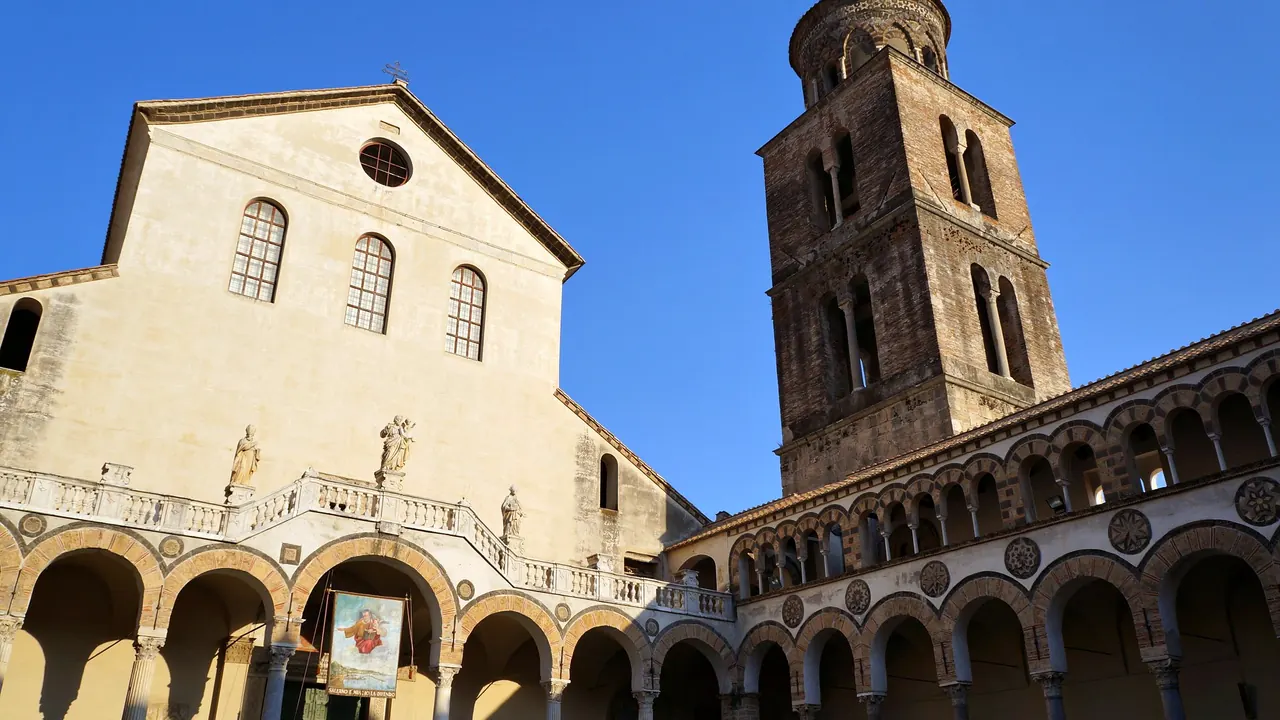
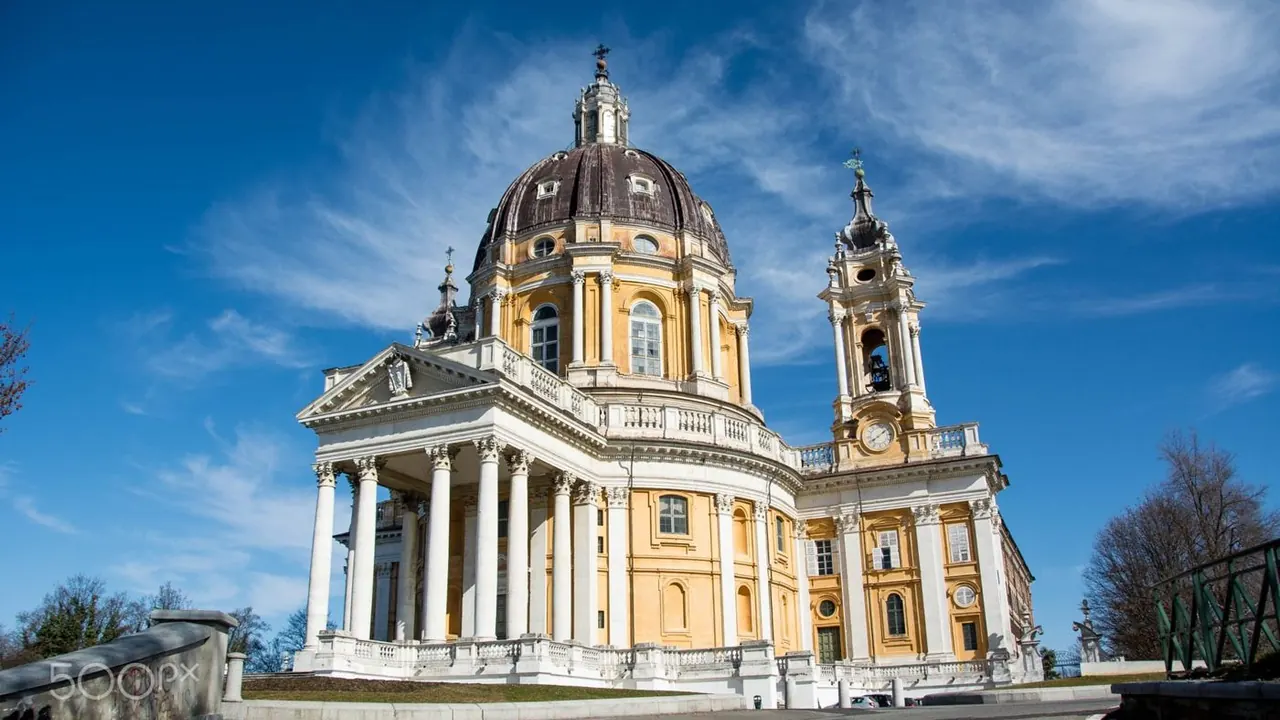
Photos: Salerno by Leandro Neumann Ciuffo, CC BY 2.0, cropped; Turin by Konstantin Dacosta, CC BY 3.0, cropped.
Salerno or Turin?
Our verdict in twelve categories, each scored against the same fixed benchmark cities, and the climate month by month, so you can choose for your trip.
Choose Salerno for
- beaches
- day trips
- prices
Salerno suits a summer trip that mixes sea and sightseeing. The city itself is modest, but it sits between the Amalfi Coast, Paestum and Pompeii. It has warm water in season and rooms that cost far less than in the cliff villages, so it works best for travellers who want a base and plan to be out every day.
Choose Turin for
- culture and sights
- live music and the arts
- food and drink
Travellers who want the city itself to be the destination will do better in Turin. The Museo Egizio, the Savoy palaces, a full opera season and Piedmontese cooking with Barolo on the wine list can fill a week without leaving town, and the Alps and the Langhe wine hills are close for days out. There is no sea, so Turin is better for spring, autumn or even winter than for a summer of swimming.
Scoreboard
Twelve categories on one fixed scale from 0 to 100. The shaded stretch is the gap between the two.
Your match
Pick a travel style or drag the sliders, and both match scores follow your weighting.
Wins on beaches and day trips with your weighting.
Wins on culture and sights and live music and the arts with your weighting.
What matters to you?
Category by category
What the scores mean for a trip.
Beaches & swimming
Salerno has the sea at the end of its streets. The grey-sand city beaches are fine for a quick swim, the long sandy shore towards Paestum has lidos and pine woods, and the clear pebbly coves of the Amalfi Coast are a ferry ride away.
Turin has no coast at all. The Ligurian Riviera is close to two hours away, so a summer swim there means a lake such as Avigliana or Lago Maggiore. If the sea matters to your trip, choose Salerno.
Food & drink
Both cities eat well, but Turin's table is richer and has more to seek out. It has agnolotti del plin, vitello tonnato, white truffles from the Langhe in autumn and Barolo and Barbaresco on the wine list. Vermouth, the aperitivo and gianduja chocolate all began here, and the historic cafés serve bicerin.
Salerno's strength is simplicity: fried seafood, pasta with clams, wood-fired pizza, buffalo mozzarella eaten the day it is made and colatura from Cetara. There is less fine dining, and the pleasure is in grazing through the old town's friggitorie and pastry shops rather than planning a trip around meals.
Culture & sights
Turin is a former royal capital with enough museums to fill several days. There are the Museo Egizio, the Royal Palace and Palazzo Madama, the Savoy residences ringing the city and the cinema museum in the Mole, with contemporary art at the Castello di Rivoli.
Salerno's heritage is medieval and compact: the Norman cathedral with Saint Matthew's crypt, the Giardino della Minerva and the Arechi Castle above the town, all seen in a day or two. The region's great antiquities, Paestum and Pompeii, lie outside the city and belong to its day trips.
Nightlife
Turin has the fuller evening out. The aperitivo leads on to wine and cocktail bars in the Quadrilatero Romano, students on the pavements of San Salvario, a more alternative crowd in Vanchiglia and the riverside Murazzi in summer. There are also a few clubs in old industrial buildings.
Salerno's nights are smaller. They centre on the lanes around Largo Campo, where young locals drink outside wine bars, and on the passeggiata along the seafront. Neither city is wild, but for clubbing from Salerno you go to the coast or to Naples.
Nature & outdoors
Both have outstanding scenery close by, of opposite kinds. Salerno's is sea and cliff: the terraced lemon groves of the Amalfi Coast, old mule tracks such as the Path of the Gods, the gorges and headlands of the Cilento, and boat trips and kayaking in summer.
Turin looks to the Alps. Gran Paradiso has ibex and high trails, summer brings hut-to-hut hiking and climbing, and winter brings skiing around Sestriere, with the Superga hills and Valentino park for gentler outings. Salerno is for walkers who want sea views in spring and autumn, and Turin for mountain walkers and skiers.
Day trips
Day trips are where Salerno pulls ahead, because its surroundings are among the most famous in Italy. The Greek temples of Paestum and the ruins of Pompeii are each about half an hour away by train, and ferries cross to Amalfi and Positano. Ravello, Naples, Herculaneum and Caserta are all easy days out.
Turin's outings lean towards wine and mountains. The Langhe villages of Barolo and Alba are about an hour south, and there are also the Sacra di San Michele, Milan by fast train, and Genoa or Aosta further off. They reward slower travel, but Salerno has more world-famous sights within easy reach.
Good for families
Neither city has a zoo, aquarium or theme park, and they suit families about equally in different ways. Salerno has a flat, car-free seafront with playgrounds and shallow sandy beaches to the south, though the old town is all steps and the Amalfi roads are hard on carsick children.
Turin is flat, and its arcades shelter pushchairs from rain and sun. The glass lift in the Mole, the car museum and the mummies keep older children busy, and Zoom Torino is a drive away. Salerno is the summer beach choice, while Turin works in any season.
Getting around
Both centres are easy on foot, so the difference lies in where you are travelling to. Salerno is a narrow strip running from the station to the old town along the sea, with direct trains to Naples, Pompeii and Paestum. In summer the ferries are the best way along the coast, because the buses and roads there are slow and crowded.
Turin's flat grid of arcaded streets is simple to find your way around, and one driverless metro line runs to Lingotto, though the trams and buses take more working out. A car is only worth having for the wine hills or the mountains.
Shopping & style
Turin offers more. Luxury labels line Via Roma under its arcades, Via Garibaldi has mainstream shops, the streets around Via Lagrange have smaller boutiques, and there are antique dealers on Via Maria Vittoria and the Balon flea market. Its chocolate makers and delicatessens selling truffles and wine make the best souvenirs.
Salerno's shopping is mostly Italian chains along Corso Vittorio Emanuele. Its most distinctive buys come from nearby: painted majolica from Vietri, limoncello from the coast and colatura from Cetara. For a bigger shopping day you go to Naples.
Affordability
The two cost about the same to visit, but the money goes in different places. Salerno is an inexpensive base for the expensive Amalfi Coast, especially outside summer. In high season, though, rooms, ferry fares, lido sunbeds and entry to the big archaeological sites add up.
Turin is comfortable rather than cheap. Hotels are fairly priced except during big trade fairs, an aperitivo can stand in for dinner, and Porta Palazzo market is good for snacks. Costs rise with fine dining, the truffle season and museum entry.
Live music & performing arts
Turin has the stronger programme all year. There are a full opera and ballet season at the Teatro Regio, the RAI National Symphony Orchestra, concerts at Lingotto, theatre in Italian at the Teatro Carignano, jazz clubs and long-running music festivals.
Salerno's main stage is the gilded Teatro Verdi, with a respectable season of opera and concerts, plus open-air concerts in summer. The Ravello Festival above Amalfi makes a special evening, but for more choice the city looks to Naples.
Wellness & relaxation
Neither city is a spa destination. Both rely on hotel spas, and for thermal water you travel about one to two hours. From Salerno that means the open-air sulphur pools at Contursi Terme, and from Turin Acqui Terme or the Alpine baths of the Aosta valley.
The calm differs in kind. Salerno relaxes by the sea, with sunset walks along its palm-lined promenade, though the port and main roads bring traffic and noise. Turin's quieter calm is urban: long coffee breaks in historic cafés, strolls under the arcades and afternoons in Valentino park.
When should you go?
Pick your month. The climate figures are measured averages, not a forecast.
Salerno in July
Turin in July
Daytime high, °C
Rainfall in the month, mm
Where the figures come from
Salerno's temperatures are measured 71 km from the centre, at Grazzanise.
Salerno has no rain gauge within 25 km of the centre, so its rainfall comes from a gridded climate dataset read at the city rather than from a gauge further away.
Turin has no rain gauge within 25 km of the centre, so its rainfall comes from a gridded climate dataset read at the city rather than from a gauge further away.
Temperature and rainfall are climate normals, averaged over the years shown. Salerno: 1991-2020 normals, Grazzanise (71.3 km from centre). Turin: 1991-2020 normals, Torino / Caselle (15.4 km from centre).
Salerno is the warmer of the two all year. The sea is warm enough for proper swimming from June to September and reaches about 26°C in August. July and August are dry and very sunny but hot, at around 31°C, so sightseeing is easier in the early morning. May, June and late September are the most comfortable months for walking and the coast paths. The rain sets in from October, and November is the wettest month at about 154mm, so winter is mild but often grey and damp.
Turin has a colder, drier winter, with January days around 7°C, crisp but fine for museums and cafés. Its wettest spell comes in late spring, peaking at about 115mm in May. Summer is warm and can be sticky, much like Salerno's but without a sea to cool off in. September and October are the best months for walking the city, and also the time of the wine harvest and truffle season in the hills.
Which traveller are you?
On a beach and sun trip, Salerno is the clear choice. The sea is warm from June to September, and the sandy shores towards Paestum and the clear coves of the Amalfi Coast are all close. Turin has no coast, and the Riviera is nearly two hours away.
For a culture and arts trip, Turin has far more within the city: the Museo Egizio, the Savoy palaces, the cinema museum inside the Mole and a full opera season at the Teatro Regio. Salerno's own sights take a day or two, and its great ancient sites lie outside town.
On a food and nightlife trip, Turin comes out ahead on both. Piedmontese cooking, Barolo, chocolate and the aperitivo ritual lead on to the bar streets of San Salvario and the Quadrilatero Romano. Salerno has honest seafood and pizza, and a smaller bar scene in the old town.
Before you go
| Measure | Salerno | Turin |
|---|---|---|
| Official language | Italian | Italian |
| Currency | Euro (EUR) | Euro (EUR) |
| Sockets | CFL230 V, 50 Hz | CFL230 V, 50 Hz |
| Driving side | Right | Right |
| Time zone | UTC+1, UTC+2 in summer | UTC+1, UTC+2 in summer |
| Emergency number | 112 | 112 |
| Elevation | 4 m | 239 m |
| Main airport | Naples International Airport (NAP)46 km from centre131 non-stop destinations | Turin Airport (TRN)14 km from centre65 non-stop destinations |
| Public holidays this year | 13 days | 13 days |
By the numbers
| Measure | Salerno | Turin |
|---|---|---|
| City population | 127,186 | 841,600 |
| People per km² | 2,123 | 6,474 |
| Museums within 10 km | 9 | 72 |
| UNESCO World Heritage sites within 50 km | 5 | 4 |
| Swim season, months above 21 °C | 5 months | - |
Where else could you go?
Every comparison below shares a destination with this one, so you can follow Salerno or Turin somewhere new.