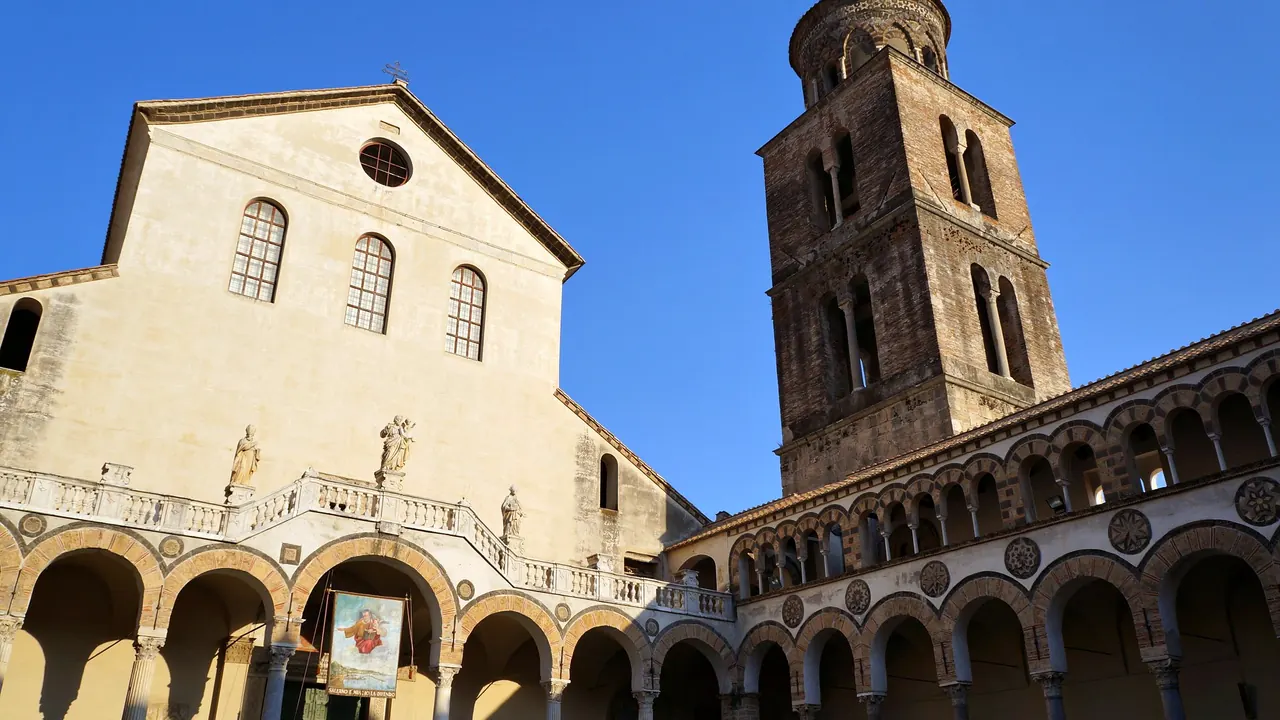
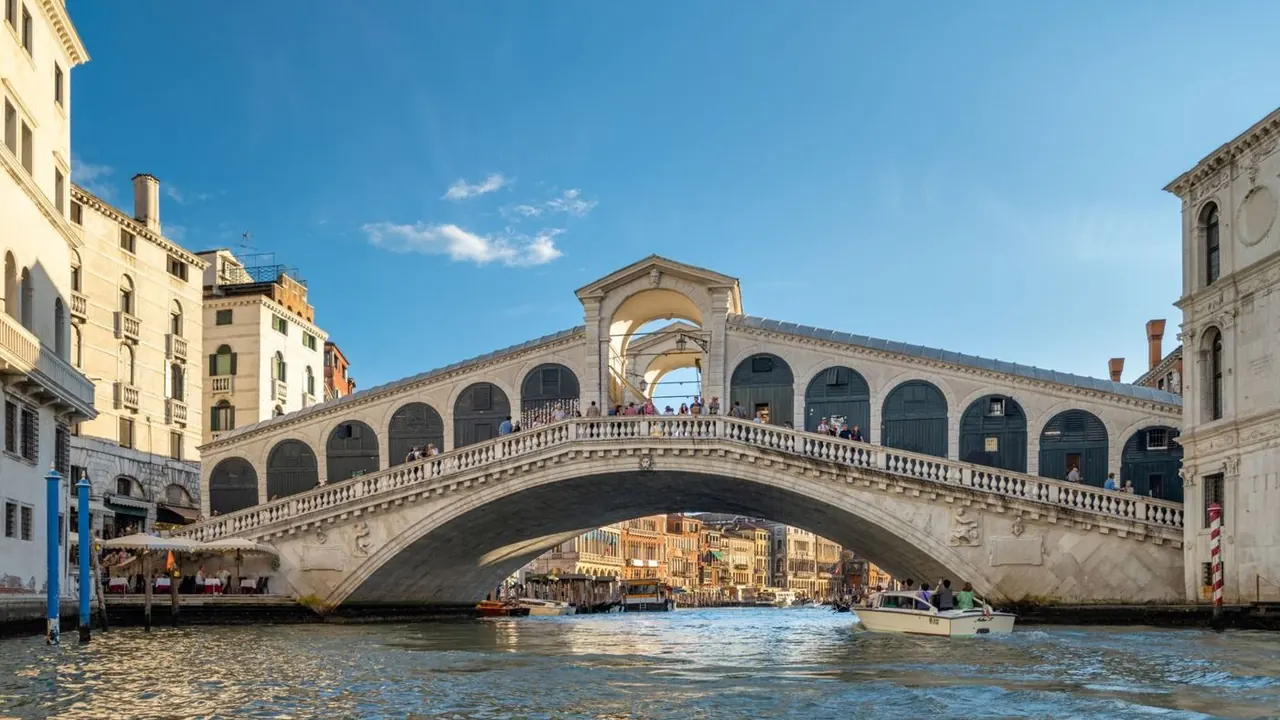
Photos: Salerno by Leandro Neumann Ciuffo, CC BY 2.0, cropped; Venice by David Vives, Pexels License.
Salerno or Venice?
Our verdict in twelve categories, each scored against the same fixed benchmark cities, and the climate month by month, so you can choose for your trip.
Choose Salerno for
- prices
- nature and the outdoors
- nightlife
Salerno suits travellers who want southern Italy as a base rather than as a single sight. It is a working port city with fair prices, and Paestum, Pompeii and the Amalfi Coast are all an easy morning's journey away. It rewards walkers, swimmers and anyone happy to spend most days out of town and come back to supper on the seafront.
Choose Venice for
- culture and sights
- live music and the arts
- shopping
Venice is the choice when the city itself is the reason for the trip. Its palaces, churches and painting collections fill a week on their own, and Salerno has nothing to match an evening at La Fenice or a late walk beside silent canals. Expect to pay heavily for that, and to find very little going on after midnight.
Scoreboard
Twelve categories on one fixed scale from 0 to 100. The shaded stretch is the gap between the two.
Your match
Pick a travel style or drag the sliders, and both match scores follow your weighting.
Too close to call, 2 points apart
Wins on prices and nature and the outdoors with your weighting.
Wins on culture and sights and live music and the arts with your weighting.
What matters to you?
Category by category
What the scores mean for a trip.
Beaches & swimming
Salerno is the better base for time by the sea, although in neither city is the town beach the main reason to swim. Salerno's grey sand by the port is fine for a quick dip. The real rewards are nearby: the long sandy beaches backed by pine woods towards Paestum, and the clear water in the Amalfi Coast's pebbly coves.
Venice's one real beach is the Lido, a long strip of fine Adriatic sand a short boat ride away. It is shallow and gentle, but the water is greenish and much of the sand is taken up by rows of cabanas. For most visitors it is one hot afternoon, not part of every day.
Food & drink
Both cities eat well, in very different styles. Salerno's is a sit-down Campanian table: fried seafood, pasta with clams, wood-fired pizza and buffalo mozzarella made that morning on the plain towards Paestum. Across the old town it is reliably good, everyday food.
Venice is at its best standing at a bacaro counter with cicchetti and a spritz, or over lagoon dishes such as black cuttlefish risotto made with fish from the Rialto market. The real difference is consistency. The tourist routes in Venice are lined with poor restaurants, so a good meal takes more seeking out.
Culture & sights
This is where Venice pulls far ahead. The whole city is the monument, from San Marco and the Doge's Palace to the palazzi on the Grand Canal. Its painting is among the richest anywhere, with the Venetian masters in the Accademia and the Frari, and modern art at the Guggenheim and the Biennale.
Salerno's heritage is real but compact. It has the Norman cathedral with the crypt of Saint Matthew, the medicinal garden linked to Europe's earliest medical school and the Arechi Castle above the town. Together they fill a day or two, and for the great ancient sites you head out to Paestum or Pompeii.
Nightlife
Neither city is built for clubbing, but Salerno stays up later. On weekends and all through summer, the lanes around Largo Campo and Via dei Mercanti fill with young locals drinking outside wine bars into the night, and Naples is close for a bigger night out. Venice is at its liveliest at aperitivo time along the Fondamenta della Misericordia and around the Rialto. Campo Santa Margherita stays busy a little longer, then the city falls silent around midnight.
Nature & outdoors
Salerno has some of Europe's most dramatic scenery on its doorstep: limestone cliffs, terraced lemon groves and old mule tracks across the Lattari mountains, with the Cilento's wooded hills and river gorges to the south. Serious hiking and boat or kayak trips along the coast are both on offer.
Venice's outdoors is the lagoon, which is flatter and quieter. There are salt marshes around Torcello with herons and flamingos, lessons in Venetian rowing and cycling along the sea walls of the Lido and Pellestrina. For real mountains you need the Dolomites, more than two hours away.
Day trips
Both are excellent bases, but Salerno has the edge for famous sights within an hour. Paestum's temples and Pompeii are each about half an hour away by train, and the ferry to Amalfi and Positano is short. Naples, Herculaneum and the palace at Caserta are all easy days out.
Venice answers with the cities of the Veneto by fast train: Giotto's chapel in Padua, Verona's arena and Palladio's Vicenza. It also has its own lagoon outings to Murano, Burano and Torcello, which you reach by boat without needing a train at all.
Good for families
Salerno is the easier city with children. Its long, flat, car-free promenade has playgrounds and gelato all along it, and the shallow sandy beaches south of town suit small swimmers. The steep old town and the winding Amalfi road are the drawbacks.
Children love the idea of Venice, with boats instead of buses and glass-blowing on Murano. In practice, hundreds of stepped bridges defeat pushchairs and there are very few parks, so it works best as a short stay with older children.
Getting around
Salerno is laid out along a line and Venice as a maze. In Salerno the station, the shopping street, the seafront and the old town sit on one strip you can walk end to end, with a bus up to the castle and regional trains straight to Naples, Pompeii and Paestum. In summer, the ferry is the way to go along the Amalfi Coast, because the coastal buses crawl and parking is scarce.
Venice has no cars or bikes, so you walk almost everywhere. Most of the centre is within about forty minutes on foot, through alleys that end at canals and get nearly everyone lost. Vaporetti run along the Grand Canal and out to the islands, and traghetto gondolas cross between the bridges. The catch is the steps on hundreds of bridges, which are hard going with wheeled luggage or a wheelchair.
Shopping & style
Venice is the more rewarding place to shop, because its crafts are made in the city itself: Murano glass, Burano lace, papier-mâché masks, marbled paper and furlane slippers. Big fashion names also line the streets near San Marco. The skill is avoiding the imported copies sold along the main routes.
Salerno's Corso Vittorio Emanuele is mostly Italian chain stores. Its best buys come from the surrounding coast: Vietri ceramics, limoncello and colatura from Cetara.
Affordability
In Salerno the extra costs are mostly ones you choose. Outside the summer it is an easy city on a modest budget. In July and August rooms fill up, a lido sunbed becomes a daily outlay and several days of ferries along the coast soon mount up. The one fixed expense is entry to Pompeii and Paestum, which most visitors come for anyway.
In Venice much of the cost comes with simply being there. Rooms in the historic centre stay dear even in the quieter months, and peak in summer and at carnival. A day on Murano, Burano or the Lido means paying for the boat, and sitting down at a café table on the piazza is a luxury in itself. Late autumn and winter outside the festivals, a bed in Mestre and lunch standing at a bacaro counter narrow the gap, but not by much.
Live music & performing arts
Venice has the stronger stage. La Fenice, where Verdi and Rossini premiered works, runs a full season of opera, ballet and concerts, and the Biennale adds festivals of contemporary music, theatre and dance. Vivaldi played in the city where he worked is on offer most evenings, though the quality varies.
Salerno's Teatro Verdi, modelled on the San Carlo in Naples, runs a respectable season, and the Ravello Festival's cliff-top concerts make a memorable summer evening. For more than that, you go to Naples.
Wellness & relaxation
Neither city has a bathing tradition of its own, so both rely on hotel spas, with thermal water about an hour away. For Salerno that means open-air sulphur pools at Contursi Terme. For Venice it means the mud and thermal pools of Abano near Padua, in use since Roman times.
What differs is the kind of calm. In Salerno it is a sunset walk under the palms and a long lunch, set against traffic noise from the port and the main roads. In Venice it is the quiet of a car-free city in Castello, Cannaregio or on Giudecca, early in the morning and late at night, away from the crowds in the middle of the day.
When should you go?
Pick your month. The climate figures are measured averages, not a forecast.
Salerno in July
Venice in July
Daytime high, °C
Rainfall in the month, mm
Where the figures come from
Salerno's temperatures are measured 71 km from the centre, at Grazzanise.
Salerno has no rain gauge within 25 km of the centre, so its rainfall comes from a gridded climate dataset read at the city rather than from a gauge further away.
Venice has no rain gauge within 25 km of the centre, so its rainfall comes from a gridded climate dataset read at the city rather than from a gauge further away.
Venice's sunshine is measured 26 km from the centre, at Treviso / S. Angelo.
Temperature and rainfall are climate normals, averaged over the years shown. Salerno: 1991-2020 normals, Grazzanise (71.3 km from centre). Venice: 1991-2020 normals, Venezia / Tessera (6.7 km from centre).
Salerno has the longer warm season. From June to September the sea is warm enough for proper swimming, at its warmest around 26°C in August, and summer is almost dry. July and August reach 31°C, though, which makes Pompeii and Paestum hard work in the middle of the day. Late May, June and September are the best months for combining beach, hiking and sightseeing. From October the rain sets in properly and is heaviest in November at around 154mm, but winter days stay mild, and Salerno is sunnier than Venice in every month.
Venice is cooler throughout. Winter highs sit around 7°C, and its rain is spread evenly across the year instead of gathering in winter, so no season is reliably dry. Spring and early autumn are the most comfortable for walking the city. High summer is warm and humid, and the Lido's water is only really pleasant for swimming from late June into September.
Which traveller are you?
On a culture and arts trip, Venice is the clear pick. The Accademia, Titian in the Frari, Tintoretto at San Rocco and the Biennale go far deeper than Salerno's cathedral and old town, which take a day or two, and La Fenice fills the evenings.
For a trip on a tight budget, Salerno wins easily. Rooms, trattorias and regional trains cost what locals pay, so the city makes a cheap base for an expensive coast. Venice charges a premium for beds, boats and most of its sights.
On an outdoors trip, choose Salerno. The Path of the Gods, the Valle delle Ferriere and the Cilento's gorges and headlands are all within reach, along with kayaking beneath the cliffs. Venice offers flat lagoon paddling and birdwatching.
Before you go
| Measure | Salerno | Venice |
|---|---|---|
| Official language | Italian | Italian |
| Currency | Euro (EUR) | Euro (EUR) |
| Sockets | CFL230 V, 50 Hz | CFL230 V, 50 Hz |
| Driving side | Right | Right |
| Time zone | UTC+1, UTC+2 in summer | UTC+1, UTC+2 in summer |
| Emergency number | 112 | 112 |
| Elevation | 4 m | 2 m |
| Main airport | Naples International Airport (NAP)46 km from centre131 non-stop destinations | Venice Marco Polo Airport (VCE)7 km from centre103 non-stop destinations |
| Public holidays this year | 13 days | 13 days |
By the numbers
| Measure | Salerno | Venice |
|---|---|---|
| City population | 127,186 | 250,369 |
| People per km² | 2,123 | 602 |
| Museums within 10 km | 9 | 52 |
| UNESCO World Heritage sites within 50 km | 5 | 5 |
| Swim season, months above 21 °C | 5 months | 4 months |
Where else could you go?
Every comparison below shares a destination with this one, so you can follow Salerno or Venice somewhere new.