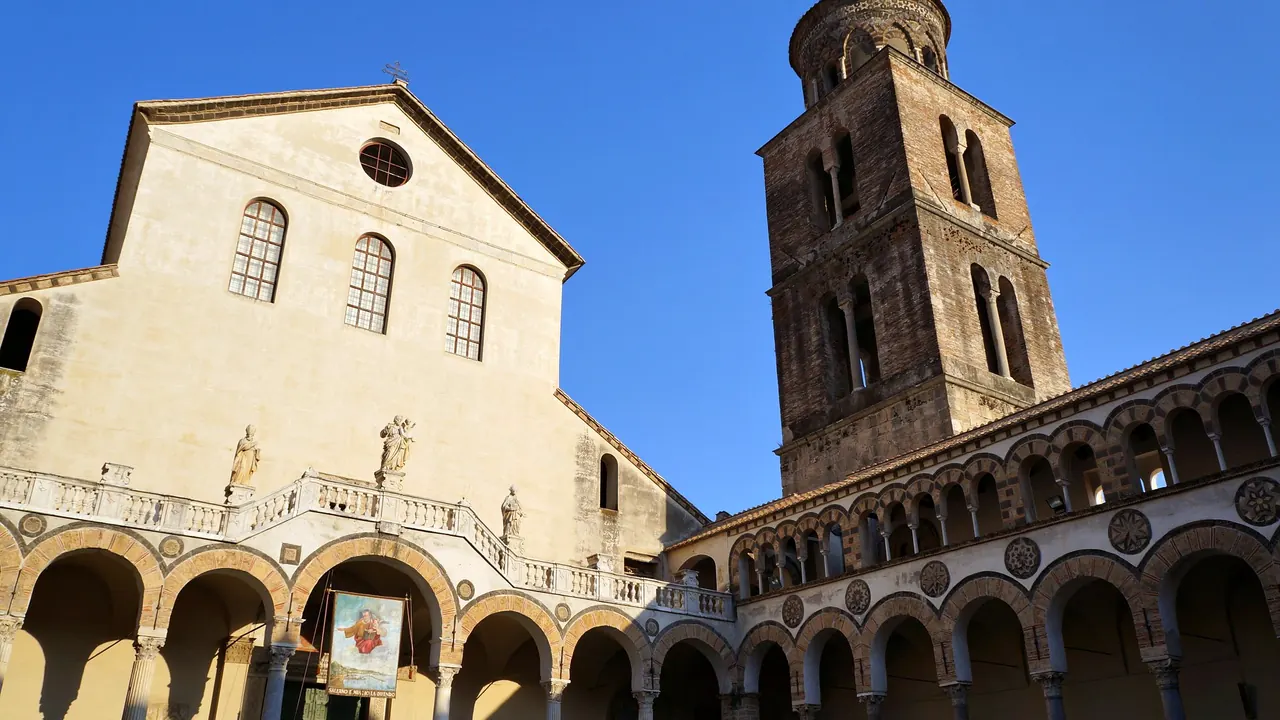
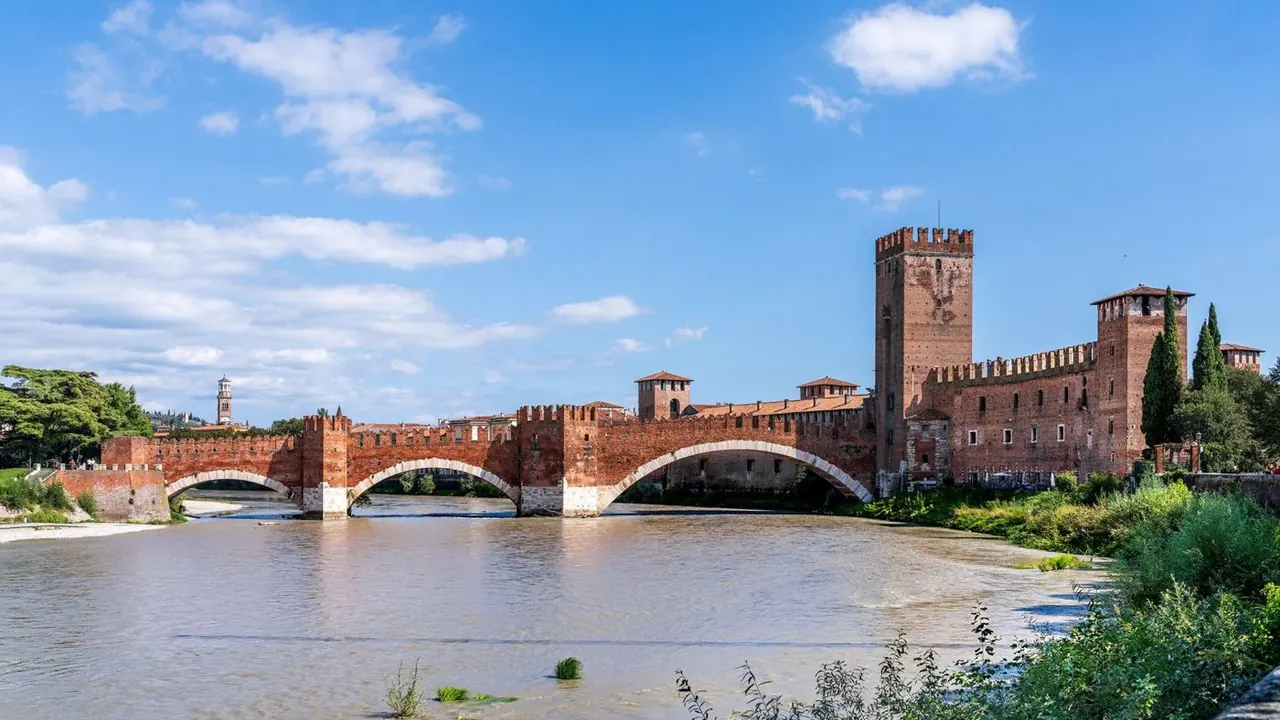
Photos: Salerno by Leandro Neumann Ciuffo, CC BY 2.0, cropped; Verona by NorbertNagel, CC BY-SA 4.0, cropped.
Salerno or Verona?
Our verdict in twelve categories, each scored against the same fixed benchmark cities, and the climate month by month, so you can choose for your trip.
Choose Salerno for
- beaches
- prices
- nature and the outdoors
Salerno suits a summer trip built around the sea and the land around it. The swimming is far better, the Amalfi cliffs and the Cilento are close by for walking and boat outings, and rooms cost noticeably less than on the coast or in Verona. It is a working port with a modest old town, so you stay there for what lies along the gulf: Paestum, Pompeii, Amalfi and the beaches.
Choose Verona for
- culture and sights
- live music and the arts
- wellness
Verona is the better pick if what you want is the city itself. Its Roman Arena, Romanesque churches and Scaliger squares give it a far richer historic centre, and summer opera on the ancient tiers is a night out Salerno has nothing to match. Families also do better here, with Gardaland and a safari zoo near Lake Garda, as long as they accept paying more for a room.
Scoreboard
Twelve categories on one fixed scale from 0 to 100. The shaded stretch is the gap between the two.
Your match
Pick a travel style or drag the sliders, and both match scores follow your weighting.
Wins on beaches and prices with your weighting.
Wins on culture and sights and live music and the arts with your weighting.
What matters to you?
Category by category
What the scores mean for a trip.
Beaches & swimming
Salerno is on the sea and Verona is not, and that is the difference. Salerno's own grey-sand city beaches do for a quick dip, and the real reward is close by: the wide sandy stretches running south towards Paestum and the clear pebble coves of Vietri, Cetara and the Amalfi Coast.
From Verona, swimming means Lake Garda, about half an hour away, where the water is calm and clear and you lie on lawns, lidos and Sirmione's limestone shelves. It makes a pleasant summer outing but cannot carry a beach vacation the way Salerno's coast can.
Food & drink
The two cities eat equally well, but they could hardly be further apart on the plate. Salerno cooks from the sea and the south: fried fish, clams, wood-fired pizza, buffalo mozzarella eaten the day it is made and Cetara's anchovy colatura, with sfogliatelle and lemon pastries from the old town's shops.
Verona's cooking is inland and heavier, with Amarone risotto, bigoli with duck, bollito with pearà and horse stew in the osterie around Piazza delle Erbe and in Veronetta. Its real strength is wine, with Valpolicella, Amarone and Soave made close by. Salerno has more cheap everyday eating on the street.
Culture & sights
Verona has much more to see within the city. Inside its river loop you find a Roman amphitheatre still in use, a Roman theatre on the hillside, the Scaliger tombs, San Zeno's bronze doors and Castelvecchio's museum in Scarpa's setting, all layered across two thousand years.
Salerno's heritage is medieval and smaller in scale: the Norman cathedral with Saint Matthew's crypt, the Minerva garden tied to Europe's first medical school and the Arechi Castle above the gulf. A day or two covers it, and the region's major ancient sites lie outside the town.
Nightlife
Neither city is a place for clubbing, and evenings in both revolve around a drink outdoors. Salerno's nights belong to young locals filling the lanes around Largo Campo and Via dei Mercanti until late in summer, with the seafront passeggiata alongside.
Verona is more about the aperitivo, with a spritz or a glass of Valpolicella on Piazza delle Erbe and later student bars in Veronetta. Its summer opera crowd, leaving the Arena near midnight, gives the centre a late lift of its own.
Nature & outdoors
Salerno has the more dramatic landscape. It lies at the start of the Amalfi Coast, where limestone cliffs, terraced lemon groves and mule tracks such as the Path of the Gods make for some of Italy's best coastal walking, while the Cilento's gorges and wild headlands lie to the south. Boat trips and kayaking along the coast add a sea side that Verona lacks.
Verona's outdoors is gentler: vineyard walks and cycling in the Valpolicella, the long Adige cycle route and the Lessinia's pastures. Monte Baldo above Lake Garda and the windsurfing at the lake's northern end are its more energetic offerings.
Day trips
Both are superb bases, and the choice comes down to what you want to see. From Salerno the outings are ancient and coastal: Paestum's Greek temples and Pompeii are each about half an hour by train, ferries run to Amalfi and Positano, and Naples, Herculaneum and Caserta are easy days.
Verona's excursions are art cities and lake towns, mostly reached by train: Venice, Vicenza's Palladio, Padua's Giotto chapel and Mantua, with Sirmione and the Valpolicella and Soave cellars close by.
Good for families
Verona gives children more to look forward to, mostly just outside town: Gardaland, the water parks on Garda's southern shore and Parco Natura Viva's drive-through safari, plus a flat, pedestrian centre that is easy with a pushchair. Most of these do need a car or a transfer.
Salerno has no theme park, zoo or aquarium. Its pluses are the long car-free seafront with playgrounds and the shallow sandy beaches to the south, set against a stepped old town and winding coast roads that are hard going for carsick children.
Getting around
Both centres are easy on foot, but they are shaped differently. Salerno is a long strip from the station along the seafront to the old town, with a short metro line, regional trains and, in summer, ferries doing the coastal work, since the Amalfi road is slow and crowded.
Verona is compact and flat inside its river loop, with no metro or tram, and its main rail line reaches Venice, Milan and the lake. A car helps there for the Valpolicella and the Lessinia, as it does in Salerno for the Cilento.
Shopping & style
Verona has the smarter shopping, with labels and jewellers along marble-paved Via Mazzini and boutiques on Corso Porta Borsari, though it remains provincial and Milan is the real destination. Salerno's Corso Vittorio Emanuele is mostly chains. Its best buys come from nearby: Vietri majolica, coastal limoncello and Cetara colatura, against Verona's Amarone, Garda olive oil and pandoro.
Affordability
Salerno is the cheaper stay, a working southern city where guesthouses cost far less than in the cliff villages and food is priced for locals. High summer brings its own costs, such as ferry fares, lido sunbeds and the entry fees at the big archaeological sites.
In Verona, rooms are what pushes the bill up. Central hotels are dear, and on summer opera nights and during trade fairs they become scarce, so staying near the station or in Veronetta helps. Eating at wine counters and student osterie stays reasonable.
Live music & performing arts
Verona has a big advantage in its summer opera season in the Roman Arena, where Verdi and Puccini play to thousands on the stone tiers, and in its summer festival of Shakespeare, dance and jazz in the Roman theatre. The Teatro Filarmonico keeps a season going through the cooler months.
Salerno relies on the gilded Teatro Verdi for opera, concerts and ballet, with outdoor concerts in summer. Its most memorable evening is a Ravello Festival concert on the terraces above Amalfi.
Wellness & relaxation
Verona is better placed for a restful stay. Sirmione's thermal centre faces the lake, a spring-fed thermal park near Lazise sits in an old villa garden, and the Caldiero springs are close to town. Salerno's nearest thermal pools are at Contursi Terme, about an hour inland, and otherwise it means hotel spas. Salerno's palm-lined seafront at sunset is lovely, but traffic and port noise make it a less peaceful base than the quieter Verona.
When should you go?
Pick your month. The climate figures are measured averages, not a forecast.
Salerno in July
Verona in July
Daytime high, °C
Rainfall in the month, mm
Where the figures come from
Salerno's temperatures are measured 71 km from the centre, at Grazzanise.
Salerno has no rain gauge within 25 km of the centre, so its rainfall comes from a gridded climate dataset read at the city rather than from a gauge further away.
Temperature and rainfall are climate normals, averaged over the years shown. Salerno: 1991-2020 normals, Grazzanise (71.3 km from centre). Verona: 1991-2020 normals, Verona / Villafranca (11.6 km from centre).
Both cities are hot in high summer, with July and August highs of around 30°C, but they behave differently either side of it. Salerno has a true beach season: from June to September the sea is warm, reaching 26°C in August, and summer is dry and very sunny. Rain arrives in autumn, peaking at about 154mm in November, and winter there is mild but wet. Late spring and early autumn are the best times to walk the coast paths and visit the ruins without the heat.
Verona's winters are much colder, with January highs near 7°C, though the rain is spread more evenly through the year and the wettest weeks fall in autumn. May, June and September are the most comfortable months for walking the centre. July and August are the time for the opera and the lake, but the afternoons on the stone piazzas can be heavy.
Which traveller are you?
On a beach and sun trip, choose Salerno. It has warm sea on its doorstep, long sandy beaches with pine woods towards Paestum and clear Amalfi coves a short ferry ride away. In Verona, swimming means a day out to Lake Garda.
For a culture and arts trip, Verona is the stronger choice. The Arena, San Zeno, Castelvecchio's museum and the Roman theatre fill two or three days in town, and summer opera in the Arena adds an evening Salerno cannot offer.
On a trip with a tight budget, Salerno makes the money go further. Rooms are cheaper than along the coast, trattorias and pizzerias charge local prices and regional trains are inexpensive, while Verona's central hotels are expensive for a city of its size.
Before you go
| Measure | Salerno | Verona |
|---|---|---|
| Official language | Italian | Italian |
| Currency | Euro (EUR) | Euro (EUR) |
| Sockets | CFL230 V, 50 Hz | CFL230 V, 50 Hz |
| Driving side | Right | Right |
| Time zone | UTC+1, UTC+2 in summer | UTC+1, UTC+2 in summer |
| Emergency number | 112 | 112 |
| Elevation | 4 m | 59 m |
| Main airport | Naples International Airport (NAP)46 km from centre131 non-stop destinations | Verona Villafranca Valerio Catullo Airport (VRN)10 km from centre96 non-stop destinations |
| Public holidays this year | 13 days | 13 days |
By the numbers
| Measure | Salerno | Verona |
|---|---|---|
| City population | 127,186 | 255,588 |
| People per km² | 2,123 | 1,285 |
| Museums within 10 km | 9 | 18 |
| UNESCO World Heritage sites within 50 km | 5 | 5 |
| Swim season, months above 21 °C | 5 months | - |
Where else could you go?
Every comparison below shares a destination with this one, so you can follow Salerno or Verona somewhere new.