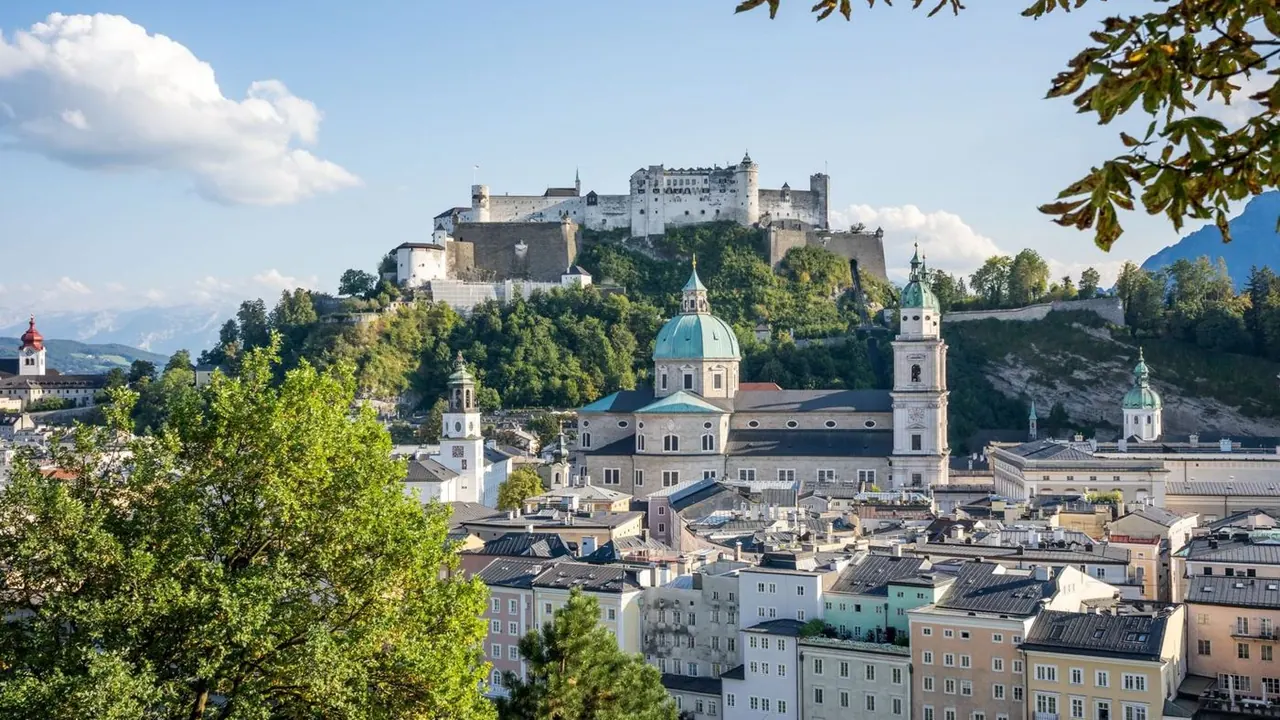
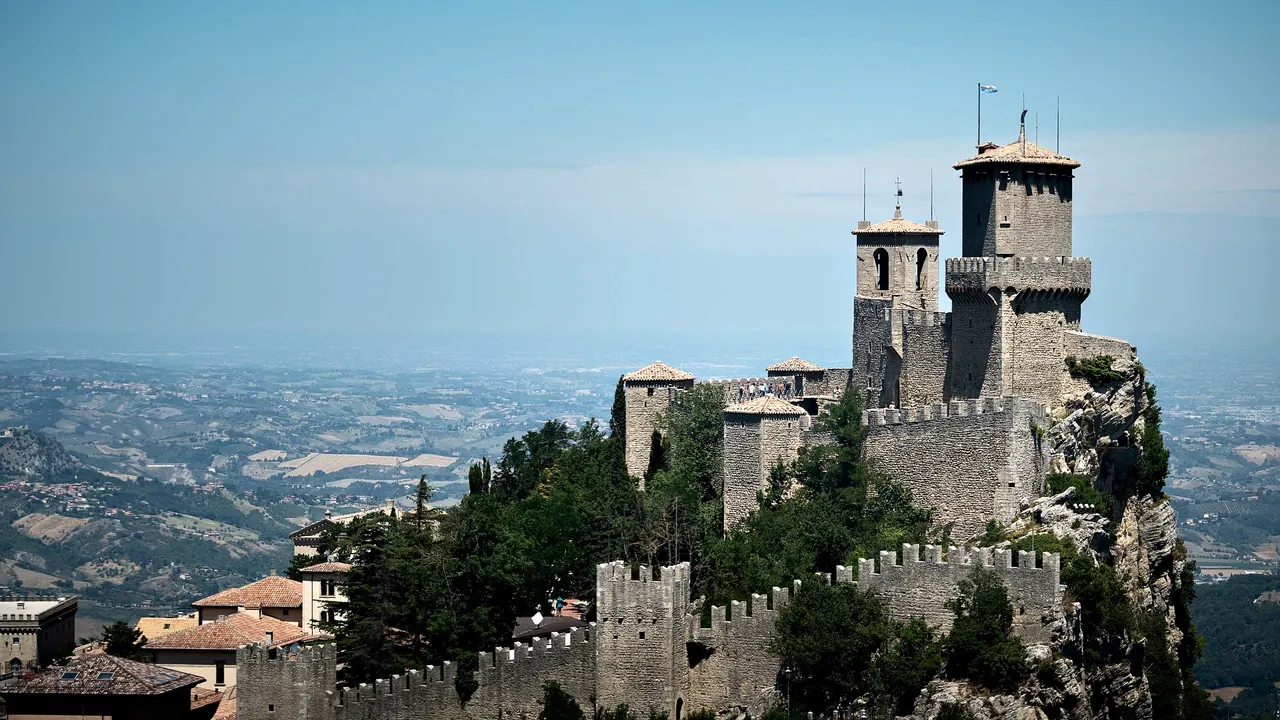
Photos: Salzburg by Leonhard Niederwimmer, Pexels License; San Marino by Tibor Szabo, Pexels License.
Salzburg or San Marino?
Our verdict in twelve categories, each scored against the same fixed benchmark cities, and the climate month by month, so you can choose for your trip.
Choose Salzburg for
- live music and the arts
- nature and the outdoors
- getting around
Salzburg suits travellers who want a city with real depth: a Baroque old town under a clifftop fortress, a classical music calendar built around Mozart, and the Alps beginning at the edge of town. It rewards a stay of several days, with ridge walks, salt mines and lake villages all close by, as long as you accept higher bills for rooms and meals.
Choose San Marino for
- prices
- beaches
San Marino works better as a short, cheaper stop within an Adriatic trip. The walled summit town and its towers fill half a day, the Romagna beaches lie half an hour below, and with a car, San Leo, Urbino and Ravenna make it a fair base. Evenings are quiet, and there is little in the way of concerts or nightlife.
Scoreboard
Twelve categories on one fixed scale from 0 to 100. The shaded stretch is the gap between the two.
Your match
Pick a travel style or drag the sliders, and both match scores follow your weighting.
Wins on live music and the arts and nature and the outdoors with your weighting.
Wins on prices and beaches with your weighting.
What matters to you?
Category by category
What the scores mean for a trip.
Beaches & swimming
Neither city is on the water, but San Marino makes for the easier beach day. The sandy Romagna shore at Rimini and Riccione is about half an hour down the mountain. It has warm, shallow sea, rows of umbrellas and beach clubs from July to early September.
Instead of the sea, Salzburg has the Salzkammergut lakes. Fuschlsee, Wolfgangsee and Mondsee have clear green water that you enter from lawns and jetties, and there is no sand. They make a lovely hot afternoon, but in both places swimming is a side trip rather than the reason to go.
Food & drink
Both cities serve hearty regional food and neither is worth travelling for, but Salzburg offers a little more. Coffee houses with cake, the peaked Salzburger Nockerl and the monastery brewery in Mülln, with beer from wooden barrels under chestnut trees, give Austrian staples like schnitzel and Kasnocken a sense of occasion.
San Marino cooks the food of Romagna: hand-rolled strozzapreti, passatelli in broth, piadina and the Tre Monti wafer cake, with the republic's own Sangiovese. In both places the tourist centre is the weak spot, so eat at Salzburg's outer inns, or in Borgo Maggiore and the lower villages.
Culture & sights
Salzburg has far more to see. It has a whole UNESCO-listed Baroque old town with the cathedral and Residenz, Hohensalzburg on its cliff, Mirabell, the Mozart houses and the catacombs of St Peter. These fill two or three days, and Hellbrunn and the Museum der Moderne add more.
San Marino's appeal is its setting and its story as one of the world's oldest surviving republics. You get the walled crest of Monte Titano, the Guaita and Cesta towers, which you can climb, and the ceremonial Palazzo Pubblico. It is memorable, but half a day covers it.
Nightlife
Neither city suits a big night out, but Salzburg at least has some life after dinner. Its beer halls have long tables and litre mugs, and the student pubs along Rudolfskai stay open later at weekends during term. San Marino's summit falls almost silent once the coaches leave, and a glass of wine above the lights of the coast is the best on offer. For clubs, people go to Munich from Salzburg and down to the Riviera from San Marino.
Nature & outdoors
This is where Salzburg pulls furthest ahead. Wooded ridges rise inside the city itself, and the Untersberg cable car lifts you to about 1,800m for limestone ridge walks. The Gaisberg draws hikers and paragliders, the Salzkammergut lakes and Berchtesgaden National Park are close, and snow often reaches the town in winter.
Monte Titano is a single ridge of about 740m, with cliff paths between the towers and wide views to the Adriatic and the Apennines. It makes a good morning walk, and the Marecchia valley suits quiet cycling, but there are no high peaks, long trails or adventure sports within easy reach.
Day trips
Both make good bases, and Salzburg has slightly more variety. From there you can reach Hallstatt, St Wolfgang and the old imperial spa town of Bad Ischl in the lake district. There are also salt mines at Hallein and Berchtesgaden, the clifftop fortress at Werfen, and Munich about an hour and a half away by train.
San Marino's trips lean towards Italian art and fortresses: San Leo across the valley, the Renaissance court city of Urbino, the Byzantine mosaics of Ravenna, Gradara, and Rimini below. A car matters more here, because only the bus to Rimini runs regularly. Salzburg has trains to Munich and Hallein, even though its lake villages are also easier to reach by car.
Good for families
Salzburg gives children more to do within the city. There are the trick fountains at Hellbrunn with the zoo beside them, the hands-on Haus der Natur, the fortress funicular and the marionette theatre. The wooden miners' slides in the nearby salt mines round it off.
San Marino's towers, battlements and cable car make an exciting morning, but there is little on the summit built for children. The family attractions are on the coast below: Italia in Miniatura, Fiabilandia, waterparks and shallow beaches. That suits families with a car far better than those relying on the bus.
Getting around
Salzburg is much easier to get around. The old town, the fortress, Mirabell and the Mozart houses are within about fifteen minutes' walk of each other, and much of the centre is car-free. A dense trolleybus and bus network covers the rest of the city, out to Hellbrunn and the Untersberg cable car, and trains run to Munich, Vienna and Hallein.
San Marino's centre is compact too, but almost every street climbs or drops, often by steps. Its links are thin: the cable car down to Borgo Maggiore, the bus from Rimini and infrequent buses between the villages. The hill towns need a car, much as Salzburg's lake villages do.
Shopping & style
Salzburg has the more rewarding shopping, mainly for Tracht. Workshops around the old town make dirndls and loden jackets to measure. Getreidegasse under its wrought-iron guild signs, the farmers' market by the Andräkirche and the Advent market on Domplatz add to it.
San Marino depends on its lower taxes, with perfume, watches, leather and spirits along the main streets and an outlet centre in the valley. Alongside these you find ceramics, decorative crossbows and the stamps and coins collectors look for. Neither city is a serious shopping destination.
Affordability
San Marino is the cheaper place to stay. Hotels and trattorias charge provincial central Italian prices, the sights cost little, and lower taxes make fuel and spirits cheaper. The summit terraces and the most convenient hotels do cost more.
Salzburg is expensive for its size. Old-town hotels and central restaurants are expensive all year, and both get scarcer and dearer during the summer festival and Advent. A city card, a room across the river or in the suburbs, and meals at the outer beer halls and inns all help.
Live music & performing arts
In live music and theatre the two are worlds apart. Salzburg's summer festival fills the Grosses Festspielhaus and the Felsenreitschule, a riding school carved into the cliff, with opera and leading orchestras, and Jedermann is performed outdoors in front of the cathedral. Mozart Week, the Easter Festival, the Mozarteum and the Landestheater keep music going through the rest of the year.
San Marino has a small theatre, occasional concerts by local ensembles and open-air music in summer. Its Medieval Days festival, with crossbow contests and flag-throwers, is a pageant rather than a concert season. For opera nearby, people go to Pesaro or Bologna.
Wellness & relaxation
Salzburg is the better place to unwind. The riverside paths, the Mirabell gardens and the coffee houses set an easy pace, and the Paracelsus Bad in the city park has saunas and a pool. The brine spa town of Bad Reichenhall and the thermal springs of the Gastein valley are within reach.
San Marino offers calm rather than treatments. There are a few hotel spas, and evening walks along the walls are peaceful once the day visitors have gone, but the streets around the towers are crowded during the day.
When should you go?
Pick your month. The climate figures are measured averages, not a forecast.
Salzburg in July
San Marino in July
Daytime high, °C
Rainfall in the month, mm
Where the figures come from
San Marino's temperatures are measured 52 km from the centre, at Frontone.
San Marino has no rain gauge within 25 km of the centre, so its rainfall comes from a gridded climate dataset read at the city rather than from a gauge further away.
Temperature and rainfall are climate normals, averaged over the years shown. Salzburg: 1991-2020 normals, Salzburg (3.4 km from centre). San Marino: 1991-2020 normals, Frontone (51.5 km from centre).
Salzburg is at its best from late spring to early autumn, though summer is wet. July reaches about 25°C and brings the most sunshine of the year, which is good for the lakes and mountain paths. May to August is also the rainiest stretch, at around 160mm a month, so expect showers. September and October are less wet and comfortable for walking the old town. From November to February it is cold, and snow often reaches the streets.
San Marino is hotter and drier in summer. July climbs to about 30°C, which makes the steep summit lanes hard going at midday, and the Adriatic below warms to about 25°C in July and August, the best time for beach days. Here the rain comes in autumn and peaks around 105mm in November, so late spring and early September are the most pleasant months for walking the ridge.
Which traveller are you?
On a culture and arts trip, choose Salzburg. The prince-archbishops' Baroque old town, Hohensalzburg and the Mozart houses fill two or three days, and the Salzburg Festival, the Mozarteum and the Landestheater offer opera and concerts that San Marino cannot match.
On an outdoors trip, Salzburg wins again by some distance. The Untersberg cable car, the Gaisberg trails, the Salzach bike path and the Salzkammergut lakes are all close, and Berchtesgaden is half an hour away. Monte Titano gives pleasant morning walks but has no long trails.
On a trip on a tight budget, your money goes further in San Marino. Hotels and lower-village trattorias charge provincial Italian prices, the sights are inexpensive, and sleeping a few kilometres below the summit saves more. Salzburg's old-town rooms and restaurants are expensive all year.
Before you go
| Measure | Salzburg | San Marino |
|---|---|---|
| Official language | German, Austrian Sign Language | Italian |
| Currency | Euro (EUR) | Euro (EUR) |
| Sockets | CF230 V, 50 Hz | CFL230 V, 50 Hz |
| Driving side | Right | Right |
| Time zone | UTC+1, UTC+2 in summer | UTC+1, UTC+2 in summer |
| Emergency number | 112 | 112 |
| Elevation | 424 m | 675 m |
| Main airport | Salzburg Airport (SZG)3 km from centre64 non-stop destinations | Bologna Guglielmo Marconi Airport (BLQ)114 km from centre98 non-stop destinations |
| Public holidays this year | 16 days | 18 days |
By the numbers
| Measure | Salzburg | San Marino |
|---|---|---|
| City population | 155,021 | 4,040 |
| People per km² | 2,360 | 569 |
| Museums within 10 km | 38 | 19 |
| UNESCO World Heritage sites within 50 km | 3 | 2 |
| Swim season, months above 21 °C | - | 4 months |
Where else could you go?
Every comparison below shares a destination with this one, so you can follow Salzburg or San Marino somewhere new.
- Hallstattvs Salzburg
- Assisivs San Marino
- Florencevs San Marino
- Bolognavs San Marino
- Sienavs San Marino
- Munichvs Salzburg