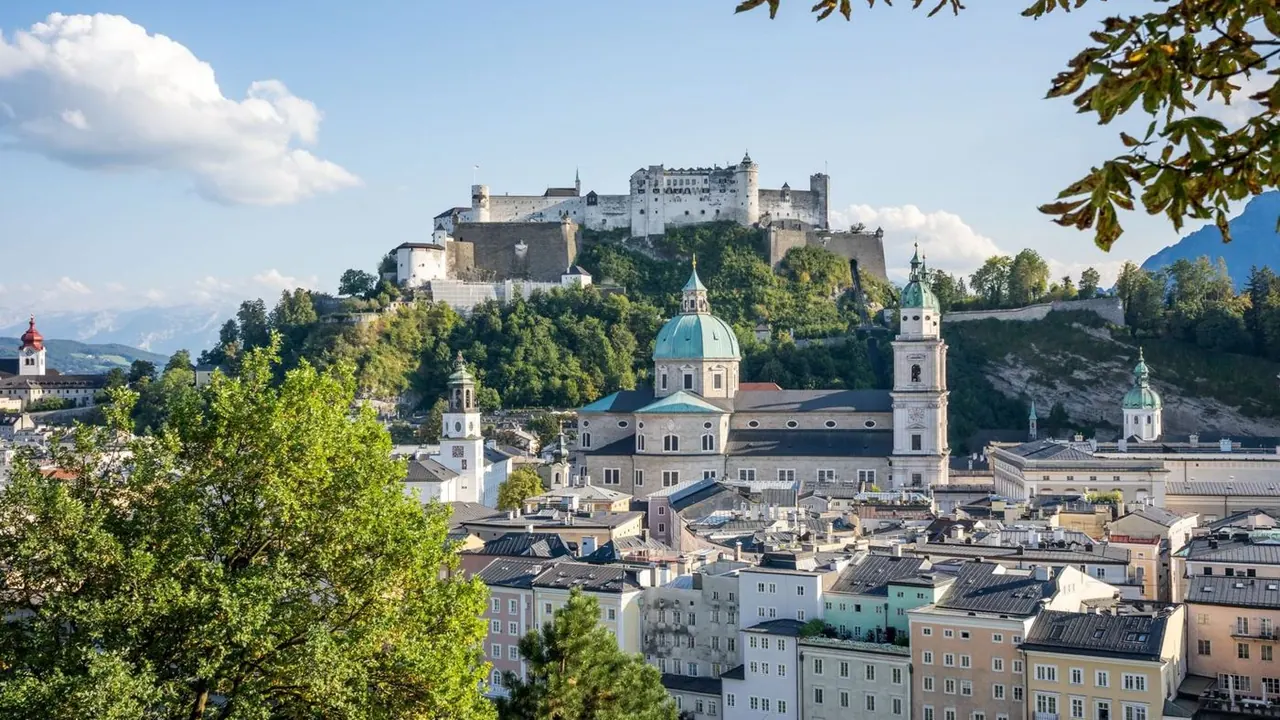
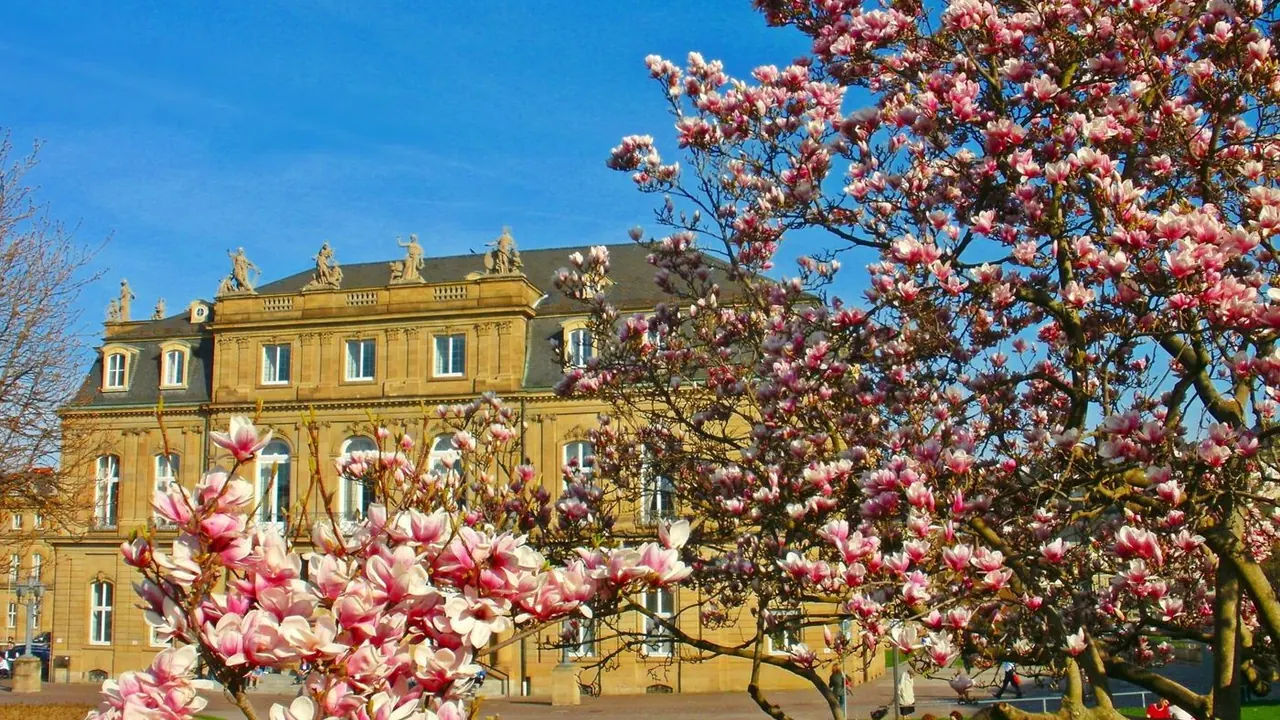
Photos: Salzburg by Leonhard Niederwimmer, Pexels License; Stuttgart by Baden de, CC BY 3.0, cropped.
Salzburg or Stuttgart?
Our verdict in twelve categories, each scored against the same fixed benchmark cities, and the climate month by month, so you can choose for your trip.
Choose Salzburg for
- beaches
- nature and the outdoors
- culture and sights
Salzburg suits travellers who want a compact Baroque old town, a medieval fortress on the cliff and classical music of real stature, with the Alps and the Salzkammergut lakes starting almost at the city limits. It rewards walkers, concert-goers and anyone happy to end the evening early after a performance and a glass of beer, on an unhurried trip of a few days.
Choose Stuttgart for
- nightlife
- food and drink
- shopping
For a trip built around eating, drinking and modern sights, Stuttgart makes more sense. Swabian taverns, wine from vineyards inside the city, the car museums and a livelier weekend bar scene give it the edge there. It is also a little easier on the budget and has mineral baths in town, while its shopping has more range. The grand old stones and the high mountains are on the Austrian side.
Scoreboard
Twelve categories on one fixed scale from 0 to 100. The shaded stretch is the gap between the two.
Your match
Pick a travel style or drag the sliders, and both match scores follow your weighting.
Too close to call, 1 point apart
Wins on beaches and nature and the outdoors with your weighting.
Wins on nightlife and food and drink with your weighting.
What matters to you?
Category by category
What the scores mean for a trip.
Beaches & swimming
Neither city is a beach destination, but Salzburg has much better summer swimming. Fuschlsee, Wolfgangsee and Mondsee are under an hour away, and their clear green water warms to about 20-24°C in high summer. You get in from lawns, jetties and small pebble shores, which makes a good half-day on a hot afternoon.
Stuttgart has nothing like this nearby. The Neckar is a working river with barges, and Max-Eyth-See is for boating rather than bathing, so swimming means the city's outdoor pools, some of them fed by mineral springs. The nearest open water worth the trip is Lake Constance, more than two hours south.
Food & drink
Stuttgart is the better place to eat. Swabian cooking such as Maultaschen, Käsespätzle and Zwiebelrostbraten is served in traditional wine taverns. Trollinger and Riesling come from vineyards inside the city, and the growers' seasonal Besen add wine with onion tart in their own houses. The Art Nouveau Markthalle and a serious fine-dining tier give a stay of several days more variety.
Salzburg's best moments are coffee and cake in the old coffee houses and the monastery brewery in Mülln, where beer is drawn from wooden barrels under chestnut trees. Its old-town restaurants often serve the same menus to tour groups, and the better cooking is in the inns on the outskirts and in the hills around town.
Culture & sights
Salzburg is the stronger city for classic sightseeing. The prince-archbishops' Baroque old town survives intact: the cathedral, the Residenz and the arcaded squares are minutes apart, with Hohensalzburg above them and the Mirabell gardens across the river. Mozart's birthplace and the St Peter catacombs complete a walk through centuries of history.
Stuttgart's culture is of a different kind. After wartime bombing it left heritage only in pockets, so its highlights are industrial and modern: the Mercedes-Benz and Porsche museums, the Staatsgalerie's painting collection and the Le Corbusier houses on the Weissenhof Estate. The Neues Schloss on Schlossplatz is its main Baroque set piece.
Nightlife
Neither city is built for late nights, but Stuttgart has more to offer after dark. Bars and lounges line Theodor-Heuss-Strasse and fill at weekends, and small clubs in basements and former industrial spaces have a loyal electronic music crowd. The Cannstatter Volksfest's beer tents liven up the autumn.
In Salzburg an evening usually means a concert, then dinner and a litre mug at a long wooden table in a beer hall. A few student pubs on Rudolfskai stay open later during term, but the old town is quiet by midnight, and locals who want to go clubbing take the train to Munich.
Nature & outdoors
Salzburg is far ahead here because it sits right where the Alps begin. A cable car climbs the Untersberg to about 1,800m for ridge walks, paragliders take off from the Gaisberg, and the Salzkammergut lakes add sailing and paddling. Berchtesgaden National Park and the Königssee are about half an hour away, and the ski areas about an hour.
Stuttgart's landscape is greener and lower: wine trails above the Neckar, deer in the Rotwildpark and Schönbuch forests, and within an hour the cliff-edge paths of the Swabian Jura and the fir ridges of the northern Black Forest. It is good walking and cycling country, but there are no high mountains.
Day trips
Both are excellent bases, but the trips are different. From Salzburg you head for lake villages and salt-mining heritage: Hallstatt beneath its prehistoric mine, St Wolfgang and St Gilgen, the spa town of Bad Ischl, the mine at Hallein and the fortress at Werfen. Several of the lake villages are much easier to reach by car.
Stuttgart's excursions are mostly historic towns that are easy to reach by rail. Ludwigsburg's palace and Esslingen are a short S-Bahn ride away, Tübingen and Heidelberg take under an hour, and Maulbronn, Hohenzollern Castle and Ulm's spire are not much further. Strasbourg is within reach for a long day.
Good for families
Both cities are safe and easy with children, and their highlights are of a similar size. In Salzburg, the trick fountains at Hellbrunn usually come first, with the zoo next door and the hands-on Haus der Natur in town. Nearby salt mines have wooden slides and underground boat rides.
Stuttgart's top outing is Wilhelma, a zoo and botanical garden that fills a whole day. Killesberg park has a miniature railway, the rack railway is a treat in itself, and older children enjoy the car museums. Neither city has a theme park. Pushchairs struggle on Salzburg's cobbles and on Stuttgart's hills.
Getting around
Both are easy to get around, in different ways. Salzburg is a walking city. The old town, fortress, Mirabell and the Mozart houses are within about fifteen minutes of each other, trolleybuses cover the rest, and the flat riverside paths suit a bike. The lakes are the weak point, as the regional buses are slow and many visitors hire a car.
Stuttgart has a flat core but steep sides. Light rail, the S-Bahn, a rack railway and a funicular, all on one ticket, carry you up the slopes, and public stairways called Stäffele give you shortcuts on foot. The rail network also reaches most of its day-trip towns, so a car is rarely needed.
Shopping & style
Stuttgart has the broader shopping. Königstrasse is one of Germany's longest pedestrian streets, a long-established family department store just off it covers designer fashion, and independent shops cluster around Calwer Strasse and the Bohnenviertel. Metzingen's outlet village, about half an hour away, attracts brand hunters.
Salzburg has less range but more local character. Getreidegasse's guild signs hang over mostly chain shops, while the old town's Tracht workshops make dirndls and loden jackets to measure. In Advent, the Christmas market on Domplatz is one of the best-known in the region.
Affordability
Neither city is cheap, but Stuttgart is the gentler of the two on the wallet. Its hotels are priced for business travellers, so rooms are expensive during trade fairs and noticeably cheaper at weekends and in quiet months, which works in a leisure visitor's favour. Taverns and beer gardens serve generous portions at fair prices.
Salzburg is expensive for its size all year, and rooms and tables become scarce during the summer festival and the Advent markets. The usual ways to save are to stay across the river or in the suburbs and come in by bus, buy a city card for the museums, and eat at the beer halls and the inns outside the centre.
Live music & performing arts
Salzburg comes out ahead for classical music. The summer festival fills the Grosses Festspielhaus and the Felsenreitschule, carved into the cliff, with leading performers, and Jedermann is played in front of the cathedral. Mozart Week and the Easter Festival add two more seasons, and the Mozarteum and the Marionette Theatre keep music going between them.
Stuttgart's strength is the depth of its resident companies across the year. Its ballet has been among Europe's most respected since John Cranko's time, and the Staatsoper is known for bold productions. Big musicals, a strong Bach tradition and a busy jazz scene give it more range beyond opera and concerts than Salzburg has.
Wellness & relaxation
Stuttgart has the better bathing culture within the city itself. The mineral springs of Bad Cannstatt and Berg are among the most productive in Europe and feed public baths such as the Mineralbad Cannstatt and the Mineralbad Leuze, where you can soak in naturally carbonated warm water indoors and out. The everyday pace is businesslike, though.
Salzburg is calmer in mood, with quiet river paths, the wooded Mönchsberg and long coffee-house afternoons, but in town it has only the Paracelsus Bad. Its real spas are outside the city, in the brine baths of Bad Reichenhall and the radon springs of the Gastein valley.
When should you go?
Pick your month. The climate figures are measured averages, not a forecast.
Salzburg in July
Stuttgart in July
Daytime high, °C
Rainfall in the month, mm
Temperature and rainfall are climate normals, averaged over the years shown. Salzburg: 1991-2020 normals, Salzburg (3.4 km from centre). Stuttgart: 1991-2020 normals, Stuttgart / Neckartal (2.8 km from centre).
Salzburg has a warm but wet summer. Highs reach about 25°C in July and August, and the lakes outside town are warm enough to swim in from June to early September. May to August is also the rainy stretch, though, because the Alps catch the clouds. June is the wettest month at around 168mm, and July and August are not far behind, so heavy showers are likely in all the warm months. The nicest walking weather comes in late April and in September, when days are mild and the rain is lighter than in high summer. Winters are cold, with January highs near 3°C, and snow often reaches the town.
Stuttgart is a little warmer all year and much drier. Even its wettest month, July, gets only about 79mm of rain, and it has more summer sunshine than Salzburg, so a June or July trip is less likely to be spoiled by the weather. Highs near 26°C in July and August are pleasant rather than too hot for the streets and vineyard paths, and the season for walking runs from May to September and stays mild into October. Its winters are milder than Salzburg's but grey, with little sunshine from November to January.
Which traveller are you?
On an outdoors trip, Salzburg is the clear choice. Ridge paths start on the Mönchsberg in the centre, a cable car climbs the Untersberg to limestone summits, and the Salzkammergut lakes and Berchtesgaden are close by. Stuttgart's wooded hills and the Swabian Jura are gentler country.
For a culture and arts trip, Salzburg comes out ahead with its UNESCO-listed Baroque old town, the Hohensalzburg fortress, Mozart's two houses and a festival calendar of opera and orchestral music. Stuttgart answers with its car museums, the Staatsgalerie and one of Europe's most respected ballet companies.
On a food and nightlife trip, Stuttgart is the stronger base. Swabian taverns, local wine poured in seasonal Besen and a fine-dining tier beat Salzburg's narrow menus. Theodor-Heuss-Strasse and the basement clubs keep weekends going long after Salzburg's old town has gone quiet.
Before you go
| Measure | Salzburg | Stuttgart |
|---|---|---|
| Official language | German, Austrian Sign Language | German |
| Currency | Euro (EUR) | Euro (EUR) |
| Sockets | CF230 V, 50 Hz | CF230 V, 50 Hz |
| Driving side | Right | Right |
| Time zone | UTC+1, UTC+2 in summer | UTC+1, UTC+2 in summer |
| Emergency number | 112 | 112 |
| Elevation | 424 m | 245 m |
| Main airport | Salzburg Airport (SZG)3 km from centre64 non-stop destinations | Stuttgart Airport (STR)10 km from centre124 non-stop destinations |
| Public holidays this year | 16 days | 12 days |
By the numbers
| Measure | Salzburg | Stuttgart |
|---|---|---|
| City population | 155,021 | 609,365 |
| People per km² | 2,360 | 2,938 |
| Museums within 10 km | 38 | 42 |
| UNESCO World Heritage sites within 50 km | 3 | 3 |
Where else could you go?
Every comparison below shares a destination with this one, so you can follow Salzburg or Stuttgart somewhere new.