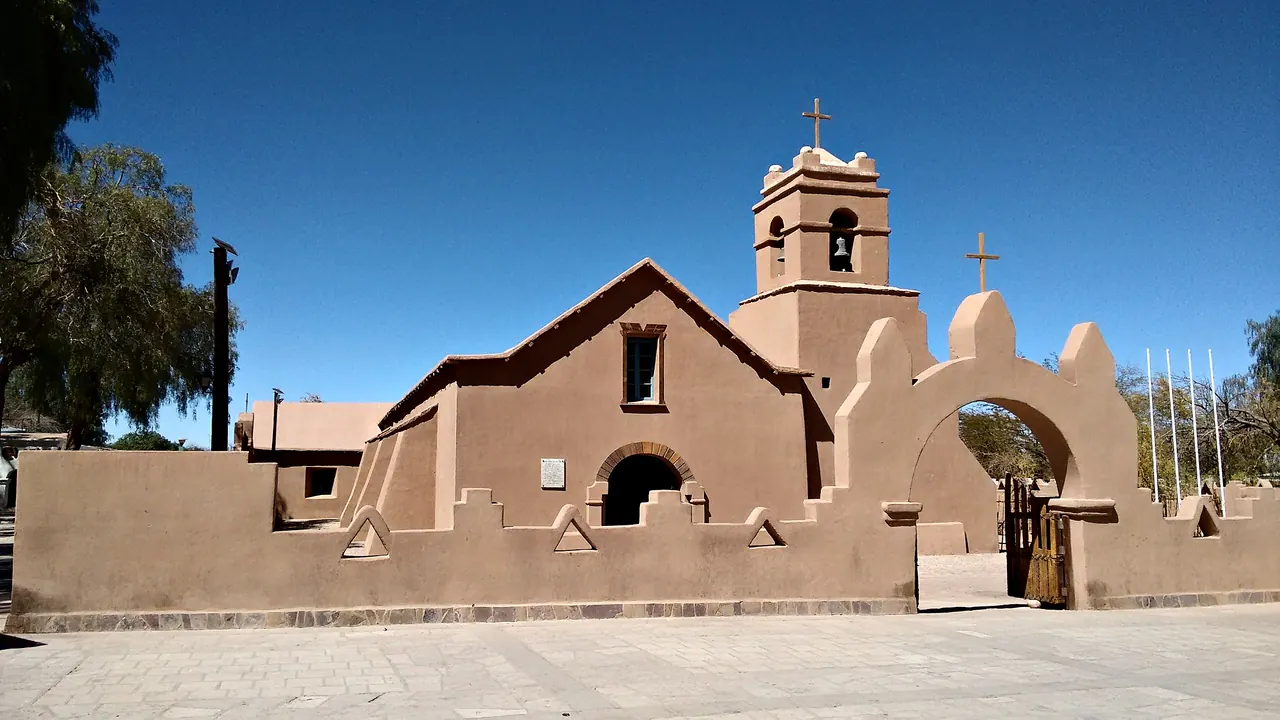
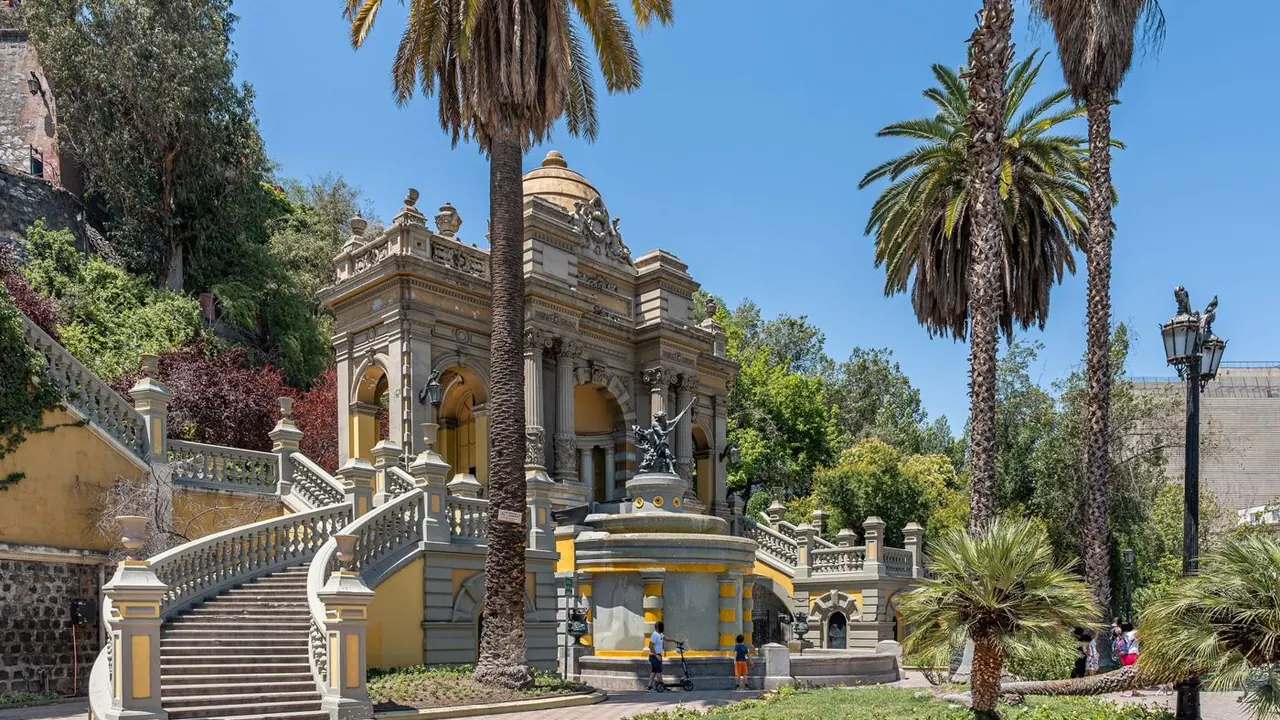
Photos: San Pedro de Atacama by MarcosEscalier, CC BY-SA 4.0, cropped; Santiago by Rjcastillo, CC BY-SA 4.0, cropped.
San Pedro de Atacama or Santiago?
Our verdict in twelve categories, each scored against the same fixed benchmark cities, and the climate month by month, so you can choose for your trip.
Choose San Pedro de Atacama for
- wellness
- nature and the outdoors
San Pedro de Atacama is for travellers who want landscape above all else: geysers steaming at sunrise, flamingos in the salt flats, deep blue lagoons under volcanoes and night skies so clear that stargazing is the evening's entertainment. It suits a focused stay of a few days to a week. It works best for people who don't mind early alarms, minibus tours and a quiet village where dinner is mainly a way to refuel.
Choose Santiago for
- nightlife
- day trips
- live music and the arts
Santiago is the better choice for a rounded city stay. It has the food, wine, museums, late nights and simple metro that the desert village lacks. Valparaíso and the wine valleys are within easy reach, and the Andes are close enough for a hike or a winter ski day. Families, and anyone who wants evenings as full as their days, will find it much easier.
Scoreboard
Twelve categories on one fixed scale from 0 to 100. The shaded stretch is the gap between the two.
Your match
Pick a travel style or drag the sliders, and both match scores follow your weighting.
Wins on wellness and nature and the outdoors with your weighting.
Wins on nightlife and day trips with your weighting.
What matters to you?
Category by category
What the scores mean for a trip.
Beaches & swimming
Neither place is a beach destination, and they differ in what counts as a swim. In San Pedro it is a float in the salt lagoons of Laguna Cejar or Baltinache. The water is so salty that you stay on the surface without effort. It is an unusual hour under a fierce sun, with no shade, not an afternoon on the sand.
Santiago at least has a real coastline within reach. Viña del Mar and the central coast towns are about two hours away, but the cold Humboldt Current means most people paddle rather than swim. In the city itself, a swim means the public pools of the Parque Metropolitano or a hotel pool.
Food & drink
This is one of the clearest gaps between the two. San Pedro's restaurants line Caracoles and cook mostly for tour groups. The better kitchens make good use of quinoa, llama and rica-rica, but the menus start to repeat after a few nights, and there are no markets to explore.
Santiago is a place to eat well in its own right. There are sea urchins and conger eel soup at the Mercado Central, cheap counters around La Vega, set lunches in the Centro and Carmenère from nearby valleys in the modern restaurants of Lastarria and Barrio Italia. The range of international food is modest, but after a desert village it feels generous.
Culture & sights
San Pedro's heritage is small and quiet. There is the cactus-wood ceiling of its adobe church, the hillside fortress of Pukará de Quitor, where the Atacameño held out against the Spanish, and the ancient round houses of Tulor. Half a day by bike covers it all, and it adds a human layer to the landscape rather than filling a trip.
Santiago has the museums and the national story. The Museo Chileno de Arte Precolombino is the highlight. La Moneda and the Museum of Memory and Human Rights tell the story of 1973 and the dictatorship, and Lastarria and Cerro Santa Lucía make good walks. Earthquakes destroyed much of the colonial city, but there is still two or three days of sightseeing here.
Nightlife
There is hardly a contest. In San Pedro, evenings end with a pisco sour by a fire pit, early enough to sleep before a pre-dawn geyser tour. The night out that really counts is an astronomy tour under the desert sky.
Santiago keeps late South American hours. Bellavista has student bars and the main LGBTQ+ clubs, Lastarria and Barrio Italia have quieter wine and cocktail bars, and at weekends clubs stay busy until morning.
Nature & outdoors
Both are outstanding for the outdoors, but San Pedro comes out ahead, because the landscape is the whole point and starts at the edge of the village. The Valle de la Luna is a bike ride away. The El Tatio geysers, the flamingo pools of the Salar and the Miscanti and Miñiques lagoons are each a morning's drive. Sun is reliable and the skies are among the darkest on earth. Altitude is the cost, and you need to acclimatise before going high.
Santiago's strength is variety. There are hikes on Cerro San Cristóbal and Manquehue, rafting and the El Morado glacier trail in the Cajón del Maipo, and in winter, ski days at Valle Nevado and La Parva. Smog, urban sprawl and the lack of buses to trailheads make these less easy to reach.
Day trips
Apart from the desert landscapes, San Pedro has few places worth a day out. There is the white-stone oasis village of Toconao and a few tiny Andean hamlets. Further north are the old church at Chiu Chiu and the vast copper mine at Chuquicamata. Uyuni in Bolivia is a multi-day journey, not a day trip.
Santiago is a much better base for outings. Valparaíso, with its funiculars, painted hills and Neruda's house La Sebastiana, is about an hour and a half away by bus, and Viña del Mar fits into the same day. The Maipo and Casablanca wine estates make a very different kind of easy day out.
Good for families
Santiago is far easier with children. The cable car and zoo on Cerro San Cristóbal, the Museo Interactivo Mirador, the amusement park in Parque O'Higgins and the playgrounds of Parque Bicentenario can fill several days. Restaurants welcome children late into the evening.
San Pedro can be a real adventure for teenagers, with sandboarding, floating in the salt lagoons and looking through telescopes. Nothing is designed for small children, though, and the big excursions mean pre-dawn starts, hours in a minibus and bitter cold above 4,000m.
Getting around
You can cross San Pedro on foot in ten minutes, but there is no public transport beyond its dusty streets. That leaves tour minibuses, a hire car or bike rides that the heat and sand make harder than they look. Even getting there takes about an hour and a half from Calama airport.
Santiago has a clean, easy metro, and one card covers trains and buses. Line 1 runs from the Centro through Providencia to Las Condes, and the walks between Lastarria, Bellavista and Providencia are pleasant. Rush hour and the buses can be trying, but you only need a car for the mountains and the wine valleys.
Shopping & style
In San Pedro, shopping means the craft market and the shops along Caracoles. They sell alpaca jumpers, woven textiles and lapis lazuli jewellery, much of it the same across the region. A warm wool layer for the dawn starts is the one truly useful purchase.
Santiago has big malls such as Costanera and Parque Arauco, luxury labels in Vitacura, and independent design and vintage shops in Barrio Italia. For crafts to take home, the workshops of Pueblito Los Dominicos, selling copper, Mapuche silver and lapis lazuli, offer more choice than San Pedro's stalls.
Affordability
Santiago is clearly the cheaper of the two. Market food, set lunches, local wine, cheap metro rides and free or inexpensive museums keep daily costs moderate. Hotels in Providencia and Las Condes and shared day tours are where the money goes.
San Pedro costs more than most of Chile, because supplies are trucked across the desert and almost nothing can be reached without a tour or a car. Excursions and park fees take up a large part of any budget, and simple adobe rooms cost more than they look. Cycling to the valleys and cooking for yourself help.
Live music & performing arts
San Pedro has almost no stage life. You might hear panpipes and charango in a restaurant on a busy night, or see costumed troupes dancing through the streets at Carnival and the feast of San Pedro and San Pablo.
Santiago has the Teatro Municipal, with its opera season, ballet company and philharmonic orchestra, contemporary work at the GAM, and the Santiago a Mil festival every January. Most theatre is in Spanish, but the folk, rock and Latin bands in Bellavista and the Centro need no translation.
Wellness & relaxation
San Pedro offers more real rest. The main draw is the Termas de Puritama, natural hot pools stepping down a reed-filled canyon. There are also lodge spas with volcano views and yoga classes in the village. The catch is the rhythm of a stay, with early alarms and thin air, so plan a few days with nothing booked.
In Santiago, the calm is outside the city, at the simple hot springs of the Cajón del Maipo or the terraced pools of Termas de Colina. The city itself is busy with cars and smoggy in winter, so Parque Forestal is the place to slow down.
When should you go?
Pick your month. The climate figures are measured averages, not a forecast.
San Pedro de Atacama in July
Santiago in July
Daytime high, °C
Rainfall in the month, mm
Where the figures come from
San Pedro de Atacama has no weather station within reach, so its figures come from a gridded climate model rather than a measured record, and read a broad area rather than the city itself.
Temperature and rainfall are climate normals, averaged over the years shown. San Pedro de Atacama: 1991-2020 normals, TerraClimate 4 km grid at the town, no weather station within 90 km. Santiago: 1991-2020 normals, Santiago Q. Normal (3.1 km from centre).
San Pedro de Atacama hardly changes through the year. It is dry and sunny, with daytime highs from about 19°C in June and July to 26°C in December and January. The only rain falls in January and February, around 14mm a month, from the odd altiplano storm. The real seasonal difference is the cold after dark and at altitude. Dawn starts for the geysers are freezing all year and harshest in winter. So any month works, as long as you pack for frost as well as fierce sun.
Santiago has clearer seasons. Summer is hot, dry and very sunny, reaching about 28°C in January, which makes long afternoons on foot tiring. Winter brings the rain, peaking at about 87mm in June, with cool, greyer days and fewer hours of sun. Spring and autumn are the most comfortable months for walking the city and hiking in the hills. Neither city is a beach destination in any month.
Which traveller are you?
On a food and nightlife trip, Santiago wins clearly. San Pedro's few fire-pit bars on Caracoles go quiet well before midnight. Santiago has seafood at the Mercado Central, Carmenère in Lastarria and Barrio Italia, and Bellavista's bars running late.
On a family trip with young children, Santiago is the safer choice. In San Pedro, the altitude, fierce sun, dry air and dust tire small children quickly. Santiago's metro takes a pushchair on most lines, and the leafy eastern districts make an easy base.
For an outdoors trip, San Pedro de Atacama wins. The Valle de la Luna, El Tatio and the altiplano lagoons lie near the village, with sun almost every day and superb night skies. Santiago's Andes are close, but sprawl, winter smog and no buses to most trailheads slow you down.
Before you go
| Measure | San Pedro de Atacama | Santiago |
|---|---|---|
| Official language | Spanish | Spanish |
| Currency | Chilean Peso (CLP) | Chilean Peso (CLP) |
| Sockets | CL220 V, 50 Hz | CL220 V, 50 Hz |
| Driving side | Right | Right |
| Time zone | UTC-4, UTC-3 in summer | UTC-4, UTC-3 in summer |
| Emergency number | Police 133/134, ambulance 131, fire 132 | Police 133/134, ambulance 131, fire 132 |
| Elevation | 2,407 m | 575 m |
| Main airport | El Loa Airport (CJC)86 km from centre3 non-stop destinations | Comodoro Arturo Merino Benítez International Airport (SCL)14 km from centre67 non-stop destinations |
| Public holidays this year | 16 days | 16 days |
By the numbers
| Measure | San Pedro de Atacama | Santiago |
|---|---|---|
| City population | 5,347 | 6,257,516 |
| People per km² | 2,325 | 7,468 |
| Museums within 10 km | 1 | 54 |
| UNESCO World Heritage sites within 50 km | 1 | 0 |
Where else could you go?
Every comparison below shares a destination with this one, so you can follow San Pedro de Atacama or Santiago somewhere new.
- Vina del Marvs Santiago
- Valparaisovs Santiago
- Mendozavs Santiago
- Saltavs San Pedro de Atacama
- La Pazvs San Pedro de Atacama
- Barilochevs Santiago