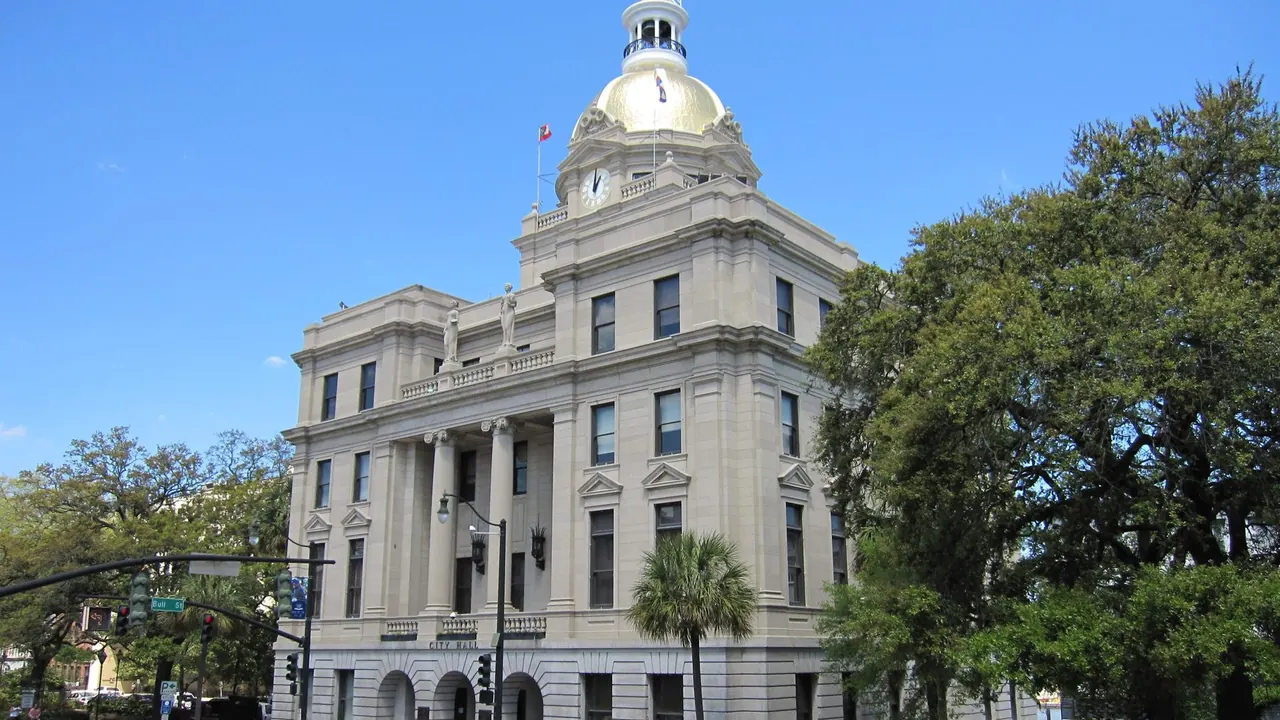
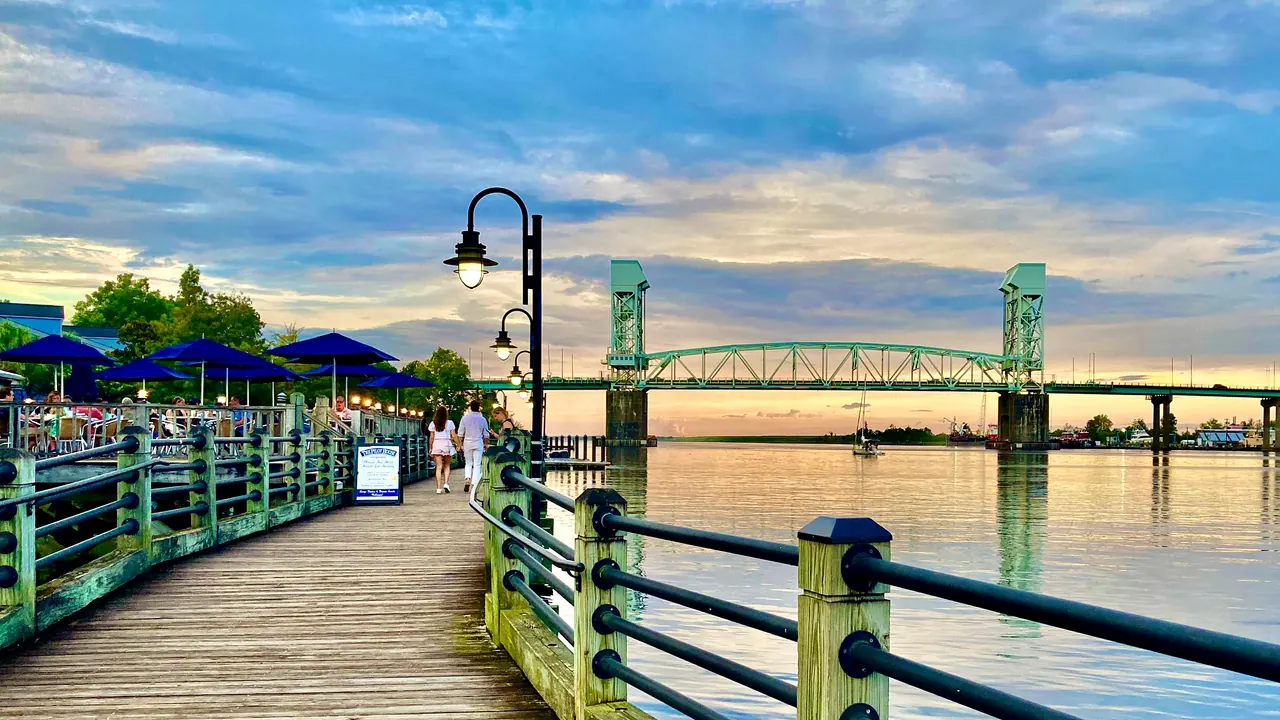
Photos: Savannah by Chris M Morris, CC BY 2.0, cropped; Wilmington by Unexpected Snacks, CC BY-SA 4.0, cropped.
Savannah or Wilmington?
Our verdict in twelve categories, each scored against the same fixed benchmark cities, and the climate month by month, so you can choose for your trip.
Choose Savannah for
- getting around
- culture and sights
- day trips
Savannah suits travellers who want the town itself to be the point of the trip. Its garden squares, old house museums and Bonaventure Cemetery reward slow walking. The historic district is compact enough to manage without a car, and the evenings are more sociable. Charleston and the Sea Islands are close enough for good outings, and the beach is there for a single day rather than the whole stay.
Choose Wilmington for
- beaches
- families
- nature and the outdoors
Wilmington is the better pick when the coast comes first. It has three distinct beach towns, an aquarium and a boardwalk for children, and Masonboro Island for paddling. Its historic district fills a day or two, but most of the time goes on sand, water and long summer afternoons. You will be driving most days, and in return it costs a little less.
Scoreboard
Twelve categories on one fixed scale from 0 to 100. The shaded stretch is the gap between the two.
Your match
Pick a travel style or drag the sliders, and both match scores follow your weighting.
Wins on getting around and culture and sights with your weighting.
Wins on beaches and families with your weighting.
What matters to you?
Category by category
What the scores mean for a trip.
Beaches & swimming
Both cities sit on rivers, and the sea is about half an hour's drive away in each case, but what you find at the end of the drive differs a lot. Wilmington has three beach towns to choose from. Wrightsville is the polished one, with pale sand and clean water, Carolina Beach has a boardwalk and a family crowd, and Kure is quieter still.
Savannah has Tybee Island, which is wide, flat and good for paddling and long walks. Its water is greenish-brown from the surrounding marshes, though, and the setting is a modest beach town. It is a pleasant day out, while Wilmington's coast can carry a whole vacation.
Food & drink
Savannah eats better. Its Lowcountry cooking runs from she-crab soup and Lowcountry boil to oyster roasts in the cooler months, and the family-style dining rooms with shared platters are an experience in themselves. Above those sits a small group of chef-led restaurants in restored townhouses south of Forsyth Park.
Wilmington's table leans more on the raw catch. It has flounder, oysters at waterfront raw bars and eastern Carolina's vinegar-sauced whole-hog barbecue, but fine dining is limited to a few places. Its strength is its craft breweries in the north end of downtown, which suit a relaxed evening better than a serious dinner.
Culture & sights
This is where the two differ most. Savannah's 1733 town plan, with its run of garden squares under Spanish moss, makes the whole centre the main sight. It also has the Telfair Museums, the Owens-Thomas House's frank account of slavery and the eerie beauty of Bonaventure Cemetery.
Wilmington has a large historic district of its own, along with the Bellamy Mansion and the Cotton Exchange. Its best-known sight, though, is the Second World War Battleship North Carolina across the river, and the rest of the list is short. Savannah repays a sightseer for longer.
Nightlife
Savannah is the livelier place to go out. You can carry a drink in a to-go cup through the historic district, so an evening moves easily between River Street's cobbled bars, the taverns around City Market and cocktail rooms in old townhouses. Its St Patrick's Day street party is one of the biggest in the South.
Wilmington's nights centre on Front Street's pubs and rooftop terraces, filled at weekends by university students, plus beach bars at Wrightsville and Carolina Beach in summer. Out of season, weeknights are very quiet.
Nature & outdoors
Both sit in flat, watery country of salt marsh and tidal creeks, but Wilmington has more to do in it. Masonboro Island is an undeveloped barrier island reached only by kayak or boat. The surf at Wrightsville adds surfing and sailing, and the trails at Carolina Beach State Park lead to wild Venus flytraps, which grow naturally nowhere else.
Savannah's outdoors is gentler. It means marsh paddling at high tide, dolphin-spotting trips, the oak avenue at Wormsloe and Skidaway Island's trails. Neither has a hill, and both are best outdoors in spring and autumn.
Day trips
Savannah has the stronger list, led by Charleston, a major historic city about two hours away. South Carolina's Beaufort, Hilton Head and the old resort of Jekyll Island are all within easy reach, and Fort Pulaski makes a half day.
Wilmington's outings are smaller towns. The best is Southport, with the ferry from there to car-free Bald Head Island, plus Fort Fisher and Brunswick Town on the way. North Carolina's own Beaufort and New Bern are each about two hours north. Either way, you will need a car.
Good for families
Savannah suits children better as a backdrop than as a playground. School-age children usually enjoy the ghost walks, the brick walls of Fort Pulaski and the birthplace of the Girl Scouts' founder, and the trolley tours and free river ferry are easy treats. Beyond Tybee's sea-turtle centre and a small wildlife centre, though, little is built for the young, and the summer heat makes a city seen on foot tiring for small legs.
Wilmington gives a family more to fill the days, especially in summer. The beaches come first, from Carolina Beach's boardwalk with its old-fashioned rides and arcades to the calmer sand at Kure. On a wet day you can try the state aquarium at Fort Fisher, the walk-through decks of the Battleship North Carolina or the children's museum downtown, and rental houses near the sea give families room to spread out. Watch for rip currents on rough days and expect to drive to almost everything.
Getting around
Savannah is far easier without a car. Its grid of squares puts most hotels, sights and restaurants within a short, flat walk, and a free downtown shuttle and a passenger ferry fill the gaps. Only Tybee, Wormsloe and Bonaventure need wheels.
Wilmington's downtown is just as pleasant on foot along the riverwalk, but it covers much less of the trip. The beaches are 15km or more away across suburban roads, buses are infrequent, and the aquarium and Southport are reached only by car. Beach traffic and parking add to that in summer.
Shopping & style
Neither is a shopping destination, but Savannah gives a better browse. Broughton Street is a proper shopping street of restored storefronts, and the art school brings shops selling work by students and graduates, with antiques and bookshops in the squares to the south.
Wilmington's independent boutiques and galleries are along Front Street and in the Cotton Exchange, with surf wear in the beach towns. For mainstream shopping, people head to the suburban centres.
Affordability
Neither is a bargain, but Wilmington goes a little easier on the budget, especially outside summer, when city hotel rooms are reasonable and casual seafood and barbecue are fair value. In summer, beachfront hotels and rental houses climb, and a hire car is hard to avoid.
Savannah's inns in the historic district are priced as a popular weekend destination. Much of what you come for costs nothing, though, and staying central can mean managing without a car.
Live music & performing arts
The two are evenly matched, and the difference is when things happen. Savannah's offering is concentrated in its spring music festival, held in historic theatres and churches, with the Lucas and Trustees theatres and an autumn jazz festival in Forsyth Park at other times. Outside those dates there may be little on.
Wilmington's is spread more evenly through the warm months. Thalian Hall, a 19th-century opera house, hosts theatre and touring shows, and bands play outdoor stages by Greenfield Lake and the river. It is easy to fit an evening in around a beach trip.
Wellness & relaxation
Neither has a bathing tradition, and spas in both are a handful of day and hotel options. Savannah is slightly better for doing very little. You can stay at a quiet inn on one of the southern squares, sit under the oaks, or spend time on a garden courtyard or porch, as long as you avoid River Street at weekends.
Wilmington's calm comes from slow waterfront evenings, resort spas near the beaches and yoga studios. Summer weekends there are busier and less restful.
When should you go?
Pick your month. The climate figures are measured averages, not a forecast.
Savannah in July
Wilmington in July
Daytime high, °C
Rainfall in the month, mm
Temperature and rainfall are climate normals, averaged over the years shown. Savannah: 1991-2020 normals, Savannah Airport (9.9 km from centre). Wilmington: 1991-2020 normals, Wilmington / The Palms Mobile Home Park (5.3 km from centre).
Savannah is the warmer of the two all year, usually a degree or two ahead. April, May and October are its best months for walking the squares, warm without being oppressive. From June to September it is genuinely hot, with highs around 34°C in July, and midday sightseeing becomes hard work. The sea off Tybee is warm enough to swim in from June into early October, reaching about 29°C in late summer. Its rain comes early in the summer, with June the wettest month at about 169mm, so September and October are noticeably drier there than in Wilmington.
Wilmington follows a similar year, but a little cooler, and its sea runs a degree or so behind. Spring is its sunniest season, with May the brightest month and April the driest. Summer is humid, and the rain keeps building as it goes on, peaking in August and September at about 221mm, so early autumn there is wetter and less settled than in Savannah. Winters in both are mild, fine for walking the streets but too cool for the sea.
Which traveller are you?
On a beach and sun trip, Wilmington is the clear choice. Wrightsville, Carolina and Kure beaches each have their own character, with pale sand and clearer water. Savannah has only Tybee Island, where the sea is tinted by the marshes, so it works better as a single day out.
For a short city break, Savannah does far more with two or three days. Its squares, churches and Telfair Museums sit within a flat, shaded walk of one another, and the evenings drift easily from bar to bar. Wilmington's compact downtown is covered quickly, and most of what lies beyond it needs a car.
On a family trip with young children, Wilmington has more to keep them busy. It has the aquarium at Fort Fisher, the boardwalk rides at Carolina Beach, the Children's Museum and beach rental houses. Savannah has trolleys, a ferry and shady parks, but no aquarium or large attraction.
Before you go
| Measure | Savannah | Wilmington |
|---|---|---|
| Currency | US Dollar (USD) | US Dollar (USD) |
| Sockets | AB120 V, 60 Hz | AB120 V, 60 Hz |
| Driving side | Right | Right |
| Time zone | UTC-5, UTC-4 in summer | UTC-5, UTC-4 in summer |
| Emergency number | 911 | 911 |
| Elevation | 15 m | 9 m |
| Main airport | Savannah Hilton Head International Airport (SAV)12 km from centre39 non-stop destinations | Wilmington International Airport (ILM)5 km from centre25 non-stop destinations |
| Public holidays this year | 12 days | 14 days |
By the numbers
| Measure | Savannah | Wilmington |
|---|---|---|
| City population | 147,780 | 115,451 |
| People per km² | 524 | 839 |
| Museums within 10 km | 19 | 2 |
| UNESCO World Heritage sites within 50 km | 0 | 0 |
| Swim season, months above 21 °C | 6 months | 6 months |
Where else could you go?
Every comparison below shares a destination with this one, so you can follow Savannah or Wilmington somewhere new.