Photos: Sedona by dconvertini, CC BY-SA 2.0, cropped; Snowbird by VeggieGarden, CC BY-SA 4.0, cropped.
Sedona or Snowbird?
Our verdict in twelve categories, each scored against the same fixed benchmark cities, and the climate month by month, so you can choose for your trip.
Choose Sedona for
- wellness
- shopping
- culture and sights
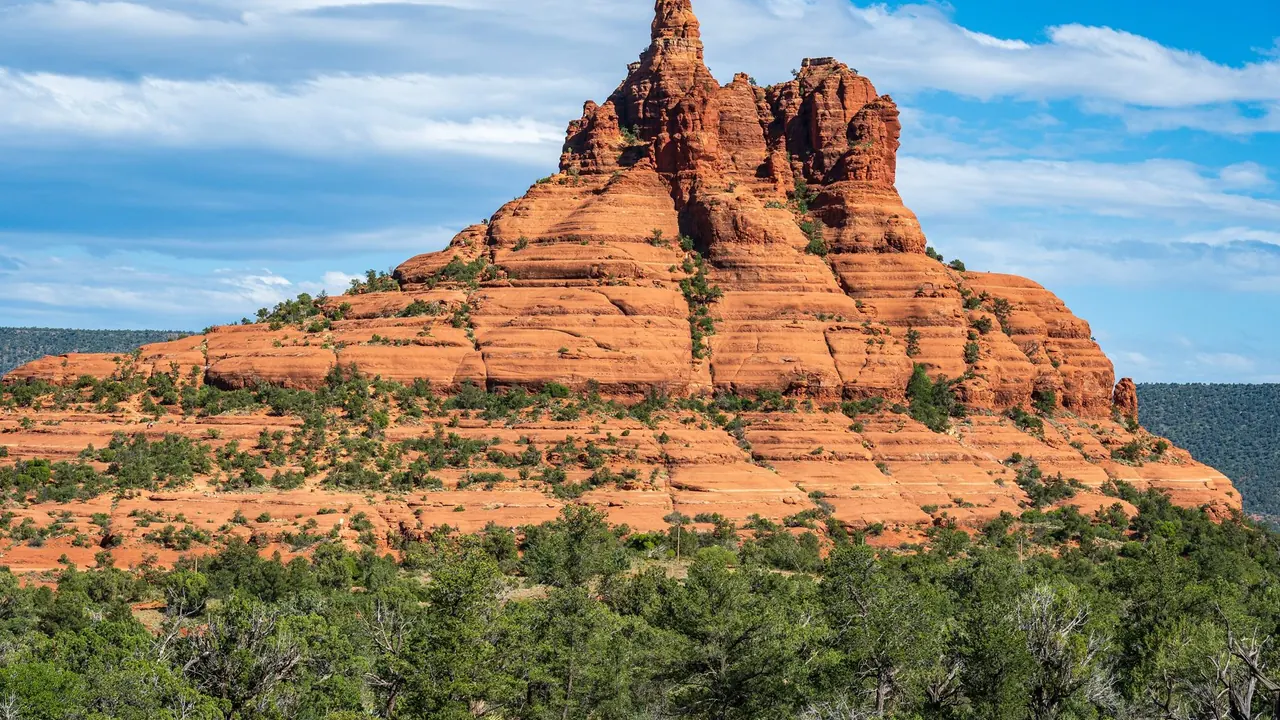
Sedona suits a slower trip built around walking, light and rest. Its red rock trails, spa resorts and retreat culture make it the better choice for couples and for anyone who wants yoga, massage and sunrise walks. There is more around it too: the galleries at Tlaquepaque, the Chapel of the Holy Cross, Sinagua cliff dwellings and the old mining town of Jerome. It is at its best in spring and autumn, when the heat is off.
Choose Snowbird for
- getting around
- nightlife
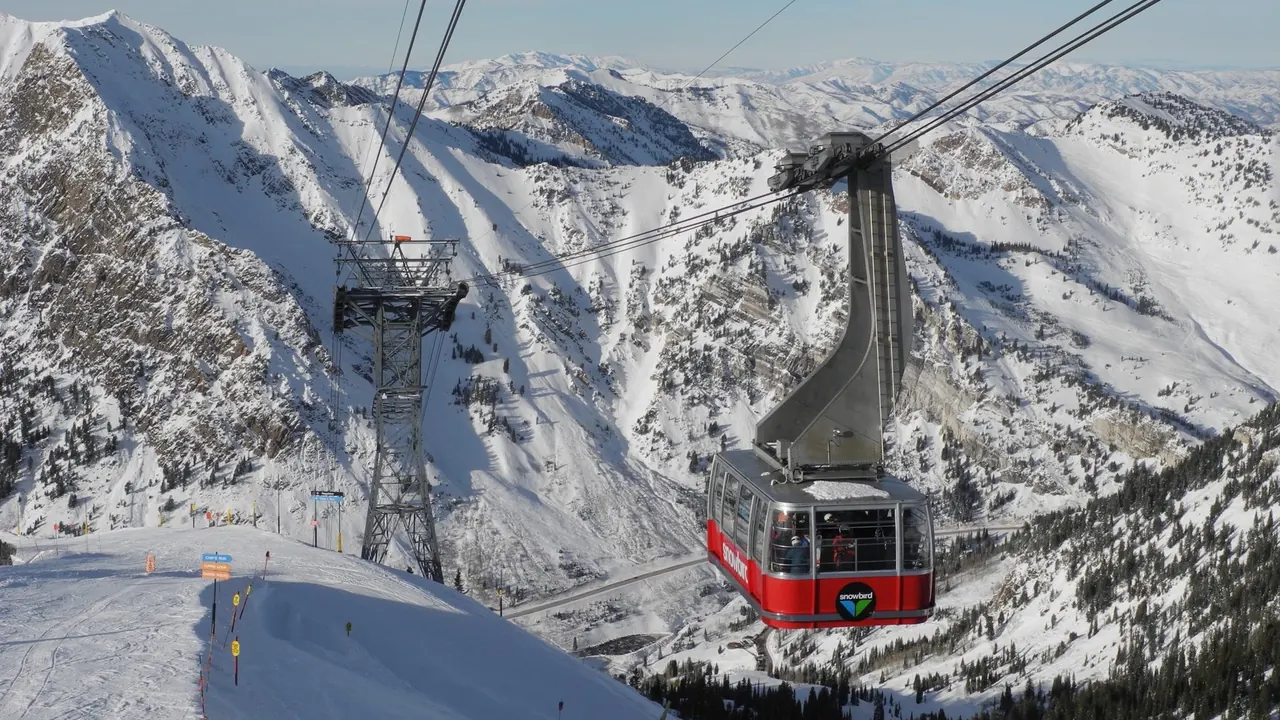
Pick Snowbird if the trip is about skiing, and serious skiing at that. The whole point is the tram to Hidden Peak, the steep chutes and bowls and the famously deep, dry snow, and from the car-free base you walk from your bed to the lift. Off the slopes there is little beyond the rooftop spa and après-ski, so expect to drive down to Salt Lake City for dinners and sights. In summer it turns into a cool alpine base for hikers.
Scoreboard
Twelve categories on one fixed scale from 0 to 100. The shaded stretch is the gap between the two.
Your match
Pick a travel style or drag the sliders, and both match scores follow your weighting.
Wins on wellness and shopping with your weighting.
Wins on getting around and nightlife with your weighting.
What matters to you?
Category by category
What the scores mean for a trip.
Beaches & swimming
Neither place is for a beach trip, but Sedona at least has proper wild swimming. On Oak Creek you can ride Slide Rock's sandstone chute or swim in the deeper pools at Grasshopper Point and Red Rock Crossing. The water is cold but makes a memorable break under the cliffs on a hot afternoon.
At Snowbird, swimming means the resort's heated pools, with the Heber Valley reservoirs about an hour's drive away for a cold summer dip. The Great Salt Lake is something to look at, not swim in.
Food & drink
Sedona offers more choice of the two. There is Southwestern cooking built on chilli and grilled meat, plenty of vegetarian and health-minded menus, terraces facing the sunset, and Verde Valley tasting rooms a short drive away. It is still a small-town range, though, and runs thin after a few meals.
At Snowbird you eat at the resort, from the dining room at the top of the tram to slopeside cafeterias and après-ski pizza. The food is competent but nothing about it is local. For variety, guests drive forty minutes down to Salt Lake City, and most do that once or twice a week.
Culture & sights
Sedona has a modest but real set of sights. There is the Chapel of the Holy Cross built into the red rock, galleries of Western and Native American art, and the Sinagua cliff dwellings and petroglyphs at Palatki, Honanki and V Bar V. Snowbird has almost nothing to visit apart from its own 1970s concrete lodges, and the canyon's silver-mining past has left little to see, so museums and historic buildings mean a trip to Salt Lake City.
Nightlife
Both go quiet early, for the same reason: people are up at dawn for the trail or the first tram. An evening in Sedona means a glass in an Uptown brewpub or wine bar, then the night sky, which is dark enough for real stargazing.
Snowbird's lively hour comes earlier, when the après-ski crowd fills the lodge bars and the sunny deck at the end of the ski day. After dinner nothing is going on, and a proper night out means a mountain drive to Salt Lake City or Park City.
Nature & outdoors
Both are outstanding, in very different ways. Sedona is all red sandstone: hikes to Cathedral Rock, Devil's Bridge and up the West Fork, slickrock mountain biking and jeep roads, with the Grand Canyon's South Rim about two hours away. It is a place for spring, autumn and mild winters.
Snowbird is all snow. A tram climbs to Hidden Peak at about 3,350m, the chutes and bowls connect across the ridge to Alta, and the season often lasts into late spring. In summer the same slopes lead onto wilderness trails, the wildflowers of Albion Basin and granite climbing, all far cooler than anything around Sedona.
Day trips
Sedona has more to reach in a day, and more variety. Jerome sits on its mountainside, the Verde Canyon Railroad runs through a roadless canyon, and Cottonwood and Cornville have the tasting rooms. Montezuma Castle and Tuzigoot are within half an hour, with Flagstaff, Walnut Canyon and Wupatki further north.
Snowbird's outings come down mainly to two. Salt Lake City has Temple Square and the Capitol, and Park City has its Victorian Main Street. Midway, Sundance and Ogden make pleasant extras rather than reasons to go.
Good for families
Both suit active families rather than those looking for zoos or theme parks, and in both places anything built for children means a drive. In Sedona the draws are Slide Rock in summer, the easy paths around Bell Rock and open-air jeep tours, though heat and exposed trails need watching.
Snowbird's car-free base is easier to manage, and in summer there is a mountain coaster, an alpine slide and a ropes course. In winter it suits teenagers and confident young skiers better than toddlers, and the altitude can tire small children.
Getting around
Once you have arrived, Snowbird is the easier of the two to get around. The lodges, tram and lifts are a short walk apart on a car-free base, and in winter ski buses run up from the valley. The catch is the single canyon road, which jams on powder mornings and can close for avalanche control.
Sedona spreads along two highways around the Y. Apart from walkable Uptown, nearly everything needs a car, with only a shuttle to some trailheads and parking that fills early. Getting there differs too: Snowbird is about forty minutes from Salt Lake City's airport, while Sedona is a two-hour drive from Phoenix.
Shopping & style
Sedona is a real place to browse, though for art rather than fashion. There are the courtyards of Tlaquepaque, galleries selling Western painting and Native American jewellery, pottery and rugs, and the crystal and metaphysical shops the town is known for. Snowbird has only a few base-area stores selling ski gear and branded clothing, handy for replacing lost goggles. For anything more you go to Salt Lake City or Park City's main street.
Affordability
Neither is a cheap stay, and the costs fall in different places. In Sedona, resort hotels, restaurants and extras such as jeep tours, balloon flights and spa treatments add up. The trails cost little beyond a parking pass, though, and Cottonwood or Flagstaff have cheaper beds.
At Snowbird the big costs are lift tickets, rentals and slopeside rooms in peak winter. You can cut them with a multi-resort pass, by sleeping in Salt Lake City and driving up, or by coming in summer, when stays are noticeably cheaper.
Live music & performing arts
Neither has a stage worth planning a trip around, and serious concerts or theatre mean a drive to Phoenix, Flagstaff or Salt Lake City. Sedona has the slightly fuller calendar, with chamber music, local theatre and its long-running film festival in late winter, plus acoustic sets and Native American flute players. Snowbird's music is seasonal and outdoors: plaza concerts in summer, oompah bands on Oktoberfest weekends and the odd band at après-ski.
Wellness & relaxation
This is Sedona's other great strength. It is a true retreat town, with destination spas facing the canyons and a wide choice of yoga, meditation, breathwork, massage and alternative therapies, and sunrise walks to the vortexes add a quiet ritual.
Snowbird has one large rooftop spa with a pool, hot tubs and steam rooms, best for recovering after a ski day. The warm mineral water of the Homestead crater in Midway is about an hour away. Neither town has hot springs of its own.
When should you go?
Pick your month. The climate figures are measured averages, not a forecast.
Sedona in July
Snowbird in July
Daytime high, °C
Rainfall in the month, mm
Where the figures come from
Sedona's station stands 153 m above the city centre, so the centre is likely a little warmer than the figures say.
Sedona has no rain gauge within 25 km of the centre, so its rainfall comes from a gridded climate dataset read at the city rather than from a gauge further away.
Snowbird has no weather station within reach, so its figures come from a gridded climate model rather than a measured record, and read a broad area rather than the city itself.
Temperature and rainfall are climate normals, averaged over the years shown. Sedona: 2009-2025 (rainfall 1991-2020) normals, Sedona / West Sedona (1.3 km from centre). Snowbird: 1991-2020 normals, TerraClimate 4 km grid at the town, no weather station within 90 km.
Sedona is a desert town with mild winters and fierce summers. April to June are the reliably dry months, and April, May and October are warm without being too hot, which makes them the best time for long hikes. March and November are pleasant too, but cooler and wetter. From June to August highs reach around 34°C, so walking means starting at dawn. July and August also bring summer storms, with about 56mm in the wettest month. Winter days of around 12°C are crisp and still good for walking, and the red rock sometimes gets a dusting of snow.
Snowbird runs on the opposite calendar. From December to February daytime highs sit around freezing, and the steady precipitation through the winter builds the deep snowpack that keeps skiing going into late spring. The mountain only warms up in July and August, to about 22°C. That makes high summer the time for its trails and wildflowers, just when Sedona is at its hottest.
Which traveller are you?
For a relaxing and wellness trip, Sedona is the clear choice. Rest is the main purpose there, with resort spas, yoga and meditation studios, sunrise walks to the vortexes and quiet, dark nights. Snowbird's single rooftop spa mostly serves tired skiers.
On a shopping trip, choose Sedona, as long as art and crafts are what you are after. Tlaquepaque's courtyard galleries, Native American jewellery, pottery and rugs and the crystal shops give you real browsing, while Snowbird's shops stop at ski gear and branded jackets.
For a ski trip, Snowbird wins outright, because Sedona has red rock but no slopes. Serious skiers come for the tram to Hidden Peak, deep dry snow, steep chutes and a season into late spring, and the car-free base puts the lifts at the door.
Before you go
| Measure | Sedona | Snowbird |
|---|---|---|
| Currency | US Dollar (USD) | US Dollar (USD) |
| Sockets | AB120 V, 60 Hz | AB120 V, 60 Hz |
| Driving side | Right | Right |
| Time zone | UTC-7 | UTC-7, UTC-6 in summer |
| Emergency number | 911 | 911 |
| Elevation | 1,319 m | 2,479 m |
| Main airport | Phoenix Sky Harbor International Airport (PHX)160 km from centre149 non-stop destinations | Salt Lake City International Airport (SLC)36 km from centre108 non-stop destinations |
| Public holidays this year | 12 days | 12 days |
By the numbers
| Measure | Sedona | Snowbird |
|---|---|---|
| City population | 9,684 | - |
| People per km² | 195 | - |
| Museums within 10 km | 0 | 0 |
| UNESCO World Heritage sites within 50 km | 0 | 0 |
Where else could you go?
Every comparison below shares a destination with this one, so you can follow Sedona or Snowbird somewhere new.