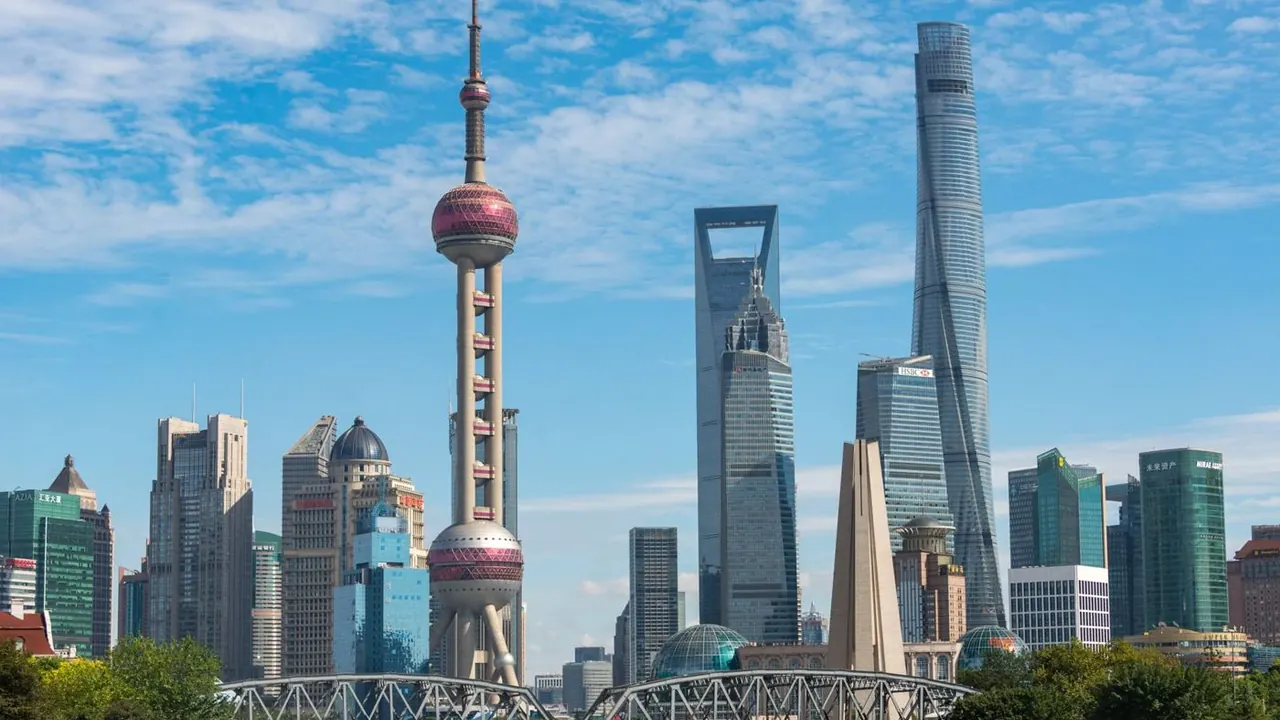
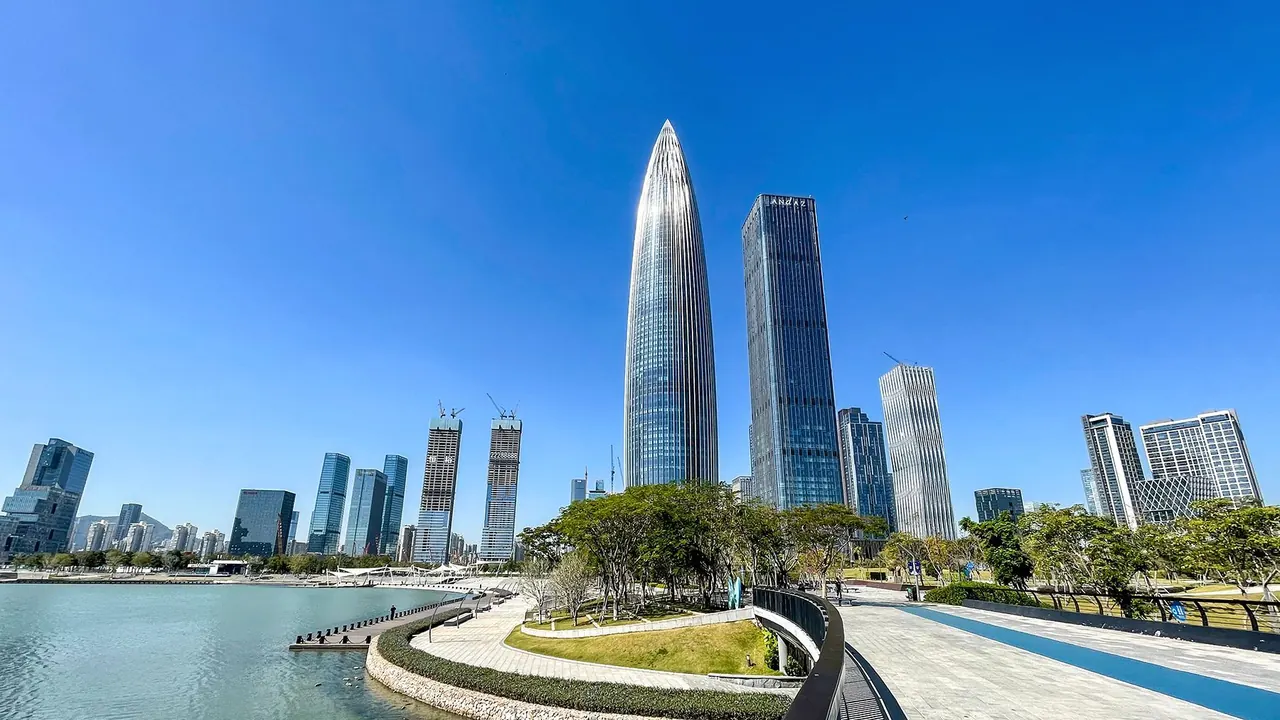
Photos: Shanghai by xiquinhosilva, CC BY 2.0, cropped; Shenzhen by Windmemories, CC BY-SA 4.0, cropped.
Shanghai or Shenzhen?
Our verdict in twelve categories, each scored against the same fixed benchmark cities, and the climate month by month, so you can choose for your trip.
Choose Shanghai for
- culture and sights
- nightlife
- live music and the arts
Shanghai is the better choice for a first city trip in China. It has the Bund facing the Pudong towers, the plane-tree lanes of the former French Concession, some of the best eating in Asia, cocktail bars and opera in the evenings, and fast trains to Suzhou, Hangzhou and the canal towns. It suits travellers who want something to do every day and every night, and who don't need the sea.
Choose Shenzhen for
- beaches
- nature and the outdoors
- prices
Choose Shenzhen if you want winter warmth, a day on the sand at Xichong, a coastal walk on the Dapeng peninsula and a hotel that costs less, with Hong Kong, Guangzhou and Macau close by. There is little history and the nights are quieter. It rewards people who care more about the outdoors, long evenings in a bathhouse and good value than about sightseeing.
Scoreboard
Twelve categories on one fixed scale from 0 to 100. The shaded stretch is the gap between the two.
Your match
Pick a travel style or drag the sliders, and both match scores follow your weighting.
Wins on culture and sights and nightlife with your weighting.
Wins on beaches and nature and the outdoors with your weighting.
What matters to you?
Category by category
What the scores mean for a trip.
Beaches & swimming
Shanghai sits on the brown, silty mouth of the Yangtze, where nobody swims. The only sand is at Jinshan, an hour and a half away, where a sea wall encloses a filtered bay in an industrial setting. For most visitors, swimming means the hotel pool.
Shenzhen has proper beaches, though none near the centre. Xichong, at the tip of the Dapeng peninsula, has a wide curve of sand facing open sea with hills behind it. Dameisha and Xiaomeisha are long and crowded on summer weekends, and all of them are about an hour or more from Futian. It is a day out rather than part of every day, but it is a real swim in warm water.
Food & drink
Shanghai has a cooking style of its own and is one of the great places to eat in Asia. Benbang dishes such as red-braised pork, shengjian buns and soup dumplings sit alongside hairy crab in autumn, morning scallion pancakes, food from every Chinese region and serious fine dining. The French Concession lanes add bistros and good coffee.
Shenzhen eats well too, but in a different way. It is a city of newcomers, so the best meals are regional: Chaoshan beef hotpot, Hakka salt-baked chicken, Cantonese dim sum, plus fish picked from tanks at Nan'ao or Shekou. These meals happen in malls and office districts rather than old food quarters, and menus are often only in Chinese.
Culture & sights
Shanghai has far more to see. The Bund's banks and trading houses look across the Huangpu to the Lujiazui towers, shikumen lane houses fill the former French Concession, and the Shanghai Museum holds a first-rate collection. The Ming-era Yu Garden and the Jade Buddha Temple are older layers, though the classical heritage lies mostly in the towns nearby.
Shenzhen was a cluster of fishing villages within living memory. Its sights are the skyline, OCT Loft's converted factories and Dafen's painting workshops. Nantou old town, Dapeng Fortress and the Hakka walled village at Crane Lake are worth the effort, but they are scattered and modest.
Nightlife
Shanghai is the place for a serious night out. It has speakeasies behind unmarked doors in the French Concession, hotel bars above the Bund looking at lit-up Pudong, and both polished clubs and underground techno rooms that run until dawn at weekends. You choose a district and stay there.
Shenzhen has a few separate clusters. Coco Park has bottle-service clubs, Shekou has relaxed pubs and terraces, and OCT has smaller arts bars. Many locals spend the night in private karaoke rooms. There is little life on the streets, and venues sit far apart inside towers and malls.
Nature & outdoors
Shanghai is flat delta country. Its green spaces are Century Park, the riverside paths along the Huangpu, the low wooded Sheshan mounds and the Dongtan wetlands on Chongming Island, which are good for birdwatching. Real hills are more than a day away.
Shenzhen has much more to offer outdoors. Wutong Mountain rises to just under 950m with views to Hong Kong, and a coastal trail on the Dapeng peninsula links rocky headlands and coves, with kayaking off the eastern shore. Shenzhen Bay's waterfront path passes mangroves where waders feed in winter. Autumn and winter are the seasons for walking.
Day trips
Both are good bases, and Shanghai is the stronger one. Suzhou's classical gardens are about half an hour away by high-speed train, Hangzhou's West Lake and the Longjing tea villages about an hour, and Nanjing's Ming walls a little further. The canal towns of Zhujiajiao, Tongli and Wuzhen add stone bridges and boat rides, so there are days of choice.
From Shenzhen, Hong Kong is the obvious trip, under half an hour to West Kowloon. Guangzhou's Chen Clan Ancestral Hall and Shamian Island are just as close, and Macau's Portuguese old town is reachable by ferry or bridge. Beyond those the list thins out, and crossing to Hong Kong or Macau needs the right visa to get back into the mainland.
Good for families
Shanghai has the bigger set of family days out. Shanghai Disney Resort is on the metro, Legoland and Haichang Ocean Park are on the city's edges, and the large hands-on science and natural history museums suit rainy or cold days. The long distances and the crowds of the national travel weeks tire out small children.
Shenzhen does well too. The Overseas Chinese Town (OCT) parks put Happy Valley's roller coasters, Window of the World and Splendid China side by side, and there is a safari park and a beach at Xiaomeisha. Little information is in English, though, and the summer heat in both cities makes the cooler months better for a family trip.
Getting around
Shanghai's metro is one of the largest in the world. It reaches both airports, the railway stations and Disneyland, and the Maglev speeds in from Pudong. The Bund and the French Concession are good on foot, and ferries over the Huangpu make a cheap, scenic shortcut, though crossing town still takes a while.
Shenzhen's metro is just as clean and bilingual, but the city stretches about 80km. Getting from Shekou to the Dapeng beaches takes most of a morning, and multilane roads make walking between districts dull. Shared bikes along the flat bay waterfront are the pleasant exception. In both cities, set up mobile payments before you arrive.
Shopping & style
Shanghai covers the whole range. Luxury flagships line West Nanjing Road and Lujiazui, and East Nanjing Road has its old department stores. The independent shops of Wukang Road and Anfu Road sell Chinese designer fashion and ceramics, and fabric markets will make a qipao or suit within days.
Shenzhen's appeal is narrower but unusual. Huaqiangbei's floors of electronics stalls are worth wandering even if you buy nothing, Luohu Commercial City is full of tailors and copy goods, and Dafen sells hand-painted canvases. Elsewhere it is mostly polished malls, with few boutiques or crafts to take home.
Affordability
In both cities, local food and public transport cost very little, so the difference lies mostly in hotels and drinks. Shanghai's central hotels around the Bund and Jing'an are priced like a European capital's, and its cocktails and Western restaurants match any global city.
Shenzhen goes further for the money. Comfortable modern rooms cost well below what they do in big international cities, and a careful traveller spends modestly. Prices rise only at the theme parks, the Shenzhen Bay luxury hotels and the expat bars of Shekou and Coco Park.
Live music & performing arts
Shanghai has the deeper stage tradition. Acrobatics are a fixture of its evenings, Yue opera grew up in its theatres, and Peking opera plays at the Yifu Theatre near People's Square. The city also has its own Kunqu troupe, a symphony orchestra and Grand Theatre productions often in English, and its jazz history goes back to the 1930s.
Shenzhen has good modern halls, the Concert Hall in Futian and the Poly Theatre among them, but most of the programme is touring and the theatre is in Mandarin. Its own contribution is the Chinese indie and rock bands in small venues around OCT Loft.
Wellness & relaxation
Both cities share the Chinese habit of bath centres and foot massage, but Shenzhen makes more of it. Its huge bathhouse complexes stay open all night and are famous enough that people cross the border just to spend an evening in one, and there are hot-spring resorts in the surrounding hills and in Huizhou.
Shanghai offers more ways to slow down. You can go to traditional Chinese medicine clinics for acupuncture and cupping, sit in temple courtyards or tea houses, join morning tai chi in the parks, and walk the quiet French Concession lanes.
When should you go?
Pick your month. The climate figures are measured averages, not a forecast.
Shanghai in July
Shenzhen in July
Daytime high, °C
Rainfall in the month, mm
Where the figures come from
Shenzhen has no rain gauge within 25 km of the centre, so its rainfall comes from a gridded climate dataset read at the city rather than from a gauge further away.
Shenzhen's sunshine is measured 28 km from the centre, at King's Park.
Temperature and rainfall are climate normals, averaged over the years shown. Shanghai: 1991-2020 (rainfall 1981-2010) normals, Shanghai / Hongqiao (8.1 km from centre). Shenzhen: 1999-2020 (sunshine 1991-2020, rainfall 1991-2020) normals, Shenzhen (4.7 km from centre).
Shanghai has four distinct seasons. Winters are cold and grey, with January highs around 9°C, too chilly for long days outdoors. Late April, May and October are the best months for walking the Bund and the old lanes. The plum rains set in during June, and July and August are hot and sticky at 33°C, slightly hotter than Shenzhen at that time of year. The sea warms in late summer, but nobody swims off the city.
Shenzhen is the warmer of the two from autumn through to spring and is at its best from October to early March. Winter days are dry and mild at about 20°C, with more sunshine than Shanghai through autumn and early winter. From May to September the rain is far heavier, peaking at 339mm in August, and storms can interrupt the beach season. Even so, the sea stays around 28°C from June to September for anyone heading to Dapeng.
Which traveller are you?
For a culture and arts trip, Shanghai is the clear pick. It has the treaty-port architecture of the Bund, the Shanghai Museum's bronzes and paintings, Peking and Kunqu opera, a symphony orchestra and the West Bund galleries. Shenzhen's sights are mostly modern and few.
On a beach and sun trip, choose Shenzhen. Xichong and the other Dapeng beaches have warm water from May to October, and the winters stay mild. Shanghai has a muddy estuary and one filtered bay in an industrial setting.
For a food and nightlife trip, Shanghai wins easily. You get soup dumplings, hairy crab and breakfast stalls by day, then speakeasies, rooftop bars above the Bund and techno clubs running until dawn. Shenzhen eats well but goes out mostly in malls and karaoke rooms.
Before you go
| Measure | Shanghai | Shenzhen |
|---|---|---|
| Official language | Putonghua | Putonghua |
| Currency | Yuan Renminbi (CNY) | Yuan Renminbi (CNY) |
| Sockets | ACI220 V, 50 Hz | ACI220 V, 50 Hz |
| Driving side | Right | Right |
| Time zone | UTC+8 | UTC+8 |
| Emergency number | Police 110, ambulance 120, fire 119 | Police 110, ambulance 120, fire 119 |
| Elevation | 4 m | 0 m |
| Main airport | Shanghai Pudong International Airport (PVG)33 km from centre208 non-stop destinations | Shenzhen Bao'an International Airport (SZX)28 km from centre174 non-stop destinations |
| Public holidays this year | 6 days | 6 days |
By the numbers
| Measure | Shanghai | Shenzhen |
|---|---|---|
| City population | 24,870,895 | 17,494,398 |
| People per km² | 3,922 | 8,759 |
| Museums within 10 km | 45 | 7 |
| UNESCO World Heritage sites within 50 km | 0 | 0 |
| Swim season, months above 21 °C | 5 months | 8 months |
Where else could you go?
Every comparison below shares a destination with this one, so you can follow Shanghai or Shenzhen somewhere new.
- Hong Kongvs Shenzhen
- Macauvs Shenzhen
- Suzhouvs Shanghai
- Hangzhouvs Shanghai
- Guilinvs Shenzhen
- Seoulvs Shanghai