Honiara
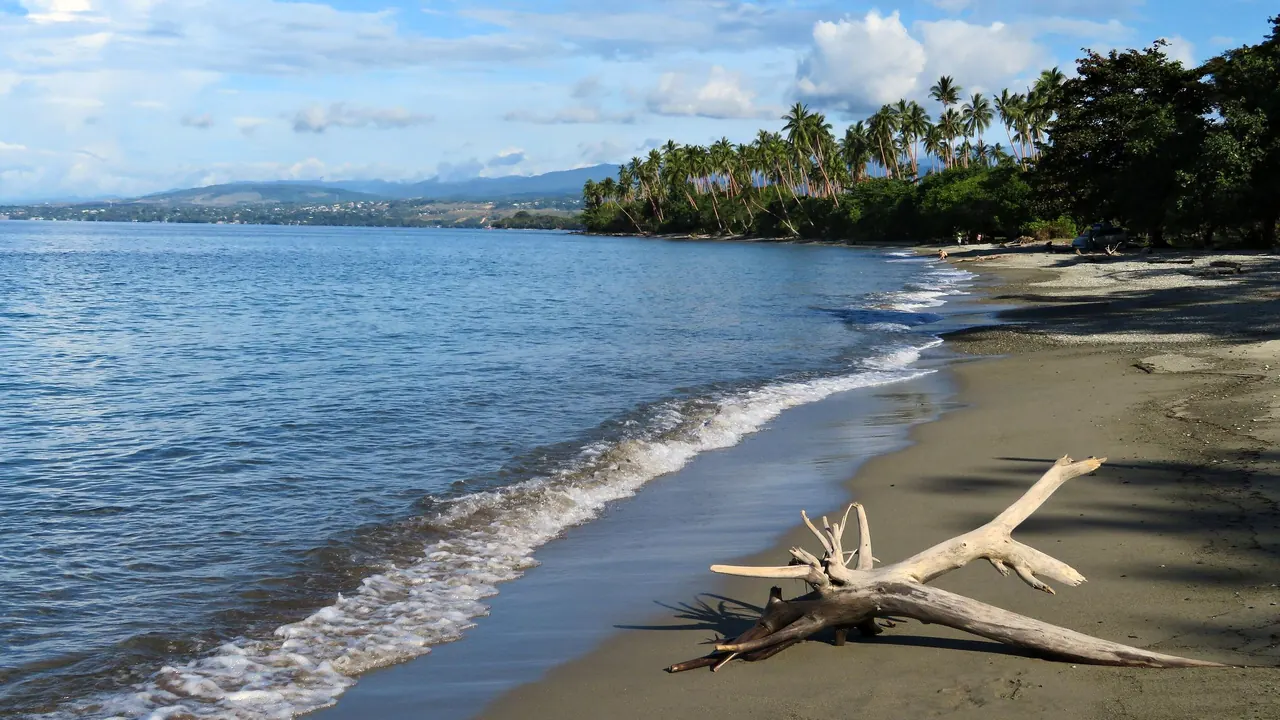
Bonegi Beach on Guadalcanal near Honiara, with palms and mountains behind
- Nature & outdoors66
- Beaches48
- Affordability38
Photo: Torbenbrinker, CC BY-SA 4.0, cropped
Match
27
Every category weighted equally
- Beach & sun30
- Culture & arts25
- Food & nightlife24
- Family trip31
- Outdoors33
- Relax & unwind30
- Shopping & style24
- On a budget29
Honiara in twelve categories
Our verdict on each, scored 0 to 100 against the same fixed benchmark cities, so a score means the same thing on every page.
Beaches & swimming. Scores 48 out of 100.
Food & drink. Scores 28 out of 100.
Culture & sights. Scores 33 out of 100.
Nightlife. Scores 14 out of 100.
Nature & outdoors. Scores 66 out of 100.
Day trips. Scores 20 out of 100.
Good for families. Scores 13 out of 100.
Getting around. Scores 27 out of 100.
Shopping & style. Scores 18 out of 100.
Affordability. Scores 38 out of 100.
Live music & performing arts. Scores 12 out of 100.
Wellness & relaxation. Scores 12 out of 100.
Honiara category by category
Beaches & swimming
48The sea is warm all year, close to 29°C, but Honiara is not a beach town. The shore along the town is mostly built up, with a working harbour and river mouths, and nobody swims there. The swimming that matters lies to the west along the coast road. Bonegi has dark-sand beaches where sunken wartime transport ships lie just offshore in shallow water, so you can snorkel over the wrecks straight from the beach. Further on, small grey-sand coves at Tambea and around Cape Esperance are quiet and hardly developed.
Expect few facilities, narrow beaches and some landowners asking a small custom fee to use a beach. Saltwater crocodiles live in Guadalcanal's rivers and estuaries, so keep away from river mouths and ask locally before swimming anywhere unfamiliar. For white sand and lagoon water, people fly or take a boat to the outer provinces.
Food & drink
28Eating in Honiara is simple. The highlight is the Central Market on Mendana Avenue, where people from the villages sell sweet potato, taro, cassava, slippery cabbage, bananas, coconuts, betel nut and fish caught that morning. The tuna is often excellent, and a few places in town serve it raw or seared. Solomon Islands home cooking means root vegetables cooked in coconut milk and stone-oven dishes such as pudding made from cassava or taro. Visitors mostly meet these at a village visit or a cultural event, not in a restaurant.
Restaurants are few. Hotel dining rooms, Chinese-run eateries, waterfront grills and small cafés make up most of them, and much of what's on the menu is imported. Solbrew, the local lager, is the standard drink. Come for the fish and the market, not for a dining scene.
Culture & sights
33Honiara grew up after the Second World War on the site of the American base, and its sights are mostly about the Guadalcanal campaign of 1942 and 1943. On Skyline Ridge above the town, the Guadalcanal American Memorial looks out over Iron Bottom Sound, named for the dozens of warships sunk in it. Bloody Ridge, the Japanese Peace Memorial on Mount Austen and rusting guns and aircraft hidden in the bush complete a battlefield that history readers come a long way to see.
In the centre, the National Museum is small but gives a good introduction to custom money, canoes and carving. The National Parliament building, a cone on the hill, is the one modern landmark. There is little old architecture, and most sites need a taxi or a guide.
Nightlife
14Going out in Honiara means a drink at sunset in a hotel bar or one of the waterfront places facing the sea, and maybe a weekend night at one of the few clubs, where reggae and island pop are the usual music. The town quietens early. Streets are dark and walking around after nightfall isn't advisable, so most visitors take a taxi between their hotel and wherever they're going. People choose Honiara for diving and history, not for nights out.
Nature & outdoors
66Honiara lies on a narrow coastal strip, with Guadalcanal's green, steep interior rising behind it. The mountains in the island's centre are the highest in the country. Closest to town is the hike up the Mataniko River to the Mataniko Falls, a few hours' guided walk through gardens and forest that ends where the river drops into a gorge, with a bat cave above it. Tenaru Falls, to the east, makes a longer jungle day out. Hikes cross customary land, so you'll need a local guide and the landowners' permission.
Under water, Honiara is exceptional. Iron Bottom Sound and the coast to the west are full of wartime ships, submarines and aircraft, and some of the wrecks are shallow enough to dive from the shore. The reefs are healthy, and the Florida Islands are visible across the strait. Heat, heavy rain from December to April, and roads that turn to mud all make outdoor trips harder.
Day trips
20There are few places to go for a day. The most rewarding is Tulagi in the Florida Islands, the capital of the British protectorate before the war, reached by boat across the strait. It has a small town, colonial remnants and wartime sites from the Japanese seaplane base. Savo Island, a volcanic island with hot springs and megapode birds laying in warm sand, needs a chartered boat and suits a full day.
On Guadalcanal itself, the open-air war museum at Vilu, in a village west of town, is an easy outing combined with Bonegi. Village visits arranged through local guides give a sense of rural life. Boats don't follow reliable schedules, so most trips need planning and a charter.
Good for families
13Honiara is hard work with children. Nothing in town is made for them: no zoo, aquarium, parks or playgrounds of note. Heat, dusty roads with few pavements and traffic make walking with a pushchair impractical. Malaria is present on Guadalcanal and medical facilities are basic, which matters more with young children. Solomon Islanders are warm towards children and older kids may enjoy snorkelling over the wrecks at Bonegi, but families usually do better heading straight to an island resort elsewhere in the country.
Getting around
27Honiara stretches along one main coastal road, Mendana Avenue and the Kukum Highway, so the layout is easy to understand. Numbered minibuses run up and down it and taxis are easy to find. The central stretch between the market, the museum and the waterfront can be walked by day, but pavements are broken or missing, it's hot, and traffic often jams the single main road. Travel west to Bonegi and Vilu, or east to the battlefields, is usually done by taxi, hired car with driver or tour. The other islands are reached by boat or small plane.
Shopping & style
18Honiara's shopping is worth a visit for its handicrafts and not much else. Look for wood carvings inlaid with nautilus shell, especially from Western Province, woven baskets and mats, and traditional shell money from Malaita, sold as strands of polished discs. These turn up at the Central Market, at craft stalls near the museum and at hotel shops. Otherwise the town has Chinatown's general stores and small supermarkets selling imported goods. There's no fashion or design shopping.
Affordability
38Honiara costs more than most visitors expect. Hotels of an international standard are few, and their rates are high for what you get. Restaurant food relies on imports and is priced accordingly, as are diving and boat charters. On the other hand, fruit, fish and snacks at the market are cheap, minibus fares are small, and the war memorials and museum cost little or nothing. Simple guesthouses keep a stay affordable, but anything comfortable makes it a mid-priced trip, not a budget one.
Live music & performing arts
12The Solomon Islands are known for bamboo panpipe ensembles, especially from Malaita, and for custom dancing with shell ornaments and body paint. Visitors usually hear them only at cultural shows, national celebrations or festivals, or by arranging a performance through a guide. Honiara has no theatre, concert hall or regular live music venue. A local band in a hotel bar is the most you'll find on an ordinary week.
Wellness & relaxation
12Honiara isn't a place for a restorative break. It has no spa or bathing tradition, and wellness means at most a massage in one of the larger hotels. The town itself is hot, dusty and choked with traffic along its single main road. The calm people associate with the Solomon Islands is out in the villages and outer islands, where days follow the light and the tide. Most visitors pass through the capital on the way there.
When should you go?
Pick a month to see what it is like. The climate figures are measured averages, not a forecast.
Honiara in July
Daytime high, °C
Rainfall in the month, mm
The whole year
Shaded against this destination’s own year: the deepest cell is its best month for that figure and the palest its weakest.
Temperature and rainfall are climate normals, averaged over the years shown. Honiara: 1992-2020, 12 years observed (rainfall 1961-1990) normals, Honiara (2.6 km from centre).
Before you go
| Measure | Honiara |
|---|---|
| Official language | English |
| Currency | Solomon Islands Dollar (SBD) |
| Sockets | GI220 V, 50 Hz |
| Driving side | Left |
| Time zone | UTC+11 |
| Emergency number | Police 999, ambulance 911, fire 988 |
| Elevation | 29 m |
| Main airport | Honiara International Airport (HIR)12 km from centre3 non-stop destinations |
| Public holidays this year | 9 days |
By the numbers
| Measure | Honiara |
|---|---|
| Population | 84,520 |
| People per km² | 3,842 |
| Museums within 10 km | 1 |
| UNESCO World Heritage sites within 50 km | 0 |
| Swim season, months above 21 °C | 12 months |
Compare Honiara with
Every comparison with a written verdict behind it.