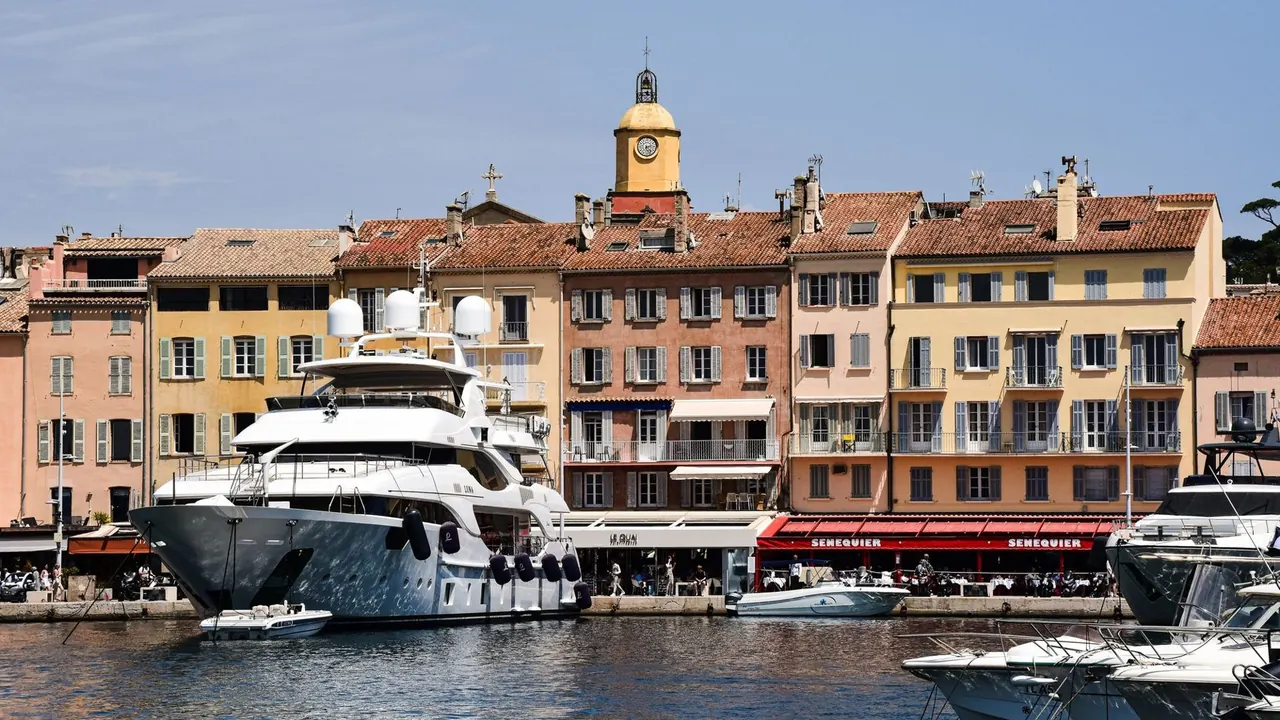
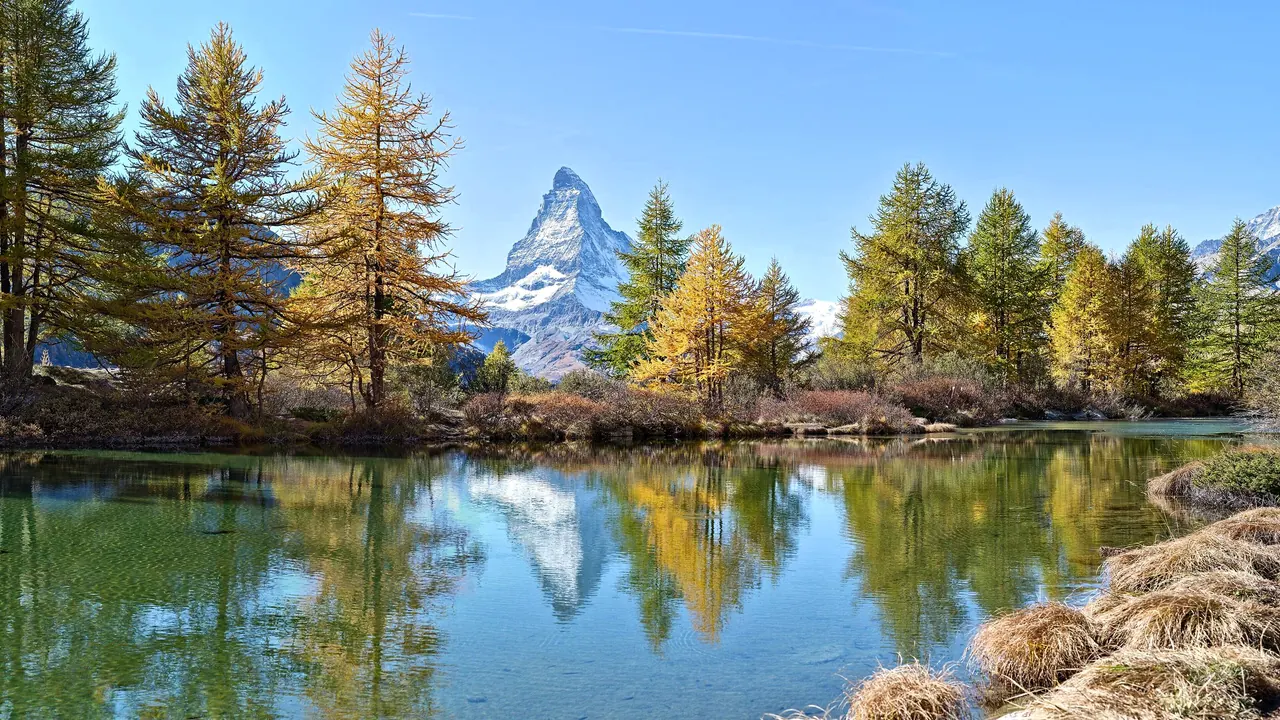
Photos: Saint-Tropez by AXP Photography, Pexels License; Zermatt by Roy Egloff, CC BY-SA 4.0, cropped.
Saint-Tropez or Zermatt?
Our verdict in twelve categories, each scored against the same fixed benchmark cities, and the climate month by month, so you can choose for your trip.
Choose Saint-Tropez for
- beaches
- shopping
- nightlife
Saint-Tropez is the choice for a summer trip built around the sea. Pampelonne's long sand, the harbour terraces and the beach-club afternoons that run into late nights make it a place to swim, eat long lunches and dress up for the evening. The old town, the Place des Lices market and the boutiques behind the port fill the hours between. It suits travellers who want sun and glamour and don't mind sitting in summer traffic to get there.
Choose Zermatt for
- getting around
- nature and the outdoors
- wellness
If mountains are the point of the trip, Zermatt wins easily. The Matterhorn stands above a car-free village, and lifts and cog railways carry you straight onto glaciers, ski runs and high trails. Skiers, hikers and climbers get far more out of it than people who want beaches or a busy evening. The quiet streets and good hotel spas also make it a calmer base for families and anyone who wants rest after a day outdoors.
Scoreboard
Twelve categories on one fixed scale from 0 to 100. The shaded stretch is the gap between the two.
Your match
Pick a travel style or drag the sliders, and both match scores follow your weighting.
Wins on beaches and shopping with your weighting.
Wins on getting around and nature and the outdoors with your weighting.
What matters to you?
Category by category
What the scores mean for a trip.
Beaches & swimming
Saint-Tropez easily wins on beaches. Pampelonne gives you about 5km of pale sand and clear water, with beach clubs and stretches of public beach. Further south, coves such as Escalet and Cap Taillat reward a walk or a short drive.
Zermatt has nothing to compare. The mountain tarns are for photographs, the meltwater is too cold for a swim even in August, and swimming means a hotel pool.
Food & drink
Saint-Tropez gives you more to eat. Expect grilled fish, bouillabaisse and aïoli with Côtes de Provence rosé, the produce market on the Place des Lices and the cream-filled tarte tropézienne. The top end is polished, though simple, good-value meals are hard to find.
Zermatt's best meals are on the mountain, at chalets around Findeln and Furi where the walk or the ski run is part of the lunch. In the village you eat Valais food such as raclette, fondue and air-dried beef with local Petite Arvine or Cornalin. The choice is narrower and many places close between seasons.
Culture & sights
Neither place is a culture destination, but Saint-Tropez has more to see. The Musée de l'Annonciade holds the pointillist and Fauvist paintings from the years Signac spent painting the harbour. Add the citadel's maritime museum and the lanes of La Ponche and you have a full day.
Zermatt's heritage is all about mountaineering. The Matterhorn Museum tells the story of the 1865 first ascent, the climbers' cemetery is beside the church, and old larch barns stand in the Hinterdorf. Together they fill a morning.
Nightlife
For going out, Saint-Tropez comes out well ahead in summer. Afternoon parties at Pampelonne lead to champagne on the harbour and then to well-known clubs that stay open until dawn. The style is moneyed, with dress codes and table service.
Zermatt's version is winter après-ski, with ski boots and loud music in the slope-side bars, then a few late bars on the main street. It is cheerful rather than glamorous. In summer, hikers with early starts go to bed after dinner.
Nature & outdoors
Saint-Tropez has good nature for a resort town. The Sentier du Littoral runs past pine-backed coves to Cap Camarat, the Maures forests have cork oaks, the gulf is good for sailing, and the national park islands of Port-Cros and Porquerolles are within reach.
Zermatt is one of the great Alpine settings. The Matterhorn rises straight above the village, the Gorner Glacier and dozens of four-thousand-metre peaks surround it, and the ski area links into Italy. In summer the same lifts lead to the Five Lakes walk, the Europaweg bridge and marmot country.
Day trips
Saint-Tropez has more variety close by. Ramatuelle and Gassin are hilltop villages, and Port Grimaud's canals are a short boat ride across the bay. Further away there are wine estates open for tastings, Porquerolles and the Roman remains at Fréjus. The catch is the summer traffic on every road out.
From Zermatt, every outing starts with the long train ride down the valley. Sion, with its two castle hills, is the most rewarding. Brig and the vineyards of Visperterminen are pleasant, but most visitors spend their spare days up in the mountains instead.
Good for families
Zermatt is a little easier with children. With no cars, the walks between hotel, ski school and lifts are short and safe. Sunnegga has gentle nursery slopes, and in summer there are marmots and cog railways. Its weak points are rainy days and the thin air at the highest viewpoints.
Saint-Tropez has the better beaches for small children, at gently shelving Pampelonne and Gigaro. Beyond that the town is built around adults, and summer jams and hot afternoons wear families down. Many families stay across the gulf instead.
Getting around
You can walk across both towns in minutes, but the difference is what happens beyond them. Saint-Tropez has no railway, slow buses and one road along the gulf that jams for hours in July and August. Its main beaches are several kilometres out, so the passenger boat from Sainte-Maxime is often the best way in.
In Zermatt you leave the car at Täsch and do everything else on foot, by electric taxi, or by cog railway, funicular and gondola from the centre. The connections onto the Swiss rail network are smooth.
Shopping & style
Saint-Tropez has much more to browse for a town its size. The big fashion houses open summer shops behind the port, small workshops hand-stitch leather Tropézienne sandals, and the Place des Lices market sells linen, baskets and vintage finds.
Zermatt's shopping is one main street of Swiss watches, jewellery and cowbell souvenirs. It is worth a visit mainly for its well-stocked mountaineering and ski outfitters.
Affordability
Both are among the most expensive places to stay in Europe, and neither suits a tight budget. The difference is where the money goes. In Saint-Tropez it is summer rooms, beach loungers and taxis, because public transport is so thin. In Zermatt the lift passes and cog railways add a cost on top of already steep rooms and meals.
The ways to save are similar: stay outside the town. That means across the gulf or inland for Saint-Tropez and down the valley in Täsch for Zermatt, and in both places a market or supermarket picnic helps.
Live music & performing arts
Neither has a theatre or concert hall worth planning a trip around, so what you get depends on when you go. Saint-Tropez has open-air classical and jazz concerts on the citadel in summer and the Bravade in May, a musket-firing procession that goes back centuries.
Zermatt has two festivals: Zermatt Unplugged's acoustic sets in spring and a chamber music festival in the village church in late summer. Outside those weeks, both places offer little more than a band in a bar.
Wellness & relaxation
Zermatt is the better place to switch off. It has an unusually large number of excellent hotel spas, some with day access for non-residents, and the car-free streets keep evenings free of traffic noise. The mood is still active rather than slow.
Saint-Tropez's spas are mostly for hotel guests, and high summer is crowded and loud. In May, June and September it slows to long lunches and pétanque under the plane trees and becomes a calm place to rest.
When should you go?
Pick your month. The climate figures are measured averages, not a forecast.
Saint-Tropez in July
Zermatt in July
Daytime high, °C
Rainfall in the month, mm
Where the figures come from
Saint-Tropez has no rain gauge within 25 km of the centre, so its rainfall comes from a gridded climate dataset read at the city rather than from a gauge further away.
Saint-Tropez's sunshine is measured 62 km from the centre, at Nice.
Zermatt has no weather station within reach, so its figures come from a gridded climate model rather than a measured record, and read a broad area rather than the city itself.
Temperature and rainfall are climate normals, averaged over the years shown. Saint-Tropez: 1999-2020 (sunshine 1991-2020, rainfall 1991-2020) normals, Le Luc (24.2 km from centre). Zermatt: 1991-2020 normals, TerraClimate 4 km grid at the town, no weather station within 90 km.
The two places are at their best at opposite times of year. Saint-Tropez is a beach destination from June to September, when the sea reaches about 24°C in August. July and August are very hot and sunny, with highs around 32°C, so walking around town is best done early or late. May, June and September are gentler. Autumn brings the rain, peaking at 155mm in November, and the winter months are cool, quiet and mostly closed.
Zermatt stays cold all year. Daytime highs are below freezing from December to February, which gives the snow that the ski season depends on. Even in July and August highs only reach about 14°C in the village, which is ideal for hiking but never warm. Rain and snow fall fairly evenly through the year, with November the wettest month. Between the ski season and the hiking season, many places in the village close.
Which traveller are you?
For a beach and sun trip, choose Saint-Tropez. It has Pampelonne's fine sand, quieter coves such as Gigaro and warm, clear water all summer. Zermatt has no sea and no bathing lake, so the nearest you get to a swim there is a hotel pool.
For a food and nightlife trip, Saint-Tropez is also the better choice. You get long Provençal lunches with local rosé, harbour terraces at dusk and summer beach parties that end in clubs open until dawn. Zermatt's evenings are lively mainly at winter après-ski and quiet the rest of the year.
On an outdoors trip, Zermatt is in a different league. Lifts climb to over 3,800m, there are hundreds of kilometres of marked trails, skiing on the glacier, and guided ascents of four-thousanders. Saint-Tropez's coastal path and the Maures forests make good walks, but they are small next to this.
Before you go
| Measure | Saint-Tropez | Zermatt |
|---|---|---|
| Official language | French | French, German, Italian, Romansh |
| Currency | Euro (EUR) | Swiss Franc (CHF) |
| Sockets | CE230 V, 50 Hz | CJ230 V, 50 Hz |
| Driving side | Right | Right |
| Time zone | UTC+1, UTC+2 in summer | UTC+1, UTC+2 in summer |
| Emergency number | 112 | 112 |
| Elevation | 0 m | 1,624 m |
| Main airport | Nice-Côte d'Azur Airport (NCE)64 km from centre130 non-stop destinations | Geneva International Airport (GVA)128 km from centre150 non-stop destinations |
| Public holidays this year | 11 days | 9 days |
By the numbers
| Measure | Saint-Tropez | Zermatt |
|---|---|---|
| City population | 3,582 | 6,023 |
| People per km² | 320 | 25 |
| Museums within 10 km | 4 | 2 |
| UNESCO World Heritage sites within 50 km | 0 | 2 |
| Swim season, months above 21 °C | 3 months | - |
Where else could you go?
Every comparison below shares a destination with this one, so you can follow Saint-Tropez or Zermatt somewhere new.
- Cannesvs Saint-Tropez
- Antibesvs Saint-Tropez
- Chamonixvs Zermatt
- Nicevs Saint-Tropez
- Interlakenvs Zermatt
- Monacovs Saint-Tropez