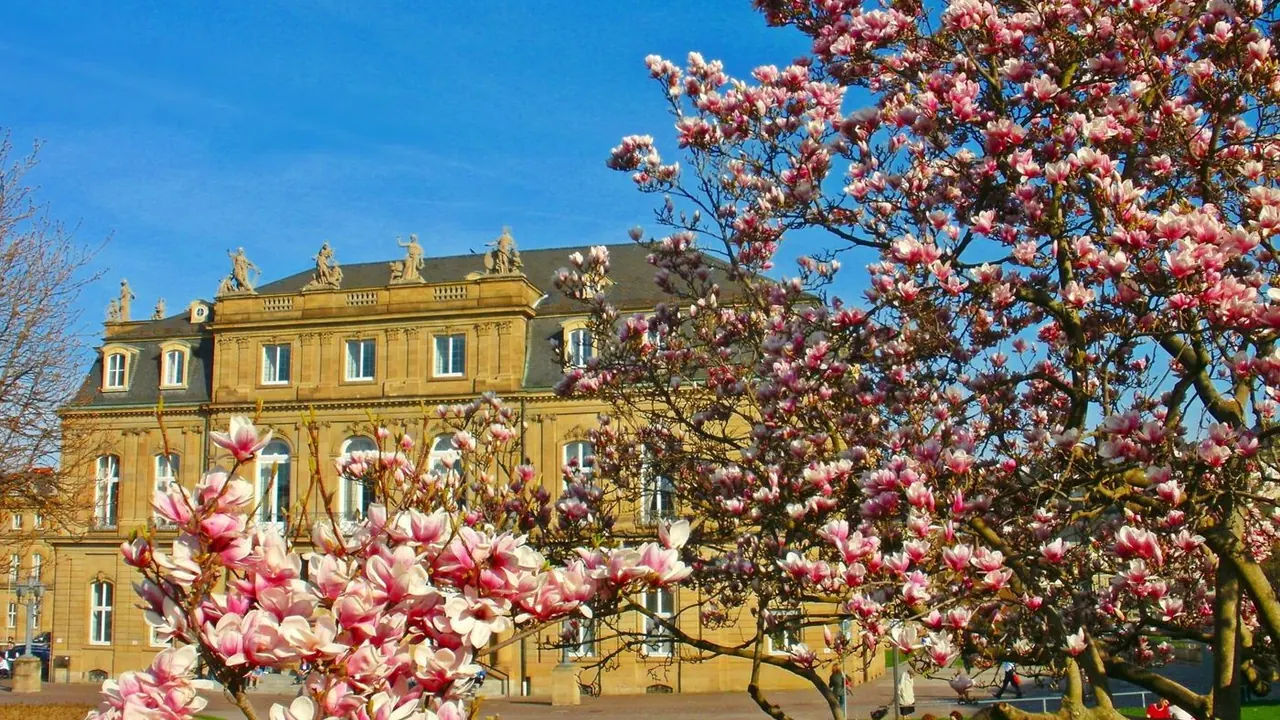
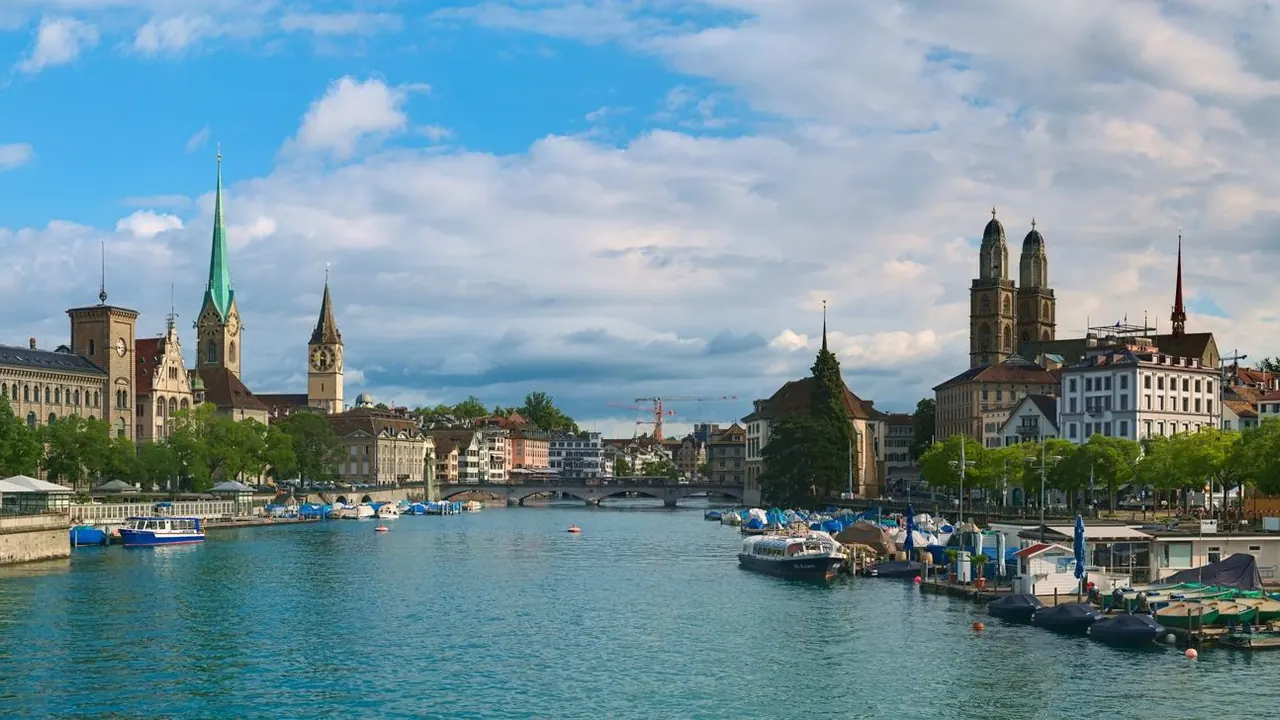
Photos: Stuttgart by Baden de, CC BY 3.0, cropped; Zurich by Daniel Kraft, CC BY-SA 3.0, cropped.
Stuttgart or Zurich?
Our verdict in twelve categories, each scored against the same fixed benchmark cities, and the climate month by month, so you can choose for your trip.
Choose Stuttgart for
- prices
- wellness
- food and drink
Stuttgart suits the traveller who wants a well-run German city without Swiss prices. Its strengths are car museums and modern architecture, a ballet company of European standing, Swabian wine taverns among vineyards inside the city limits, and mineral baths fed by some of Europe's most productive springs. It is also a strong base for palaces, castles and old university towns.
Choose Zurich for
- beaches
- getting around
- nightlife
Zurich is the better pick when the setting matters more than the budget. Here you can swim in a clean lake from wooden bathing houses, see the Alps from the shore, take trams and boats that make the city effortless and go clubbing until morning. Families and walkers who want real mountains will get more from it, as long as they accept that almost everything costs a great deal.
Scoreboard
Twelve categories on one fixed scale from 0 to 100. The shaded stretch is the gap between the two.
Your match
Pick a travel style or drag the sliders, and both match scores follow your weighting.
Wins on prices and wellness with your weighting.
Wins on beaches and getting around with your weighting.
What matters to you?
Category by category
What the scores mean for a trip.
Beaches & swimming
Neither city has a coast, but Zurich makes far more of its water. From June to early September people swim in the clear lake from wooden bathing houses and lawned lidos, and at the Letten river baths swimmers let the Limmat carry them downstream.
Stuttgart has nothing comparable. The Neckar is a working river and Max-Eyth-See is for boating, so summer swimming means outdoor pools, some of them fed by the springs. Lake Constance is more than two hours away. Neither city works for a sand-and-sea vacation.
Food & drink
Both cities eat well and regionally, but in different styles. Swabian cooking is the more distinctive: Maultaschen, Käsespätzle and Zwiebelrostbraten in wine taverns, Trollinger and Riesling from slopes inside the city, and Besen taverns that growers open in their own homes in season. The Art Nouveau Markthalle is a real pleasure to browse.
Zurich's food is creamier and more polished. Expect veal Geschnetzeltes with rösti, fondue in the guild houses, and chocolate and Luxemburgerli as its true speciality, with Kreis 4 and 5 offering more casual international choice. Neither has much street food, and a meal in Zurich costs a great deal more.
Culture & sights
The two are evenly matched, but their sights are of different kinds. Stuttgart's lean towards industry and modern design: the Mercedes-Benz and Porsche museums, the Staatsgalerie with its postmodern wing, and the Le Corbusier houses of the Weissenhof Estate. Wartime bombing left only fragments of its old core around Schlossplatz.
Zurich has the opposite balance. Its well-kept Altstadt runs along both banks of the Limmat, with the Grossmünster, Chagall's windows in the Fraumünster and the guild houses, and the Kunsthaus and the Swiss National Museum add depth. Choose Stuttgart for cars and architecture, Zurich for old streets and painting.
Nightlife
Zurich is the clear choice for a night out. Electronic music has deep roots there, and the clubs in Kreis 4 and 5 and in the old industrial spaces of Zurich West run until morning at weekends. In summer the drinking moves outdoors to the bathing houses and the banks of the Limmat, though the price of a round keeps nights shorter than they might be.
Stuttgart is sociable but tamer. The bars along Theodor-Heuss-Strasse fill at weekends, but the clubs are small and scattered. Outside the Cannstatter Volksfest and the late-summer wine village, most evenings wind down early.
Nature & outdoors
Zurich has much grander scenery. The lake stretches towards the snow-capped Glarus Alps, the Uetliberg and the Albis ridge start a short train ride from the centre, and within about an hour Rigi and Pilatus offer high-mountain hiking in summer and ski slopes in winter.
Stuttgart's countryside is gentler. There are vineyard trails above the Neckar and deer forests in the Rotwildpark and Schönbuch, and the limestone cliffs and caves of the Swabian Jura and the fir ridges of the Black Forest are about an hour out. It is fine walking and cycling country, but there are no peaks.
Day trips
Both are excellent bases, and the real difference is where they take you. From Stuttgart the trips lead to German palaces and old towns: Ludwigsburg, half-timbered Esslingen, Tübingen, Heidelberg's castle, Hohenzollern on its hill and the abbey at Maulbronn. Strasbourg is possible as a long day across the border.
Zurich's rail hub opens up Switzerland instead. Lucerne is under an hour away, Bern and Basel are about an hour each, and the Rhine Falls pair well with Stein am Rhein. Zurich also has the lake boat to Rapperswil, a trip by water that Stuttgart cannot match.
Good for families
Both are safe and orderly with children, and Zurich has the edge. Its zoo, with the indoor Madagascar rainforest and the elephant park, is only the start. Summer lidos have shallow water and lawns, lake boats suit all ages, and the Technorama science centre is twenty minutes away by train.
Stuttgart's Wilhelma, with its Moorish pavilions, easily fills a day, and the little railway at Killesberg and the rack railway delight younger children. The steep hills are harder work with a pushchair, though. Neither city has a big theme park close by.
Getting around
Zurich is about as easy as cities get. The old town and lake shore are walkable, and blue trams reach every neighbourhood. Trains, funiculars and even the lake boats share one ticket, and the airport is a short ride from the main station.
Stuttgart also works well, with a flat, compact centre and light rail climbing the steep sides of its basin. Away from the core, though, the hills make walking real effort, and the Stäffele stairways are more of a workout than a stroll.
Shopping & style
Zurich is the stronger shopping city, mostly at the top end. Bahnhofstrasse is one of the world's great streets for watches and jewellery, the Altstadt lanes hold boutiques and antique shops, and the viaduct arches in Zurich West house design shops.
Stuttgart is more mainstream. Königstrasse is a long run of high-street names and Breuninger covers designer fashion. The outlet village at Metzingen, about half an hour away, suits brand shoppers looking for bargains better than anything in Zurich.
Affordability
On cost the two cities are far apart. Stuttgart is not cheap and sits above the Western European middle, but a visit stays manageable. Hotel rooms drop in price at weekends and away from the big trade fairs, and beer gardens give plenty of food for the money. It is the smart restaurants and central hotels that eat into a budget.
Zurich is on a different level, among the most expensive cities in the world to visit. Even simple rooms cost more than in most European capitals, drinks are steep, and transport and museums are priced high as well. The visitor card that combines travel with museum entry helps, and so do supermarket lunches and the free lidos and drinking fountains, but only a little.
Live music & performing arts
Both cities have more on stage than their size would suggest. Stuttgart's highlight is its ballet, among Europe's most respected companies since John Cranko's time, which shares the state theatre with a bold opera company. Add the Bach tradition at the Liederhalle and long seasons of musicals at Möhringen.
Zurich answers with the lakeside Opernhaus, the Tonhalle Orchestra in its restored hall and the Schauspielhaus. It also has the livelier alternative scene, at the Rote Fabrik and in Kreis 4 and 5, with open-air festivals by the lake in summer.
Wellness & relaxation
Stuttgart has the edge, because its bathing comes straight out of the ground. Bad Cannstatt and Berg sit on some of Europe's most productive mineral springs, and public baths such as the Mineralbad Cannstatt and the Mineralbad Leuze turn that water into an everyday local habit. In Zurich, getting the same kind of spring-fed soak means taking the train out to Baden.
Within the city, Zurich's wellness comes from individual places. There are thermal pools in the stone vaults of the old Hürlimann brewery, and in winter the wooden bathing houses on the lake become saunas, with cold plunges between sessions. The pace in Zurich is quieter, but bathing there is something you go out to do, not part of daily life.
When should you go?
Pick your month. The climate figures are measured averages, not a forecast.
Stuttgart in July
Zurich in July
Daytime high, °C
Rainfall in the month, mm
Temperature and rainfall are climate normals, averaged over the years shown. Stuttgart: 1991-2020 normals, Stuttgart / Neckartal (2.8 km from centre). Zurich: 1991-2020 normals, Zurich Town / Ville. (2.2 km from centre).
Both cities are at their best from May to September. Stuttgart is the warmer and drier of the two, with highs around 26°C in July and August against Zurich's 24°C. Summer is the wettest season in both, but Stuttgart's rain stays moderate at about 79mm in July, while Zurich takes around 128mm in June and stays wet all summer. Stuttgart also gets more sunshine in every season. The lake swimming that makes Zurich special runs only from June to early September.
Spring and early autumn are comfortable for walking in either city, and they are the time to see the Jura or the Alpine foothills in colour. Winters are cold in both, with Zurich's highs around 4°C. Zurich is also noticeably greyer in December, often with fog sitting over the lake, so a winter visit there is better spent heading up into the sunny mountains or into a sauna.
Which traveller are you?
On a trip on a tight budget, Stuttgart is the only sensible choice of the two. Generous tavern meals, fairly priced day tickets and cheaper weekend hotel rooms make money last far longer than in Zurich, where even a simple lunch is costly.
For an outdoors trip, Zurich is clearly ahead. The Uetliberg ridge is a short train ride away, and Rigi, Pilatus and the Glarus valleys put real Alpine hiking and winter skiing within about an hour. Stuttgart's walks stay among wooded hills and vineyards.
On a food and nightlife trip, Zurich is the better choice for the nights. Its clubs in Kreis 4 and 5 and Zurich West run until morning, with summer bars in the lake bathing houses. Stuttgart's Swabian wine taverns make a cosier dinner, but its evenings end earlier.
Before you go
| Measure | Stuttgart | Zurich |
|---|---|---|
| Official language | German | French, German, Italian, Romansh |
| Currency | Euro (EUR) | Swiss Franc (CHF) |
| Sockets | CF230 V, 50 Hz | CJ230 V, 50 Hz |
| Driving side | Right | Right |
| Time zone | UTC+1, UTC+2 in summer | UTC+1, UTC+2 in summer |
| Emergency number | 112 | 112 |
| Elevation | 245 m | 408 m |
| Main airport | Stuttgart Airport (STR)10 km from centre124 non-stop destinations | Zürich Airport (ZRH)9 km from centre226 non-stop destinations |
| Public holidays this year | 12 days | 10 days |
By the numbers
| Measure | Stuttgart | Zurich |
|---|---|---|
| City population | 609,365 | 440,935 |
| People per km² | 2,938 | 5,016 |
| Museums within 10 km | 42 | 63 |
| UNESCO World Heritage sites within 50 km | 3 | 1 |
Where else could you go?
Every comparison below shares a destination with this one, so you can follow Stuttgart or Zurich somewhere new.