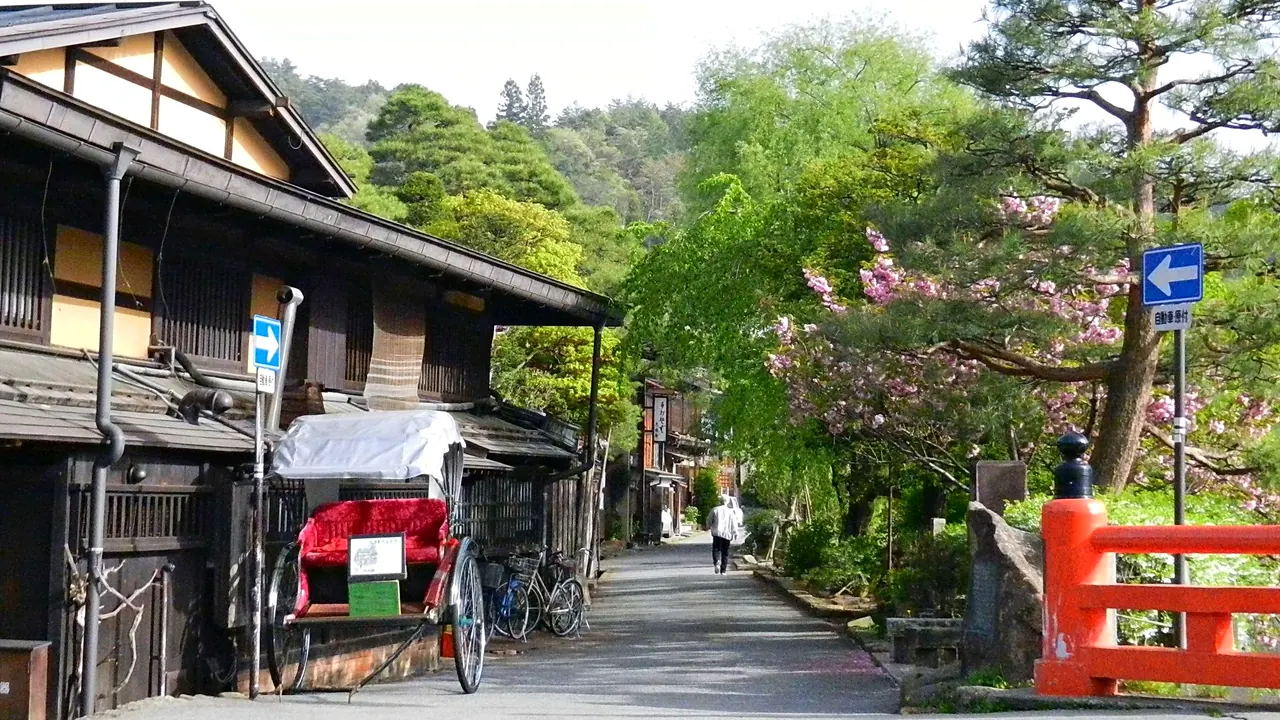
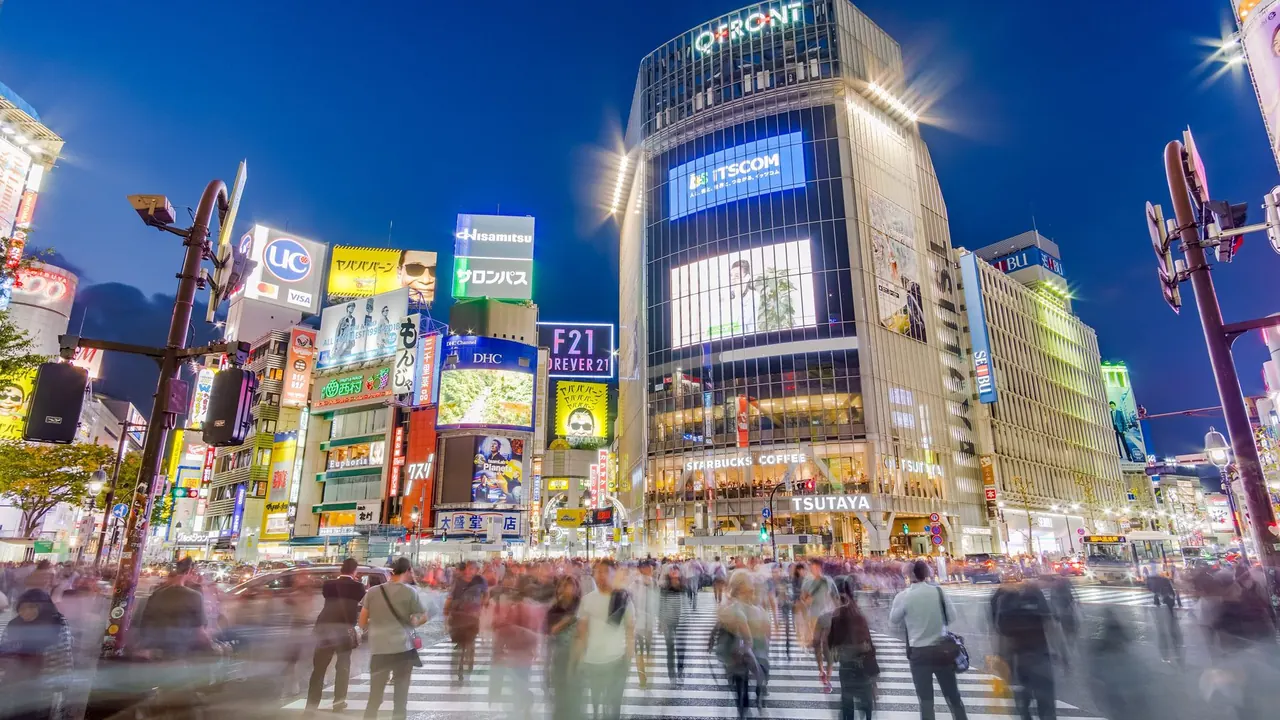
Photos: Takayama by lienyuan lee, CC BY 3.0, cropped; Tokyo by Benh LIEU SONG, CC BY-SA 2.0, cropped.
Takayama or Tokyo?
Our verdict in twelve categories, each scored against the same fixed benchmark cities, and the climate month by month, so you can choose for your trip.
Choose Takayama for
- nature and the outdoors
- prices
Takayama suits travellers who want the mountains and old Japan at a slow pace. You get an intact Edo-period merchant quarter, ryokan evenings with a hot-spring bath, and the Northern Alps and Shirakawa-go within a bus ride. It works best as a two- or three-day stop on a longer route, for people who are happy with early nights and a small menu.
Choose Tokyo for
- nightlife
- live music and the arts
- shopping
Tokyo is the choice for almost everything else. Its food, shopping, nightlife and stage life all run deeper than Takayama's, and a rail network that runs to the minute makes all of it easy to reach. It is also far easier with children. You could fill a week without leaving the city, and Kamakura, Nikko and Hakone are all close enough for a day out.
Scoreboard
Twelve categories on one fixed scale from 0 to 100. The shaded stretch is the gap between the two.
Your match
Pick a travel style or drag the sliders, and both match scores follow your weighting.
Wins on nature and the outdoors and prices with your weighting.
Wins on nightlife and live music and the arts with your weighting.
What matters to you?
Category by category
What the scores mean for a trip.
Beaches & swimming
Neither is a beach destination, but only Tokyo puts a swim within easy reach. Takayama sits deep in the Hida mountains, and the nearest water you will get into there is a hot spring.
From Tokyo, the Shonan coast at Kamakura, Zushi and Enoshima is about an hour south by train. Its dark volcanic sand and warm summer water make a pleasant afternoon in July or August, even if the beaches are crowded at weekends.
Food & drink
Takayama eats well on a narrow range. Hida beef comes grilled on magnolia leaves with hoba miso or on skewers in the old town, alongside soy-glazed dango, local ramen, market pickles and tastings at the sake breweries under their cedar balls. It is delicious for a couple of days and then starts to repeat.
Tokyo has no such ceiling. Station soba counters, decades-old single-dish specialists, kaiseki rooms, the depachika halls and the Tsukiji outer market give you a different meal every time, and the French and Italian cooking rivals that of Europe.
Culture & sights
The two show Japanese heritage in opposite ways. Takayama keeps what Tokyo lost to the 1923 earthquake and the war: whole lanes of dark-timbered merchant houses in Sanmachi Suji, the old government office at Takayama Jinya, and gassho farmhouses at Hida Folk Village. Together they make a single, coherent townscape that you can see in a day or two.
Tokyo offers far more in total. Its sights are spread across a modern city, from Senso-ji and Meiji Jingu to Rikugien and Yanaka, and its museums have no equal in Takayama. Ueno Park alone holds the Tokyo National Museum, with the world's largest collection of Japanese art.
Nightlife
In Takayama the evening usually ends at the ryokan dinner table. A few izakaya near the station and east of the river are fine for a sake afterwards, and the town is quiet by eleven.
Tokyo is one of the great cities for a night out. The tiny bars of Golden Gai, buildings stacked with whisky and vinyl bars, and the smoky yakitori lane at Omoide Yokocho lead on to the clubs of Shibuya and Roppongi, where people stay until the first morning train.
Nature & outdoors
Takayama has the edge, because the Northern Alps are right at the door. Kamikochi's flat trails beneath the Hotaka range, the Okuhida ropeway and summer walking on Norikura are all within about an hour and a half. Winter brings skiing. The catch is that buses set the schedule, and Kamikochi closes in the cold months.
Tokyo reaches its mountains by commuter train instead. Mount Takao is the easy first hike, Okutama offers steeper gorges and ridges, and Hakone and the Fuji Five Lakes have the classic Fuji views. These are greener outings than alpine ones, but they are simpler to fit around a city stay.
Day trips
Takayama's best outing is outstanding. Shirakawa-go's thatched UNESCO village is under an hour away, and Hida-Furukawa and Gero Onsen are close by train. Beyond those, the surrounding country is mostly mountains, and Kanazawa is better treated as your next stop than as a return trip.
Tokyo gives you far more choice in every direction. You can visit Kamakura's Great Buddha and Zen temples, Nikko's Toshogu shrine in cedar forest, Yokohama's harbour, the old merchant streets of Kawagoe and Sawara, or Hakone's inns and lake boats. All of them are an easy rail ride out and back.
Good for families
Takayama is safe and easy with children, and the market snacks, festival floats, folk village and winter snow are good for a day or two. After that, the craft shops and old houses start to test young patience, and there is no zoo or aquarium.
Tokyo is built for a longer family stay. Disneyland and DisneySea, the Ghibli Museum, Ueno Zoo and Miraikan are the big draws, and the toy and character shops of Akihabara and Ikebukuro add more. Lifts, baby rooms and clean toilets at every station make the days easy, though rush hour and the August heat are best avoided.
Getting around
Takayama's centre is so small that you hardly need transport. The old town, the Jinya and the markets are a few minutes' stroll from the station, and a loop bus takes you up the hill to the folk village. Getting out of town is harder. Shirakawa-go and the Okuhida valleys depend on regional buses, so your outings follow their timetable, and seats can fill up in busy seasons.
Tokyo is the other way round. Frequent trains go almost anywhere you might want, in the city and well beyond it, with English signs and one rechargeable card for every journey. A day trip takes no more planning than crossing town. Takayama makes you plan ahead, while in Tokyo you mainly need to find your way through huge stations such as Shinjuku and avoid the rush-hour crush.
Shopping & style
Takayama is a place to buy a few well-made local things. Look for amber Shunkei lacquerware, yew carvings cut from a single block, Hida bentwood furniture and brewery sake, though many old-town shops lean towards souvenirs.
Tokyo is a shopping destination in its own right. You will find luxury in Ginza and its department stores, flagship architecture on Omotesando, and vintage and independent labels in Harajuku and Shimokitazawa. Specialist streets cover knives at Kappabashi, books in Jimbocho and electronics in Akihabara, and Tokyo's own craft shops sell lacquer, washi and indigo.
Affordability
Overall costs are similar, but they fall in different places. In Takayama the big costs are the ryokan night with a multi-course dinner, a proper Hida beef meal and the festival weeks. Ramen, market food and the sights are cheap, and getting around the small town costs very little.
Tokyo's big cost is the room: small, central and pricier in cherry-blossom season and Golden Week. Eating is where it gives back, with set lunches, conveyor-belt sushi and convenience-store meals that are cheap and good. Taxis and cocktail bars soon push the budget up, though.
Live music & performing arts
Takayama's stage is its festival. In spring and autumn, ornate floats are paraded through the streets, karakuri puppets perform on some of them, and lantern processions fill the evenings. Outside those days there is little else.
Tokyo has performances every night. There is single-act kabuki at the Kabuki-za, Noh, the Takarazuka Revue and opera at the New National Theatre. Its orchestras play in halls such as Suntory Hall, and jazz bars and small live houses in Koenji and Shimokitazawa host bands every evening.
Wellness & relaxation
Both are excellent for bathing, but in very different settings. In Takayama, the hot-spring bath usually comes with your ryokan room, followed by a yukata evening. The riverside open-air pools of Okuhida and the famous spa town of Gero are each about an hour away, set among mountain quiet.
Tokyo's bathing is part of everyday city life. You will find neighbourhood sento with painted Fuji murals, dark mineral springs in the south of the city and large sauna complexes. For a mountain onsen you need the trip to Hakone, and many baths still turn away guests with tattoos.
When should you go?
Pick your month. The climate figures are measured averages, not a forecast.
Takayama in July
Tokyo in July
Daytime high, °C
Rainfall in the month, mm
Where the figures come from
Takayama's sunshine is measured 65 km from the centre, at Matsumoto.
Temperature and rainfall are climate normals, averaged over the years shown. Takayama: 1971-2000 (sunshine 1991-2020, rainfall 1981-2010) normals, Takayama (0.5 km from centre). Tokyo: 1991-2020 normals, Tokyo (3.6 km from centre).
Takayama has real mountain seasons. Winter is cold, with daytime highs around 3°C in January, and the snow brings skiing and the thatched villages at their most striking, though Kamikochi is closed. Spring warms quickly. May is mild and sunny, and October is crisp and fairly dry, so these are the best months for walking and the high valleys. July is the wettest month, with around 273mm, and September is nearly as wet. August is hot but one of the sunniest months.
Tokyo is milder in winter, and December to February are its driest, sunniest months, good for walking the streets. Midsummer is hot and humid, reaching 32°C in August, which is also when Sagami Bay is warmest for swimming at about 26°C. Autumn rain arrives later than in the mountains and peaks in October at around 237mm. Late spring and November are the comfortable months in both places.
Which traveller are you?
On an outdoors trip, make Takayama the base. Give it three or four days between late spring and autumn, plan each hike around the bus timetable, and think about a night up in the valleys. Tokyo only fits hiking in as a single day away from the city.
On a family trip with young children, spend most of the week in Tokyo and plan outings around rush hour and the summer heat. Takayama works best as one or two nights in the middle, ideally in winter, when the snow keeps children busy.
On a food and nightlife trip, spend most of your nights in Tokyo. Stay near Shinjuku or Shibuya so you can still get back after the last train around midnight. If you add Takayama, treat it as a rest stop, with a long ryokan dinner and an early night.
Before you go
| Measure | Takayama | Tokyo |
|---|---|---|
| Official language | Japanese | Japanese |
| Currency | Yen (JPY) | Yen (JPY) |
| Sockets | AB100 V, 50 and 60 Hz depending on the region | AB100 V, 50 and 60 Hz depending on the region |
| Driving side | Left | Left |
| Time zone | UTC+9 | UTC+9 |
| Emergency number | Police 110, fire 119 | Police 110, fire 119 |
| Elevation | 573 m | 6 m |
| Main airport | Chubu Centrair International Airport (NGO)149 km from centre43 non-stop destinations | Tokyo Haneda International Airport (HND)18 km from centre98 non-stop destinations |
| Public holidays this year | 16 days | 16 days |
By the numbers
| Measure | Takayama | Tokyo |
|---|---|---|
| City population | 85,199 | 14,264,798 |
| People per km² | 39 | 6,501 |
| Museums within 10 km | 14 | 192 |
| UNESCO World Heritage sites within 50 km | 1 | 1 |
| Swim season, months above 21 °C | - | 4 months |
Where else could you go?
Every comparison below shares a destination with this one, so you can follow Takayama or Tokyo somewhere new.