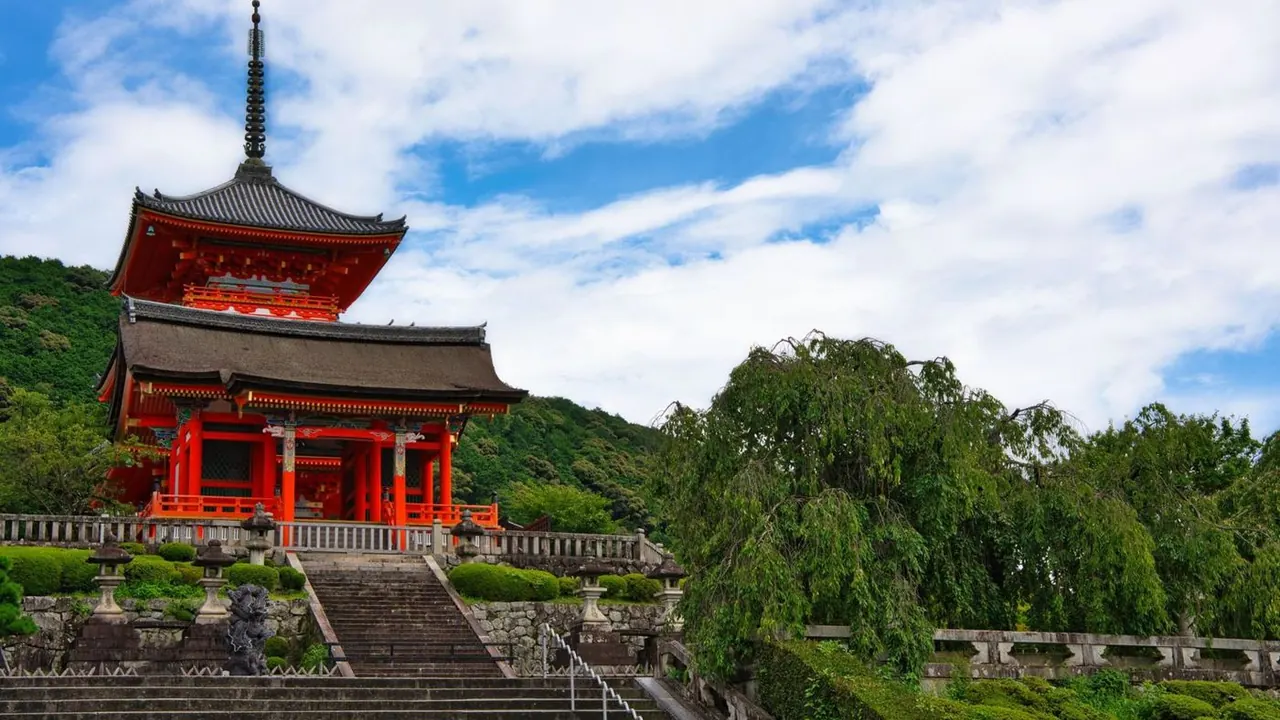
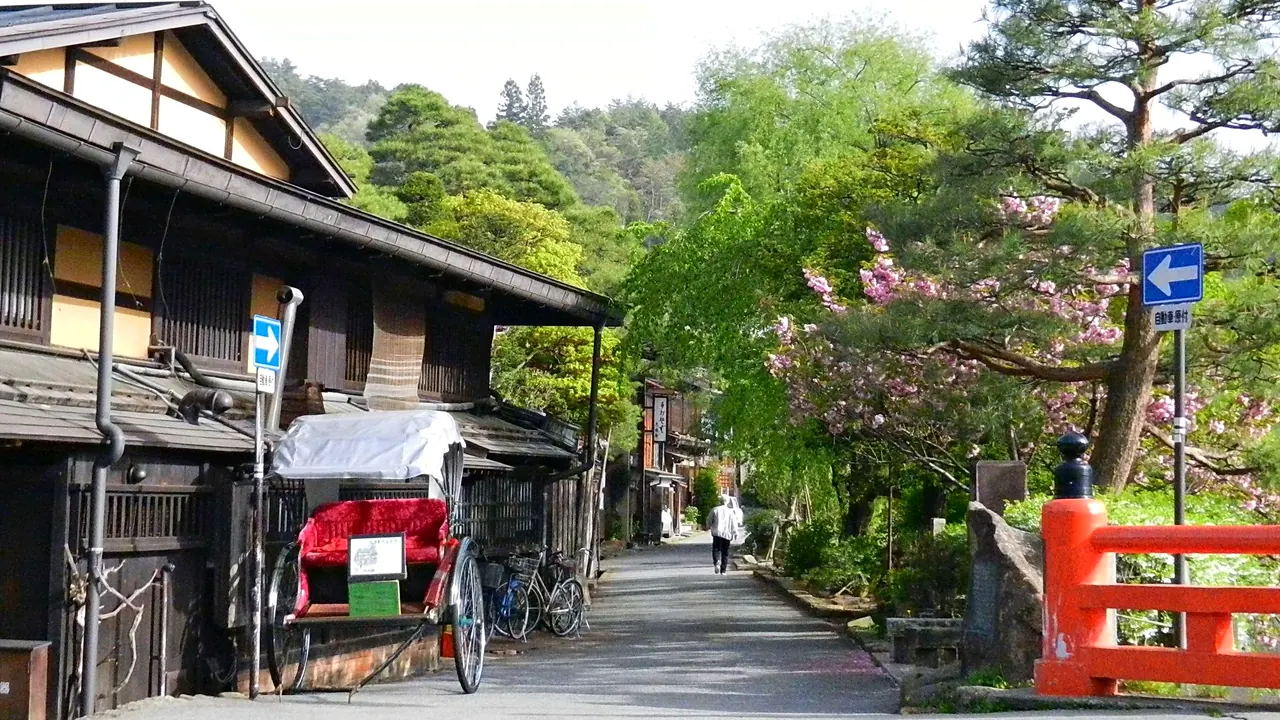
Photos: Kyoto by Bert Mulder, Pexels License; Takayama by lienyuan lee, CC BY 3.0, cropped.
Kyoto or Takayama?
Our verdict in twelve categories, each scored against the same fixed benchmark cities, and the climate month by month, so you can choose for your trip.
Choose Kyoto for
- live music and the arts
- food and drink
- culture and sights
Kyoto is the choice for a traveller who wants depth. It has a thousand years of imperial heritage, temples and gardens by the hundred, kaiseki and temple cooking, geisha dances and kabuki, and Nara, Osaka and Himeji are all an easy train ride away. It rewards a stay of several days. It also works well for families, who get a railway museum, an aquarium and a zoo between the shrines.
Choose Takayama for
- wellness
- nature and the outdoors
- prices
Takayama suits a slower, smaller trip. Its few lanes of Edo-period merchant houses can be seen in a day or two, and the real pull is the mountain country around it: ryokan with their own hot-spring baths, Hida beef and sake tastings, the thatched farmhouses of Shirakawa-go and the alpine valleys of Kamikochi and Okuhida. Choose it to rest and walk, not for evenings out or a full programme of sights.
Scoreboard
Twelve categories on one fixed scale from 0 to 100. The shaded stretch is the gap between the two.
Your match
Pick a travel style or drag the sliders, and both match scores follow your weighting.
Wins on live music and the arts and food and drink with your weighting.
Wins on wellness and nature and the outdoors with your weighting.
What matters to you?
Category by category
What the scores mean for a trip.
Beaches & swimming
Neither is a place to swim, but Kyoto at least has options within reach. In summer there is a freshwater dip on the sandy Lake Biwa strands such as Omi-Maiko, and a city beach on Osaka Bay about an hour away by train.
Takayama lies deep in the Hida mountains, with the coast at Toyama Bay some two hours off, and the closest it comes to bathing is a hot-spring soak. For real sand, plan a separate stop: from Kyoto that could be the Tango Peninsula.
Food & drink
Kyoto is one of Japan's great eating cities. It has kaiseki in the old wooden houses of Gion, shojin ryori in temple precincts such as Daitokuji, tofu and yuba, the stalls of Nishiki Market and the sake breweries of Fushimi. Its serious restaurants could fill a long stay without repeating.
Takayama eats well but narrowly. The highlights are Hida beef grilled on a magnolia leaf or on skewers, soy-glazed dango, the local ramen and tastings at the old breweries in the merchant quarter. That is a pleasure for two or three days, but after that the menu starts to repeat.
Culture & sights
Here the gap is wide. Kyoto has seventeen UNESCO-listed sites, from Kinkaku-ji and the rock garden of Ryoan-ji to Nijo Castle. Add Fushimi Inari, the Kyoto National Museum and the machiya lanes of Higashiyama, and there is enough for a week of sightseeing.
Takayama offers one coherent, well-preserved old town. It has the timbered lanes of Sanmachi Suji, the feudal government office of Takayama Jinya, the Kusakabe and Yoshijima merchant houses and the farmhouses of Hida Folk Village. All of it is atmospheric and easy to take in within a day or two, and that is also its limit.
Nightlife
Neither is a destination for a night out, but Kyoto gives an evening more to do. Pontocho and the Kiyamachi canal have small bars, sake bars, standing izakaya and a few clubs, and Osaka's late nights are under an hour away by train.
In Takayama most visitors eat dinner at their ryokan. A beer or a sake in one of the izakaya near the station is about as far as the evening goes, and little is open after eleven.
Nature & outdoors
Both are ringed by forested hills, but the scale differs. Kyoto's nature is gentle and close at hand: the Daimonji trail behind the eastern temples, the bamboo of Arashiyama, the cedar path from Kurama to Kibune and the green banks of the Kamo River. Cherry blossom and maple colour are its great seasonal shows.
Takayama is the gateway to the Northern Alps. The Shin-Hotaka ropeway rises towards peaks near 3,000m, Kamikochi has riverside trails, Norikura has high walking in summer, and there is snow and skiing in winter. The landscape is grander, but getting to it depends on bus timetables rather than a walk from the door.
Day trips
Kyoto is among the best day-trip bases in Japan. Nara's deer and great Buddha, Osaka's food streets, the Byodo-in at Uji, Himeji Castle and Kobe are all quick to reach by fast train, often without any planning ahead.
Takayama has a strong but shorter list. Shirakawa-go's thatched village is under an hour away by bus, Hida-Furukawa's canals and storehouses are a short train ride, and Gero Onsen lies close by to the south. Kanazawa is far enough away to make more sense as the next stop than as a day out.
Good for families
Both are safe, clean and easy with children, but Kyoto has more that is built for them. There is the Kyoto Railway Museum with its steam roundhouse and simulators, an aquarium and a zoo near the centre, samurai shows at Toei Kyoto Studio Park, and Osaka's theme park within reach.
Children enjoy Takayama mostly by chance: market snacks, the giant festival floats, the folk village and the winter snow. It has no zoo, aquarium or theme park, so it fits best as a day or two on a longer family tour of Japan.
Getting around
Kyoto is a city you piece together, while Takayama is a town you walk. Kyoto's flat central grid is good on foot or by hired bicycle. Its great temples are scattered around the edges of the basin, though, so seeing them means mixing JR lines, private railways, the Randen tram and buses that are slow and packed in cherry blossom and autumn colour seasons.
In Takayama the old town, the Jinya and the morning markets are within fifteen minutes' walk of the station, and a circular bus climbs to the folk village. The planning starts further out, when reaching Shirakawa-go or the Okuhida valleys depends on regional bus connections.
Shopping & style
Both towns are best for traditional craft, and Kyoto has far more of it, plus a modern centre. Family shops that go back generations sell Kiyomizu-ware, Nishijin silk, fans, incense and hand-forged knives. The Teramachi arcades and the To-ji and Kitano Tenmangu flea markets are good for browsing, and Shijo has the department stores.
Takayama's lanes focus on a few local crafts: amber Shunkei lacquer, yew carvings, Hida bentwood furniture and sarubobo charms, with pickles and miso from the morning markets. It is rewarding if you want one or two well-made objects, but there is little beyond that.
Affordability
Costs are much the same, and in both towns most of the money goes on the room and the big dinner rather than the day itself. In Kyoto that means hotels and ryokan, which are dearest at cherry blossom and autumn colour time, plus a kaiseki dinner as the splurge. A business hotel near the station and lunch rather than dinner at good restaurants keep the bill in check.
In Takayama the money goes on a ryokan night with a full dinner, a proper Hida beef meal and rooms during the spring and autumn festival weeks. Guesthouses, market food and the short walks between sights cost little.
Live music & performing arts
Kyoto has a real stage life. There are the spring dances of the geiko and maiko, kabuki at the Minamiza, Japan's oldest kabuki theatre, regular Noh, a symphony orchestra at the Kyoto Concert Hall, and opera and dance at ROHM Theatre. On a random evening the choice can still be thin.
In Takayama, performance happens almost only during the spring and autumn festival, with karakuri puppets on the floats and lantern-lit processions. If your visit falls on those days it is memorable; otherwise there is little to see.
Wellness & relaxation
Kyoto has more ways to slow down, but each takes some seeking out. A bath means walking to a tiled neighbourhood sento and learning the etiquette, or travelling out to the springs at Kurama or Arashiyama. The deeper calm comes from zazen, a tea ceremony or a quiet hour by a gravel garden, and in a city this popular you have to get up early to find it.
Takayama is the easier place to rest, because rest is the starting point rather than something you plan. The town is small and quiet by evening, so a stay soon falls into a pattern of bath, dinner and an early night. Each town has a celebrated spa town about an hour away, but from Kyoto that is a day out from the sights, while around Takayama the mountain springs are a main reason for coming.
When should you go?
Pick your month. The climate figures are measured averages, not a forecast.
Kyoto in July
Takayama in July
Daytime high, °C
Rainfall in the month, mm
Where the figures come from
Kyoto's sunshine is measured 43 km from the centre, at Osaka.
Takayama's sunshine is measured 65 km from the centre, at Matsumoto.
Temperature and rainfall are climate normals, averaged over the years shown. Kyoto: 1971-2000 (sunshine 1991-2020, rainfall 1991-2020) normals, Kyoto (3.2 km from centre). Takayama: 1971-2000 (sunshine 1991-2020, rainfall 1981-2010) normals, Takayama (0.5 km from centre).
Kyoto is at its best in April and May and again from mid-October through November, when the days are mild enough for long temple walks. July and August are hot and sticky, with highs around 32°C, and July is the wettest month at about 250mm. Winters are cold but often bright and fairly dry, a good season for quiet gardens. Neither town is a beach destination, though the sea near Kyoto reaches about 27°C in August for anyone heading to the coast.
Takayama follows the same wet pattern, with rain building through May and June and heavy spells in July and September, when around 263mm falls. Its winter is much colder, with daytime highs around 3°C in January and February and snow across the region. That makes Shirakawa-go lovely but long strolls chilly. Summer is a little gentler than Kyoto's, so August suits mountain walking. October is the pick, mild and drier than any month from spring to September, and April is also pleasant before the early-summer rain sets in.
Which traveller are you?
For a culture and arts trip, Kyoto is the clear pick. Its UNESCO-listed temples, gardens, Nijo Castle and National Museum fill whole days, and evenings can bring kabuki at the Minamiza, Noh or the geiko dances. Takayama offers stage performance only at festival time.
On a food and nightlife trip, Kyoto leads again, with kaiseki, temple cuisine, Nishiki Market and the sake of Fushimi, then drinks along Pontocho and Kiyamachi. Takayama's Hida beef and breweries are excellent, but its menu is short and its evenings end early.
For a relaxing and wellness trip, Takayama has the edge. Hot-spring water in the ryokan, quiet early nights, morning walks by the river and the mountain baths of Okuhida and Gero make rest the whole point, without the crowds at Kyoto's famous sights.
Before you go
| Measure | Kyoto | Takayama |
|---|---|---|
| Official language | Japanese | Japanese |
| Currency | Yen (JPY) | Yen (JPY) |
| Sockets | AB100 V, 50 and 60 Hz depending on the region | AB100 V, 50 and 60 Hz depending on the region |
| Driving side | Left | Left |
| Time zone | UTC+9 | UTC+9 |
| Emergency number | Police 110, fire 119 | Police 110, fire 119 |
| Elevation | 51 m | 573 m |
| Main airport | Kansai International Airport (KIX)81 km from centre62 non-stop destinations | Chubu Centrair International Airport (NGO)149 km from centre43 non-stop destinations |
| Public holidays this year | 16 days | 16 days |
By the numbers
| Measure | Kyoto | Takayama |
|---|---|---|
| City population | 1,463,723 | 85,199 |
| People per km² | 1,768 | 39 |
| Museums within 10 km | 77 | 14 |
| UNESCO World Heritage sites within 50 km | 4 | 1 |
| Swim season, months above 21 °C | 5 months | - |
Where else could you go?
Every comparison below shares a destination with this one, so you can follow Kyoto or Takayama somewhere new.