Photos: Takayama by lienyuan lee, CC BY 3.0, cropped; Yokohama by Yoshio Kohara, CC BY 3.0, cropped.
Takayama or Yokohama?
Our verdict in twelve categories, each scored against the same fixed benchmark cities, and the climate month by month, so you can choose for your trip.
Choose Takayama for
- wellness
- nature and the outdoors
- culture and sights
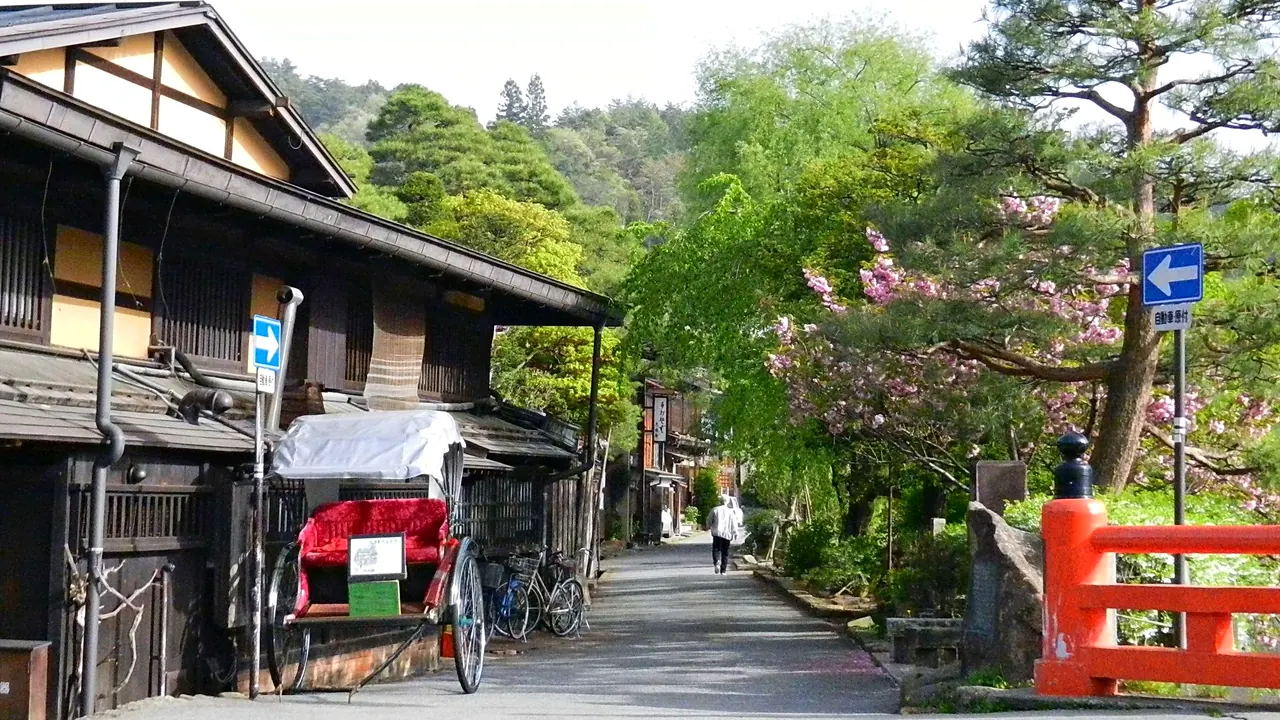
Takayama is for travellers who want a slower, rural Japan: an Edo-period merchant town, a ryokan with its own hot-spring bath, and the Northern Alps within reach by bus. It is best for two or three quiet days as part of a longer route. It suits walkers and bathers much better than anyone who wants evenings out or attractions built for children.
Choose Yokohama for
- beaches
- families
- live music and the arts
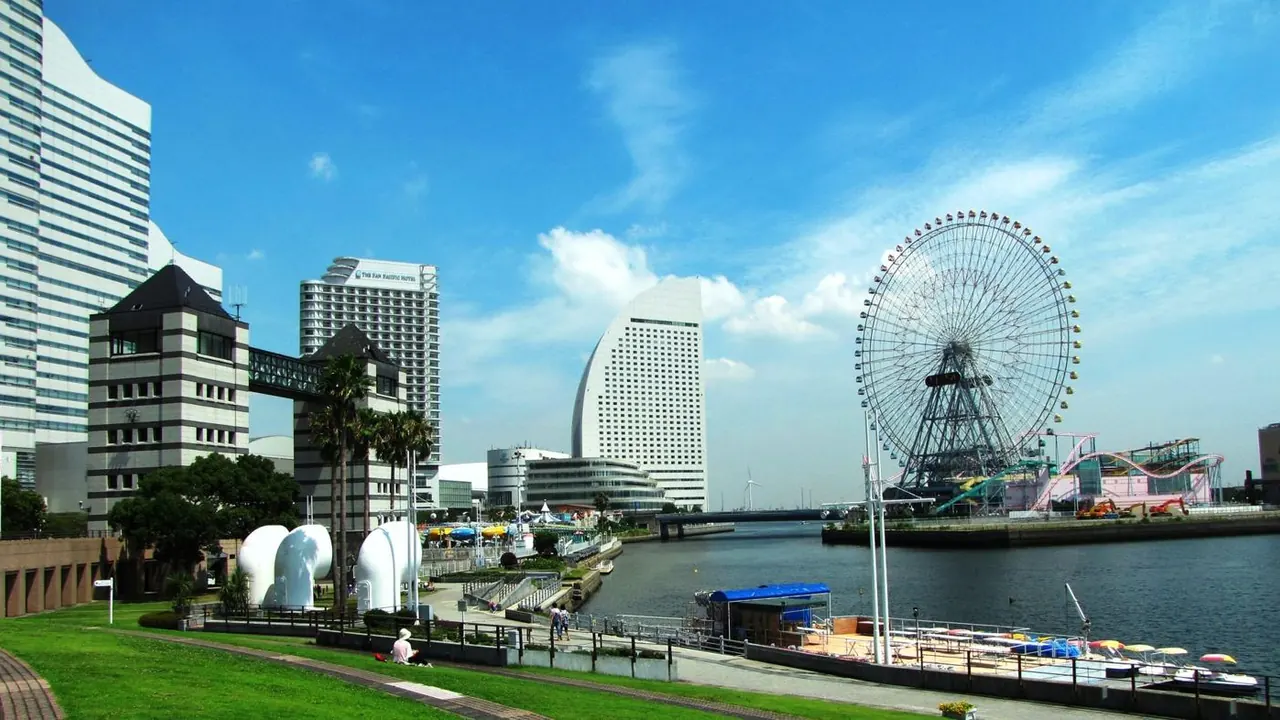
Choose Yokohama for a comfortable base with a lot within reach. Fast trains make Tokyo, Kamakura and Hakone easy day trips, the food runs from Chinatown to the grill bars of Noge, and children are well looked after with an aquarium, a zoo and hands-on museums. It is the better pick for families, for evenings out and for anyone who would rather not plan around bus timetables.
Scoreboard
Twelve categories on one fixed scale from 0 to 100. The shaded stretch is the gap between the two.
Your match
Pick a travel style or drag the sliders, and both match scores follow your weighting.
Wins on wellness and nature and the outdoors with your weighting.
Wins on beaches and families with your weighting.
What matters to you?
Category by category
What the scores mean for a trip.
Beaches & swimming
Takayama lies deep in the Hida mountains, about two hours from the coast, so a bathe here means a hot spring, not the sea. Yokohama is not a beach city either, but it can offer a summer swim. There is Umi no Koen on the inner bay, and the grey-brown sand of Zushi, Kamakura and the Miura Peninsula is within an hour by train.
For a sea day in July or August, only Yokohama will do. Even there, the beach is a day out and not a reason to book.
Food & drink
Takayama has only a few specialities, but they are memorable. Hida beef is grilled on a magnolia leaf with hoba miso, the dango is glazed with soy, the markets sell pickles and the old breweries of the merchant quarter offer sake tastings. After a couple of days the menus repeat, and dinner is usually early and at the ryokan.
Yokohama has much more variety. There is Japan's largest Chinatown, the city's own iekei ramen and sanma-men, the ramen museum at Shin-Yokohama, the food halls under the station and Noge's grill bars. That is enough for a week of different meals, though the best fine dining is in Tokyo.
Culture & sights
Both towns take about two days to see, but their history is completely different. Takayama is old inland Japan, well preserved. It has the dark timber lanes of Sanmachi Suji, the feudal government office at Takayama Jinya, wealthy merchant houses and the thatched farmhouses of Hida Folk Village.
Yokohama shows Japan meeting the outside world. It has the Western houses and foreigners' cemetery on the Yamate Bluff, the stone customs buildings of Kannai, the Hikawa Maru liner and the temples and teahouses moved to Sankeien. Takayama feels more complete as a single townscape, while Yokohama adds an art museum and a modern skyline.
Nightlife
Takayama hardly has a nightlife. There are a few izakaya and small bars near the station and east of the river, and little stays open after eleven.
Yokohama has more going on, with standing bars and counter seats in Noge, karaoke in Kannai and bars with harbour views in Minato Mirai. Neither is a clubbing city, and locals who want a big night take the train to Tokyo. For a long evening of yakitori and beer, though, Yokohama is the one to pick.
Nature & outdoors
Takayama has the bigger mountains close at hand. Kamikochi's riverside trails under the Hotaka range, the Shin-Hotaka ropeway to peaks near 3,000m and summer walking on Norikura are all within about an hour and a half by bus. There is snow and skiing in winter, though Kamikochi closes in the cold months.
Yokohama's outdoors are gentler and by the sea. There are temple trails on Kamakura's wooded ridges, cliffs and caves on Enoshima and shore walks on the Miura Peninsula, with Hakone's crater lake and the Tanzawa hills further away. What it offers is sea air and winter views of Fuji, not high mountain scenery.
Day trips
Takayama has only a few day trips, but they are strong. The UNESCO-listed thatched village of Shirakawa-go is under an hour away by bus, and the canal town of Hida-Furukawa and the spa town of Gero Onsen are close by train. Kanazawa works better as your next stop than as a day out, and beyond these it is mostly mountain country.
Yokohama has far more choice. Tokyo and Kamakura's Great Buddha and Zen temples are each under half an hour away by train. Enoshima, Hakone, Odawara and the Edo-period streets of Kawagoe all make easy outings.
Good for families
Takayama is safe and easy to manage. Children enjoy the market snacks, the folk village, the festival floats and the winter snow, but there is no zoo, aquarium or theme park, and the craft shops soon bore them.
Yokohama is much better for families. It has the Cup Noodles Museum, a seafront Ferris wheel, the aquarium and rides at Hakkeijima, and Zoorasia, with Tokyo Disneyland about an hour away. Stations have lifts and nursing rooms.
Getting around
You won't need a car in either city. Takayama's old town, the Jinya and the markets are a short, flat walk from the station. Anything further out depends on regional buses and trains, which need planning and can fill up in busy seasons.
Yokohama is far easier to get around. It has a dense rail network on a single tap-on card, English signs and fast lines to Tokyo, Kamakura and Haneda Airport. The only things to plan for are the steep climb to the Bluff and a bus to Sankeien.
Shopping & style
Takayama is the place for traditional craft. It sells amber Shunkei lacquerware, yew carvings, Hida bentwood furniture, brewery sake and sarubobo charms, though much of the old town leans towards souvenirs.
Yokohama has more shops, and they are easier to get round. There are department stores and underground arcades around Yokohama Station and waterfront malls at Minato Mirai. Below the Bluff is Motomachi, a long, smart street known for leather goods. For serious fashion, people still take the train to Tokyo.
Affordability
The two cost about the same, and in both, cheap ramen and plain business hotels keep a stay moderate. What differs is where the money goes. In Takayama it goes on a ryokan night with a multi-course dinner, a proper Hida beef meal and rooms in festival weeks. In Yokohama it goes on the harbour-view hotels of Minato Mirai, summer weekends and paid family attractions, balanced by free sights such as Yamashita Park and the houses on the Bluff.
Live music & performing arts
Takayama has almost no stage life outside the Takayama Festival each spring and autumn, with its karakuri puppets and lantern-lit float processions. Yokohama has a real performing-arts scene. The Kanagawa Philharmonic plays at Minato Mirai Hall, the Kanagawa Arts Theatre stages opera and dance, the arenas host touring concerts, and old jazz cafés in Noge and Kannai still have small live sets.
If your dates match the festival, Takayama is well worth seeing. Otherwise, for an evening at a show, go to Yokohama or into Tokyo.
Wellness & relaxation
Takayama is the more restful of the two. Many ryokan have spring-fed indoor and open-air baths, the town is quiet in the evening, and the riverside pools of Okuhida and the well-known baths of Gero Onsen are about an hour away.
Yokohama offers an urban version: neighbourhood sento and large bath complexes with saunas, one of them on the Minato Mirai waterfront, as well as Sankeien's ponds and the rose gardens on the Bluff. For a proper onsen in a mountain inn, you have to go to Hakone.
When should you go?
Pick your month. The climate figures are measured averages, not a forecast.
Takayama in July
Yokohama in July
Daytime high, °C
Rainfall in the month, mm
Where the figures come from
Takayama's sunshine is measured 65 km from the centre, at Matsumoto.
Yokohama's sunshine is measured 29 km from the centre, at Tokyo.
Temperature and rainfall are climate normals, averaged over the years shown. Takayama: 1971-2000 (sunshine 1991-2020, rainfall 1981-2010) normals, Takayama (0.5 km from centre). Yokohama: 1971-2000 (sunshine 1991-2020, rainfall 1991-2020) normals, Yokohama (1.6 km from centre).
Takayama has a true mountain climate. In January and February daytime highs are only about 3°C and snow covers the region. That suits the thatched villages, but it is cold for long walks. Summer turns warm and sunny, but July and September are very wet, with about 273mm of rain in July. May and October are the best months, mild and drier, and May is one of the sunniest months. October brings autumn colour to the mountains.
Yokohama is milder all year. Winter highs are near 10°C and the days are clear and sunny, so December and January are good for walking the harbour. Beach weather is limited to July and August, when the sea reaches about 26°C, though summer is hot and humid. Its wettest weeks come later than Takayama's, in September and October, with about 276mm of rain in October. Spring and November are the most comfortable times to visit.
Which traveller are you?
On a family trip with children, Takayama's markets, festival floats and winter snow are fun for a day, but nothing there is built for children. Yokohama is the clear choice, with Hakkeijima Sea Paradise, Zoorasia, the Cup Noodles and Anpanman museums, and a flat harbour for pushchairs.
For a relaxing and wellness trip, choose Takayama. Here a few unhurried nights of bathing are the whole point of the stay. From Yokohama, a real mountain onsen means a trip out to Hakone, and the city's baths are only an evening's break from a working city.
On a food and nightlife trip, Takayama's Hida beef and brewery sake are excellent for a couple of days, but the choice is narrow and little stays open past eleven. Yokohama has Chinatown's dim sum halls, its own iekei ramen and long evenings in Noge's tiny izakaya.
Before you go
| Measure | Takayama | Yokohama |
|---|---|---|
| Official language | Japanese | Japanese |
| Currency | Yen (JPY) | Yen (JPY) |
| Sockets | AB100 V, 50 and 60 Hz depending on the region | AB100 V, 50 and 60 Hz depending on the region |
| Driving side | Left | Left |
| Time zone | UTC+9 | UTC+9 |
| Emergency number | Police 110, fire 119 | Police 110, fire 119 |
| Elevation | 573 m | 24 m |
| Main airport | Chubu Centrair International Airport (NGO)149 km from centre43 non-stop destinations | Tokyo Haneda International Airport (HND)18 km from centre98 non-stop destinations |
| Public holidays this year | 16 days | 16 days |
By the numbers
| Measure | Takayama | Yokohama |
|---|---|---|
| City population | 85,199 | 3,757,630 |
| People per km² | 39 | 8,585 |
| Museums within 10 km | 14 | 38 |
| UNESCO World Heritage sites within 50 km | 1 | 1 |
| Swim season, months above 21 °C | - | 5 months |
Where else could you go?
Every comparison below shares a destination with this one, so you can follow Takayama or Yokohama somewhere new.
- Kamakuravs Yokohama
- Tokyovs Yokohama
- Hakonevs Yokohama
- Kanazawavs Takayama
- Nikkovs Yokohama
- Kyotovs Takayama