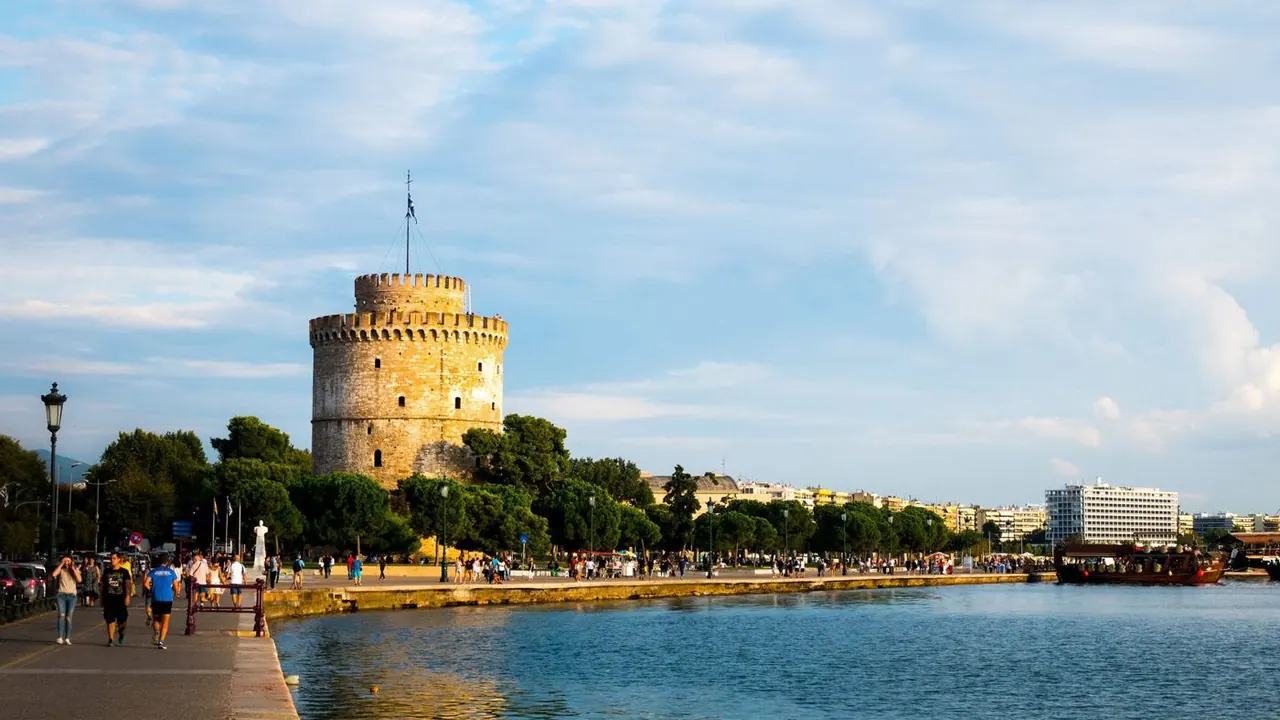
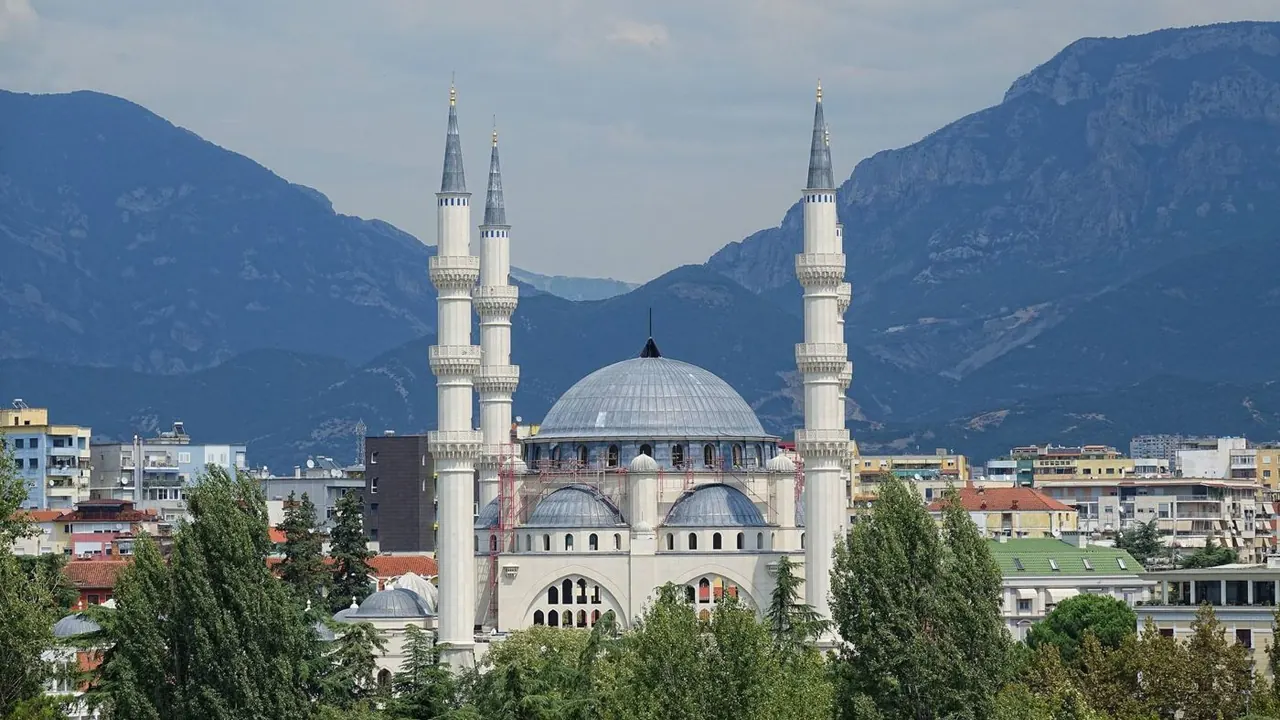
Photos: Thessaloniki by Destinygreece, CC BY-SA 4.0, cropped; Tirana by Bjørn Christian Tørrissen, CC BY-SA 4.0, cropped.
Thessaloniki or Tirana?
Our verdict in twelve categories, each scored against the same fixed benchmark cities, and the climate month by month, so you can choose for your trip.
Choose Thessaloniki for
- culture and sights
- food and drink
- live music and the arts
Thessaloniki is the better choice for travellers who want a city that is full on its own terms. It has some of the best everyday eating in Greece, a Byzantine heritage of world standing in its churches and museums, and a late, crowded night out that runs through the week. Add the Macedonian royal tombs at Vergina and the coves of Halkidiki within reach, and it suits a longer stay or a trip that mixes city, history and sea.
Choose Tirana for
- prices
Tirana makes more sense for a curious traveller on a careful budget who is happy to use the capital as a base rather than the main event. Its own sights are about the communist century, told well in bunkers and a former secret police building. The rewards beyond them are Berat, Kruja and the cable car up Dajti. It is cheaper day to day, and it suits a short, unusual trip more than a long one.
Scoreboard
Twelve categories on one fixed scale from 0 to 100. The shaded stretch is the gap between the two.
Your match
Pick a travel style or drag the sliders, and both match scores follow your weighting.
Wins on culture and sights and food and drink with your weighting.
Wins on prices with your weighting.
What matters to you?
Category by category
What the scores mean for a trip.
Beaches & swimming
Neither city is a place to swim in town, so the question is how good the nearest decent sea is. Thessaloniki wins because Halkidiki's Kassandra peninsula starts about an hour's drive away, with clear, warm water and some of the finest coves in Greece. The suburban beaches at Perea and Nea Michaniona are only ordinary.
From Tirana, the realistic option is Durrës, under an hour away. It has a long sandy strip with shallow water that suits children, but it is lined with hotels, packed on summer weekends and murky near the port. Albania's famous clear coves at Ksamil and Himara are a separate trip.
Food & drink
Thessaloniki is the stronger food city by a wide margin. Its cooking draws on Ottoman, Sephardic and Anatolian refugee traditions, so a single meze spread at an ouzeri can cover spiced soutzoukakia, a dozen ways with aubergine and a stream of tsipouro. The Kapani and Modiano markets add working stalls with tavernas between them.
Tirana's cooking is plainer and more rural: tavë kosi, fërgesë, byrek and grilled meat with village bread. Its high point is a long lunch at one of the farm restaurants in the hills outside town, where much of the food is grown on site. In the centre the choice is narrower, and the culture of slow terrace coffee is as much a part of the experience as the food.
Culture & sights
Thessaloniki has far more to see. Fifteen UNESCO-listed early Christian and Byzantine monuments, including the Rotunda and Agios Dimitrios, sit alongside the Arch of Galerius, the Roman Forum and two major museums, with Ano Poli's Ottoman lanes and walls above. Its weakness is that the centre was rebuilt after 1917, so the monuments stand among modern blocks.
Tirana tells a different and much more recent story. Bunk'Art and the House of Leaves are gripping on the communist dictatorship, and Skanderbeg Square with the Et'hem Bey Mosque gives the city its centre. But the historic fabric is thin, and two days covers it. Anyone after older heritage has to leave town.
Nightlife
Thessaloniki's night is bigger, later and spread across more of the city. It moves from the warehouse bars of Ladadika to the louder DJ bars around Valaoritou and the crowded tables of the Bit Bazaar, and in summer out to open-air clubs. A large student population keeps it casual and busy even on weeknights.
Tirana packs its going out into Blloku, the former leadership quarter, with cocktail bars, lounge terraces and a few clubs near the Grand Park lake. It is a dress-up, see-and-be-seen scene. Outside that grid the city goes quiet.
Nature & outdoors
The two are broadly level outdoors, but the landscape sits in different places. Tirana has a mountain on its doorstep: the Dajti cable car lifts you to about 1,000m of beech and pine forest in a quarter of an hour, and the turquoise Bovilla reservoir is within an hour. Rafting canyons lie further out.
Thessaloniki's own green space is gentler, the Seich Sou pine forest and a long flat promenade. Its bigger outdoor draws need a car: hut-to-hut hiking on Mount Olympus, Greece's highest peak, sailing and kayaking off Halkidiki, and winter skiing at Kaimaktsalan and Seli.
Day trips
Thessaloniki has the richer and easier surroundings. The royal tombs at Vergina, Alexander's birthplace at Pella and the sanctuary at Dion make a run of ancient Macedonian sites. Edessa's waterfalls, Naoussa's vineyards and boat trips along the Mount Athos coast can fill more days.
Tirana has good outings too, but fewer, and they take more effort. Skanderbeg's castle at Kruja is under an hour away, and Berat's white Ottoman houses and lived-in citadel are well worth the trip. Slower roads mean that Berat, Shkodra and Apollonia each take a full day by minibus, tour or hire car.
Good for families
Neither is an easy city with small children, but Thessaloniki copes slightly better. Its long seafront has playgrounds and a park strip, and the Noesis science centre and planetarium is a proper rainy-day outing. Many families still stay in Halkidiki for the beaches and come into the city for the day.
Tirana's best outings are the Grand Park lake and the Dajti cable car, and the shallow sand at Durrës is gentle for young swimmers. Otherwise there is little made for children. Assertive drivers and broken pavements make a buggy hard work in both cities.
Getting around
Both cities keep the sights within walking distance, so the difference is in the backup. Thessaloniki has a metro line under its long waterfront strip, along with buses that slow in traffic and a steep climb to Ano Poli. Tirana is more compact, with most places twenty minutes apart on foot, but it has no metro or tram, and its bus routes are hard for a visitor to read, so taxis do the rest.
Shopping & style
Thessaloniki offers more, though it is no shopping destination. Tsimiski gives it a proper high street, and the Kapani and Modiano markets are excellent for spices, cheeses, loukoumi and tsipouro to carry home.
Tirana's fashion shopping is limited to malls and a few Blloku boutiques. Its draw is the Pazari i Ri area and Kruja's bazaar, for felt hats, embroidery, copperware and filigree silver, the sort of local craft Thessaloniki lacks.
Affordability
Tirana is the cheaper of the two, among the least expensive capitals in Europe. Byrek, grilled-meat dinners, raki and taxis barely dent a budget. Thessaloniki is still good value by Southern European standards, because it is priced for students and locals, but a day there costs more, and its day trips often add car hire.
Live music & performing arts
Thessaloniki has the deeper scene. The State Orchestra plays at the waterfront Concert Hall, summer concerts are held at open-air theatres like Dasos, and the most memorable evenings are rebetiko and laika sessions at tavernas that run late into the night. A small jazz and indie circuit serves the students.
In Tirana, the main event is the opera house on Skanderbeg Square, where tickets for opera and ballet are easy to get. Albania's UNESCO-recognised iso-polyphonic singing is more often heard in the south than on a stage in the capital.
Wellness & relaxation
Thessaloniki is slightly the better place to unwind, partly because its thermal water is closer. The simple spring-fed baths at Lagadas are half an hour out, though the Ottoman hammams in the centre, such as the Bey Hamam, survive only as monuments. The rest of its calm comes from the sea: long iced coffees at a waterfront café and the evening walk along the gulf.
For Tirana, the nearest hot springs are the sulphur baths at Llixha, about an hour away, with old-fashioned spa hotels around them. The city has its own slow rhythm of terrace coffee and the evening xhiro, but traffic noise fills much of the centre, so for real quiet you go to the Grand Park or up Dajti.
When should you go?
Pick your month. The climate figures are measured averages, not a forecast.
Thessaloniki in July
Tirana in July
Daytime high, °C
Rainfall in the month, mm
Temperature and rainfall are climate normals, averaged over the years shown. Thessaloniki: 1991-2020 normals, Thessaloniki Airport (14 km from centre). Tirana: 1961-1990 normals, Tirana (3 km from centre).
Both cities share a hot summer and a mild spring and autumn, but their winters differ sharply. July and August reach about 32°C in Thessaloniki and only slightly less in Tirana, too hot for long walks in the middle of the day. That makes May, June, September and early October the most comfortable months for sightseeing in either. For swimming, the Aegean off Thessaloniki warms to 27°C in August and stays pleasant through September, a little warmer than the Adriatic at Durrës.
The big difference is rain. Thessaloniki stays fairly dry all year, with its wettest month barely past 56mm, so even winter is fine for museums and tavernas if you can live with chilly days around 10°C. Tirana is far wetter from October to April, peaking at about 172mm in November. Its late autumn and winter are a damp, grey time to visit, and the clear sunny months there run from May to September.
Which traveller are you?
For a culture and arts trip, Thessaloniki is the clear pick. Its UNESCO-listed Byzantine churches, the Rotunda's mosaics and the gold of ancient Macedonia outweigh Tirana's communist-era bunkers, and in the evening it has a state orchestra and late rebetiko at tavernas.
On a trip on a tight budget, Tirana goes further. Meals, coffee, raki, taxis and museum tickets cost even less than in Thessaloniki, which is already good value. Central hotels are cheap, and only Blloku's smarter cocktail bars ask noticeably more.
For a food and nightlife trip, Thessaloniki wins comfortably. Meze tables at ouzeri, bougatsa in the morning and the Kapani market lead into nights in Ladadika and around Valaoritou that run past three, where Tirana's night out is mostly a single dressy district.
Before you go
| Measure | Thessaloniki | Tirana |
|---|---|---|
| Official language | Greek | Albanian |
| Currency | Euro (EUR) | Lek (ALL) |
| Sockets | CF230 V, 50 Hz | CF220 V, 50 Hz |
| Driving side | Right | Right |
| Time zone | UTC+2, UTC+3 in summer | UTC+1, UTC+2 in summer |
| Emergency number | 112 | 112 |
| Elevation | 6 m | 110 m |
| Main airport | Thessaloniki Macedonia International Airport (SKG)14 km from centre90 non-stop destinations | Tirana International Airport Mother Teresa (TIA)13 km from centre121 non-stop destinations |
| Public holidays this year | 15 days | 14 days |
By the numbers
| Measure | Thessaloniki | Tirana |
|---|---|---|
| City population | 309,617 | 389,323 |
| People per km² | 16,042 | 9,314 |
| Museums within 10 km | 32 | 11 |
| UNESCO World Heritage sites within 50 km | 1 | 0 |
| Swim season, months above 21 °C | 5 months | 5 months |
Where else could you go?
Every comparison below shares a destination with this one, so you can follow Thessaloniki or Tirana somewhere new.