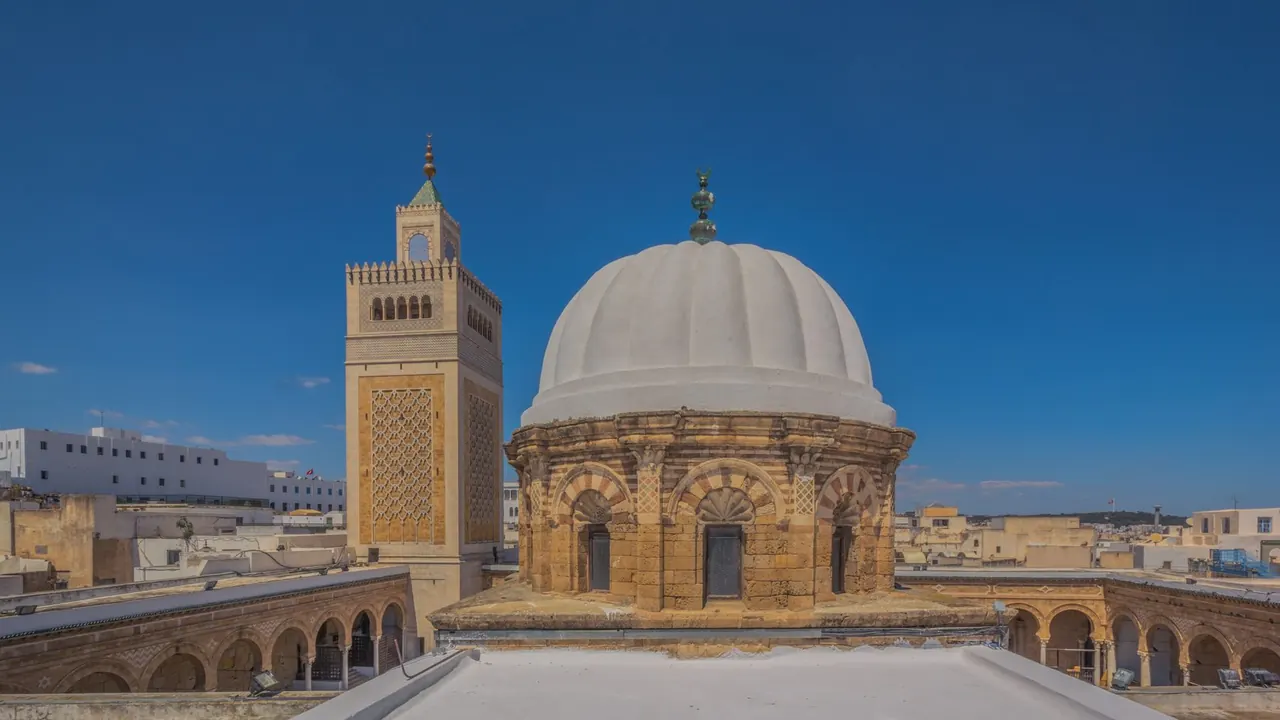
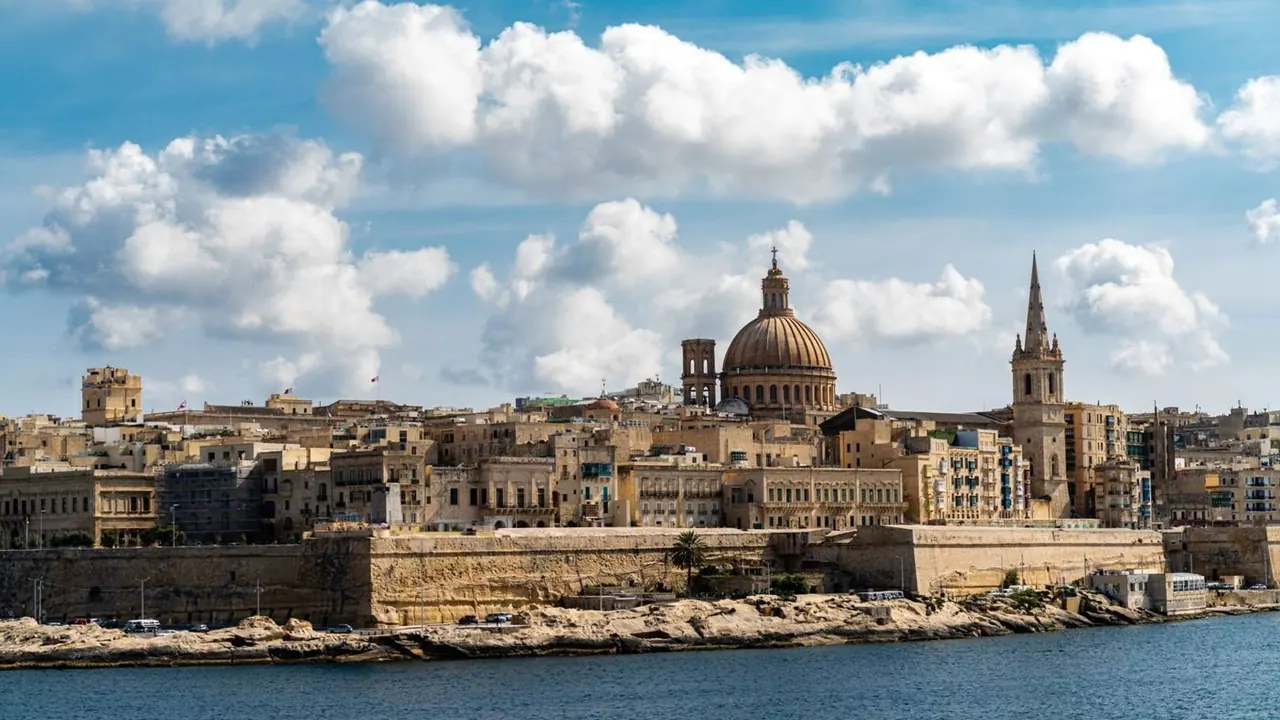
Photos: Tunis by IssamBarhoumi, CC BY-SA 4.0, cropped; Valletta by Pho Tomass, Pexels License.
Tunis or Valletta?
Our verdict in twelve categories, each scored against the same fixed benchmark cities, and the climate month by month, so you can choose for your trip.
Choose Tunis for
- prices
- wellness
- shopping
Tunis suits a traveller who wants a lot of history for little money and can live with some rough edges. The medina and the Bardo's mosaics, Carthage by suburban train and long days out to Dougga and Kairouan fill a week easily. Seawater spas in Gammarth and the old neighbourhood hammams add a restful side that Malta lacks. Evenings are quiet and the streets are hard work, so it rewards patience more than a wish for ease.
Choose Valletta for
- families
- getting around
- nightlife
Valletta is the easier and more compact trip. You can walk the whole walled city in a morning, English is spoken everywhere, buses run to the rest of the island, and clear water is a ladder's climb below the bastions. It costs noticeably more, but families, swimmers and divers will find it takes far less effort, and so will anyone who wants a glass of wine on Strait Street after a day of Baroque sights.
Scoreboard
Twelve categories on one fixed scale from 0 to 100. The shaded stretch is the gap between the two.
Your match
Pick a travel style or drag the sliders, and both match scores follow your weighting.
Too close to call, 1 point apart
Wins on prices and wellness with your weighting.
Wins on families and getting around with your weighting.
What matters to you?
Category by category
What the scores mean for a trip.
Beaches & swimming
Tunis has the longer sandy strands, at La Marsa and Gammarth out along the TGM line, and they are where local families spend summer weekends. The water near the port and the lagoon is poor, though, and the really good beaches at Hammamet are an hour's drive away.
Valletta gives you cleaner, clearer sea right under the city walls, reached by ladders off flat limestone ledges. Golden Bay, Mellieha Bay and St Peter's Pool are easy bus rides away. The sand is limited and crowded in August, but for simply getting into good water, Malta is better.
Food & drink
The two are close, but they feed you differently. Tunis is about heat and street eating: harissa, brik with its runny egg, lablabi for breakfast and the fish and spice stalls of the Marché Central. Its best sit-down meals are seafood in La Goulette, and alcohol stays on the margins.
Valletta is gentler, with Sicilian and British influences. You get pastizzi at the counter, rabbit stew and lampuki pies in autumn, and wine bars tucked along stepped streets. Tourist menus are common on the main streets, so the better fish is out at Marsaxlokk.
Culture & sights
Both cities offer a rich set of sights, but in different forms. Tunis is a city of layers: the UNESCO medina around the Zitouna Mosque, the French boulevards beside it, the Bardo's Roman mosaics and the scattered remains of Carthage, which take some imagination. Seeing it properly takes several days.
Valletta is a single, coherent creation, a Baroque grid built by the Knights after 1565, with Caravaggio in St John's Co-Cathedral and the Three Cities just across the harbour. It is more polished and compact, and two or three unhurried days are enough.
Nightlife
Neither city stays up late in its centre, but Valletta gives you more to do after dark. Strait Street's wine bars and the outdoor tables on the side-street steps make for an easy, mixed evening. Paceville's clubs, half an hour away, run until dawn in summer for anyone who wants noise.
In Tunis, evenings mostly mean coffee and shisha in cafés. The downtown beer bars are mostly male and rough. The relaxed, mixed scene is limited to the summer lounges and beach clubs of La Marsa and Gammarth, and out of season there is very little.
Nature & outdoors
Valletta has the stronger outdoor offer, and almost all of it is in the sea. The clear water around Malta makes diving the main draw, with wrecks and caves close to shore, Gozo's Blue Hole, and boat trips into the Blue Grotto. On land there are only short cliff walks at Dingli.
Tunis has a softer setting of lagoons where flamingos feed and short climbs on Bou Kornine above the bay. Further afield, Ichkeul's wetlands and the slopes of Djebel Zaghouan are worth the trip for birdwatchers and walkers, but trails and outfitters are few.
Day trips
Both make excellent bases, but the trips differ in scale. From Tunis the outings are longer and more varied: Roman Dougga on its hillside, the holy city of Kairouan, Andalusian Testour and Nabeul's potteries. Several of them take about two hours each way and are easier with a driver or a louage.
From Valletta everything is close. Mdina and Rabat are half an hour away, the prehistoric temples stand above the southern cliffs and Gozo is a ferry ride off. The trips are short and easy, but they all share one island character.
Good for families
Valletta is the easier place to bring children. English is spoken, distances are short and the aquarium, Popeye Village and the shallow northern bays are all within reach. The noon cannon at the Upper Barrakka Gardens is a reliable hit, although the stepped streets defeat pushchairs.
Tunis is just as welcoming to children in cafés and souks, and Carthage's open ruins and Belvedere Park are fun. The city itself offers little else for them, and heavy traffic and broken pavements wear families down, which is why many choose a coastal hotel instead.
Getting around
Valletta is far simpler to get around. The walled city is about a kilometre long and easy to cover on foot, a lift and short ferries link it to the harbour towns, and buses from the city gate reach nearly the whole island, though slowly on congested roads.
Tunis does have the one thing Malta lacks, a railway. The TGM crosses the lagoon to Carthage, Sidi Bou Said and La Marsa, and taxis are cheap. Away from those lines, though, chaotic traffic, uneven pavements and summer heat make getting about tiring.
Shopping & style
Tunis is the better place to shop, because its medina is a working market. The souks are still partly grouped by trade, with chechia makers, perfumers, kilims and brass, and Nabeul ceramics and Sidi Bou Said birdcages are classic finds. Going deeper into the lanes, and bargaining cheerfully, pays off.
Valletta's Republic and Merchant Streets are mostly high-street chains and jewellers. Silver filigree, Gozo lace and blown glass from Ta' Qali are good souvenirs, but they are a short list rather than a reason to come.
Affordability
Tunis costs far less. Street food, taxis, train rides, museum entry and restored medina guesthouses are all cheap by Mediterranean standards. Only the smart Gammarth hotels, imported drinks and organised tours approach European rates.
Valletta is mid-priced, and rooms inside the walls cost more than elsewhere on Malta, especially in summer. Pastizzi and buses are cheap, but central restaurants and museum entries add up, and staying in Sliema is the usual way to save.
Live music & performing arts
The two are not far apart, and both rely on festivals, but Valletta has slightly more going on. Its Manoel Theatre, dating from 1731, is worth a visit for the gilded auditorium alone. The Philharmonic, the winter baroque festival, harbour jazz and the rival opera houses on Gozo give it a broader classical calendar.
Tunis offers something Malta cannot. You can hear malouf in Baron d'Erlanger's palace at Sidi Bou Said, and the Carthage International Festival holds summer concerts in the Roman theatre. Between these events, live performance is thin in both cities.
Wellness & relaxation
Tunis has a real bathing culture behind it. There is serious thalassotherapy at the Gammarth resorts, plain and steamy neighbourhood hammams in the medina, and the Roman-era hot springs of Korbous on Cap Bon. The city itself is noisy, so the calm is found around its edges.
Valletta has no spa tradition, only pleasant hotel spas. Its restful side is the quiet after the cruise crowds leave, with golden light on the limestone and the Barrakka Gardens above a still harbour.
When should you go?
Pick your month. The climate figures are measured averages, not a forecast.
Tunis in July
Valletta in July
Daytime high, °C
Rainfall in the month, mm
Temperature and rainfall are climate normals, averaged over the years shown. Tunis: 1991-2020 normals, Tunis-Carthage (6 km from centre). Valletta: 1991-2020 normals, Luqa (5.9 km from centre).
Both cities share the same Mediterranean rhythm, but Tunis runs hotter. Its summer peaks around 35°C in August, too hot for long walks through the medina or around Carthage, so May, June, late September and October are the comfortable months. Valletta tops out nearer 32°C and has a little more sea breeze. April and May are its best months for walking, being dry, sunny and mild. In both places the sea is warm enough for swimming from June into October and reaches about 27°C at the end of summer.
The wet seasons differ. Rain in Tunis is spread fairly evenly from September to March, and no month is truly soaked. Valletta has an almost rainless summer but a sharper winter, with November and December the wettest at around 90mm. Winter days in both cities are mild for sightseeing but too cool for the beach.
Which traveller are you?
On a trip on a tight budget, Tunis stretches the money further. A week can be built around a medina guesthouse, local lunches and the suburban train to Carthage. In Valletta, saving usually means sleeping across the harbour in Sliema.
On a family trip with young children, Valletta is easier. Tunis usually means a coastal hotel with tiring trips into town. On Malta, stay in Sliema, cross by ferry for the morning and spend afternoons at a northern bay.
For a relaxing and wellness trip, Tunis is the better base. Stay at a Gammarth spa hotel, spend mornings in the medina and keep a day for Cap Bon's springs. Valletta rewards slow evenings and harbour views, not treatments.
Before you go
| Measure | Tunis | Valletta |
|---|---|---|
| Official language | Arabic | English, Maltese |
| Currency | Tunisian Dinar (TND) | Euro (EUR) |
| Sockets | CE230 V, 50 Hz | G230 V, 50 Hz |
| Driving side | Right | Left |
| Time zone | UTC+1 | UTC+1, UTC+2 in summer |
| Emergency number | Police 197, ambulance 190, fire 198 | 112 |
| Elevation | 4 m | 56 m |
| Main airport | Tunis Carthage International Airport (TUN)7 km from centre56 non-stop destinations | Malta International Airport (MLA)6 km from centre113 non-stop destinations |
| Public holidays this year | 8 days | 14 days |
By the numbers
| Measure | Tunis | Valletta |
|---|---|---|
| City population | 602,560 | 5,197 |
| People per km² | 2,834 | 6,496 |
| Museums within 10 km | 16 | 16 |
| UNESCO World Heritage sites within 50 km | 3 | 3 |
| Swim season, months above 21 °C | 5 months | 6 months |
Where else could you go?
Every comparison below shares a destination with this one, so you can follow Tunis or Valletta somewhere new.