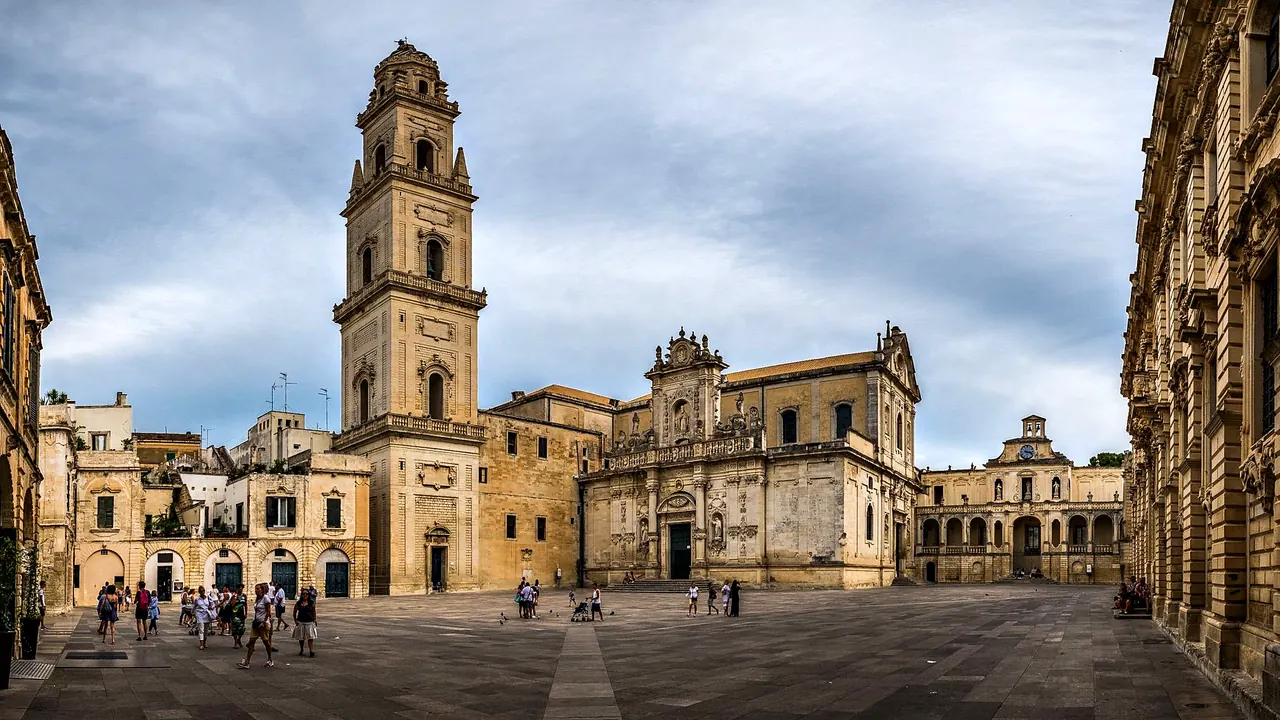
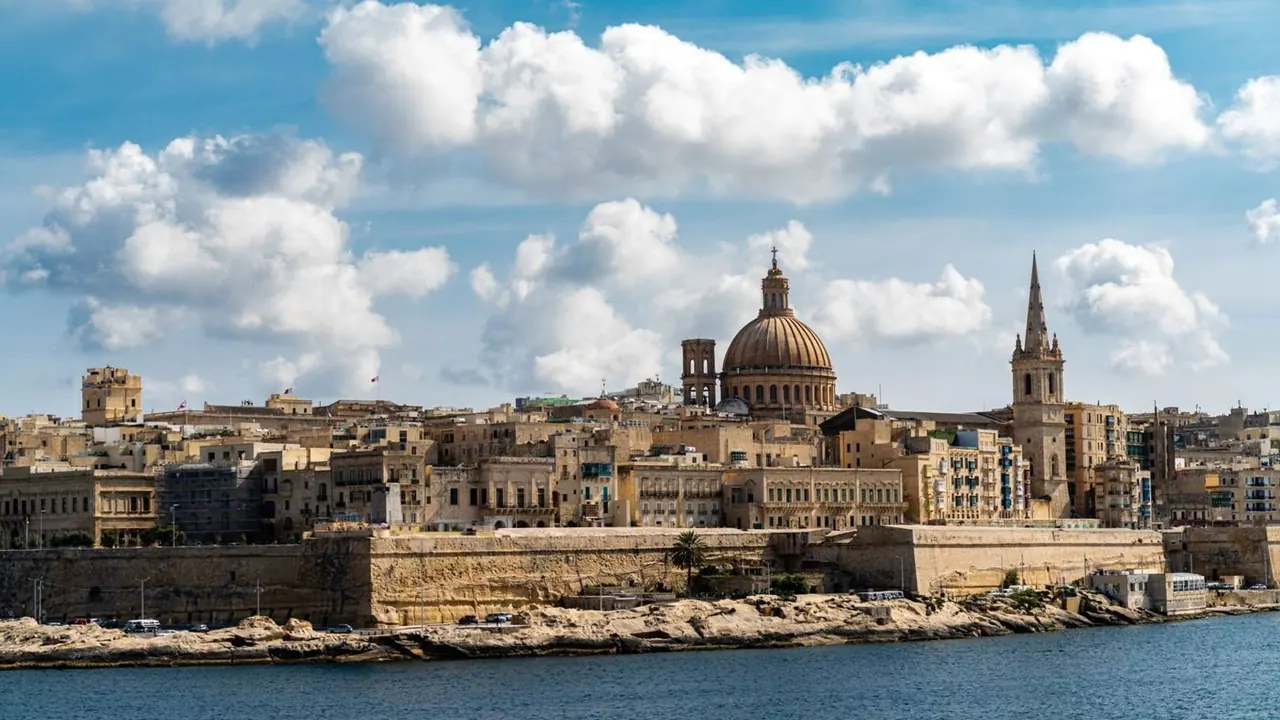
Photos: Lecce by Giuseppe Milo, CC BY 3.0, cropped; Valletta by Pho Tomass, Pexels License.
Lecce or Valletta?
Our verdict in twelve categories, each scored against the same fixed benchmark cities, and the climate month by month, so you can choose for your trip.
Choose Lecce for
- wellness
- food and drink
- prices
Lecce suits a slower summer trip built around the Salento coast. Mornings go to sandy beaches and cliff coves, long afternoons to rest, and evenings to the Baroque piazzas. The food is more distinctive than Malta's and costs less, and the spa farmhouses and the sulphur grottoes at Santa Cesarea give a restful stay more to work with. You will want a car, because the coast and the stone towns are hard to reach without one.
Choose Valletta for
- getting around
- families
- culture and sights
Valletta is the better choice for history packed close together and a trip with no car. In a couple of days you can walk the Knights' fortified grid, see the Caravaggio in St John's and cross by ferry to the Three Cities, then take the bus to Mdina, the prehistoric temples and Gozo. Families will find it easier, the winter is milder and there is a little more going on after dark. In return, expect a higher bill and swimming mostly off rocks.
Scoreboard
Twelve categories on one fixed scale from 0 to 100. The shaded stretch is the gap between the two.
Your match
Pick a travel style or drag the sliders, and both match scores follow your weighting.
Too close to call, 1 point apart
Wins on wellness and food and drink with your weighting.
Wins on getting around and families with your weighting.
What matters to you?
Category by category
What the scores mean for a trip.
Beaches & swimming
These two are close for a beach trip, and the difference is in what you swim from. Lecce has nothing much on its own doorstep, but within about 40 minutes by car it reaches two seas. On the Adriatic side are the pale coves and sea stacks of Torre dell'Orso. On the Ionian side, the long, shallow sands of Porto Cesareo are among the best in southern Italy.
Valletta lets you swim in town, climbing down ladders off limestone ledges below the bastions into very clear water. Its sandy bays at Golden Bay and Mellieha are small, crowded in August and a bus ride away. Prefer sand and a full beach day and Lecce has the edge. Prefer a quick dip between sights and Valletta does that better.
Food & drink
Lecce eats better and more distinctively. The day runs from a warm pasticciotto with almond-sweetened iced coffee to chickpeas with fried pasta, fava purée and Negroamaro, all honest peasant cooking found easily in old-town osterie. The limit is range: it is Apulian food or little else.
Valletta's cooking is a mix of Sicily, North Africa and Britain, with pastizzi, rabbit stew and lampuki pie. Too many places on its main streets cater to cruise passengers. The best fish means a trip out to Marsaxlokk.
Culture & sights
Both are honey-coloured limestone cities, but Valletta has more to see. Its whole fortified grid is a UNESCO site. St John's Co-Cathedral, with its marble tomb floor and Caravaggio, is a sight of European rank, and the Grandmaster's Palace, Fort St Elmo and the Three Cities across the harbour add depth.
Lecce's appeal is ornament rather than a list of landmarks. The carved Baroque facades of Santa Croce, Piazza del Duomo at dusk and the half-buried Roman amphitheatre reward slow wandering. Its museums are modest.
Nightlife
Neither city is a reason to come for nights out, but Valletta offers a little more. Strait Street's wine and cocktail bars give the capital a sociable evening. For clubs, Paceville is half an hour away by bus or taxi and runs until dawn in summer.
Lecce's evenings are the passeggiata, an aperitivo on the piazzas and small bars in the lanes, kept lively by students. Dancing means driving to the summer beach clubs near Gallipoli.
Nature & outdoors
This one is even, and both cities find their outdoors on the coast. Around Lecce the land is a flat plain of olive groves for gentle cycling. The draw is the cliff path from Roca Vecchia towards Leuca, with birdwatching in the Alimini wetlands and the pine woods of Porto Selvaggio.
Malta's strength is underwater. Its very clear sea, with wrecks close to shore and Gozo's Blue Hole, makes it the stronger choice for divers. On land the walks are short ones along Dingli Cliffs and Gozo's greener coast.
Day trips
Valletta packs more into a small area and needs no car. Mdina and the Roman remains at Rabat are half an hour away. The Hagar Qim and Mnajdra temples are older than the pyramids, and Gozo makes a full day by ferry.
Lecce opens up a wider, more varied region: Otranto's cathedral mosaic, island Gallipoli, Galatina's frescoes, and the trulli of Alberobello further north. Distances are longer, though, and most of these trips are realistic only with a hire car.
Good for families
Valletta works a little better with children, largely because of Malta as a whole. English is spoken everywhere, distances are short, and there is an aquarium at Qawra and the Popeye Village film set. The capital itself, with its stepped streets, is hard going with a pushchair, so many families stay in Sliema.
Lecce's flat, mostly traffic-free old town is the gentler place to walk with small children, and the shallow sands at Porto Cesareo are ideal for them. Beyond that there is little built for children.
Getting around
Both centres are walkable, but beyond the walls Valletta is much easier. Buses from the city gate reach nearly the whole island, and short ferries cross to Sliema and the Three Cities. Slow, crowded roads are the price.
Lecce's flat old town is simple on foot, and trains run north to Bari. The Salento's local railways and summer-only beach buses are thin, though, so most visitors end up hiring a car and parking outside the walls.
Shopping & style
Neither is a shopping destination, and the interest in both lies in local crafts. Lecce has papier-mâché saints from old-town workshops, carved limestone and Grottaglie ceramics. Valletta offers silver filigree, Gozo lace and blown glass, plus high-street chains along Republic Street and a market on Merchant Street.
Affordability
Lecce is the cheaper stay for most of the year, with low-cost food and wine and fairly priced bed and breakfasts in old palazzi. August is the exception, when Italian visitors fill the Salento and a hire car adds to the bill.
Valletta's rooms inside the walls are dearer, and visitor restaurants in the centre charge more. Cheap buses and staying across the harbour in Sliema or Gzira bring the costs down.
Live music & performing arts
Valletta has the edge, thanks largely to the Manoel Theatre of 1731. Its small gilded auditorium is worth a visit for whatever is on. Add a winter baroque festival, summer jazz on the Grand Harbour, and the rival opera houses on Gozo every autumn.
Lecce's theatres carry a modest season. Its real draw is pizzica, the Salento's tambourine dance, heard at village festivals all summer and at the huge Notte della Taranta in Melpignano in August.
Wellness & relaxation
Lecce is the better place to unwind properly. The long afternoon closure slows everyone down. Old masseria farmhouses on the plain have become spa retreats, and Santa Cesarea's sulphur pools in cliff grottoes are under an hour away.
Valletta offers calm rather than treatments. When the cruise passengers leave in the late afternoon, the Barrakka Gardens over the harbour turn quiet, and spas are mainly in resort hotels in St Julian's.
When should you go?
Pick your month. The climate figures are measured averages, not a forecast.
Lecce in July
Valletta in July
Daytime high, °C
Rainfall in the month, mm
Where the figures come from
Lecce's temperatures are measured 38 km from the centre, at Brindisi.
Lecce has no rain gauge within 25 km of the centre, so its rainfall comes from a gridded climate dataset read at the city rather than from a gauge further away.
Temperature and rainfall are climate normals, averaged over the years shown. Lecce: 1991-2020 (sunshine 1981-2010) normals, Brindisi (38 km from centre). Valletta: 1991-2020 normals, Luqa (5.9 km from centre).
Both cities have long, dry, sunny summers, but Valletta runs hotter and drier. July and August reach about 30°C in Lecce and a couple of degrees more in Valletta, where July is almost rainless. That makes midday sightseeing hard work in both cities. The sea is warm enough for swimming from June to September in both places. Valletta's water holds on longer, still around 24°C in October, while Lecce's cools a little sooner.
For walking, May and late September to October are the best months in both. Lecce's autumn turns wet earlier and harder, with November its rainiest month at about 102mm. Winter separates the two most clearly. Valletta stays mild, with highs in the mid-teens and a little more sunshine, so it works as a winter city break. Lecce is cooler and greyer from December to February.
Which traveller are you?
For a short city break, Lecce's old town is enough for a day or two on foot, but the best outings from it need a hire car. Valletta suits a long weekend better. Its sights are packed inside a walled city about a kilometre long, and nothing nearby needs driving.
On a relaxing and wellness trip, Lecce lets a week pass easily: a morning swim, a long lunch and a late dinner outdoors. Valletta keeps you climbing stepped streets between sights, and its spa treatments are nothing special.
On a tight budget, Lecce goes further outside August. You can live on pastry breakfasts, a rustico at midday and trattoria dinners with local wine, and save more by doing without a hire car. In Valletta, cheap buses and pastizzi help, but a bed inside the walls soon uses up the savings.
Before you go
| Measure | Lecce | Valletta |
|---|---|---|
| Official language | Italian | English, Maltese |
| Currency | Euro (EUR) | Euro (EUR) |
| Sockets | CFL230 V, 50 Hz | G230 V, 50 Hz |
| Driving side | Right | Left |
| Time zone | UTC+1, UTC+2 in summer | UTC+1, UTC+2 in summer |
| Emergency number | 112 | 112 |
| Elevation | 49 m | 56 m |
| Main airport | Brindisi Airport (BDS)39 km from centre49 non-stop destinations | Malta International Airport (MLA)6 km from centre113 non-stop destinations |
| Public holidays this year | 13 days | 14 days |
By the numbers
| Measure | Lecce | Valletta |
|---|---|---|
| City population | 94,783 | 5,197 |
| People per km² | 393 | 6,496 |
| Museums within 10 km | 11 | 16 |
| UNESCO World Heritage sites within 50 km | 0 | 3 |
| Swim season, months above 21 °C | 4 months | 6 months |
Where else could you go?
Every comparison below shares a destination with this one, so you can follow Lecce or Valletta somewhere new.