United States
Florida Panhandle
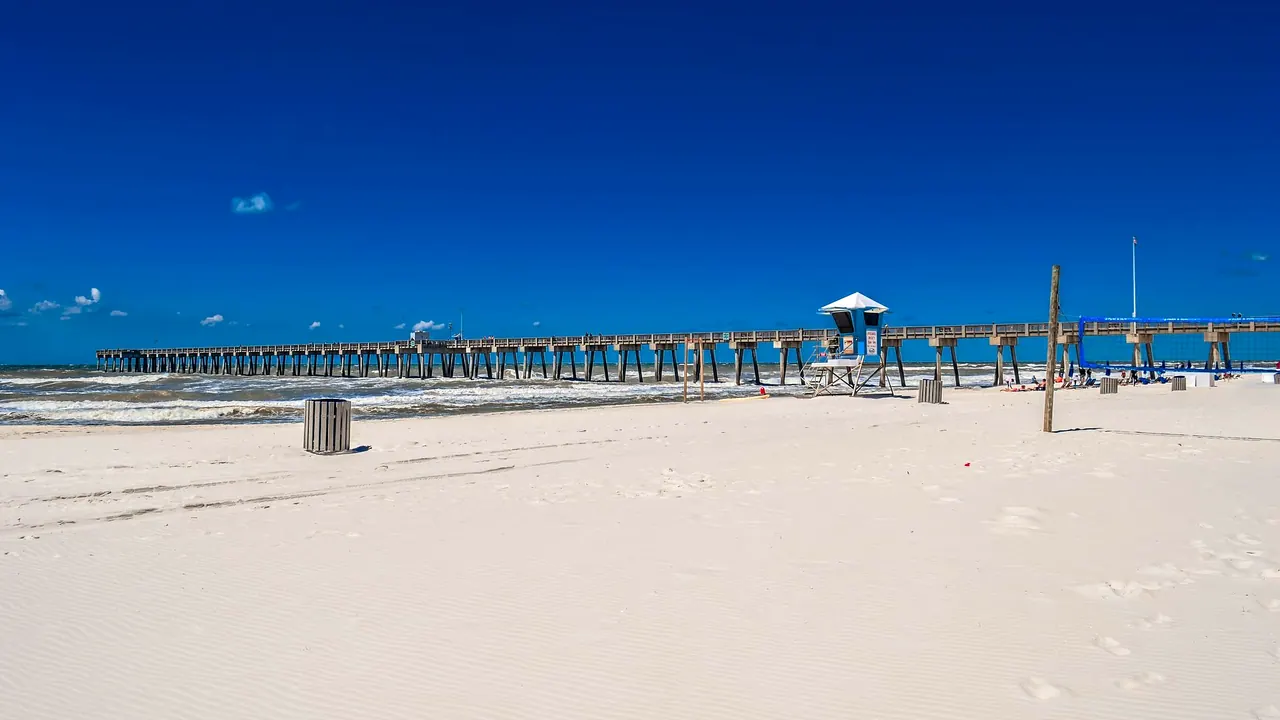
White sand and a boardwalk at Panama City Beach
- Beaches90
- Families70
- Nature & outdoors62
Photo: Marco Membreno, Pexels License
Florida Panhandle lies in Florida, which has its own page.
Match
47
Every category weighted equally
- Beach & sun52
- Culture & arts40
- Food & nightlife42
- Family trip52
- Outdoors50
- Relax & unwind49
- Shopping & style43
- On a budget45
Florida Panhandle in twelve categories
Our verdict on each, scored 0 to 100 against the same fixed benchmark cities, so a score means the same thing on every page.
Beaches & swimming. Scores 90 out of 100.
Food & drink. Scores 47 out of 100.
Culture & sights. Scores 36 out of 100.
Nightlife. Scores 46 out of 100.
Nature & outdoors. Scores 62 out of 100.
Day trips. Scores 40 out of 100.
Good for families. Scores 70 out of 100.
Getting around. Scores 35 out of 100.
Shopping & style. Scores 40 out of 100.
Affordability. Scores 33 out of 100.
Live music & performing arts. Scores 30 out of 100.
Wellness & relaxation. Scores 35 out of 100.
Florida Panhandle category by category
Beaches & swimming
90The beaches are the reason to come. Fine white quartz sand runs almost without a break from Perdido Key to Mexico Beach, with emerald and turquoise Gulf water behind it. Every stretch has its own character: Pensacola Beach and the Gulf Islands National Seashore for long empty sand, Destin and Panama City Beach for big resort beaches, and the 30A strip between them for small, low-rise towns, dune lakes and Grayton Beach. Further east, St. Joseph Peninsula and St. George Island are wilder and quieter.
The sea is warm enough to swim from May to October and reaches about 29°C in high summer. By winter it is too cold for most people. Rip currents are a real hazard, so watch the beach warning flags. Late summer and autumn are hurricane season.
Food & drink
47Eating here means Gulf seafood: grouper sandwiches, fried or boiled shrimp, deep-water royal reds, smoked mullet and fish dip, eaten at casual waterfront shacks with a beer. Apalachicola, a historic oyster port, keeps the old coastal food at its most local. The restaurants with the most ambition are along 30A and in downtown Pensacola, which also has the region's best mix of places to eat.
Away from those spots, Destin and Panama City Beach are lined with chains and big tourist seafood restaurants. In summer, popular places have long queues at dinner. Southern cooking, barbecue and a few craft breweries fill out the scene. It is a pleasant place to eat, but few people would plan a trip around the food.
Culture & sights
36The heritage is concentrated in Pensacola, settled by the Spanish in the sixteenth century. Its Historic Pensacola district has preserved colonial-era houses, and there are oak-shaded streets around Seville Square. The best single sight is the National Naval Aviation Museum, a huge collection of historic aircraft at the naval air station. Across the bay, Fort Pickens and Fort Barrancas are brick coastal forts on the National Seashore.
In the east, Tallahassee has the old and new state capitols and the rebuilt Spanish and Apalachee mission at Mission San Luis. Apalachicola has a well-kept nineteenth-century cotton and oyster port. Seaside and Rosemary Beach are planned towns that architecture enthusiasts come to see. Overall it is worth a few outings, not a cultural trip.
Nightlife
46Going out here means beach bars. Bands play on open-air decks with your feet in the sand, and rum drinks are served at sunset. Destin's harbour boardwalk is the liveliest strip on summer nights. Panama City Beach has big beachfront clubs and a long spring break tradition with large crowds of students in March. Downtown Pensacola, around Palafox Street, has the most varied and grown-up scene, with cocktail bars and late pubs in old brick buildings.
The 30A towns are wine-bar quiet and empty out early. The beach-bar legend on the Alabama line at Perdido Key pulls crowds from both states. Outside spring and summer, most places get much quieter.
Nature & outdoors
62This is a flat landscape, and its appeal is quieter than mountains. Barrier islands with tall white dunes, salt marsh and longleaf pine forest run along the coast. Along 30A there are coastal dune lakes, a rare kind of lagoon that opens to the Gulf after heavy rain. Grayton Beach and Topsail Hill state parks have walking trails and paddling around them. Inland there are crystal-clear springs, and Wakulla is the best known. You can canoe the shallow, sandy Blackwater River or explore the Apalachicola National Forest.
On the water, fishing is the big pastime. Charter boats leave Destin for snapper, grouper and billfish, and kayakers and paddleboarders follow dolphins in the sounds. St. Marks wildlife refuge is excellent for birds, and sea turtles nest on the beaches in summer.
Day trips
40Most day trips are to other towns along the same coast. If you stay around Destin or 30A, you can visit downtown Pensacola, the smaller resort towns of Seaside and Rosemary Beach, or Apalachicola, which takes about two hours to the east. Tallahassee, the state capital, is a reasonable trip inland from the eastern end.
Over the state line, Mobile in Alabama is about an hour from Pensacola. It has antebellum houses, a battleship museum and its own long Mardi Gras tradition, and the bayside town of Fairhope is nearby. The list is pleasant rather than strong. There are no wine regions, few heritage sites, and long drives between the best stops.
Good for families
70This is a classic family beach destination. Most visitors rent condos or beach houses with kitchens and pools. The sand is soft, and on calm days the shallow water is easy for small children, though parents need to watch the rip current flags. There are two marine parks with dolphin and sea lion shows. One is in Panama City Beach, and the other, founded in the 1950s, is on Okaloosa Island at Fort Walton Beach, a short drive from Destin. Panama City Beach also has a water park, and both it and Destin have mini-golf, go-karts, dolphin cruises and arcades.
The Naval Aviation Museum in Pensacola is a hit with older children. The 30A towns suit families who would rather cycle and build sandcastles. Midsummer heat, afternoon thunderstorms and the need to drive everywhere take some effort.
Getting around
35You will need a car. Local bus services are very limited, and the region stretches more than 300km along the coast, so going from Pensacola to Apalachicola takes most of a morning. The roads are easy, but US-98 through Destin and the bridges to the beaches back up heavily on summer weekends and changeover days.
If you stay put, things get simpler. Many people park at their rental and walk or cycle to the beach. Along 30A, a long paved trail links the small towns, so bikes and golf carts are the normal way to get around. Pensacola, Destin-Fort Walton Beach and Panama City each have an airport, so you can fly in close to whichever stretch you choose.
Shopping & style
40Shopping is mostly a rainy-day activity. The biggest draw is a large designer outlet centre between Destin and 30A. Open-air shopping complexes in Destin and Panama City Beach have chain stores, beachwear and surf shops. The 30A towns, especially Seaside, Rosemary Beach and Alys Beach, have small boutiques with resort clothing, home goods, books and art, and they suit an evening walk better than serious buying.
Downtown Pensacola has independent shops and a weekly market along Palafox Street. Beyond that, you will find the usual beach souvenirs and shell shops, and nothing that would bring you here to shop.
Affordability
33In the summer season this is an expensive coast. Beachfront rentals and hotels charge their highest rates from June to August, and 30A is the priciest stretch. Eating out costs what it does elsewhere in the United States, tips included, and a hire car adds to the bill.
The cost depends heavily on where you stay. Older condo towers in Panama City Beach, motels back from the water, and rooms in Pensacola cost noticeably less. Big rentals shared by several families bring the cost per person down. The beaches, state parks and the Naval Aviation Museum cost little or nothing. Spring and autumn are cheaper than summer, and the water is still warm.
Live music & performing arts
30Pensacola is the region's arts town. It has a regional opera company, a symphony orchestra and touring shows at the restored 1920s Saenger Theatre. There is a performing arts centre on the college campus near Destin, and a small repertory theatre in Seaside. Tallahassee's university music school gives frequent concerts and recitals.
Most live music, though, means cover bands and singer-songwriters on beach-bar decks, plus summer concerts on the lawns of the 30A towns. If performances matter to you, base yourself in Pensacola and check its seasons, which mostly run outside high summer.
Wellness & relaxation
35There is no spa or bathing tradition here. Wellness means a massage at a resort spa, morning yoga classes and a slow pace. You get that pace by choosing the right stretch of coast. The low-rise 30A towns, Cape San Blas and St. George Island have no high-rises and few attractions, and the days revolve around bikes, books and sunsets.
Destin and Panama City Beach are busier and noisier, especially in spring and midsummer. If rest is the point, go in May or late September and October, when the water is still warm and the crowds have thinned.
Where to stay in Florida Panhandle
Destin suits a first visit with children or a fishing trip. It has wide resort beaches, charter boats leaving the harbour and the liveliest summer evenings on the boardwalk, though traffic on US-98 is slow at weekends. Panama City Beach is similar, with a big beach and a water park and marine park for families. Its older condo towers are the cheapest beachfront on the coast, but expect crowds of students in March.
The low-rise 30A towns between the two suit a quieter and pricier stay. Here you cycle the paved trail to the beach, the dune lakes and the better restaurants, and evenings end early. At the western end, Pensacola suits travellers who want history, the widest choice of places to eat and drink, and concerts or theatre. Stay downtown and drive over to Pensacola Beach and the National Seashore for the sand.
For a second visit, or for real quiet, go east to Cape San Blas or St. George Island. They have no high-rises and few attractions, and Apalachicola is close by for oysters and old streets. The coast runs for more than 300km, so one base covers a week. On a longer trip, split it between a western and an eastern base and fly into the nearest of the three airports.
When should you go?
Pick a month to see what it is like. The climate figures are measured averages, not a forecast.
Florida Panhandle in July
Daytime high, °C
Rainfall in the month, mm
The whole year
Shaded against this destination’s own year: the deepest cell is its best month for that figure and the palest its weakest.
Where the figures come from
Florida Panhandle's temperatures are measured 29 km from the centre, at Valparaiso / Eglin Air Force Base.
Florida Panhandle has no rain gauge within 25 km of the centre, so its rainfall comes from a gridded climate dataset read at the destination rather than from a gauge further away.
Temperature and rainfall are climate normals, averaged over the years shown. Florida Panhandle: 1971-2000 (rainfall 1991-2020) normals, Valparaiso / Eglin Air Force Base (28.5 km from centre).
Before you go
| Measure | Florida Panhandle |
|---|---|
| Currency | US Dollar (USD) |
| Sockets | AB120 V, 60 Hz |
| Driving side | Right |
| Time zone | UTC-6, UTC-5 in summer |
| Emergency number | 911 |
| Main airport | Destin-Fort Walton Beach Airport (VPS)45 non-stop destinations |
| Public holidays this year | 11 days |
By the numbers
| Measure | Florida Panhandle |
|---|---|
| Swim season, months above 21 °C | 7 months |
Compare Florida Panhandle with
Every comparison with a written verdict behind it.
- Everglades
- Florida Keys
- Great Smoky Mountains
- Gulf Shores
- Hilton Head
- Islamorada
- Key Largo
- Marathon
- Myrtle Beach
- Outer Banks
- Sanibel
- Shenandoah
- Siesta Key