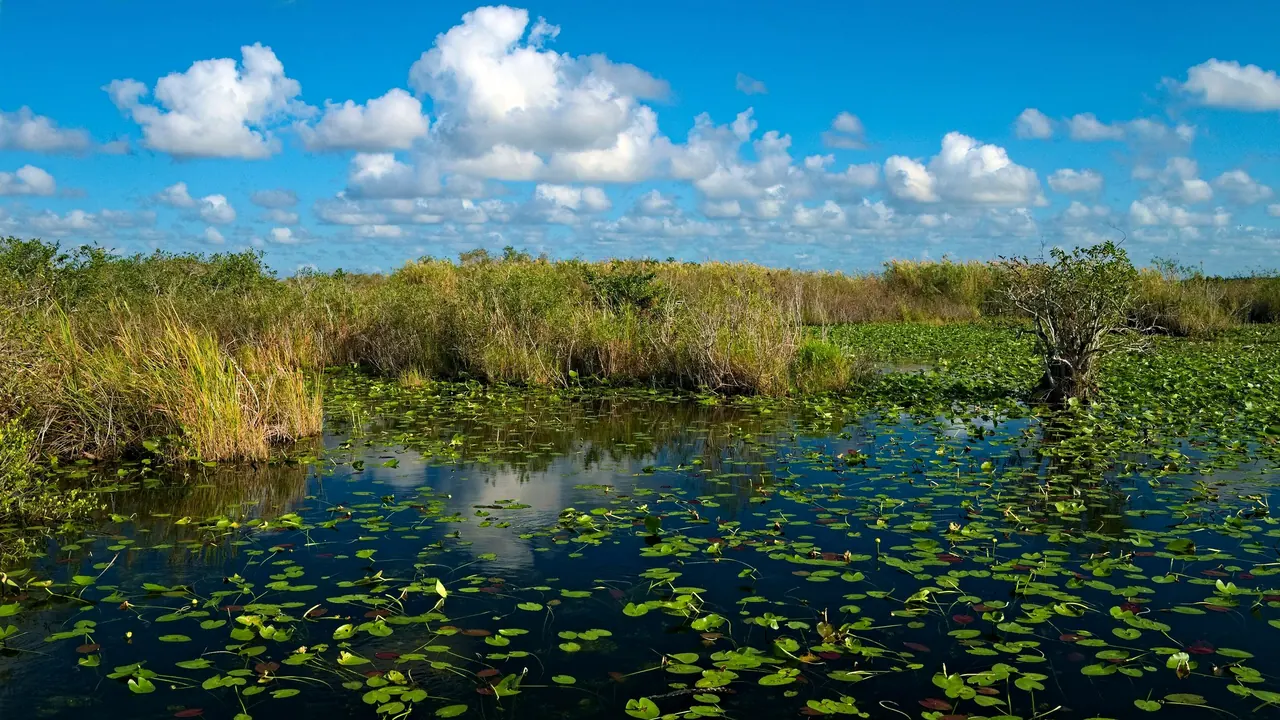
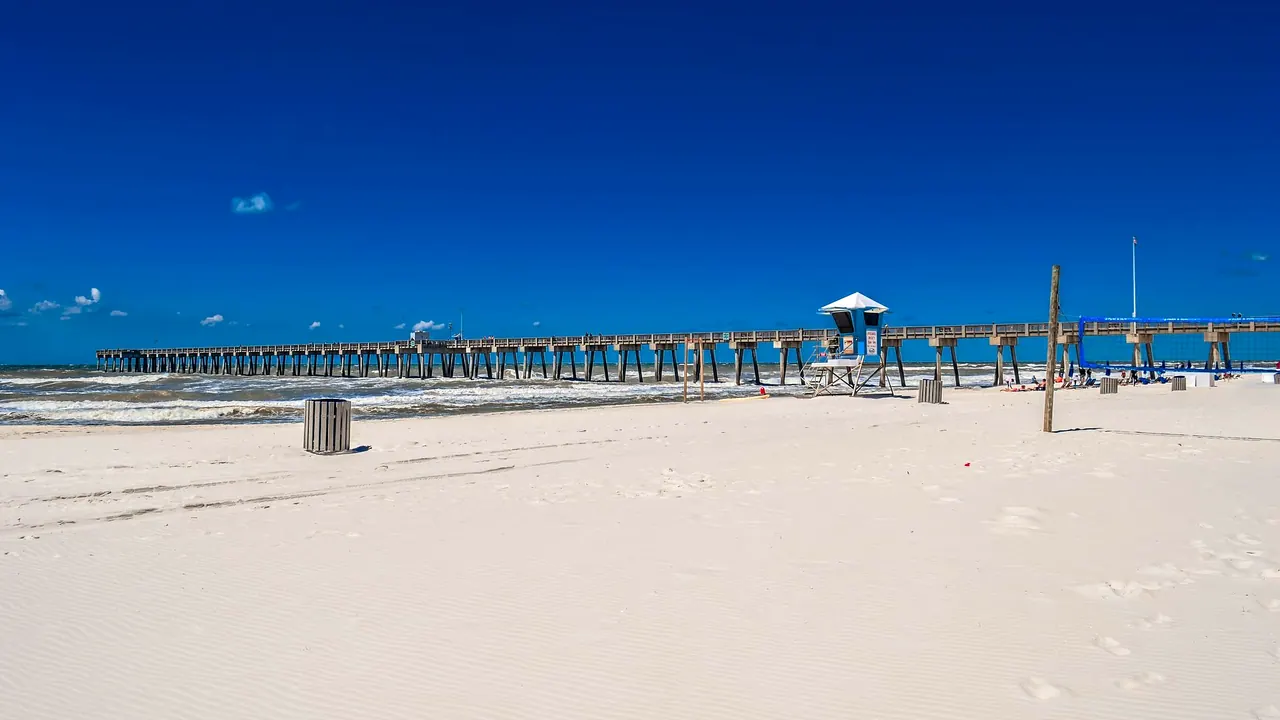
Photos: Everglades by Daniel Kraft, CC BY-SA 3.0, cropped; Florida Panhandle by Marco Membreno, Pexels License.
Everglades or Florida Panhandle?
Our verdict in twelve categories, each scored against the same fixed benchmark cities, and the climate month by month, so you can choose for your trip.
Choose Everglades for
- nature and the outdoors
- day trips
- prices
The Everglades is for travellers who come to watch wildlife. You get alligators beside the Anhinga Trail, crocodiles and spoonbills at Flamingo, and kayak routes through the mangroves of the Ten Thousand Islands. It suits early risers who like guided boat trips and quiet evenings, and who don't mind driving to Miami or the Keys for a good meal, a show or a swim. Plan it for the dry winter months.
Choose Florida Panhandle for
- beaches
- nightlife
- shopping
For a beach vacation, pick the Florida Panhandle. It has white quartz sand and clear Gulf water along a coast where you can rent a place and stay put. It works for families in a condo, couples after a slow week on 30A and groups who want the beach bars of Destin or Pensacola. There is much more to do here after dark, but winter is too cool for the sea.
Scoreboard
Twelve categories on one fixed scale from 0 to 100. The shaded stretch is the gap between the two.
Your match
Pick a travel style or drag the sliders, and both match scores follow your weighting.
Wins on nature and the outdoors and day trips with your weighting.
Wins on beaches and nightlife with your weighting.
What matters to you?
Category by category
What the scores mean for a trip.
Beaches & swimming
No other category separates these two as much. The Everglades shore is mangrove and mudflat with crocodiles in the water. The only sand is on wild keys in the Ten Thousand Islands that you reach by boat, so for a swim you drive to Marco Island or the Upper Keys.
The Panhandle is built around its beaches. White quartz sand runs from Perdido Key to Mexico Beach, from the empty Gulf Islands National Seashore to the resort fronts of Destin and the small towns of 30A. Watch the rip current flags, but this is the place to swim.
Food & drink
Both kitchens are built on seafood eaten near the water, but the Panhandle has more choice and more ambition. Around Everglades City and Chokoloskee you eat stone crab claws in season, grouper, gator tail and frog legs. Homestead adds Mexican and Central American cooking, and the Redland stands sell fruit milkshakes. For anything more serious you drive to Miami.
On the Panhandle the staples are grouper sandwiches, boiled shrimp, deep-water royal reds and smoked mullet dip, eaten at casual waterfront shacks. Apalachicola, a historic seafood port, keeps the coastal cooking at its most local, and downtown Pensacola and the 30A towns have the most ambitious kitchens.
Culture & sights
Pensacola gives the Panhandle a real historic core. It has colonial houses around Seville Square, brick forts on the National Seashore and the large National Naval Aviation Museum, and further east there are Mission San Luis and the old port of Apalachicola.
The Everglades has a handful of curiosities: the Smallwood Store on Chokoloskee, the Miccosukee Indian Village, a Cold War missile site and Coral Castle. Each fills an afternoon, while the Panhandle has enough for several days out.
Nightlife
After dark in the Everglades there are stars over Flamingo, frogs calling from the sawgrass and a sports bar or two in Homestead. A real night out means the hour's drive to Miami.
The Panhandle has a proper beach-bar scene. Bands play on decks with sand underfoot, Destin's harbour boardwalk is busy on summer nights, Panama City Beach has big clubs, and Palafox Street in Pensacola has cocktail bars. It thins out outside spring and summer, and the 30A towns go quiet early.
Nature & outdoors
Both are flat, but the Everglades is by far the wilder of the two. Its slow river of sawgrass, its mangrove backcountry and Florida Bay bring alligators, crocodiles, manatees and wading birds into close view. The Ten Thousand Islands offer canoe routes that take several days.
The Panhandle's outdoors is gentler and centred on the coast. There are dune lakes along 30A, clear springs such as Wakulla, canoeing on the Blackwater River and charter fishing out of Destin. St. Marks is good for birds, but nothing there matches the Everglades for wildlife.
Day trips
The Everglades has two strong outings close by. Miami's Little Havana, Coral Gables and Miami Beach are about an hour north of Homestead, and the reef towns of Key Largo and Islamorada lie to the south. From Everglades City, Naples is within easy reach.
From the Panhandle, most trips go to other towns along the same coast, and the drives are long. Mobile, over the Alabama line, gives the biggest change of scene.
Good for families
With children, the Everglades works best as a winter outing. Start early on the Anhinga Trail boardwalk, where alligators lie a few metres away, then take the open-air tram at Shark Valley and sign up for the junior ranger programme. Be back at a hotel pool in Florida City before the afternoon heat. Zoo Miami, a short drive north, fills another day.
The Panhandle has enough to fill a whole week with children. Older children tend to love the historic aircraft at the Naval Aviation Museum in Pensacola. Families who would rather cycle can ride the paved trail between the 30A towns, and Destin adds dolphin cruises and go-karts. The main things to plan around are midsummer heat and afternoon thunderstorms.
Getting around
Both need a car, and neither has much public transport. The difference is in what you do once you arrive. In the Everglades the heart of the region is reached only by boat, canoe or kayak, and moving between the Homestead side and the Gulf side takes about two hours.
On the Panhandle you can park at your rental and cycle, and the paved trail along 30A links the towns, though US-98 backs up on summer weekends. Three airports along the coast let you land close to the stretch you choose.
Shopping & style
In the Everglades, the one souvenir worth taking home is Miccosukee patchwork or beadwork from the stalls along the Tamiami Trail. Beyond that there are field guides at the visitor centres, gator trinkets and the outlet centre at Florida City.
The Panhandle has far more for a rainy afternoon. There is a large designer outlet centre between Destin and 30A, and Seaside, Rosemary Beach and Alys Beach have small boutiques selling resort clothing and home goods. Palafox Street in Pensacola has independent shops and a weekly market. Even so, few people would come here to shop.
Affordability
The Everglades comes out somewhat cheaper, mainly because the plain chain motels of Homestead and Florida City cost less than rooms near a beach. The money goes on park entry, airboat and boat tours, and kayak outfitters.
On the Panhandle, summer beachfront rentals push costs up, especially on 30A. Shared houses, older condos in Panama City Beach and spring or autumn dates bring them down, and the beaches and state parks cost little.
Live music & performing arts
For live performance, the Panhandle is clearly the one to choose. The Everglades has no stage at all. The closest you get to a show is a handler working with an alligator by the roadside or a festival now and then in Everglades City, so any concert or play means a drive into Miami.
The Panhandle can fill an evening or two, provided you base yourself in Pensacola. Opera, orchestral concerts and touring productions there share the restored Saenger Theatre, mostly outside high summer. Along the rest of the coast the music is lighter, with singer-songwriters on beach-bar decks and open-air concerts on the 30A lawns.
Wellness & relaxation
Neither has a spa or bathing tradition, but the Panhandle makes it easier to rest. It has resort spas and morning yoga, and the low-rise calm of 30A, Cape San Blas and St. George Island comes with a beach to lie on.
The Everglades offers stillness rather than pampering. Days in Everglades City and Chokoloskee follow the tides, and sunsets over the mangroves are the evening's event. A hotel pool is the only place to soak.
When should you go?
Pick your month. The climate figures are measured averages, not a forecast.
Everglades in July
Florida Panhandle in July
Daytime high, °C
Rainfall in the month, mm
Where the figures come from
Everglades has no rain gauge within 25 km of the centre, so its rainfall comes from a gridded climate dataset read at the destination rather than from a gauge further away.
Everglades's sunshine is measured 51 km from the centre, at Miami International Airport.
Florida Panhandle's temperatures are measured 29 km from the centre, at Valparaiso / Eglin Air Force Base.
Florida Panhandle has no rain gauge within 25 km of the centre, so its rainfall comes from a gridded climate dataset read at the destination rather than from a gauge further away.
Temperature and rainfall are climate normals, averaged over the years shown. Everglades: 1971-2000 (sunshine 1981-2010, rainfall 1991-2020) normals, Homestead / Homestead Base (22.5 km from centre). Florida Panhandle: 1971-2000 (rainfall 1991-2020) normals, Valparaiso / Eglin Air Force Base (28.5 km from centre).
The two are at their best at opposite ends of the year. Around the Everglades, the dry season from December to April is the time to go, with warm, sunny days and little rain. From May the wet season brings heavy afternoon storms, with rain peaking at around 240mm in June. Highs above 30°C then make walking the boardwalks hard work, though the sea nearby stays warm all year.
The Panhandle works the other way round. Winter highs of about 15°C and a sea near 18°C rule out the beach, so the season runs from May to October, when the Gulf warms to about 29°C. Midsummer is the hottest and wettest stretch. May and the period from late September into October give you warm water without the worst of the heat. The rest of the year has fairly steady rain rather than a clear dry season.
Which traveller are you?
For a beach and sun trip, the Florida Panhandle wins easily. White sand runs for miles, the Gulf is warm from May to October, and you can choose resort Destin or quiet St. George Island. The Everglades shore is mangrove, and a swim means leaving the region.
On an outdoors trip, go to the Everglades in the dry season. Alligators beside the Anhinga Trail, the Shark Valley loop by bike and kayaking through the Ten Thousand Islands bring you close to wildlife in a way the Panhandle's dunes and springs cannot.
On a family trip with children, the Panhandle is far easier. Condos with pools, gentle water on calm days, marine parks and mini-golf keep all ages busy. The Everglades thrills school-age wildlife fans, but long drives, little shade and mosquitoes wear out small children.
Before you go
| Measure | Everglades | Florida Panhandle |
|---|---|---|
| Currency | US Dollar (USD) | US Dollar (USD) |
| Sockets | AB120 V, 60 Hz | AB120 V, 60 Hz |
| Driving side | Right | Right |
| Time zone | UTC-5, UTC-4 in summer | UTC-6, UTC-5 in summer |
| Emergency number | 911 | 911 |
| Main airport | Miami International Airport (MIA)197 non-stop destinations | Destin-Fort Walton Beach Airport (VPS)45 non-stop destinations |
| Public holidays this year | 11 days | 11 days |
By the numbers
| Measure | Everglades | Florida Panhandle |
|---|---|---|
| Swim season, months above 21 °C | 12 months | 7 months |
Where else could you go?
Every comparison below shares a destination with this one, so you can follow Everglades or Florida Panhandle somewhere new.
- Key Largovs Everglades
- Islamoradavs Everglades
- Miamivs Everglades
- Marathonvs Everglades
- Gulf Shoresvs Florida Panhandle
- Florida Keysvs Everglades