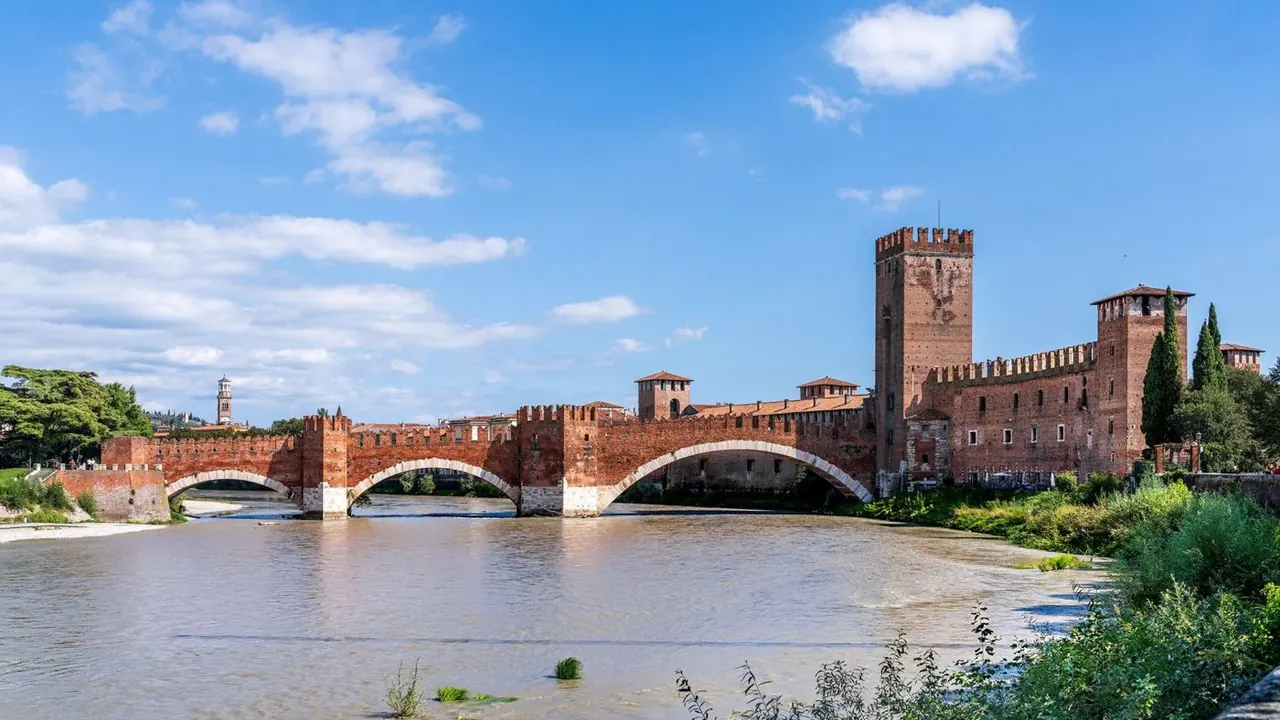
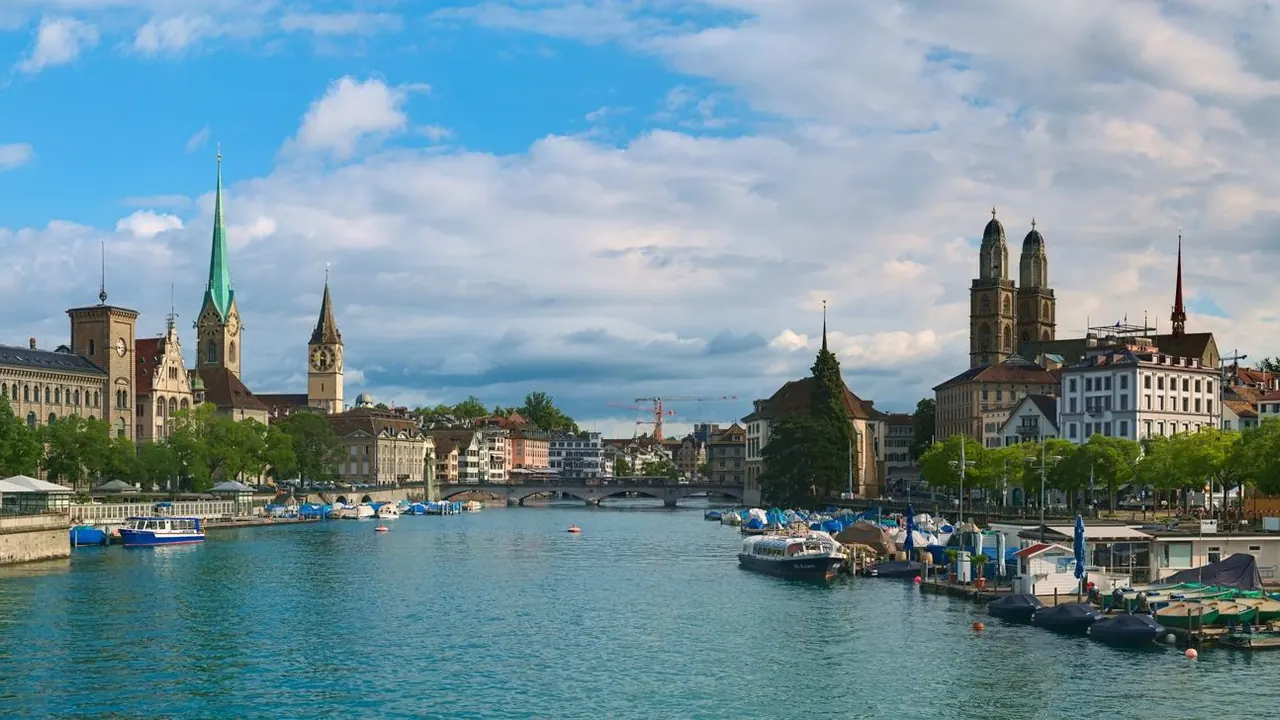
Photos: Verona by NorbertNagel, CC BY-SA 4.0, cropped; Zurich by Daniel Kraft, CC BY-SA 3.0, cropped.
Verona or Zurich?
Our verdict in twelve categories, each scored against the same fixed benchmark cities, and the climate month by month, so you can choose for your trip.
Choose Verona for
- prices
- culture and sights
- food and drink
Verona suits travellers who want Roman stones, Romanesque churches and Veneto wine in the same few days, then plan to fan out to Venice, Padua, Vicenza and Lake Garda by train. It costs a great deal less, it eats better, and its summer evenings belong to opera in the Arena rather than to clubs.
Choose Zurich for
- getting around
- nightlife
- nature and the outdoors
Pick Zurich if you want getting about to take no thought at all and you want the mountains to be part of the plan. Trams, boats and trains run on one ticket, and there are lakes and Alps within an hour. You also get a zoo and lidos for children, and a real club scene in Kreis 4 and 5. That makes Zurich the more active and lively base, as long as you accept that almost everything will cost a lot.
Scoreboard
Twelve categories on one fixed scale from 0 to 100. The shaded stretch is the gap between the two.
Your match
Pick a travel style or drag the sliders, and both match scores follow your weighting.
Too close to call, 2 points apart
Wins on prices and culture and sights with your weighting.
Wins on getting around and nightlife with your weighting.
What matters to you?
Category by category
What the scores mean for a trip.
Beaches & swimming
Neither city has a coast, and both offer lake swimming of much the same quality and season. The real difference is distance. In Zurich you swim in the middle of town, from the wooden bathing houses at Utoquai and Mythenquai or by drifting down the Limmat at Letten. In Verona, swimming means half an hour out to Garda's southern shore.
In return, Verona gets a lake with more of a resort feel. It has lidos, small pebble beaches and Sirmione's flat limestone shelves, though they get busy at summer weekends. Zurich offers only grass, piers and concrete decks.
Food & drink
Verona eats with more character. Risotto made with Amarone, bigoli with duck and bollito misto with peppery pearà are served in wood-panelled osterie. Valpolicella, Soave and Bardolino are all made a short drive away, and evenings start at a wine counter.
Zurich's cooking is reliable but narrower: veal Geschnetzeltes with rösti, fondue in the guild houses, and excellent chocolate and confectionery. It does have the wider international choice, around Langstrasse in Kreis 4 and 5, where Verona has little beyond Italian food. However, every meal in Zurich costs a lot.
Culture & sights
Verona's whole centre is the sight, and a UNESCO-listed one. It has a Roman amphitheatre still in use, a Roman theatre on the hillside and the bronze doors of San Zeno. Castelvecchio's art collection is displayed in Carlo Scarpa's famous setting inside a medieval fortress.
Zurich's strength lies in its museums rather than its streets. The Kunsthaus runs to Monet, Munch and Giacometti, and the Rietberg shows art from Asia, Africa and the Americas. In the compact Altstadt, the Grossmünster and the Chagall windows of the Fraumünster are the high points. It is well worth two days, but it has less to see than Verona.
Nightlife
Zurich is clearly the place for a late night. Clubs in Kreis 4 and 5 and in the industrial spaces of Zurich West stay open until morning at weekends, and electronic music is a serious local passion. In August the Street Parade fills the lake shore. The high price of every round is the only brake.
Verona's evenings are about the aperitivo: a spritz in Piazza delle Erbe, then a wine bar in Veronetta if you want to stay out later. The centre empties well before the small hours. The only exception is in summer, when the Arena's opera audience pours out near midnight.
Nature & outdoors
Zurich has real mountains within reach. The Glarus Alps stand at the far end of its lake, Rigi and Pilatus are about an hour away for high hiking, and ski areas such as Flumserberg make a winter day on the slopes easy. The Uetliberg's forest trails start almost in the suburbs.
Verona's surroundings are gentler. You get vineyard walks and cycling in the Valpolicella, beech woods and gorges on the Lessinia plateau, and Monte Baldo's ridges above Garda, whose northern end is known for sailing and windsurfing. The Dolomites are too far for a comfortable day.
Day trips
Both cities are excellent bases, but Verona has the edge for variety packed close together. Venice is just over an hour away by train. Vicenza and Padua are nearer still, Mantua is under an hour south, and Sirmione and the Valpolicella cellars are on the doorstep.
From Zurich, the Swiss rail network makes Lucerne, Bern, Basel and St Gallen's abbey library easy days out, and the Rhine Falls pair well with Stein am Rhein. The connections are smoother than Verona's, but the destinations are spread out more and offer a little less contrast.
Good for families
Zurich is the easier city with children. The zoo's Madagascar rainforest hall and elephant park are in town, the lidos have shallow areas, lake boats suit all ages, and trams handle buggies without fuss. The Technorama and Lucerne's transport museum are a short ride away.
Verona has the bigger thrills, with Gardaland and the safari section at Parco Natura Viva, and Zurich has no theme park to match. However, Verona's family attractions lie outside the city and mostly need a car. Its summer afternoons can also be too hot for small children.
Getting around
In Zurich, getting around is barely a consideration. Trams reach every district, and buses, S-Bahn, funiculars and lake boats all run on one ticket. The airport is a short train ride from the main station, so a car is never needed.
Verona works well on foot inside its river loop, where the Arena, the piazzas and Castelvecchio are minutes apart. There is no tram or metro, though, and the station is a twenty-minute walk away. The Valpolicella, the Lessinia and parts of Garda are hard to reach without driving.
Shopping & style
Zurich is the better place to shop. Bahnhofstrasse runs from the station to the lake past watchmakers, jewellers and long-established department stores. The viaduct arches in Zurich West hold design shops, and there are antiques in the Niederdorf. Chocolate is the obvious thing to take home.
Verona's Via Mazzini offers Italian fashion in a smart but provincial way. The best things to bring back are Amarone, olive oil from the Garda shore and a pandoro at Christmas.
Affordability
This is the widest gap between the two cities. Zurich is among the most expensive places in the world to visit: simple rooms, casual lunches, drinks, museums and transport all cost a lot. Supermarket picnics by the lake and the free lidos help only at the edges.
Verona is not cheap for its size, and centre hotels get scarce and expensive on opera nights. Still, staying across the river or near the station, eating in Veronetta's osterie and drinking local wine keep a trip there far lighter than any equivalent in Zurich.
Live music & performing arts
The two cities are broadly level, but the season decides. Verona's great draw is summer opera in the Roman Arena, with grand productions of Verdi and Puccini in front of thousands of spectators on ancient stone tiers. The Roman theatre adds Shakespeare and jazz under the stars. In winter the programme is modest.
Zurich's stage is busy all year. The Opernhaus offers opera and ballet, the Tonhalle Orchestra plays in its restored hall, and the Schauspielhaus is a leading theatre, though it performs mostly in German. Jazz, indie and electronic acts play at the Rote Fabrik.
Wellness & relaxation
Zurich offers more for a restful trip, and it is right in town. There are thermal pools and a rooftop pool in the stone vaults of the old Hürlimann brewery. In winter the wooden bathing houses become saunas, with cold dips in the lake or the Limmat, and the old spa town of Baden is twenty minutes away.
Verona's warm springs are all out of town, at Sirmione's lakeside thermal centre, near Lazise and at Caldiero. Inside the city, rest comes from long lunches, the evening passeggiata and the terraces of the Giardino Giusti.
When should you go?
Pick your month. The climate figures are measured averages, not a forecast.
Verona in July
Zurich in July
Daytime high, °C
Rainfall in the month, mm
Temperature and rainfall are climate normals, averaged over the years shown. Verona: 1991-2020 normals, Verona / Villafranca (11.6 km from centre). Zurich: 1991-2020 normals, Zurich Town / Ville. (2.2 km from centre).
Verona is the warmer and sunnier of the two right through the year. From June to August afternoons reach about 30°C, which makes July and August hard going for walking the old streets after lunch but good for a swim in Lake Garda. May, June and September are the most comfortable months for sightseeing. Rain is spread fairly evenly, but September to November is the wettest stretch. Winters are cool and grey without being harsh.
Zurich is milder in summer, with highs of about 24°C, which is pleasant for walking and hiking. May to August is also its wettest time, though, with around 126mm a month, and the lake is warm enough for swimming only from June to early September. Winters are colder than Verona's, around 4°C, and see very little sun. September is Zurich's best compromise. It is still about 19°C and much drier than the summer months, with enough sunshine for both the city and the mountains.
Which traveller are you?
On a culture and arts trip, Verona is the stronger choice. The Arena, San Zeno, the Scaliger tombs and Castelvecchio make up a whole Roman and medieval city, and Padua's Giotto and Vicenza's Palladio are each less than an hour away by train.
For a trip on a tight budget, choose Verona without hesitation. Zurich is among the most expensive cities in Europe at every level. In Verona, student osterie in Veronetta, cheap local wine and a centre you can walk keep daily costs reasonable.
On an outdoors trip, Zurich wins clearly. Rigi, Pilatus and the Glarus valleys are within about an hour for high-mountain walks, and there is skiing in winter. The Uetliberg ridge starts a short train ride from town, and trains and boats replace the car Verona's hills need.
Before you go
| Measure | Verona | Zurich |
|---|---|---|
| Official language | Italian | French, German, Italian, Romansh |
| Currency | Euro (EUR) | Swiss Franc (CHF) |
| Sockets | CFL230 V, 50 Hz | CJ230 V, 50 Hz |
| Driving side | Right | Right |
| Time zone | UTC+1, UTC+2 in summer | UTC+1, UTC+2 in summer |
| Emergency number | 112 | 112 |
| Elevation | 59 m | 408 m |
| Main airport | Verona Villafranca Valerio Catullo Airport (VRN)10 km from centre96 non-stop destinations | Zürich Airport (ZRH)9 km from centre226 non-stop destinations |
| Public holidays this year | 13 days | 10 days |
By the numbers
| Measure | Verona | Zurich |
|---|---|---|
| City population | 255,588 | 440,935 |
| People per km² | 1,285 | 5,016 |
| Museums within 10 km | 18 | 63 |
| UNESCO World Heritage sites within 50 km | 5 | 1 |
Where else could you go?
Every comparison below shares a destination with this one, so you can follow Verona or Zurich somewhere new.