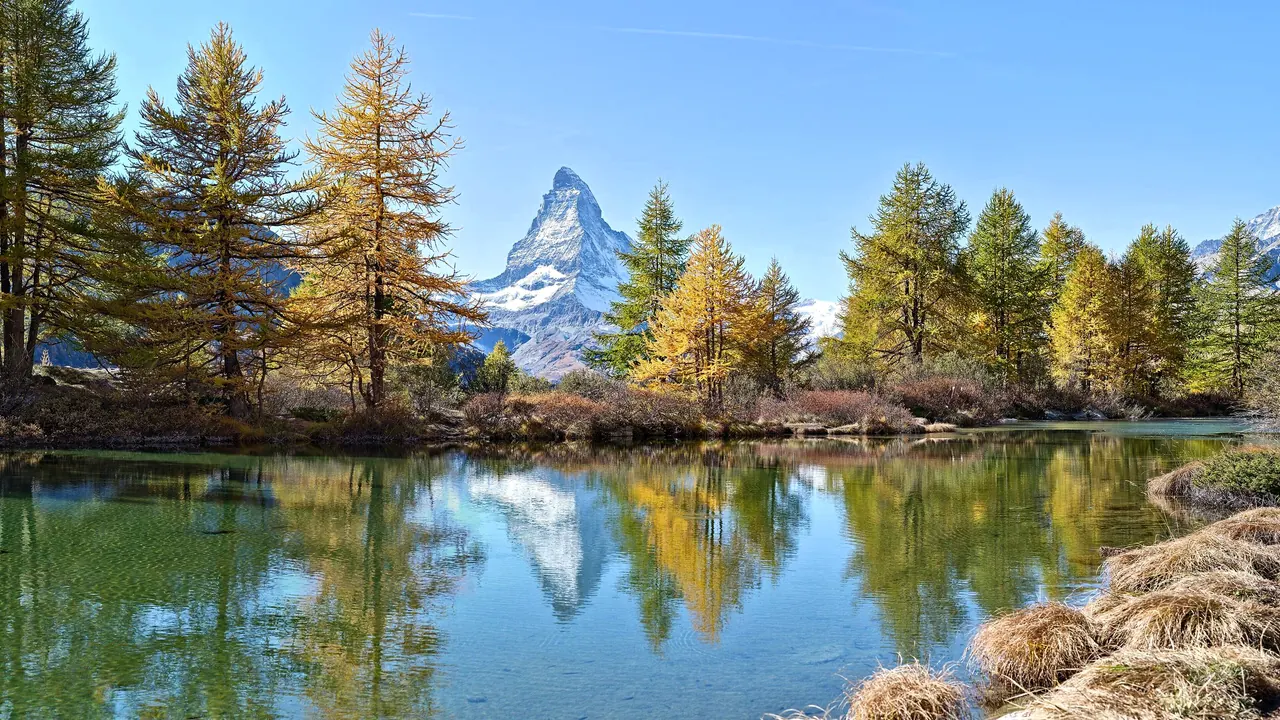
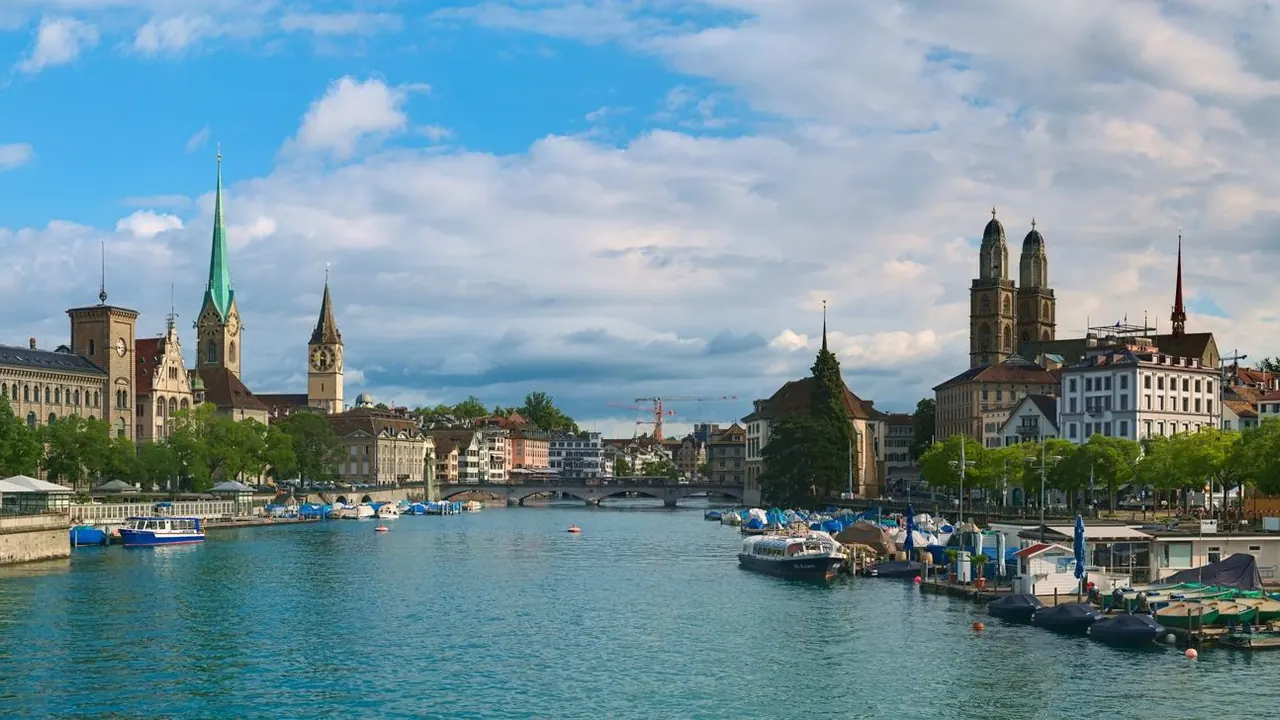
Photos: Zermatt by Roy Egloff, CC BY-SA 4.0, cropped; Zurich by Daniel Kraft, CC BY-SA 3.0, cropped.
Zermatt or Zurich?
Our verdict in twelve categories, each scored against the same fixed benchmark cities, and the climate month by month, so you can choose for your trip.
Choose Zermatt for
- nature and the outdoors
Zermatt is for travellers who want the high Alps on their doorstep. The skiing runs across into Italy, summer trails climb towards glaciers and mountain huts, and the Matterhorn rises over every terrace. It suits people who will spend their days on lifts and paths and their evenings over raclette, and who don't mind that the village has little else to offer.
Choose Zurich for
- live music and the arts
- day trips
- beaches
Pick Zurich for a broader trip with a city at its centre. Galleries, opera, lake lidos and a serious club scene fill the days and evenings. Trains put Lucerne, Bern and the mountains within a day's outing. That makes it the better base for mixed interests and for families, and for anyone who wants the Alps as an excursion rather than the whole stay.
Scoreboard
Twelve categories on one fixed scale from 0 to 100. The shaded stretch is the gap between the two.
Your match
Pick a travel style or drag the sliders, and both match scores follow your weighting.
Wins on nature and the outdoors with your weighting.
Wins on live music and the arts and day trips with your weighting.
What matters to you?
Category by category
What the scores mean for a trip.
Beaches & swimming
Zermatt's mountain tarns are fed by meltwater. They are lovely with the Matterhorn reflected in them but far too cold to swim in, so a swim in Zermatt means a hotel pool.
Zurich is also inland, yet it is a real swimming city from June to early September. Lawned lidos and wooden bathing houses line the lake, and at the Letten river baths swimmers let the Limmat carry them downstream. You swim from grass and decks rather than sand, but neither city has a beach and Zurich is far ahead of Zermatt here.
Food & drink
Zermatt's best meals are on the mountain. Long lunches on chalet terraces at Findeln, Furi and Zum See, reached on skis or on foot, come with raclette, air-dried beef and Valais wines such as Petite Arvine. The range is narrow, though, and out of season many kitchens close.
Zurich has more variety and keeps it going all year. It ranges from veal Geschnetzeltes with rösti in the Altstadt guild houses to the casual, international places of Kreis 4 and 5. Its chocolate and confectionery, led by the old tea rooms on Paradeplatz, are a pleasure Zermatt can't match. Both are expensive at every level.
Culture & sights
Zermatt's heritage is all about mountaineering. There is the Matterhorn Museum on the first ascent of 1865, the climbers' graves beside the church and the larch-wood granaries of the Hinterdorf, all easily seen in a morning. People come for the peaks, not the sights.
Zurich fills two or three full days. The Kunsthaus, the Swiss National Museum and the Rietberg are serious collections. The Altstadt adds the Grossmünster, where the Swiss Reformation began, and Chagall's stained glass in the Fraumünster.
Nightlife
Zermatt's nightlife is après-ski. Slope-side bars fill with ski boots and loud music from late afternoon, and a few bars and small clubs on the main street keep going on winter weekends. In summer the hikers turn in early, and between seasons little is open.
Zurich has a real club culture. Electronic music runs until morning in Kreis 4 and 5 and in Zurich West, Langstrasse is the rough-edged centre of it all, and the Street Parade takes over the lake shore every August. On summer evenings people move to the bars in the lake bathing houses.
Nature & outdoors
Nature is where Zermatt wins. The Matterhorn stands over the village, lifts climb to the Gornergrat and to more than 3,800m at the Matterhorn Glacier Paradise, and the glacier keeps some pistes open in summer. Once the snow melts, trails lead to the Five Lakes, the Hörnli hut and the Europaweg suspension bridge.
Zurich's nature is gentler and centres on the lake: promenades along both shores, plus the Uetliberg and the Albis ridge on the edge of town. Rigi, Pilatus and Flumserberg are about an hour away and make fine days out. But you come back to the city each evening rather than waking up under four-thousand-metre peaks.
Day trips
From Zermatt, every outing starts with a long train ride down the valley. Sion, with its castle hills and steep vineyards, is the best of them, and Brig and Saas-Fee are also within reach. Most visitors spend their spare days in the mountains instead.
Zurich sits at the hub of the Swiss railways. Lucerne is under an hour away, and Bern, Basel and the abbey library at St Gallen are about an hour each. The Rhine Falls, Stein am Rhein and the lake boat to Rapperswil add more choice, and all are easy without a car.
Good for families
Zermatt's car-free lanes are calm and safe. Children enjoy the nursery slopes at Sunnegga, spotting marmots and riding the cog railways. Beyond that, little is built for them, rainy days drag, and the highest viewpoints can be too cold and thin-aired for small children.
Zurich has much more to keep children busy, especially younger ones. There is the zoo with its Madagascar rainforest hall and elephant park, lake lidos with shallow areas and boat trips for all ages. The Technorama and Lucerne's Swiss Museum of Transport are an easy train ride away.
Getting around
You won't need a car in either, but they work differently. Zermatt is a compact, car-free strip where you walk to the cog railway, the Sunnegga funicular and the gondolas, with electric taxis for the outlying stations. The drawbacks are steep climbs to the hotels on the edges and a train ride of over an hour to leave the valley.
Zurich goes further. Trams, S-Bahn trains, funiculars and lake boats all run on one ticket, services are punctual, and the airport is a short train ride from the main station.
Shopping & style
Shopping in Zermatt means one main street of watch boutiques, souvenir shops and excellent ski and mountaineering outfitters. It is worth a visit if you need gear, and little more.
Zurich has Bahnhofstrasse, one of the world's great luxury streets, as well as antique shops in the Niederdorf, design shops in the viaduct arches of Zurich West and flea markets on summer Saturdays. Both cities lead with watches, but only Zurich is worth an afternoon of browsing.
Affordability
Both are about as expensive as travel in Europe gets, so the difference lies in how you cut the bill. In Zermatt that means self-catering, supermarket picnics and sleeping down the valley in Täsch, while lift and railway tickets can't be avoided.
In Zurich, the travel pass and a visitor card that bundles transport with museum entry help a little. The lake lidos and drinking fountains are free.
Live music & performing arts
Zermatt has no theatre or concert hall. Outside its two festivals, Zermatt Unplugged in spring and a chamber music festival in late summer, live music means a band in an après-ski bar.
Zurich runs a full season. There is opera and ballet at the Opernhaus, the Tonhalle Orchestra in its restored concert hall, and the Schauspielhaus, though most of its plays are in German. The Rote Fabrik and venues around Kreis 4 and 5 cover jazz, indie and electronic acts.
Wellness & relaxation
Zermatt relies on its hotel spas, many with mountain views and some open to day visitors. The car-free streets and clear air add to the quiet, although peak weeks feel active rather than restful.
Zurich offers somewhat more, with real bathing. There are thermal pools in the stone vaults of the old Hürlimann brewery, topped by a rooftop pool, and winter saunas in the wooden bathing houses on the lake and the river. Baden's hot springs, in use since Roman times, are about twenty minutes away by train.
When should you go?
Pick your month. The climate figures are measured averages, not a forecast.
Zermatt in July
Zurich in July
Daytime high, °C
Rainfall in the month, mm
Where the figures come from
Zermatt has no weather station within reach, so its figures come from a gridded climate model rather than a measured record, and read a broad area rather than the city itself.
Temperature and rainfall are climate normals, averaged over the years shown. Zermatt: 1991-2020 normals, TerraClimate 4 km grid at the town, no weather station within 90 km. Zurich: 1991-2020 normals, Zurich Town / Ville. (2.2 km from centre).
Zermatt has two seasons worth planning around. From December to March, daytime highs in the village sit at or below freezing, and those are the skiing months. July and August reach only about 14°C, which gives cool, clear weather for the high trails. Spring and late autumn fall between the two seasons, and November is the wettest month at 130mm, the poorest time to go.
Zurich is much warmer, with summer highs around 24°C, and the lake is good for swimming from June to early September. Those summer months bring the most rain and also the most sunshine, so expect showers between long bright spells. Winter is mild by comparison at about 4°C, but grey: December gets only about 43 hours of sunshine. Late spring and September are the most comfortable months for walking the old town.
Which traveller are you?
For an outdoors trip, Zermatt is the clear choice. Lifts climb above 3,800m, the skiing crosses the border into Italy, and in summer marked trails lead past lakes, glaciers, marmots and ibex. Zurich's mountains are a train ride away, while Zermatt's start at the door.
On a culture and arts trip, Zurich offers far more. It has the Kunsthaus, the Swiss National Museum, Chagall's windows in the Fraumünster and evenings at the Opernhaus or the Tonhalle. Zermatt's mountaineering museum and old larch barns fill one morning.
On a family trip with young children, Zurich gives you more to do: the zoo's rainforest hall, shallow lake lidos, boat trips and the Technorama nearby. Zermatt's car-free streets are calm, but they mainly reward families who ski or hike together.
Before you go
| Measure | Zermatt | Zurich |
|---|---|---|
| Official language | French, German, Italian, Romansh | French, German, Italian, Romansh |
| Currency | Swiss Franc (CHF) | Swiss Franc (CHF) |
| Sockets | CJ230 V, 50 Hz | CJ230 V, 50 Hz |
| Driving side | Right | Right |
| Time zone | UTC+1, UTC+2 in summer | UTC+1, UTC+2 in summer |
| Emergency number | 112 | 112 |
| Elevation | 1,624 m | 408 m |
| Main airport | Geneva International Airport (GVA)128 km from centre150 non-stop destinations | Zürich Airport (ZRH)9 km from centre226 non-stop destinations |
| Public holidays this year | 9 days | 10 days |
By the numbers
| Measure | Zermatt | Zurich |
|---|---|---|
| City population | 6,023 | 440,935 |
| People per km² | 25 | 5,016 |
| Museums within 10 km | 2 | 63 |
| UNESCO World Heritage sites within 50 km | 2 | 1 |
Where else could you go?
Every comparison below shares a destination with this one, so you can follow Zermatt or Zurich somewhere new.
- Lucernevs Zurich
- Chamonixvs Zermatt
- Baselvs Zurich
- Interlakenvs Zermatt
- Freiburgvs Zurich
- Interlakenvs Zurich