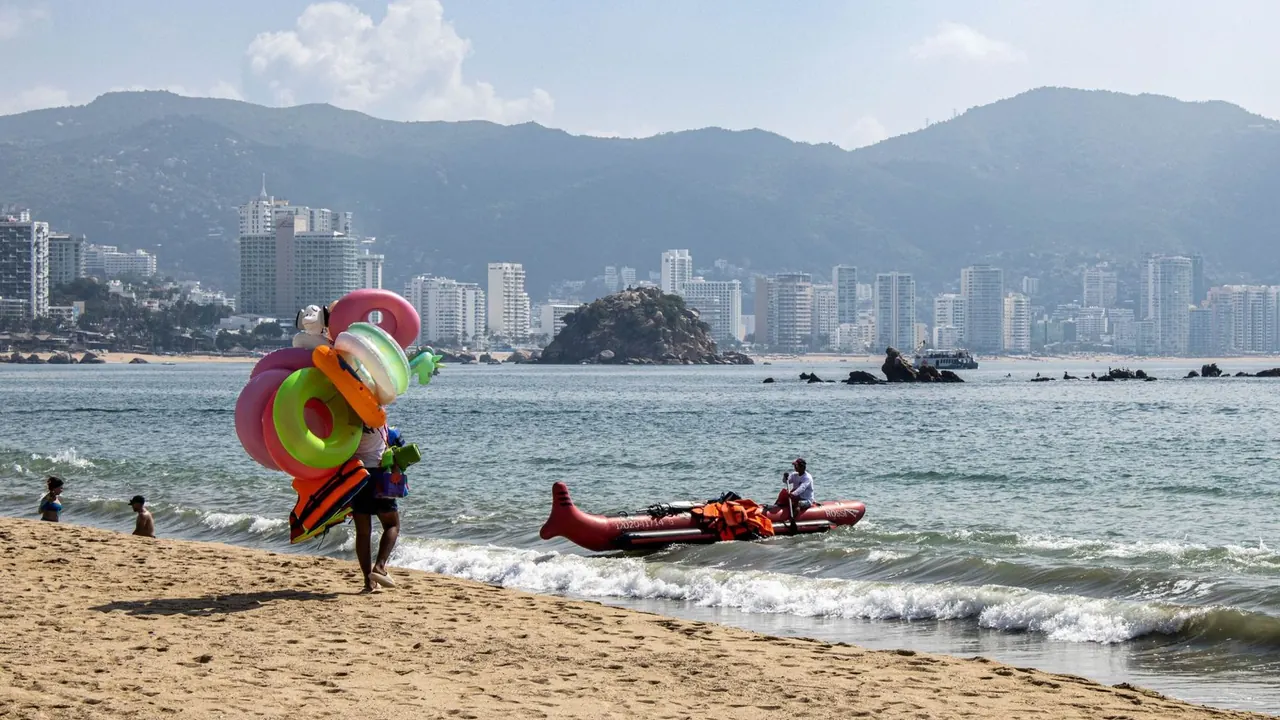
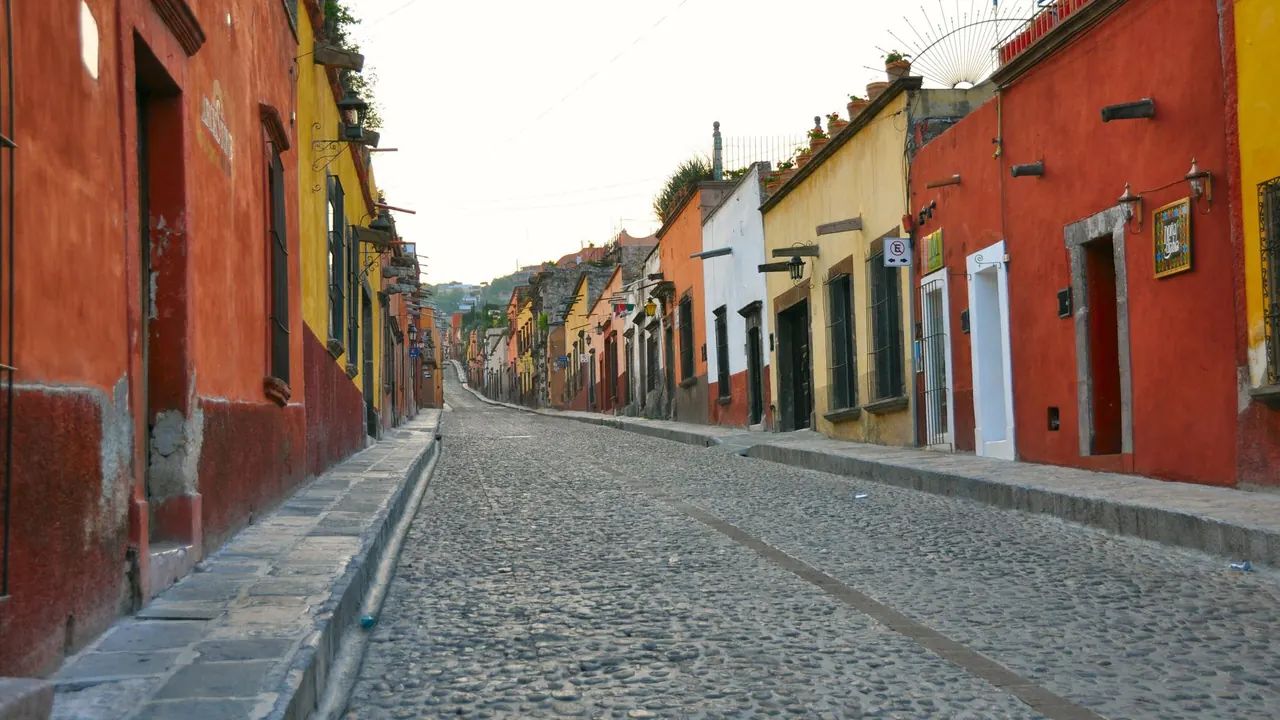
Photos: Acapulco by Felicia Navarrete, Pexels License; San Miguel de Allende by Russ Bowling, CC BY 2.0, cropped.
Acapulco or San Miguel de Allende?
Our verdict in twelve categories, each scored against the same fixed benchmark cities, and the climate month by month, so you can choose for your trip.
Choose Acapulco for
- beaches
- nightlife
- prices
Acapulco is for a trip built around the sea: warm water in every month, sandy coves inside the bay, big resort hotels and long nights on the Costera. It suits travellers who want to swim, eat grilled fish and go out, and who care more about a cheap, easy stay than about sights.
Choose San Miguel de Allende for
- day trips
- culture and sights
- wellness
Travellers who would rather walk than swim will be happier in San Miguel de Allende. Its cobbled colonial centre, craft and design shops, slow courtyard mornings and hot springs make for a calmer, more grown-up stay. Guanajuato, Querétaro and Atotonilco are also close enough for easy day trips. Expect to pay more, and forget the beach entirely.
Scoreboard
Twelve categories on one fixed scale from 0 to 100. The shaded stretch is the gap between the two.
Your match
Pick a travel style or drag the sliders, and both match scores follow your weighting.
Wins on beaches and nightlife with your weighting.
Wins on day trips and culture and sights with your weighting.
What matters to you?
Category by category
What the scores mean for a trip.
Beaches & swimming
This is where the two cities differ most. Acapulco's bay is lined with sand, from Condesa and Icacos on the hotel strip to the calm coves of Caleta and Caletilla, and sheltered Puerto Marqués is the best place for a clean swim. Avoid swimming in the surf at Revolcadero and Pie de la Cuesta.
San Miguel de Allende is many hours' drive inland from either coast. The nearest thing to a swim is a soak in the warm spring pools outside town, so a beach means a separate leg of the trip.
Food & drink
San Miguel de Allende offers more variety for a stay of a few days. There are courtyard and rooftop restaurants around the Jardín, chefs cooking with Bajío produce such as nopal and mesquite, Guanajuato wines and plenty of mezcal. For cheap meals, there are gorditas and tamales at the market and the Sunday tianguis.
Acapulco's food is narrower but more distinctly regional. Go to Barra Vieja for pescado a la talla grilled over wood, try the tomato-based ceviche and eat green pozole with the rest of the city on a Thursday. Along the Costera, expect mostly chain restaurants.
Culture & sights
In San Miguel de Allende the town itself is the sight: a UNESCO-listed hillside of cobbled streets and colonial façades below the pink spires of the Parroquia. San Felipe Neri, the Casa de Allende and the art schools of Bellas Artes are all within a few blocks. Two unhurried days cover the main sights, and every walk adds to the visit.
Acapulco's list is shorter: the Fuerte de San Diego, which once guarded the Manila galleons, the cliff divers at La Quebrada and Diego Rivera's mosaics on the Casa de los Vientos. One day is enough.
Nightlife
Acapulco is the place to stay out late. The Costera has beach bars, terraces and big hillside clubs that stay open until dawn, and on long weekends and in Easter and Christmas weeks the whole strip turns into a party. The music is loud and mainstream, and midweek out of season the strip goes quiet.
In San Miguel de Allende, evenings are for drinks rather than dancing: a rooftop at dusk as the Parroquia lights up, then mezcal bars and cantinas near the Jardín. Weekends stay busy until late, but weeknights end soon after dinner and there are almost no clubs.
Nature & outdoors
Acapulco has more to do outdoors, and most of it is on the water. You can snorkel and dive around Roqueta Island, go deep-sea fishing for sailfish and marlin, take a boat through the mangroves of Coyuca Lagoon and watch turtle releases near Barra Vieja. Hiking inland is hard going in the heat.
San Miguel de Allende offers dry highland country instead. There are cactus trails in the El Charco del Ingenio canyon, horse riding, mountain biking and dawn balloon flights, but they fill a morning rather than a whole trip.
Day trips
San Miguel de Allende makes an excellent base. Guanajuato and Querétaro are each about an hour away, and the murals of Atotonilco are closer still. Dolores Hidalgo, Mineral de Pozos, Bernal and the wine country add several more outings, though the smaller places need a car or a driver.
Acapulco offers little beyond half days at Pie de la Cuesta and Barra Vieja. Taxco, the obvious cultural outing, is around three hours away and works better as an overnight stay.
Good for families
Acapulco is the easier city with children. The shallow coves of Caleta and Caletilla, the boat to Roqueta Island, a water park with wave pools and resorts with kids' clubs will keep them busy. The downsides are dangerous surf on the open-ocean beaches and fierce heat.
San Miguel de Allende is a town for adults, and its steep cobbles are hard work with a pushchair. Older children may enjoy the spring pools, a horse ride or a fiesta parade, and the Jardín is friendly in the evenings, but younger ones soon run out of things to do.
Getting around
San Miguel de Allende is the easier place to explore on foot, because everything worth seeing is within a walk of the Jardín. The streets are steep and stony, and the altitude of about 1,900m adds to the effort, so good shoes matter. Arrival means a shuttle from Querétaro or León.
Acapulco stretches a long way along the Costera, with no rail. The old town, the hotel strip and Diamante are too far apart to walk between. Buses and taxis cover the whole length cheaply, and taxis are the usual choice at night.
Shopping & style
San Miguel de Allende is a real shopping stop for crafts and décor. The Mercado de Artesanías sells punched tin, blown glass and textiles, design shops carry high-quality folk art and furniture, and a former textile mill holds artists' studios and antique dealers.
In Acapulco, shopping is mostly souvenirs and beachwear, plus chain malls in Diamante. The artisan market near the old town is still worth a look for Taxco silver and Olinalá lacquerware, as long as you bargain and check the quality.
Affordability
Acapulco is the cheaper of the two for most of the year. Spending climbs in a few predictable places: the luxury resorts and restaurants of Diamante, the hotels on the Las Brisas hillside, and Easter week, Christmas and long weekends, when families from Mexico City drive down and fill the rooms. Outside those times, even the large all-inclusive resorts are fair value, and the taquerías and market stalls around the old centre are the cheapest meals in town.
San Miguel de Allende costs more. The gap is widest at weekends and during big festivals such as the Alborada and Holy Week, when rooms are at their dearest. A few streets from the centre, prices drop quickly. Market lunches, cantinas and taxis out to the hot springs stay cheap, and because the main sights are churches and the streets themselves, a day of sightseeing costs almost nothing.
Live music & performing arts
San Miguel de Allende has the fuller calendar. There is the nineteenth-century Teatro Ángela Peralta, long-running chamber music and jazz festivals, live guitar and son in the bars, and street music during the Alborada and Holy Week.
Live performance in Acapulco is informal: mariachis and trios in seafood restaurants, folk shows in hotels, big pop concerts in Diamante and occasional Philharmonic dates. There is no regular theatre season.
Wellness & relaxation
San Miguel de Allende is well suited to slowing down, with quiet courtyard mornings, a mild dry climate and the hot mineral springs near Atotonilco. Their open-air pools and domed grottoes make a calm half day out, and temazcal sweat lodges, yoga and day spas add to the choice.
In Acapulco, rest mostly means the resort spas in Diamante and Las Brisas or the clifftop hotels above the bay. The Costera is noisy, so stay at the slower east end of the bay or at Pie de la Cuesta for a quieter time.
When should you go?
Pick your month. The climate figures are measured averages, not a forecast.
Acapulco in July
San Miguel de Allende in July
Daytime high, °C
Rainfall in the month, mm
Where the figures come from
San Miguel de Allende's temperatures are measured 54 km from the centre, at Guanajuato, Gto..
San Miguel de Allende has no rain gauge within 25 km of the centre, so its rainfall comes from a gridded climate dataset read at the city rather than from a gauge further away.
Temperature and rainfall are climate normals, averaged over the years shown. Acapulco: 1991-2020 normals, Acapulco, Gro. (5.9 km from centre). San Miguel de Allende: 1991-2020 normals, Guanajuato, Gto. (53.7 km from centre).
Acapulco is hot all year, with daytime highs around 33°C and a sea warm enough for swimming in every month. What changes is the rain. From November to May it is almost dry and very sunny, while June to October brings heavy downpours, reaching about 290mm in September, and the water in the bay turns murky. For most visitors, the dry months are the time to go.
San Miguel de Allende sits on the high plateau, so it is milder and changes more through the year. December and January bring clear days around 23°C, ideal for walking the steep streets. April and May climb to about 32°C, which makes afternoon climbs tiring. The summer rains from June to September are moderate and turn the hills green. Both cities are at their best in the dry winter, so November to March is the season to visit either one, or to combine them.
Which traveller are you?
On a beach and sun trip, Acapulco is the clear choice. The Pacific stays warm all year, Caleta, Caletilla and Puerto Marqués are calm enough for swimming, and Roqueta Island is a short boat ride away. San Miguel has no coast at all.
For a culture and arts trip, San Miguel de Allende wins easily. Its UNESCO-listed centre of churches, courtyards and galleries, the Siqueiros mural at Bellas Artes and the festival concerts fill several days. Acapulco's history fits into one.
On a tight budget, Acapulco goes further. It is priced for Mexican vacationers, so beach-view rooms in older Costera hotels, seafood lunches and local buses cost little. In San Miguel, the boutique hotels and restaurants around the Jardín are aimed at wealthier visitors.
Before you go
| Measure | Acapulco | San Miguel de Allende |
|---|---|---|
| Official language | Spanish, Nahuatl, Yucatec Maya | Spanish, Nahuatl, Yucatec Maya |
| Currency | Mexican Peso (MXN) | Mexican Peso (MXN) |
| Sockets | AB127 V, 60 Hz | AB127 V, 60 Hz |
| Driving side | Right | Right |
| Time zone | UTC-6 | UTC-6 |
| Emergency number | 911 | 911 |
| Elevation | 18 m | 1,900 m |
| Main airport | General Juan N. Álvarez International Airport (ACA)18 km from centre10 non-stop destinations | Guanajuato International Airport (BJX)77 km from centre22 non-stop destinations |
| Public holidays this year | 9 days | 9 days |
By the numbers
| Measure | Acapulco | San Miguel de Allende |
|---|---|---|
| City population | 658,609 | 69,811 |
| People per km² | 350 | - |
| Museums within 10 km | 3 | 2 |
| UNESCO World Heritage sites within 50 km | 0 | 2 |
| Swim season, months above 21 °C | 12 months | - |
Where else could you go?
Every comparison below shares a destination with this one, so you can follow Acapulco or San Miguel de Allende somewhere new.