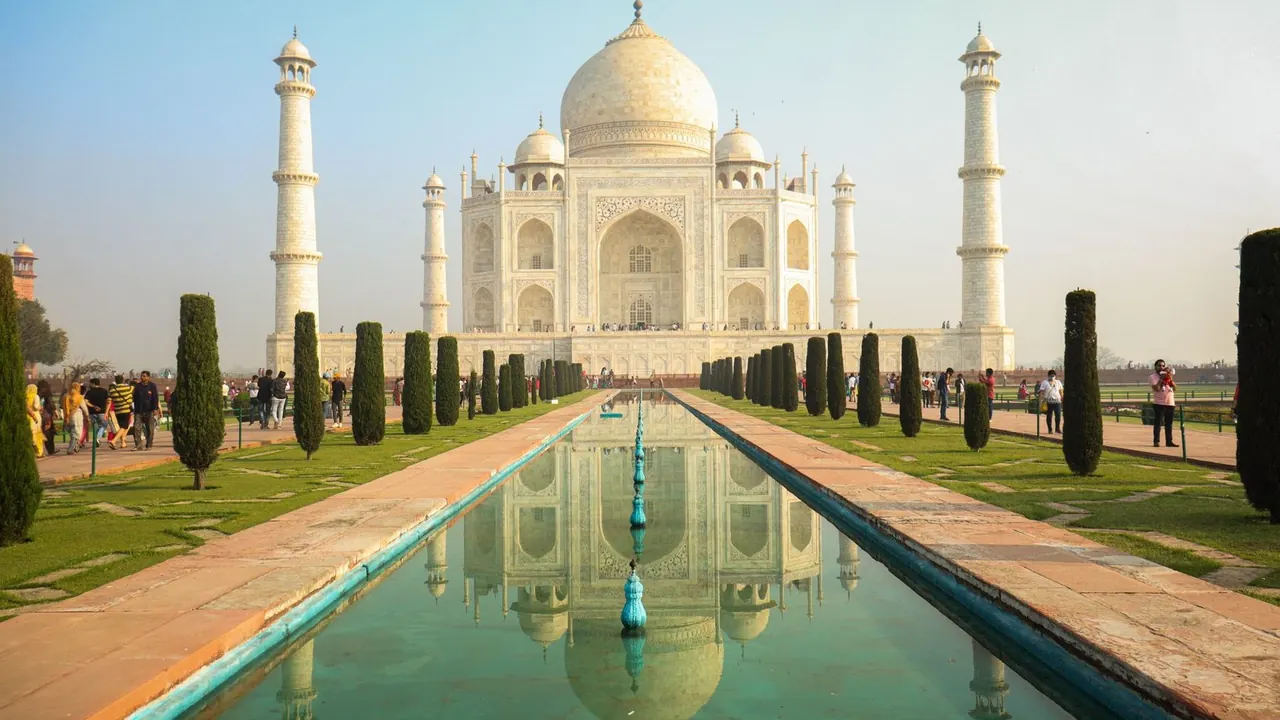
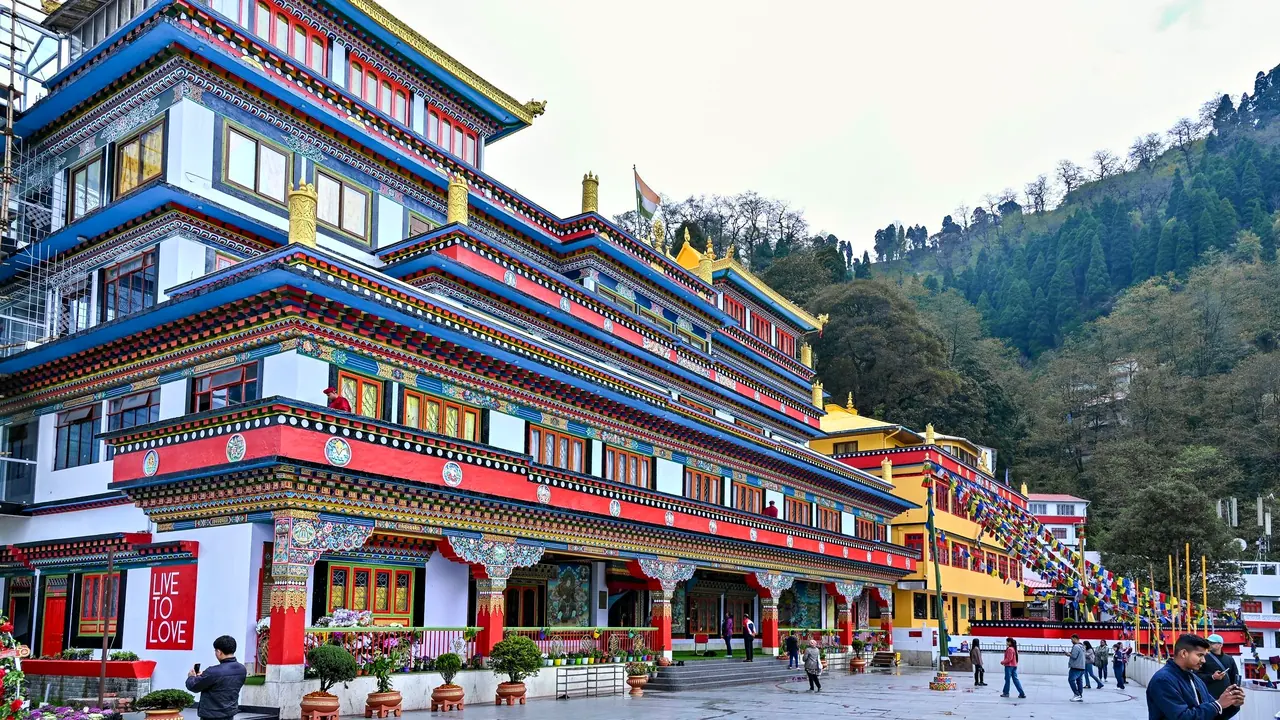
Photos: Agra by Sanket Sawale, Pexels License; Darjeeling by Krishnendu Biswas, Pexels License.
Agra or Darjeeling?
Our verdict in twelve categories, each scored against the same fixed benchmark cities, and the climate month by month, so you can choose for your trip.
Choose Agra for
- culture and sights
- day trips
- prices
Agra is the choice for a trip built around Mughal architecture. The Taj Mahal, Agra Fort and the finely inlaid smaller tombs reward every hour you give them, and Fatehpur Sikri, Mathura and Bharatpur turn a short stay into several full days. In return it asks for early starts and patience with heat, traffic and touts, and it gives little back after dark.
Choose Darjeeling for
- nature and the outdoors
- wellness
- families
Travellers after mountains, cool air and a slower pace will be happier in Darjeeling. The draw is Kangchenjunga above the ridge, tea estates falling away below town and walks that lead up to the Singalila Ridge, with the toy train and the zoo to keep children happy. Its sights are modest next to Agra's, so go for the landscape and the tea rather than the monuments.
Scoreboard
Twelve categories on one fixed scale from 0 to 100. The shaded stretch is the gap between the two.
Your match
Pick a travel style or drag the sliders, and both match scores follow your weighting.
Wins on culture and sights and day trips with your weighting.
Wins on nature and the outdoors and wellness with your weighting.
What matters to you?
Category by category
What the scores mean for a trip.
Beaches & swimming
Neither city has open water to swim in. In Agra the Yamuna is a backdrop to the Taj rather than a place to bathe, so a hotel pool is the realistic option, and a welcome one in the hot months. Darjeeling sits on a cool mountain ridge above fast, cold valley rivers, so any time in the water belongs to another part of the trip.
Food & drink
The two eat about equally well, but in very different styles. Agra cooks in the Mughlai tradition of kormas, kebabs and tandoor breads. It is at its best in the old bazaars, with bedai and jalebi for breakfast near the Jama Masjid and chaat in Sadar Bazaar in the evening, and petha is the sweet to take away.
Darjeeling's food comes from the hills: momos, thukpa and sel roti in small kitchens around Chowk Bazaar. Above all there is the tea itself, which you can taste flush by flush on the Mall or at an estate. In both towns the choice narrows quickly beyond this, and neither suits anyone looking for fine dining.
Culture & sights
Agra pulls well ahead here. The Taj Mahal alone justifies the journey. Agra Fort, the Baby Taj and Akbar's tomb at Sikandra add a run of Mughal monuments that very few cities in India can match.
Darjeeling's heritage is gentler and more mixed. It has the UNESCO-listed toy train looping round Batasia, the old monastery at Ghoom, St Andrew's Church and the mountaineering museum linked to Tenzing Norgay. That makes two or three pleasant days of wandering, but nothing there stops you in your tracks the way the Taj does.
Nightlife
Both towns are asleep by late evening, and for the same reason: an alarm set before dawn, for the Taj in one and for Tiger Hill in the other. The difference is the setting. In Agra the evening drink is on a hotel rooftop facing the dome in warm air, while in Darjeeling it is in an old pub by the fire, with the streets outside cold and quiet by around ten.
Nature & outdoors
Darjeeling is the place for landscape. Kangchenjunga fills the sky on clear mornings, and the tea terraces and rhododendron forest begin at the edge of town. The Singalila Ridge is a proper multi-day trek through red panda country, with views of four of the world's five highest peaks.
Agra is flat and dusty, and its greenery is limited to the Mughal gardens and the riverside at Mehtab Bagh. Its strength is wildlife: the winter birds at Keoladeo and the gharials and river dolphins of the Chambal are worth the trip for nature lovers. There is nowhere to hike.
Day trips
Agra has far more within a day's reach. Fatehpur Sikri, an entire abandoned Mughal capital about 40km away, pairs easily with the Bharatpur wetlands or the water palaces of Deeg. Mathura and Vrindavan offer Krishna's temples and ghats, and Gwalior's hilltop fort is a train ride to the south.
Darjeeling's outings are to smaller hill towns much like itself: Kurseong with its schools and tea estates, Mirik with its lake, and Kalimpong with its monasteries across the Teesta. They are pleasant places, but the winding roads make for slow days, and they offer a change of mood rather than new sights.
Good for families
Darjeeling is the easier of the two with children, though neither is simple. The cool air, the zoo and the toy train win children over. The steep steps, the long drive up that often brings on car sickness and the cold dawn outings mean it suits older children better than toddlers.
Agra has little for children beyond the monuments, and the heat, chaotic traffic and touts at the gates wear families down. Older children may love the scale of the Taj and the fort ramparts, and the bear rescue centre on the Mathura road is a real highlight. Still, most families keep the stay short and spend the afternoons by the pool.
Getting around
Neither is a walking town, but for different reasons. Agra's sights are spread across a flat, congested city with few pavements, so app taxis, auto-rickshaws or a car and driver for the day do the work. The last stretch to the Taj is on foot, by electric cart or by cycle rickshaw. Arriving is easy by train from Delhi into Agra Cantt.
Darjeeling has a pleasant car-free centre around Chowrasta and the Mall, but everywhere else means steep lanes, long flights of steps and shared jeeps in slow traffic. Simply getting there takes three hours or more by road from Siliguri, Bagdogra or New Jalpaiguri.
Shopping & style
Both suit a shopper with a clear aim rather than someone browsing for fashion. Agra's buy is pietra dura marble inlay, along with leather and carpets in Kinari and Sadar bazaars. The risk is the commission trade, so shop where you choose rather than where a driver takes you.
In Darjeeling the buy is tea, tasted and bought loose by estate and flush along the Mall and Nehru Road. The Tibetan Refugee Self Help Centre also sells carpets and thangkas made on site. The stalls of singing bowls and shawls repeat each other, but nobody is steering you into a showroom.
Affordability
Both are very cheap on the ground, with guesthouses, street food and short rides all costing little. In Agra the main extra costs are the foreigners' entry fees at the Taj and the other monuments, and the few hotels with a view of the dome.
In Darjeeling the costs come from heritage hotels, tea-estate bungalows, private taxis to Tiger Hill and rooms with a mountain view. Those rooms cost more in the autumn and spring peaks and during Indian school vacations.
Live music & performing arts
Neither has a stage worth planning an evening around. Agra's offer is made for visitors, with productions retelling the story of Shah Jahan and Mumtaz Mahal and the Taj Mahotsav festival of crafts and folk dance each spring at Shilpgram. Darjeeling's comes from the hills themselves: masked cham dances at the monasteries during festivals such as Losar, and occasional evenings of Nepali and Lepcha music.
Wellness & relaxation
Darjeeling is the more restful of the two because the calm comes from the place itself. A tea-estate bungalow, cool mountain mornings, long walks and a quiet corner at Ghoom monastery all help you unwind. Stay on the edge of town, though, because the Mall and its jeeps are anything but peaceful.
In Agra, rest means retreating into a hotel, with its spa, Ayurvedic massage and pool after a hot morning of sightseeing. Outside, traffic and touts set the tone, and the walled gardens at Itimad-ud-Daulah and Sikandra are among the few calm places in the open.
When should you go?
Pick your month. The climate figures are measured averages, not a forecast.
Agra in July
Darjeeling in July
Daytime high, °C
Rainfall in the month, mm
Where the figures come from
Darjeeling has no weather station within reach, so its figures come from a gridded climate model rather than a measured record, and read a broad area rather than the city itself.
Temperature and rainfall are climate normals, averaged over the years shown. Agra: 1942-2025, 10 years observed (rainfall 1971-2000) normals, Agra (6.2 km from centre). Darjeeling: 1991-2020 normals, TerraClimate 4 km grid at the town, no weather station within 90 km.
Agra is at its best from October to March, when days are dry and warm enough to spend outdoors. January highs fall to about 20°C, and winter haze can soften the view of the dome. From April to June the plains bake, with highs near 40°C that push sightseeing into the early morning. The monsoon follows, with the heaviest rain in July and August at around 230mm a month.
Darjeeling follows a different calendar. It never gets hot, staying in the low to mid twenties through the summer, which makes it a natural escape in May when Agra is at its fiercest. Its monsoon is far heavier, though, peaking at 778mm in July, and from June to September cloud often hides the mountains. October to December and March to April are the seasons for clear views. Winter is chilly, with daytime highs around 15°C.
Which traveller are you?
On a culture and arts trip, Agra is the clear pick. The Taj Mahal, Agra Fort, the inlay of Itimad-ud-Daulah and Akbar's tomb at Sikandra fill two rich days, and Fatehpur Sikri adds a whole abandoned capital. Darjeeling has a heritage railway and a few monasteries.
For an outdoors trip, Darjeeling wins easily. Walks through the tea estates start at the edge of town, Tiger Hill gives sunrise over the snow peaks, and the Singalila Ridge climbs to Sandakphu. Agra's outdoor highlight is birdwatching at Keoladeo, and it has no hills at all.
On a family trip with children, Darjeeling is the gentler choice. The toy train, the red pandas and snow leopards at the zoo, and pony rides on Chowrasta give children something of their own, and the cool air is easier than Agra's heat. Steep steps rule out buggies, though.
Before you go
| Measure | Agra | Darjeeling |
|---|---|---|
| Official language | Hindi, English | Hindi, English |
| Currency | Indian Rupee (INR) | Indian Rupee (INR) |
| Sockets | CM230 V, 50 Hz | CM230 V, 50 Hz |
| Driving side | Left | Left |
| Time zone | UTC+5:30 | UTC+5:30 |
| Emergency number | 108 or 112 | 108 or 112 |
| Elevation | 171 m | 2,115 m |
| Main airport | Agra Airport / Agra Air Force Station (AGR)6 km from centre2 non-stop destinations | Bagdogra Airport (IXB)40 km from centre13 non-stop destinations |
By the numbers
| Measure | Agra | Darjeeling |
|---|---|---|
| City population | 1,585,705 | 118,805 |
| People per km² | 8,417 | 11,208 |
| Museums within 10 km | 0 | 7 |
| UNESCO World Heritage sites within 50 km | 4 | 1 |
Where else could you go?
Every comparison below shares a destination with this one, so you can follow Agra or Darjeeling somewhere new.