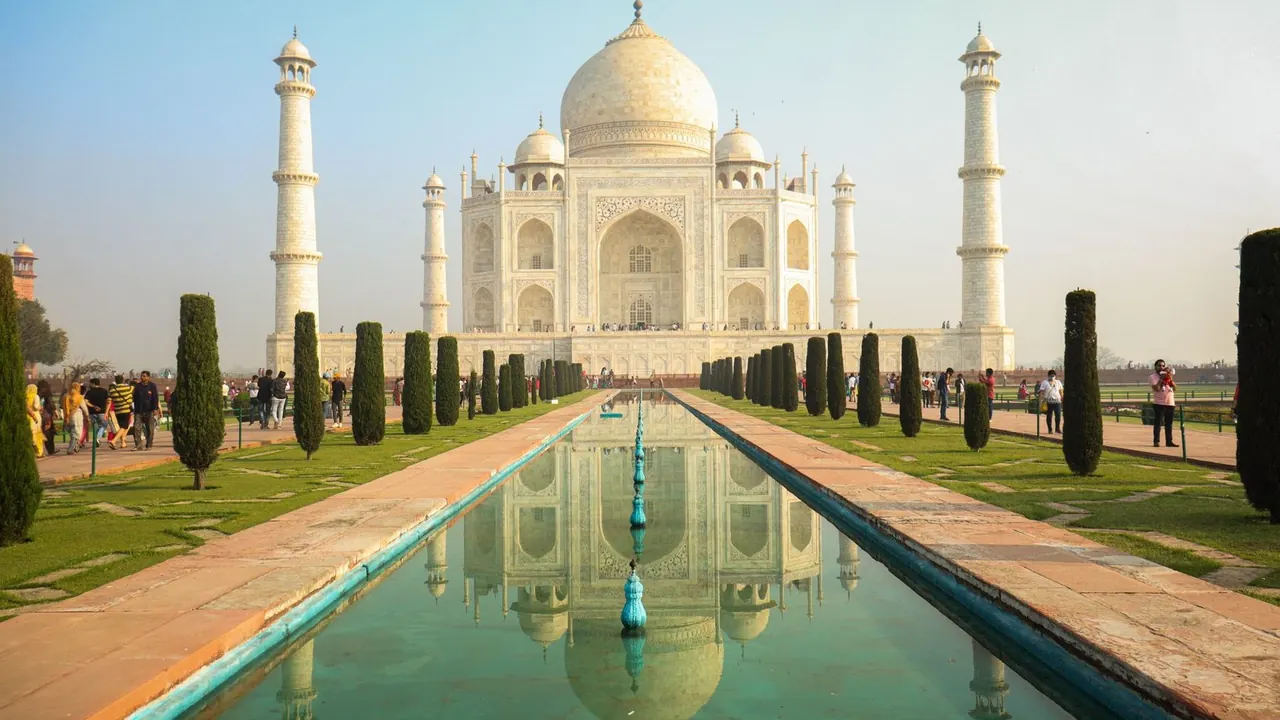
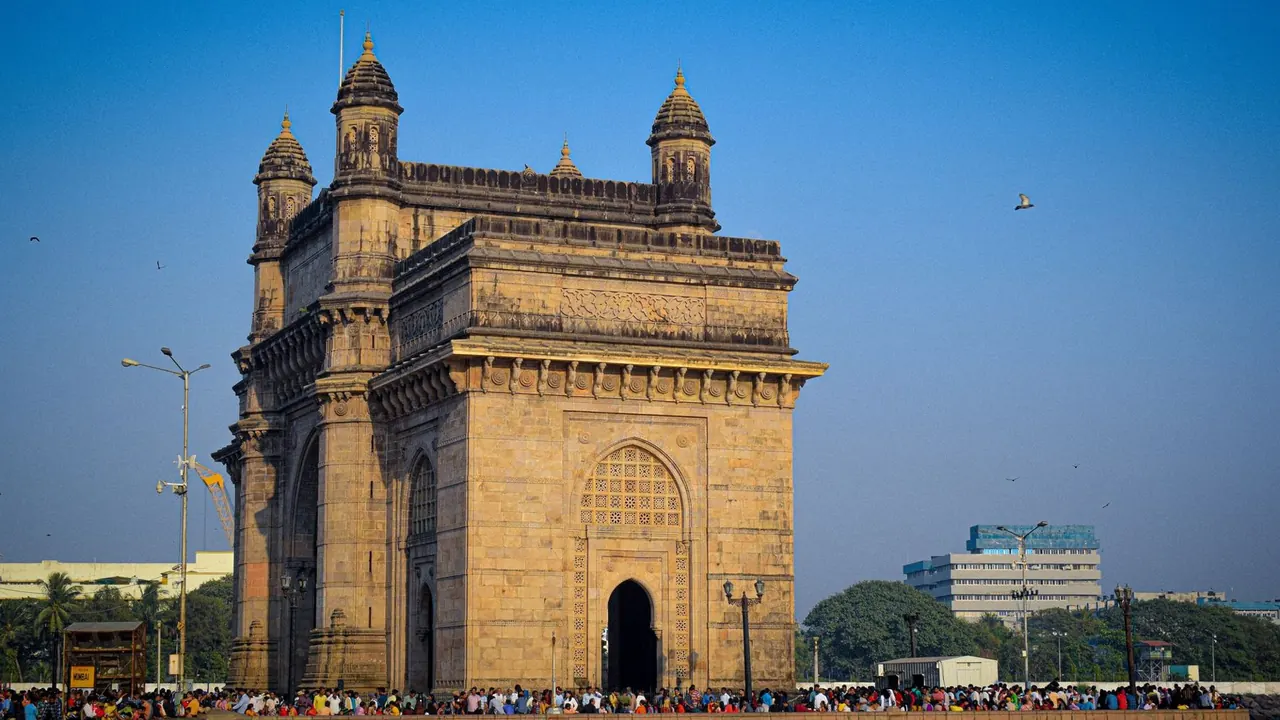
Photos: Agra by Sanket Sawale, Pexels License; Mumbai by Shubam Bhasin, Pexels License.
Agra or Mumbai?
Our verdict in twelve categories, each scored against the same fixed benchmark cities, and the climate month by month, so you can choose for your trip.
Choose Agra for
- day trips
- prices
- culture and sights
Agra suits the traveller who comes for the Mughal monuments and is happy to let them shape the whole visit: the Taj Mahal at first light, Agra Fort, the inlaid tomb of Itimad-ud-Daulah and the deserted capital of Fatehpur Sikri a short drive away. It is cheap, it is quiet after dark, and two or three days cover it well. That makes it a natural stop on a route through northern India rather than a place for a long stay.
Choose Mumbai for
- nightlife
- live music and the arts
- food and drink
Choose Mumbai if you want a city that keeps going after the sightseeing. Street food, Irani cafés and coastal curries, the bars of Bandra and Lower Parel, an evening at the NCPA or Prithvi Theatre, and bazaars that run on into designer boutiques give a longer stay plenty to do. Its sights are fewer and slower to reach than Agra's, and a comfortable room costs noticeably more.
Scoreboard
Twelve categories on one fixed scale from 0 to 100. The shaded stretch is the gap between the two.
Your match
Pick a travel style or drag the sliders, and both match scores follow your weighting.
Wins on day trips and prices with your weighting.
Wins on nightlife and live music and the arts with your weighting.
What matters to you?
Category by category
What the scores mean for a trip.
Beaches & swimming
Neither city is a beach destination, but Agra has nothing at all. It is an inland city on the Yamuna, a river for viewing the Taj rather than swimming, so the water you get is a hotel pool.
Mumbai at least has the sand of Juhu and Girgaum Chowpatty, where people stroll at sunset, fly kites and eat snacks. The water there is murky and few people go in. A proper swim means a ferry across the harbour to Alibaug, which takes most of a day.
Food & drink
Agra's food is Mughlai: kormas, biryani and tandoor breads, with bedai and jalebi for breakfast in the old bazaars and petha sold on every corner. Beyond that, most meals are in hotels or restaurants built for tour groups, and it is worth exploring for a day or two at most.
Mumbai has far more to explore. Street snacks run from vada pav to bhel puri at Chowpatty, the Irani cafés of Fort serve berry pulao, and Konkani kitchens cook pomfret and crab in coconut curries. On top of that there is food from all over India and a serious modern restaurant scene in Bandra and Lower Parel.
Culture & sights
Agra is ahead because of the Taj Mahal itself, backed by the red sandstone halls of Agra Fort, the fine inlay of Itimad-ud-Daulah and Akbar's tomb at Sikandra. These are first-rank Mughal monuments, close together, and two days covers them.
Mumbai's sights are of a different kind: the Gothic extravagance of the CSMT station, the Victorian and Art Deco facades around the Oval Maidan, and good collections at the CSMVS and Bhau Daji Lad museums. It has more museums than Agra, but the sights are spread out and slow to link, and none matches the Taj.
Nightlife
Agra hardly has a nightlife. After a pre-dawn start at the Taj, evenings end with dinner and perhaps a drink on a hotel rooftop facing the dome.
Mumbai offers a real night out, with cocktail bars, gastropubs and a few clubs in Bandra, Khar and the old mills of Lower Parel, plus the older Colaba bar strip. It is dressy at weekends, closes around 1am and is expensive to drink in, but it is in another league from Agra.
Nature & outdoors
Agra's outdoors is mostly about birds and rivers outside the city. Keoladeo's wetlands at Bharatpur are superb in winter and the Chambal sanctuary has gharials and river dolphins, but the city itself is flat and dusty, with no trails.
Mumbai has more within reach. Sanjay Gandhi National Park, with its forest, leopards and the Kanheri caves, lies inside the city limits, flamingos gather on the Sewri mudflats, and the Western Ghats around Lonavala and Matheran offer proper hiking, greenest in the monsoon.
Day trips
Agra has the better day trips. Fatehpur Sikri, Akbar's abandoned capital, is about 40km away and combines easily with Bharatpur or Deeg. Mathura and Vrindavan are an hour north, and Gwalior's hilltop fort is a train ride south.
From Mumbai the obvious trip is the boat to the Shiva carvings of Elephanta, with the Buddhist caves at Karla and Bhaja further out. After that, traffic and distance rule out Ajanta, Ellora and Pune as day trips.
Good for families
Both cities are tiring with children, though Mumbai gives them more to do. Agra has little beyond the scale of the Taj and the fort ramparts, and the bear rescue centre on the Mathura road, so families keep visits short.
In Mumbai, the Nehru Science Centre makes a good indoor morning, and the Byculla zoo, the Gateway ferries and ice cream on Chowpatty fill an afternoon. Heat, crowds and traffic still mean a driver and a hotel pool are worth having.
Getting around
Agra has no walkable centre. Its monuments are scattered along and away from the river, so you rely on rickshaws, app taxis or a car and driver hired for the day, and you cover the final stretch to the Taj on foot or by electric cart.
Mumbai is easier, though slow. The Fort, Kala Ghoda and Colaba district is pleasant on foot, and the suburban railway and metro lines offer fast routes north if you avoid rush hour. Road traffic along the long, narrow city can still turn a short trip into an hour.
Shopping & style
Agra's shopping centres on its crafts: pietra dura marble inlay, leather shoes, carpets and petha, plus cheap browsing in Kinari and Sadar bazaars. The commission showrooms that drivers steer you towards are the main hazard.
Mumbai has much more choice. There are spices under the Victorian roof of Crawford Market, gold in Zaveri Bazaar and old brass and film posters in Chor Bazaar. Beyond the street stalls of Colaba Causeway and Linking Road, Kala Ghoda and Bandra add handloom textiles and Indian designer labels.
Affordability
Agra is the cheaper stay. Guesthouses, mid-range hotels, street food and rickshaws cost very little, and the main expenses are the foreigners' entry fees at the Mughal monuments and the few luxury hotels with views of the Taj.
Mumbai's food and transport are just as cheap, but the rooms are not. A comfortable hotel in the south of the city costs far more than anywhere in Agra, and taxes on drinks make a night in the smart bars feel closer to Western prices.
Live music & performing arts
Agra's performances are mostly staged for tourists: musicals retelling the story of Shah Jahan and Mumtaz Mahal, hotel dance evenings, and the Taj Mahotsav crafts and folk festival in spring.
Mumbai has a real local stage. The NCPA at Nariman Point is home to the Symphony Orchestra of India and hosts classical music, dance and jazz. Prithvi Theatre in Juhu anchors Hindi and English drama, and the Kala Ghoda Arts Festival brings performers onto the streets each winter.
Wellness & relaxation
Neither city is restful, though Mumbai offers a little more beyond the hotel. In Agra, calm means a hotel spa and pool, or a shaded bench in the walled gardens of Itimad-ud-Daulah or Sikandra late in the day.
Mumbai adds yoga studios and Ayurvedic centres in Bandra, early walks along Marine Drive or Bandstand, and the quiet of the Banganga Tank. For a real retreat, the hills of Lonavala are within reach.
When should you go?
Pick your month. The climate figures are measured averages, not a forecast.
Agra in July
Mumbai in July
Daytime high, °C
Rainfall in the month, mm
Where the figures come from
Agra has no rain gauge within 25 km of the centre, so its rainfall comes from a gridded climate dataset read at the city rather than from a gauge further away.
Temperature and rainfall are climate normals, averaged over the years shown. Agra: 1942-2025 (rainfall 1991-2020) normals, Agra (6.2 km from centre). Mumbai: 1991-2020 normals, Bombay / Santacruz (5.4 km from centre).
Agra is at its best from November to February. January days reach about 20°C, December and February sit in the low to mid twenties, and November is a little warmer again, all comfortable for walking between the monuments, though winter haze can soften the views. From April to June the heat climbs to 40°C and sightseeing shrinks to the early morning. The monsoon follows, with the heaviest rain from July to September.
Mumbai is hot in every month, with highs in the low thirties all year, so the rain decides when to go. From November to May it is almost dry and sunny, and the sea stays between 25°C and 30°C. June to September is the monsoon, peaking at 860mm in July, with very little sunshine. The two line up best from November to February, when Agra is mild and Mumbai is dry.
Which traveller are you?
On a culture and arts trip, Agra is the stronger choice for its monuments. The Taj Mahal, Agra Fort, the Baby Taj and Fatehpur Sikri are within easy reach of each other, while Mumbai's colonial landmarks and museums are fewer and spread out.
For a food and nightlife trip, Mumbai wins easily. You get vada pav carts, Irani cafés, Malvani seafood and late kebab grills, then cocktail bars in Bandra and Lower Parel. Agra's food is worth a day or two and its evenings end at dinner.
On a shopping trip, Mumbai has the range. It runs from Crawford Market, Zaveri Bazaar and Chor Bazaar to handloom and designer boutiques in Kala Ghoda and Bandra. Agra offers marble inlay, leather and petha, but drivers steer you to commission showrooms.
Before you go
| Measure | Agra | Mumbai |
|---|---|---|
| Official language | Hindi, English | Hindi, English |
| Currency | Indian Rupee (INR) | Indian Rupee (INR) |
| Sockets | CM230 V, 50 Hz | CM230 V, 50 Hz |
| Driving side | Left | Left |
| Time zone | UTC+5:30 | UTC+5:30 |
| Emergency number | 108 or 112 | 108 or 112 |
| Elevation | 171 m | 14 m |
| Main airport | Agra Airport / Agra Air Force Station (AGR)6 km from centre2 non-stop destinations | Chhatrapati Shivaji Maharaj International Airport (BOM)2 km from centre122 non-stop destinations |
By the numbers
| Measure | Agra | Mumbai |
|---|---|---|
| City population | 1,585,705 | 15,414,288 |
| People per km² | 8,417 | 25,563 |
| Museums within 10 km | 0 | 1 |
| UNESCO World Heritage sites within 50 km | 4 | 3 |
| Swim season, months above 21 °C | - | 12 months |
Where else could you go?
Every comparison below shares a destination with this one, so you can follow Agra or Mumbai somewhere new.