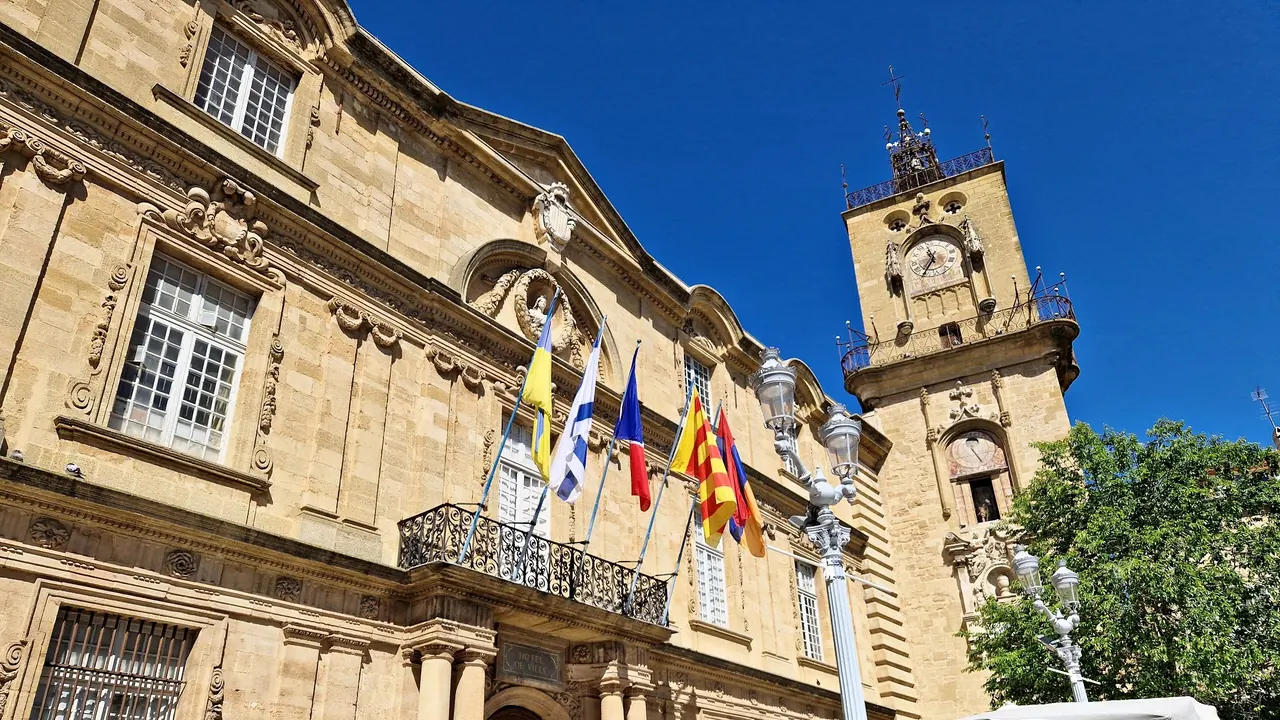
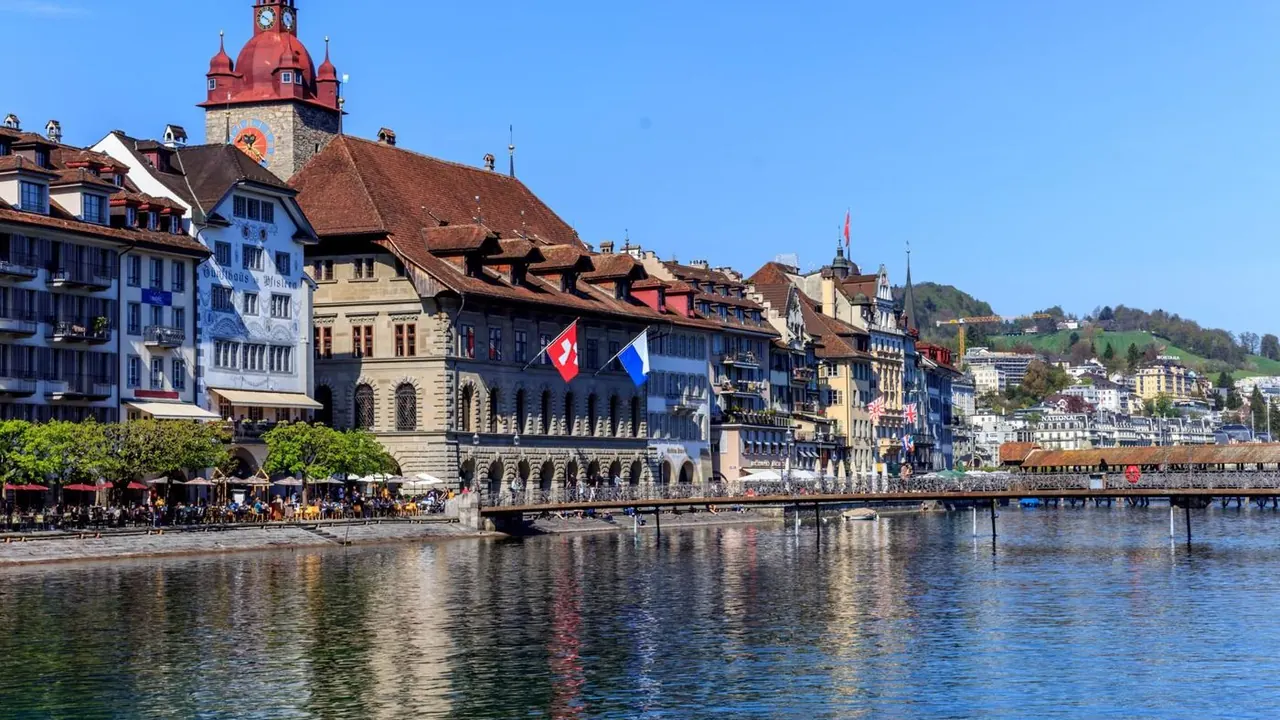
Photos: Aix-en-Provence by Hanay, CC BY-SA 4.0, cropped; Lucerne by ILOVESwitzerland, Pexels License.
Aix-en-Provence or Lucerne?
Our verdict in twelve categories, each scored against the same fixed benchmark cities, and the climate month by month, so you can choose for your trip.
Choose Aix-en-Provence for
- food and drink
- prices
- nightlife
Aix-en-Provence suits travellers who want a warm, slow-paced base in the south: long market lunches, terrace evenings with a student crowd, and a car to reach Avignon, Arles, the Luberon villages and the coast. Choose it if food, small-town beauty and a full programme of day trips matter more than mountains. It is not cheap, but it is far easier on the budget than Lucerne.
Choose Lucerne for
- getting around
- families
- nature and the outdoors
Lucerne is the better pick for scenery and ease. Lakes, cogwheel railways and summits begin a short walk from the station, the transport links everything without a car, and children have more to do. It costs a great deal and the food is plain, but for mountains, steamers and classical music by the water it gives you more than Aix.
Scoreboard
Twelve categories on one fixed scale from 0 to 100. The shaded stretch is the gap between the two.
Your match
Pick a travel style or drag the sliders, and both match scores follow your weighting.
Too close to call, 2 points apart
Wins on food and drink and prices with your weighting.
Wins on getting around and families with your weighting.
What matters to you?
Category by category
What the scores mean for a trip.
Beaches & swimming
Aix has the edge, mainly because it has real sea within reach. The coves of the Côte Bleue, Cassis and the calanques are about an hour away and warm enough for a proper swim through high summer, though they are pebbly, rocky and crowded in August, and without a car the trip is a chore.
In Lucerne the water is right in town: the Lido, the old wooden lake baths and the lawns at Ufschötti. The lake is clean and has mountains all around, but the season is short and the shore is grass and jetties. It is somewhere for a quick dip, not a beach day.
Food & drink
Eating is one of the reasons to go to Aix and an afterthought in Lucerne. Aix has produce markets every morning on Place Richelme, unhurried lunches of daube, tians and grilled fish with Coteaux d'Aix rosé, and calissons from old confectioners. The range is mostly French, but within it the cooking is good.
Lucerne offers hearty Swiss dishes such as Chügelipastete, rösti, fondue and lake perch, served in panelled guild-house taverns. Too many places near the Chapel Bridge cater to coach tours, and you pay a lot for a menu with little variety.
Culture & sights
The two are about even, but the sightseeing is different in kind. In Aix the town itself is the attraction: the plane trees and mossy fountains of the Cours Mirabeau, the honey-coloured mansions of the Mazarin quarter, and Cézanne's world spread across his studio at Les Lauves, the Jas de Bouffan and the Bibemus quarries. At a gentle pace it fills two or three days.
Lucerne has fewer sights, but some of them are icons of Switzerland: the Chapel Bridge and Water Tower, the Lion Monument and the towers of the Musegg Wall, which you can climb. The Rosengart Collection's Picasso and Klee are a match for the Musée Granet, and a day or two covers it all.
Nightlife
Neither is a place for a big night out, but Aix has more going on. A large student population fills the terraces around Place des Cardeurs on warm evenings, and there are a few wine bars and small clubs. Anyone after a real club night goes to Marseille.
Lucerne usually settles for a drink by the water and is quiet by midnight. The great exception is Fasnacht, when the whole Old Town is out in costume until dawn.
Nature & outdoors
Lucerne's setting is the bigger draw. Mountains rise straight from the lake, and Pilatus, Rigi and the Stanserhorn are climbed by cogwheel railway or cable car, while Titlis keeps its snow all year. Boat, train and trail fit into a single day, with skiing in winter, though low cloud can hide everything.
Aix has fine landscapes of a drier kind: Sainte-Victoire on the edge of town, the white cliffs of the Calanques, the Verdon gorge and cycling routes through the Luberon. Most of it needs a car, and the midsummer heat and fire closures limit the best seasons to spring and autumn.
Day trips
Aix is the richer base. Marseille is half an hour away, the TGV reaches Avignon in about twenty minutes, and Arles, Nîmes and the Pont du Gard follow, so the choice of Roman and papal heritage is remarkable. Add hill villages such as Gordes and Roussillon, Les Baux in the Alpilles and the vineyards of Bandol.
Lucerne's outings are more varied in setting and simpler to arrange. Bern, Basel and Zurich are each under an hour by train, and the lake steamer runs to the Rütli meadow and the William Tell country around Altdorf.
Good for families
Lucerne gives children much more to do. The Swiss Museum of Transport is a full day on its own, the Glacier Garden has its mirror maze, and the steamers and mountain trains are an adventure in themselves. The catch is that they cost a lot and depend on the weather.
Aix is safe and pleasant for a stroll with ice cream among the fountains, but its sights are mansions and museums, and summer afternoons are very hot. Families usually rent a villa with a pool and drive to La Barben zoo or the coast.
Getting around
In both, the centre is easy to walk around. The difference is what happens after that. Lucerne's station, boat piers and Old Town sit side by side on the lakefront, and trains, steamers and cable cars all run on one integrated ticket system, so you never need a car.
In Aix everything inside the old town is on foot, but the TGV station is a shuttle ride out on the plateau, and the Provençal villages are badly served by buses. Most visitors end up hiring a car and then struggling to park it.
Shopping & style
Aix is the more enjoyable place to shop. French fashion and shoe boutiques line Rue d'Italie and Rue Fabrot, there are delicatessens, and the markets sell flowers, textiles and bric-a-brac. You can take home santons, olive-wood ware, Marseille soap and printed fabrics.
Lucerne's shopping revolves around watches. Big jewellery houses on Schwanenplatz sit beside shops selling army knives, chocolate and cuckoo clocks, but there is little fashion or design beyond them.
Affordability
Neither is a bargain, but Aix is clearly the cheaper stay. Hotels are scarce and expensive, especially in July, yet the lunch menus in the back streets, market picnics and cheap regional buses all keep costs down.
Lucerne is expensive at every step. Even a simple meal costs a lot, and the mountain railways and cable cars that make the trip worthwhile take a large share of the budget. A Swiss travel pass and lakeside supermarket picnics help a little, but they don't make it a budget trip.
Live music & performing arts
Both towns are known for a summer festival, and they are very different. The Festival d'Aix is opera, with productions staged in the courtyard of the Archbishop's Palace in July. Ballet Preljocaj at the Pavillon Noir gives Aix contemporary dance all year.
Lucerne has the stronger programme overall. The Lucerne Festival brings the world's leading orchestras to Jean Nouvel's lakefront hall in late summer, and that hall, known for its acoustics, keeps a resident orchestra and a full season through the rest of the year.
Wellness & relaxation
Aix has the edge, because water is part of its history. The Romans founded it on warm springs, and some of its fountains still run warm. The Thermes Sextius spa stands on the site of the ancient baths. Outside July, long lunches and afternoons under the plane trees keep the pace slow.
Lucerne has no thermal springs and no bathhouse tradition, so a spa visit means a hotel spa or the Mario Botta mineral bath high on the Rigi, which looks out over the mountains. Instead, its calm comes from quiet evenings, the lakeside promenades and steamer rides with nothing to do but watch the shore, though the Old Town fills with tour groups in the middle of the day.
When should you go?
Pick your month. The climate figures are measured averages, not a forecast.
Aix-en-Provence in July
Lucerne in July
Daytime high, °C
Rainfall in the month, mm
Where the figures come from
Lucerne has no rain gauge within 25 km of the centre, so its rainfall comes from a gridded climate dataset read at the city rather than from a gauge further away.
Lucerne's sunshine is measured 42 km from the centre, at Zurich Town / Ville..
Temperature and rainfall are climate normals, averaged over the years shown. Aix-en-Provence: 1991-2020 normals, Marseille / Marignane (19.2 km from centre). Lucerne: 2005-2025 (sunshine 1991-2020, rainfall 1991-2020) normals, Emmen (4.2 km from centre).
Aix is a warm-weather town. May and June are ideal for walking the streets, July reaches about 31°C with almost no rain, which is fine for the coast but hard work in the old town in the afternoon, and the sea is at its warmest in August, around 22°C. Rain arrives in September and lasts through November, though autumn days stay mild. Winter is cool and sunny, with highs around 12°C.
Lucerne runs on a different calendar. Summer is pleasant rather than hot, around 24°C in July, but it is also the wettest season, so mountain views come and go. Late spring and September often bring the best walking weather. From November to February it is cold and grey with little sunshine. That suits skiing and Christmas visits, but not a lakeside stay.
Which traveller are you?
On a food and nightlife trip, Aix is the clear choice. Its morning markets, long Provençal lunches with local rosé and student-filled bar squares give evenings far more life than Lucerne's quiet riverside pubs and narrow menus.
For an outdoors trip, Lucerne wins. Pilatus, Rigi and the Stanserhorn are reached by train, boat and cable car straight from town, with summer hiking and winter skiing. Aix's Calanques and Sainte-Victoire are superb, but they need a car and often close on high fire-risk days.
On a family trip with children, Lucerne works better. The Transport Museum fills a day, and steamers, cogwheel trains and the Pilatus toboggan run turn every journey into an outing. In Aix, families mostly sit by the pool and drive out for things to do.
Before you go
| Measure | Aix-en-Provence | Lucerne |
|---|---|---|
| Official language | French | French, German, Italian, Romansh |
| Currency | Euro (EUR) | Swiss Franc (CHF) |
| Sockets | CE230 V, 50 Hz | CJ230 V, 50 Hz |
| Driving side | Right | Right |
| Time zone | UTC+1, UTC+2 in summer | UTC+1, UTC+2 in summer |
| Emergency number | 112 | 112 |
| Elevation | 73 m | 436 m |
| Main airport | Marseille Provence Airport (MRS)21 km from centre126 non-stop destinations | Zürich Airport (ZRH)49 km from centre226 non-stop destinations |
| Public holidays this year | 11 days | 12 days |
By the numbers
| Measure | Aix-en-Provence | Lucerne |
|---|---|---|
| City population | 149,695 | 86,234 |
| People per km² | 804 | 2,963 |
| Museums within 10 km | 8 | 14 |
| UNESCO World Heritage sites within 50 km | 1 | 1 |
| Swim season, months above 21 °C | 2 months | - |
Where else could you go?
Every comparison below shares a destination with this one, so you can follow Aix-en-Provence or Lucerne somewhere new.
- Marseillevs Aix-en-Provence
- Zurichvs Lucerne
- Interlakenvs Lucerne
- Bernvs Lucerne
- Avignonvs Aix-en-Provence
- Baselvs Lucerne