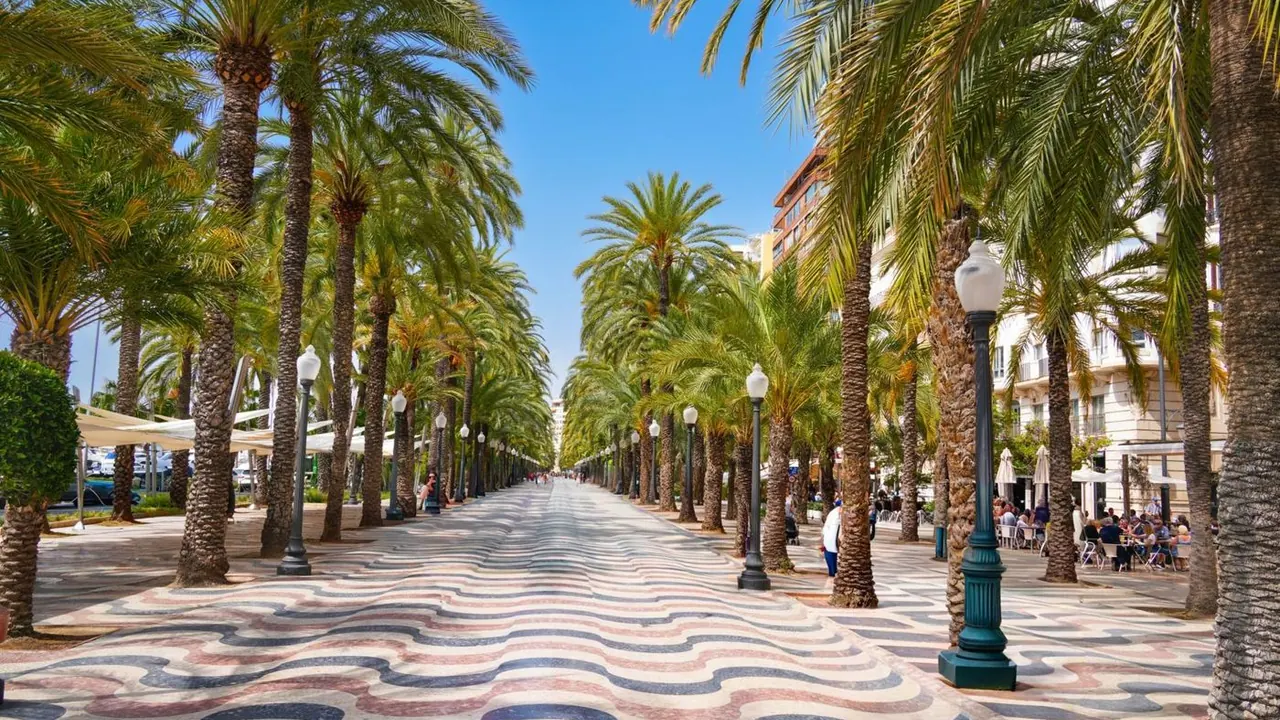
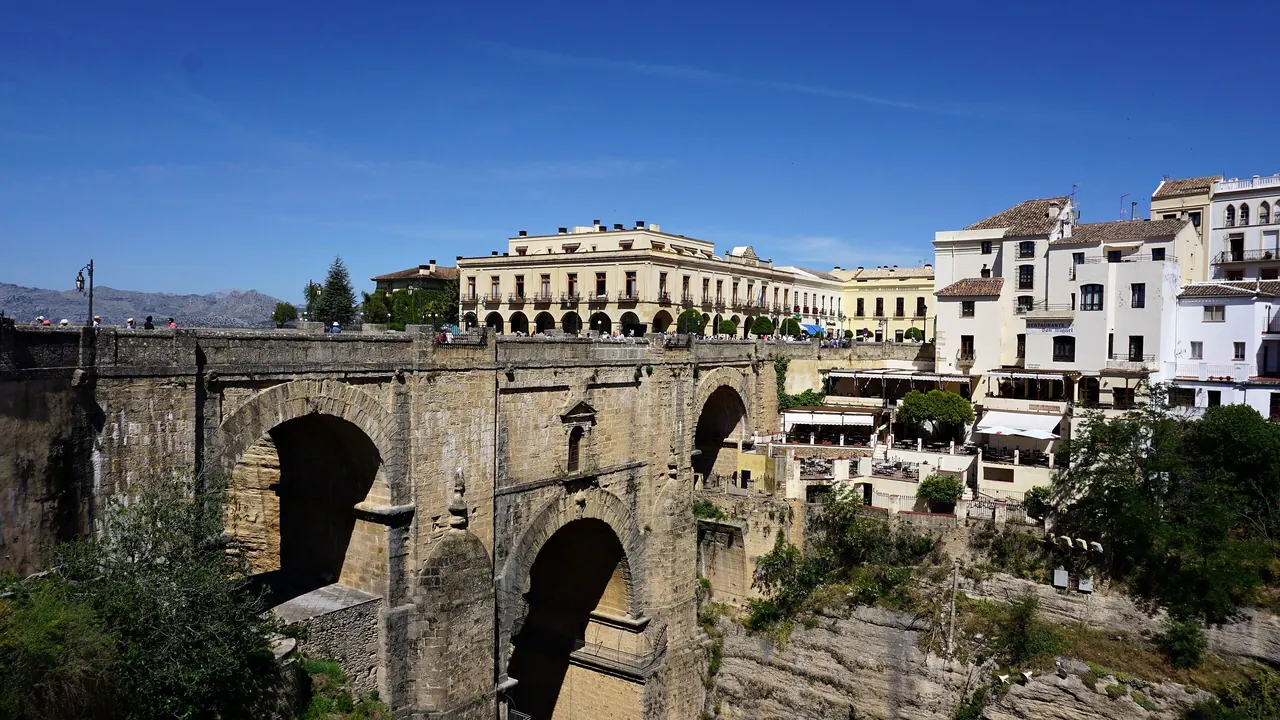
Photos: Alicante by Emilio Sánchez Hernández, Pexels License; Ronda by Julia Kostecka, CC BY 2.0, cropped.
Alicante or Ronda?
Our verdict in twelve categories, each scored against the same fixed benchmark cities, and the climate month by month, so you can choose for your trip.
Choose Alicante for
- beaches
- nightlife
- families
Alicante is the pick for a sun-and-sea vacation with a proper city attached. Postiguet lies under the castle, the tram runs out to the long sands of San Juan, and the days move from long rice lunches to late bars in El Barrio. Families, beach lovers and anyone who wants evenings out and easy transport without a car will find it the more complete base.
Choose Ronda for
- nature and the outdoors
- culture and sights
- prices
Travellers who come for landscape and history rather than the sea will get more from Ronda. The town is split by the Tajo gorge, and the Puente Nuevo, the old bullring and the Arab baths are all a short walk apart. The Sierra de Grazalema and the Sierra de las Nieves make greener, richer walking country than the dry hills behind Alicante. It suits walkers, couples and road-trippers with a hire car who are happy with quiet evenings.
Scoreboard
Twelve categories on one fixed scale from 0 to 100. The shaded stretch is the gap between the two.
Your match
Pick a travel style or drag the sliders, and both match scores follow your weighting.
Wins on beaches and nightlife with your weighting.
Wins on nature and the outdoors and culture and sights with your weighting.
What matters to you?
Category by category
What the scores mean for a trip.
Beaches & swimming
This is where the two differ most. In Alicante the sea is part of every day. Postiguet sits below the castle, the tram runs to the fine sand and shallow water of Playa de San Juan, and a boat crosses to Tabarca for clearer, rockier swimming. Expect crowds in July and August.
Ronda has no beach of its own. The Costa del Sol near Estepona is about 50km away over a winding mountain road, which turns a swim into a full day out, so most visitors use a hotel pool instead.
Food & drink
Alicante eats better. Its rice cooking, from arroz a banda to the egg-crusted arroz con costra, is worth planning lunches around, and the modernist Mercado Central adds red prawns, mojama and counters for a snack. Old-town tapas bars and local Alicante wines fill the evenings.
Ronda's mountain cooking is hearty and honest: oxtail stew, lamb, game, cured hams, chestnuts and mushrooms in autumn, and Sierras de Málaga wines from nearby estates. The range is narrower and fine dining is scarce. In both towns, the restaurants with the best views are the weakest choice.
Culture & sights
Ronda has the more memorable heritage, and much of it is the town itself. The Puente Nuevo over the Tajo gorge, the old Moorish quarter of La Ciudad, the Real Maestranza bullring with its museum and the well-preserved Arab baths make a compact and unusual set of sights.
Alicante's highlights are the Castillo de Santa Bárbara with its views over the bay, the flowerpot-lined steps of Santa Cruz and the MARQ, which beats any museum in Ronda. You can see either town properly in a day or two.
Nightlife
Alicante goes out properly. After a late dinner, the narrow streets of El Barrio fill with small bars until the early hours, the marina has bigger bars and clubs, and the beach terraces at San Juan stay busy on summer nights. Serious clubbers will still find it limited.
In Ronda, evenings end with tapas around the Plaza del Socorro and perhaps one more drink. Outside the September fair, the town is asleep by the early hours.
Nature & outdoors
Ronda is the stronger choice for the outdoors. It sits among limestone mountains, with the green Sierra de Grazalema and its griffon vultures to the west, the Spanish fir forests of the Sierra de las Nieves to the east, and a path from town down to the foot of the gorge. The Caminito del Rey is an hour's drive away.
Alicante's nature is drier and more coastal. There is the coastal path round Cabo de las Huertas, snorkelling in the Tabarca marine reserve, flamingos on the Santa Pola salt lagoons, and real hiking and climbing on Puig Campana and around Sella. Alicante is better for time on the water, Ronda for time on foot.
Day trips
Both make excellent bases for day trips, but of different kinds. From Alicante most outings work by tram or train: Elche's UNESCO palm grove half an hour away, painted Villajoyosa and white Altea up the coast, and Valencia about two hours north. Guadalest is the main draw inland.
Ronda's trips head into the hills: the white villages of Setenil, Grazalema and Zahara, the Roman site at Acinipo and the cave paintings of La Pileta. Seville, Málaga and Gibraltar are each within reach for a long day, but most of these trips need a hire car.
Good for families
Alicante is far easier with children. Shallow water at San Juan, a beach a few minutes from the centre and a flat promenade for pushchairs keep the days simple. The castle lift and the Tabarca boat add some variety, and the theme and water parks near Benidorm are under an hour away by car.
Ronda suits older children, who will enjoy the bridge, the path down into the gorge and the nearby caves. There are no zoos or theme parks, though, and the steep cobbled lanes make pushchairs hard work. Families there do best in a country house with a pool.
Getting around
Both centres are walkable, but in Alicante you can do much more without a car. The old quarter, port, market and beach are all within about fifteen minutes of each other. The tram follows the coast to San Juan, Benidorm and Dénia, and trains reach Elche, Murcia and Valencia.
Ronda takes only minutes to cross on foot, though the lanes down into La Ciudad are steep. Trains and buses are fine for arriving, but the white villages and the natural parks really need a car, and parking in the old town is tight.
Shopping & style
Neither town is a reason to travel for shopping, but Alicante gives you far more to browse. Around Avenida Maisonnave there is a real high-street district of department stores and familiar Spanish chains, enough for an afternoon of clothes shopping that Ronda can't match. The weekly street markets add esparto baskets and ceramics, and Elche's shoe factory outlets are half an hour away for anyone after cheap footwear. Even here, luxury labels are scarce.
In Ronda, shopping is something you do on the way to somewhere else: a walk along Carrera Espinel, then the souvenir shops near the bridge, which sell ceramics and leather goods. In both towns the best things to take home are edible. In Alicante that means turrón and saffron from the Mercado Central, and in Ronda it means local wine, cured meats from the hills and convent sweets.
Affordability
Overall costs are similar, and both are cheaper than Spain's big cities. The difference is where the money goes. In Alicante it goes on rooms: beds near the beach cost far more in July, August and during the Hogueras, while from October to May they are easy to find and the weather stays mild. Cheap trams and the free castle grounds help.
In Ronda the biggest extra is a hire car, and prices climb at hotels overlooking the gorge, at Easter and during the September fair. Free walking around the small town and fairly priced rural houses make up for it.
Live music & performing arts
Alicante has the fuller programme, though neither town is known for the arts. The nineteenth-century Teatro Principal stages drama, musicals and dance, and the ADDA auditorium hosts the provincial symphony orchestra and visiting jazz performers. Most of it is in Spanish.
Ronda offers small flamenco shows for visitors and an occasional programme at the municipal theatre. Its standout event is the Corrida Goyesca at the September fair, a bullfight in eighteenth-century costume held in the historic ring.
Wellness & relaxation
Neither town has a bathing culture of its own. Alicante comes out a little ahead with its hotel and day spas and the slow seafront routine of a walk, a long lunch and a siesta. Murcia's thermal towns of Archena and Fortuna are about an hour away.
Ronda's Arab baths are a monument, not a spa. What Ronda offers is quiet: once the day-trippers leave, the town settles down, and the farmhouse hotels in the hills suit a few days of doing nothing.
When should you go?
Pick your month. The climate figures are measured averages, not a forecast.
Alicante in July
Ronda in July
Daytime high, °C
Rainfall in the month, mm
Where the figures come from
Ronda has no weather station within reach, so its figures come from a gridded climate model rather than a measured record, and read a broad area rather than the city itself.
Temperature and rainfall are climate normals, averaged over the years shown. Alicante: 1991-2020 normals, Alicante (2.8 km from centre). Ronda: 1991-2020 normals, TerraClimate 4 km grid at the town, no weather station within 90 km.
Alicante works all year. It is dry for most of it, with only September bringing heavier showers, and the sea is warm enough to swim from June into October, reaching 26°C in August. July and August are hot at around 31°C, so sightseeing moves to the mornings and evenings. Winter stays mild and sunny enough for walking and cycling, and spring and autumn are the most comfortable seasons overall.
Ronda's year has sharper edges. Summer is a little hotter, reaching 32°C in July and August, and almost rainless. From October to March the rain sets in hard, peaking at around 120mm in December, and winter days barely reach 13°C. The best months for walking the town and the sierras are May, June and late September, and April and October also work if you pack for showers. The coast below has cooler water than Alicante's, so summer swimming usually means a pool.
Which traveller are you?
On a beach and sun trip, Alicante wins outright. Postiguet is a short walk from the old town, the tram takes you to about 7km of calm, shallow water at San Juan, and Tabarca adds clear water for snorkelling. Ronda's nearest beaches are an hour of hairpin bends away.
For a food and nightlife trip, Alicante is the stronger choice. Rice dishes, red prawns from the Mercado Central and old-town tapas lead into late nights in El Barrio and on summer beach terraces. Ronda gives you a good dinner of oxtail stew, and then quiet streets.
On an outdoors trip, Ronda is the better base. The Sierra de Grazalema, the fir forests of the Sierra de las Nieves, the path down into the Tajo and the Caminito del Rey are all close by. Alicante has good hiking inland, but it is drier and more spread out.
Before you go
| Measure | Alicante | Ronda |
|---|---|---|
| Official language | Spanish | Spanish |
| Currency | Euro (EUR) | Euro (EUR) |
| Sockets | CF230 V, 50 Hz | CF230 V, 50 Hz |
| Driving side | Right | Right |
| Time zone | UTC+1, UTC+2 in summer | UTC+1, UTC+2 in summer |
| Emergency number | 112 | 112 |
| Elevation | 3 m | 724 m |
| Main airport | Alicante-Elche Miguel Hernández Airport (ALC)10 km from centre126 non-stop destinations | Málaga-Costa del Sol Airport (AGP)60 km from centre166 non-stop destinations |
| Public holidays this year | 13 days | 12 days |
By the numbers
| Measure | Alicante | Ronda |
|---|---|---|
| City population | 366,221 | 33,671 |
| People per km² | 1,819 | 87 |
| Museums within 10 km | 8 | 5 |
| UNESCO World Heritage sites within 50 km | 2 | 0 |
| Swim season, months above 21 °C | 5 months | 1 month |
Where else could you go?
Every comparison below shares a destination with this one, so you can follow Alicante or Ronda somewhere new.