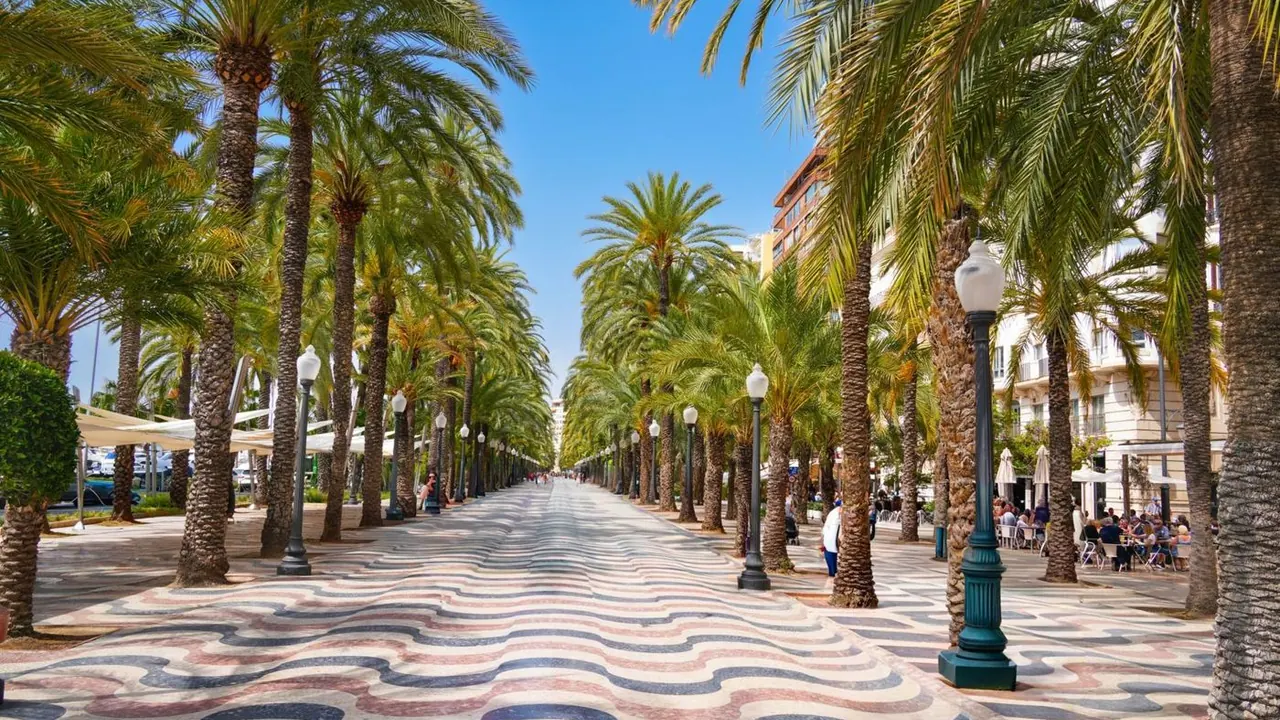
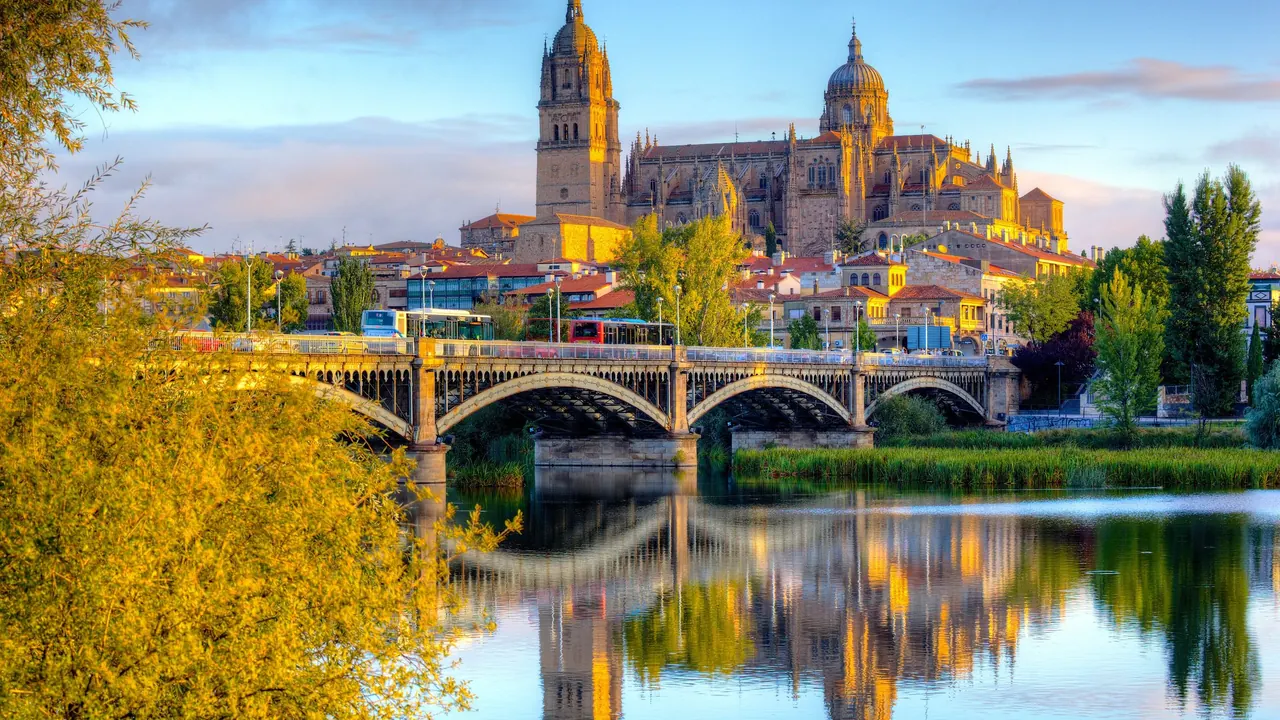
Photos: Alicante by Emilio Sánchez Hernández, Pexels License; Salamanca by Jiuguang Wang, CC BY-SA 3.0 ES, cropped.
Alicante or Salamanca?
Our verdict in twelve categories, each scored against the same fixed benchmark cities, and the climate month by month, so you can choose for your trip.
Choose Alicante for
- beaches
- families
- nature and the outdoors
Alicante is the choice for a sun and sea vacation with a city around it. You can swim at Postiguet below the castle in the morning, eat rice at lunch and catch the tram to Playa de San Juan in the afternoon. It is the easier of the two with children, it has more coast and mountain to explore, and it stays mild enough through winter to be worth a visit out of season. Its own sights are modest, so it works best as a base rather than a city you come to study.
Choose Salamanca for
- culture and sights
- getting around
- prices
Salamanca suits travellers who want a historic city to be the whole point of the trip. The golden sandstone old town, the Plaza Mayor, the university and the twin cathedrals give it far more to see than Alicante, and all of it sits within a short walk. Evenings are spent in tapas bars and student nightlife, and the walled and Romanesque towns of Old Castile make good day trips. There is no sea, though, and families looking for things laid on for children will find little.
Scoreboard
Twelve categories on one fixed scale from 0 to 100. The shaded stretch is the gap between the two.
Your match
Pick a travel style or drag the sliders, and both match scores follow your weighting.
Wins on beaches and families with your weighting.
Wins on culture and sights and getting around with your weighting.
What matters to you?
Category by category
What the scores mean for a trip.
Beaches & swimming
This is the widest gap between the two cities. Alicante is a real beach city: Postiguet is a short walk from the old town, the tram runs out to the 7km of fine sand at Playa de San Juan, and boats cross to the clear water around Tabarca. The sea stays swimmable for about five months of the year.
Salamanca is on the high plain, a long way from any coast. In the summer heat, locals go to municipal pools and river beaches on the Tormes, which are fine for an afternoon but no reason to choose the city.
Food & drink
Alicante has the edge, mostly because it has the sea. Its rice dishes, arroz a banda, black rice and the egg-crusted arroz con costra, are best eaten at a long lunch. The Mercado Central sells red prawns and mojama, and the old-town tapas bars are good for everyday eating.
Salamanca eats in a different way, standing at the bar counter. Ibérico ham from Guijuelo, hornazo, suckling pig and morucha beef make it a city of meat and charcuterie, eaten while moving between bars off the Plaza Mayor and Calle Van Dyck. It is generous and cheap, but the range is narrow and there is little seafood.
Culture & sights
Salamanca is far ahead. The whole old city is a World Heritage Site, and the Plaza Mayor, the Plateresque university façade, the Old and New Cathedrals and the Casa de las Conchas are a rare concentration of sights. Floodlit at night, the sandstone gives a second, quite different view of the same streets. Its museums, apart from Casa Lis, are minor.
Alicante's highlights are the Castillo de Santa Bárbara with its view over the bay, the whitewashed Barrio de Santa Cruz and the MARQ archaeology museum. They are pleasant, but they are things to do between swims rather than the main reason to come.
Nightlife
The two are fairly evenly matched, but the nights are different in kind. Alicante's nightlife follows the summer. It has small bars in El Barrio under the castle, dressier clubs around the marina and late beach terraces at San Juan, and the Hogueras festival in June brings several nights of fireworks and street parties.
Salamanca's nightlife follows the university term. From Thursday to Saturday, students and Spanish-language learners fill the bars around Calle Bordadores and Gran Vía and then move on to dance bars open past 3am. It is cheap and sociable, but it goes quiet in high summer, which is exactly when Alicante is at its busiest.
Nature & outdoors
Alicante offers more, and more of it is on the doorstep. You can walk the coastal path round Cabo de las Huertas, snorkel in the Tabarca marine reserve, kayak in the bay and watch flamingos on the Santa Pola salt lagoons, with the climbing crags at Sella and the peaks of Puig Campana within an hour.
Salamanca has little beyond the Tormes riverside paths close to town. Its best landscapes, the chestnut forests of the Sierra de Francia and the granite gorge of the Arribes del Duero, are an hour's drive away and need a car.
Day trips
Both make good bases, but in different directions. From Alicante, the trips mix coast and town: Elche's palm grove, the painted houses of Villajoyosa, white Altea and the rock-top village of Guadalest, with Valencia a train ride away.
From Salamanca, the trips are almost entirely historic: the walls of Ávila, the Romanesque churches of Zamora, the ramparts of Ciudad Rodrigo and the half-timbered villages of La Alberca and Mogarraz. These villages are harder to reach without a car than Alicante's coastal tram stops.
Good for families
Alicante is the clear choice with children. The shallow water at San Juan, a promenade made for pushchairs, the castle lift and the Tabarca boat fill the days, and the theme, water and marine parks near Benidorm are there if they want more.
Salamanca is welcoming and safe, and children enjoy hunting for the frog and the astronaut carved on its façades. Beyond that, there is no zoo, aquarium or beach, and the heat in summer and the cold in winter limit what families can do. It works better as a short stop on a longer trip.
Getting around
Salamanca is the easier to get around because almost everything is in one place. The pedestrianised old town takes about twenty minutes to cross, from the Plaza Mayor down to the Roman bridge, and most visitors never need a bus. The cobbles need some care with a pushchair.
Alicante's centre is also walkable, but the city spreads further along the coast. The tram helps here, running out to San Juan and on to Benidorm and Dénia, and trains run to Elche and Valencia. In both cities, the mountains are best reached by car.
Shopping & style
Neither city is a shopping destination, but Alicante has a little more. Avenida Maisonnave has department stores and chains, there are weekly markets with esparto baskets and ceramics, and Elche's shoe factory outlets are half an hour away.
Salamanca's best buys are ibérico ham, cheese and the silver filigree charro jewellery of the province. Beyond those, its pedestrian high streets offer the usual Spanish chains.
Affordability
Both are fairly cheap by Western European standards, but you save on different things. Salamanca's students keep tapas and drinks cheap, with a free tapa often served with a drink, and you will spend almost nothing on transport. On the other hand, the cathedrals, towers and university all charge admission.
In Alicante, many sights, including the castle grounds, are free, and set lunches are good value. Beach rooms are much more expensive in July and August, so it is cheapest from October to May.
Live music & performing arts
Neither city has much of a performing arts scene, and neither has an opera season. Alicante's offering centres on the Teatro Principal and the ADDA auditorium, home of the provincial symphony orchestra, with mainly Spanish-language theatre.
Salamanca has the Teatro Liceo, concerts in the university's historic halls, and the tunas, students in black capes singing under the Plaza Mayor arcades. You are more likely to hear music by chance as you walk around Salamanca than in Alicante.
Wellness & relaxation
Both are about the same for relaxation, and neither has a bathing culture of its own. Alicante's version of rest is the sun: a walk along the palm-shaded Explanada, a long lunch and a siesta, with the Roman-era springs at Archena an hour away.
Salamanca has Arab-style bath houses, the old balneario at Ledesma half an hour out and quiet cloisters such as San Esteban. These suit a slower vacation in town rather than one by the sea.
When should you go?
Pick your month. The climate figures are measured averages, not a forecast.
Alicante in July
Salamanca in July
Daytime high, °C
Rainfall in the month, mm
Temperature and rainfall are climate normals, averaged over the years shown. Alicante: 1991-2020 normals, Alicante (2.8 km from centre). Salamanca: 1991-2020 normals, Salamanca / Matacan (13.9 km from centre).
Alicante has a long warm season and mild winters. The sea is warm enough for swimming from June into October and reaches about 26°C in August, while July and August are hot enough that people plan their days around the midday heat. Rain is scarce all year and peaks lightly in September. Even January stays around 17°C with plenty of sunshine, which makes the cooler months good for walking and sightseeing.
Salamanca has a much stronger split between seasons, as you would expect up on the Meseta. Winters are cold and grey, with January highs near 9°C, while July climbs past 30°C and the hottest afternoons are hard going on the stone streets. Late spring, May and June, and September are the best months for walking the old town. October is its wettest month, and from November the cold sets in. In midwinter Alicante is far warmer; in high summer the two are similarly hot, but only Alicante has the sea to cool off in.
Which traveller are you?
On a beach and sun trip, Alicante wins easily. It has a city beach below the castle, the long sandy stretch at San Juan reached by tram, the island of Tabarca and the Costa Blanca coves. Salamanca, far inland, can offer only pools and river beaches.
For a culture and arts trip, Salamanca is clearly richer. It has a UNESCO-listed old town in golden stone, one of Europe's oldest universities, two cathedrals side by side and a run of convents and palaces. Alicante's castle and the MARQ museum fill only a day or two.
On a family trip with children, Alicante is the easier choice. It has shallow, calm beaches, a promenade made for scooters, the Tabarca boat, and theme and water parks near Benidorm. Salamanca is safe and compact, but children soon tire of its churches and colleges.
Before you go
| Measure | Alicante | Salamanca |
|---|---|---|
| Official language | Spanish | Spanish |
| Currency | Euro (EUR) | Euro (EUR) |
| Sockets | CF230 V, 50 Hz | CF230 V, 50 Hz |
| Driving side | Right | Right |
| Time zone | UTC+1, UTC+2 in summer | UTC+1, UTC+2 in summer |
| Emergency number | 112 | 112 |
| Elevation | 3 m | 798 m |
| Main airport | Alicante-Elche Miguel Hernández Airport (ALC)10 km from centre126 non-stop destinations | Adolfo Suárez Madrid–Barajas Airport (MAD)184 km from centre239 non-stop destinations |
| Public holidays this year | 13 days | 12 days |
By the numbers
| Measure | Alicante | Salamanca |
|---|---|---|
| City population | 366,221 | 146,110 |
| People per km² | 1,819 | 3,690 |
| Museums within 10 km | 8 | 13 |
| UNESCO World Heritage sites within 50 km | 2 | 1 |
| Swim season, months above 21 °C | 5 months | - |
Where else could you go?
Every comparison below shares a destination with this one, so you can follow Alicante or Salamanca somewhere new.
- Valenciavs Alicante
- Madridvs Salamanca
- Toledovs Salamanca
- Portovs Salamanca
- Coimbravs Salamanca
- Granadavs Alicante