Photos: Alicante by Emilio Sánchez Hernández, Pexels License; Seville by Tibor Kovacs, CC BY 2.0, cropped.
Alicante or Seville?
Our verdict in twelve categories, each scored against the same fixed benchmark cities, and the climate month by month, so you can choose for your trip.
Choose Alicante for
- beaches
- families
- nature and the outdoors
Alicante is the choice when the sea matters. Postiguet and Playa de San Juan are a short walk or tram ride from the centre. The coast and the mountains behind it give more to do outdoors, and it is the easier of the two with small children. Its own sights fill a couple of days, so it suits a relaxed vacation built around swimming, long rice lunches and the odd trip along the Costa Blanca.
Choose Seville for
- culture and sights
- live music and the arts
- shopping
For a trip built around history and atmosphere, Seville is much the stronger city. The Alcázar, the cathedral and the lanes of Santa Cruz make one of Europe's great old centres. Flamenco is performed every night, the tapas go deeper, and Córdoba, Jerez and Cádiz are easy days out by train. The trade-off is that there is no beach, and the summer heat is punishing.
Scoreboard
Twelve categories on one fixed scale from 0 to 100. The shaded stretch is the gap between the two.
Your match
Pick a travel style or drag the sliders, and both match scores follow your weighting.
Too close to call, 1 point apart
Wins on beaches and families with your weighting.
Wins on culture and sights and live music and the arts with your weighting.
What matters to you?
Category by category
What the scores mean for a trip.
Beaches & swimming
This is where the two cities differ most. Alicante is a beach city. Postiguet is a few minutes from the old town, the tram runs out to the 7km of fine sand at Playa de San Juan, and the boat to Tabarca or the coves towards Villajoyosa add variety. The catch is the crowds in July and August.
Seville has no beach of its own. A day by the sea means a car or a coach to Matalascañas or Mazagón on the Atlantic, and in town a swim means a hotel rooftop pool or a municipal pool. Visitors who want both usually add a few nights on the coast.
Food & drink
Both cities eat well and locally, but Seville has the edge for anyone who travels to eat. Its tapas are the main event: an evening spent standing at the counters of tile-fronted bars in El Arenal and Triana, ordering fried fish and pork cheek with a glass of manzanilla or fino.
Alicante's strength is rice, eaten at long lunches rather than on a tapas round: arroz a banda, black rice and arroz con costra, with red prawns at the Mercado Central. The tapas streets near its market are good for everyday eating, but they lack the depth of Seville's bars.
Culture & sights
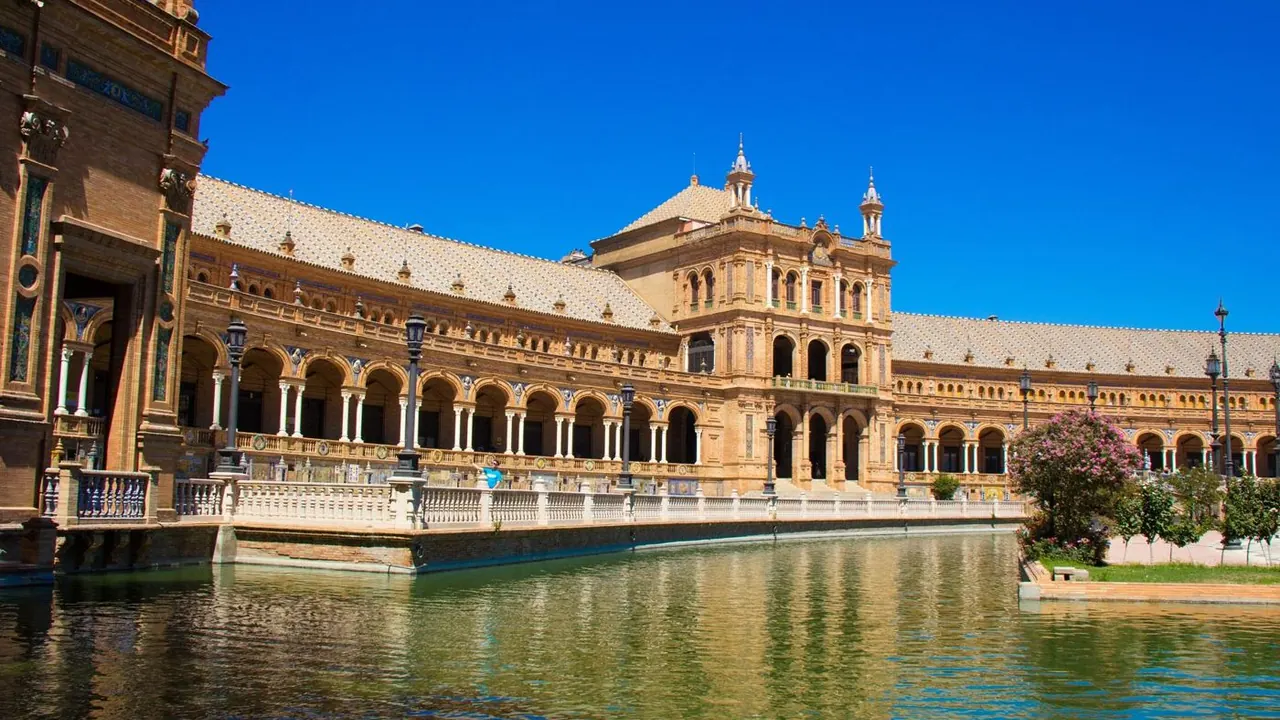
Seville is in a different league. The Real Alcázar, the cathedral with the Giralda and the Archivo de Indias form a UNESCO-listed core. Beyond them are Plaza de España, Casa de Pilatos and the Murillos of the Museo de Bellas Artes, enough for three or four days.
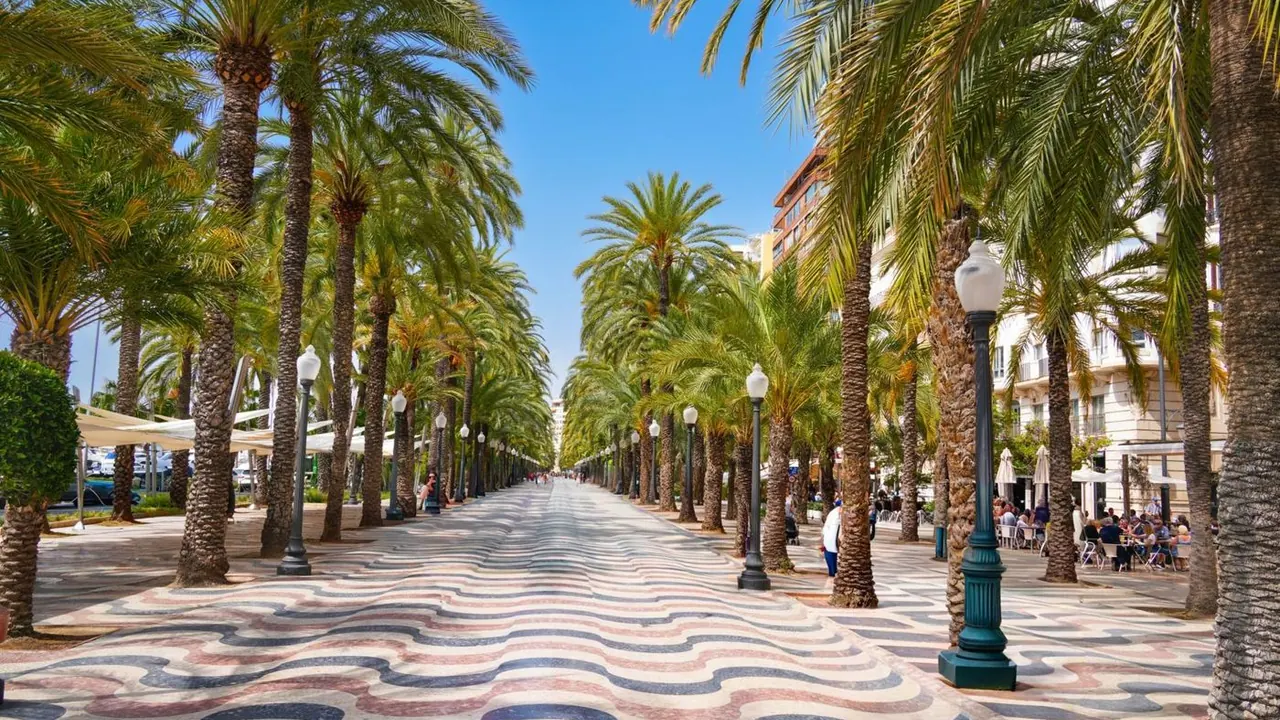
Both cities have a whitewashed quarter called Santa Cruz, but Alicante's is a quiet hillside of flowerpots and steps rather than the setting for great monuments. Above it, the Castillo de Santa Bárbara looks over the bay. Add the mosaic Explanada and the well-presented MARQ, and two days covers Alicante's sights.
Nightlife
Evenings start late and run long in both, and neither suits serious clubbing. The difference is the setting. In Alicante the night moves from the small bars on the steps of El Barrio to dressier bars and clubs by the marina and, in summer, the beach bars at San Juan. The Hogueras in late June are the high point of its year.
Seville's evenings spread across its squares and neighbourhoods: the mixed, LGBT-friendly Alameda de Hércules, Triana and the Alfalfa, and open-air bars along the river once the summer heat breaks. Its big all-nighter is the April Fair in the casetas.
Nature & outdoors
Alicante has more on its doorstep. The Cabo de las Huertas path, snorkelling and diving in the Tabarca marine reserve and sailing in the bay are all close. Within an hour inland, Puig Campana and the Sierra de Aitana offer real mountain hiking, and there is rock climbing at Sella.
Seville sits in flat farmland, so nature near town means María Luisa Park and the river. Its great asset is Doñana, one of Europe's great wetlands, about an hour and a half away, and the Sierra de Aracena has gentler walking.
Day trips
Córdoba alone gives Seville the stronger day trips. Its Great Mosque is under an hour away by high-speed train. Jerez, Cádiz, Carmona and the Roman ruins of Itálica are all within easy reach, and the white villages lie beyond them.
From Alicante, the best trip is to Elche and its UNESCO palm grove, half an hour away. Next come the coastal tram to Villajoyosa and Altea and the castle village of Guadalest. Valencia is about two hours away by train, and Tabarca makes a gentle half day.
Good for families
Alicante is the easier vacation with children, mainly because of the sea. The shallow water at San Juan, the short walk to Postiguet and a promenade made for scooters cover most days. The theme, water and marine parks near Benidorm add the big outings.
Seville has María Luisa Park with its rowing boats, the maze in the Alcázar gardens, a theme park and an aquarium. In July and August, though, it often passes 40°C, which makes sightseeing with small children hard work. Both cities are relaxed about children out late in the evening.
Getting around
Seville is a little easier to get around. Its flat, partly pedestrianised centre puts the cathedral, Triana and Plaza de España within a half-hour walk. Bike lanes and a public bike scheme make cycling genuinely useful, though walking at midday in summer is hard going.
Alicante's centre is smaller, with the old quarter, port, market and beach about fifteen minutes apart. Its asset is the coastal tram to San Juan, Benidorm and Dénia, slow but scenic, while the inland mountains need a car.
Shopping & style
Neither is a shopping destination, but Seville gives more reason to browse. Triana's pottery workshops sell hand-painted tiles. The streets around Calle Sierpes and Calle Cuna sell flamenco dresses, mantillas, fans and guitars made for locals going to the April Fair, and there is the Thursday flea market on Calle Feria.
Alicante's shopping is more practical. Chain stores line Avenida Maisonnave, the Mercado Central sells turrón and saffron to take home, and the shoe outlets of Elche are half an hour away.
Affordability
Day-to-day costs are similar, with good-value tapas and wine in both and centres you can walk. The difference is in when rooms are expensive. In Alicante, beach rooms peak in July, August and during the Hogueras, and are far cheaper from October to May, when the weather stays mild.
Seville runs the other way. The summer heat makes rooms good value, while Holy Week and the April Fair push rates up steeply. Tickets for the Alcázar and the cathedral are an extra in Seville, whereas Alicante's castle grounds are free or nearly so.
Live music & performing arts
Seville wins clearly, and the reason is flamenco. It is performed every night in the tablaos of Santa Cruz and Triana and in the peñas where aficionados gather. The Teatro de la Maestranza stages opera in the city where Carmen and The Barber of Seville are set.
Alicante has the Teatro Principal and the ADDA concert hall, home to the provincial symphony orchestra, but the programme is small and mostly in Spanish, with no local tradition to travel for.
Wellness & relaxation
Neither city has a bathing culture of its own, and rest in both comes down to slow days, long lunches and the afternoon siesta. In Alicante, that means sun and sea and a walk along the palm-shaded Explanada. The thermal springs of Archena and Fortuna, used since Roman times, are about an hour's drive away.
Seville has Arab-style bath houses in old mansions, with warm and cold pools under arched ceilings, and the cool, quiet courtyards of the Alcázar gardens. The drawback is that its narrow streets are noisy at night.
When should you go?
Pick your month. The climate figures are measured averages, not a forecast.
Alicante in July
Seville in July
Daytime high, °C
Rainfall in the month, mm
Temperature and rainfall are climate normals, averaged over the years shown. Alicante: 1991-2020 normals, Alicante (2.8 km from centre). Seville: 1991-2020 normals, Sevilla / San Pablo (8.1 km from centre).
Alicante has the longer comfortable season. Spring and autumn are mild for walking, and the sea is warm enough to swim from June into October, reaching about 26°C in August. Summer is dry and very sunny, with highs around 31°C. September brings the first rain of note, and winter days stay mild enough for long walks, with highs in the high teens.
Seville is at its best from March to May and again in October, when the days are warm and the streets are pleasant to walk. July and August average 36°C with almost no rain, far too hot for sightseeing in the middle of the day. Late autumn and winter are cooler and much wetter than on the coast, with December the wettest month at around 78mm, though days still reach the mid-teens.
Which traveller are you?
On a beach and sun trip, Alicante wins outright. Postiguet sits below the castle in the city centre, the tram reaches the long sands of San Juan, and Tabarca adds clear water. From Seville, the nearest Atlantic beach is over an hour's drive away.
For a culture and arts trip, Seville is the obvious pick. The Alcázar, the cathedral and the Giralda, the Museo de Bellas Artes and nightly flamenco in tablaos and peñas fill several days, while Alicante's castle and the MARQ take about two.
On a family trip with young children, Alicante is the better base. Days can be built around the sea instead of monuments, and the castle lift and the boat to Tabarca make easy outings. Seville suits older children better, and outside high summer.
Before you go
| Measure | Alicante | Seville |
|---|---|---|
| Official language | Spanish | Spanish |
| Currency | Euro (EUR) | Euro (EUR) |
| Sockets | CF230 V, 50 Hz | CF230 V, 50 Hz |
| Driving side | Right | Right |
| Time zone | UTC+1, UTC+2 in summer | UTC+1, UTC+2 in summer |
| Emergency number | 112 | 112 |
| Elevation | 3 m | 18 m |
| Main airport | Alicante-Elche Miguel Hernández Airport (ALC)10 km from centre126 non-stop destinations | Seville Airport (SVQ)9 km from centre96 non-stop destinations |
| Public holidays this year | 13 days | 12 days |
By the numbers
| Measure | Alicante | Seville |
|---|---|---|
| City population | 366,221 | 689,423 |
| People per km² | 1,819 | 4,896 |
| Museums within 10 km | 8 | 24 |
| UNESCO World Heritage sites within 50 km | 2 | 1 |
| Swim season, months above 21 °C | 5 months | - |
Where else could you go?
Every comparison below shares a destination with this one, so you can follow Alicante or Seville somewhere new.