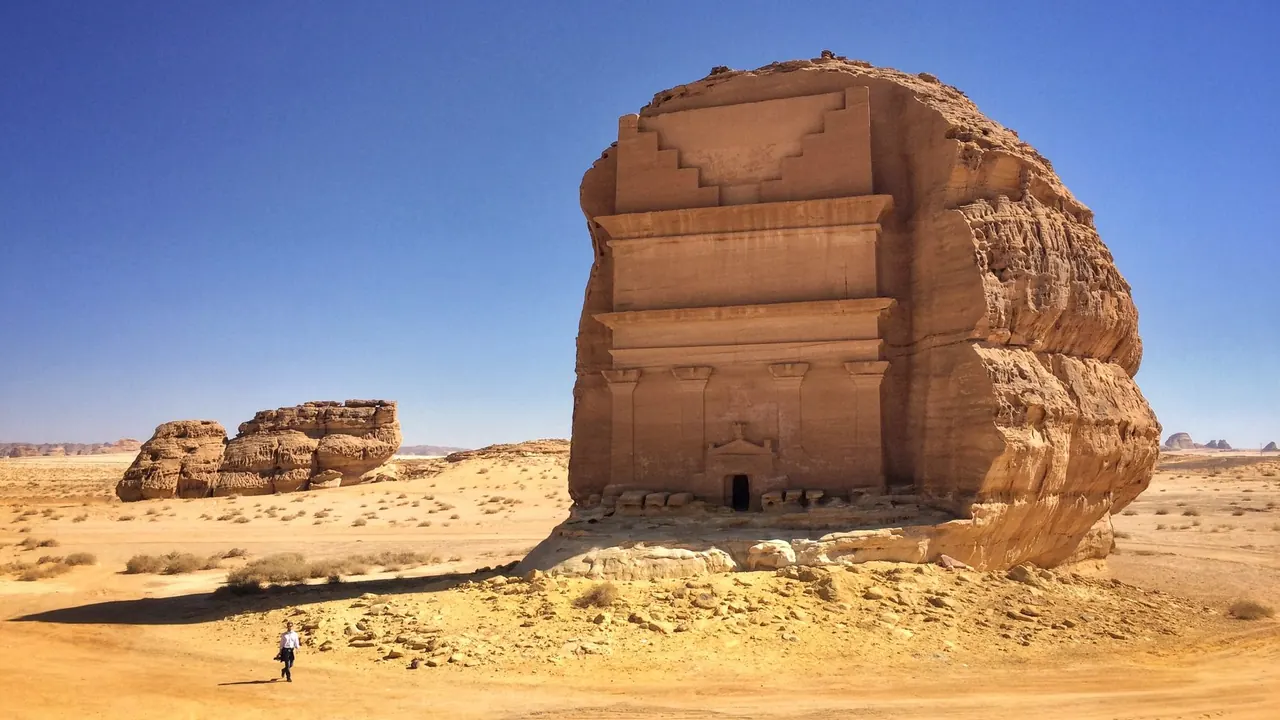
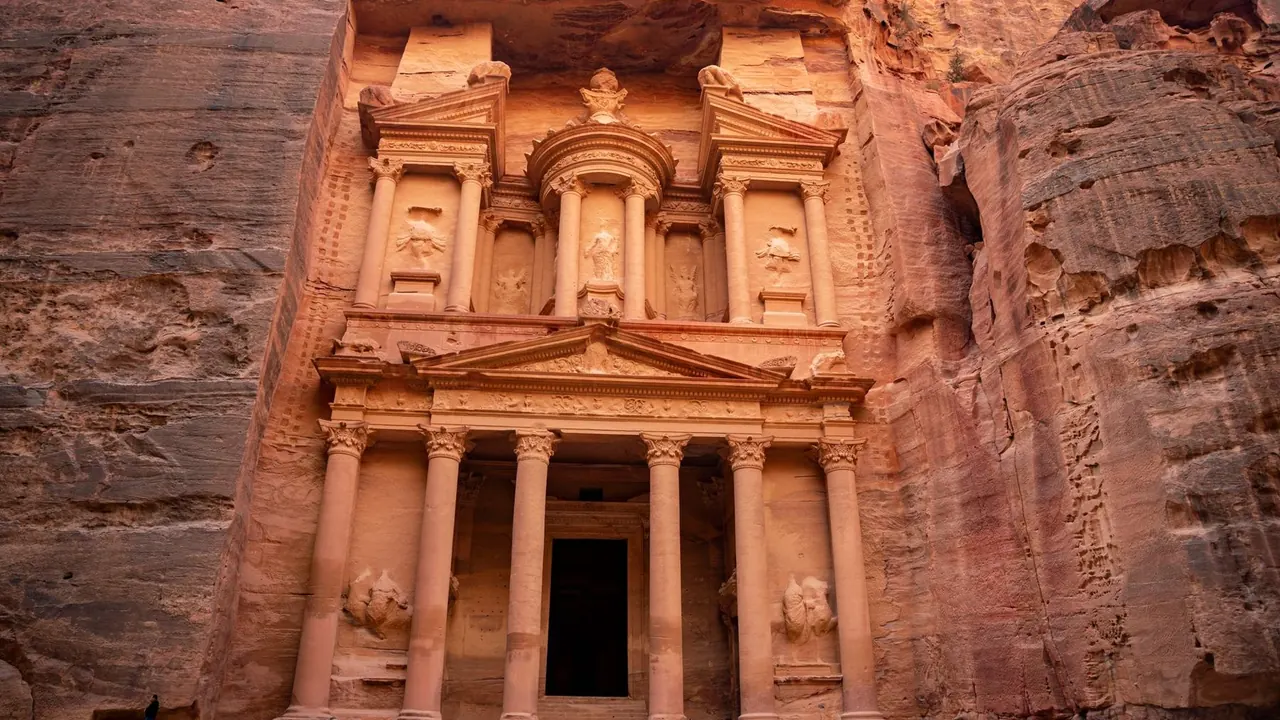
Photos: AlUla by Richard.hargas, CC BY-SA 4.0, cropped; Petra by Yasir Gürbüz, Pexels License.
AlUla or Petra?
Our verdict in twelve categories, each scored against the same fixed benchmark cities, and the climate month by month, so you can choose for your trip.
Choose AlUla for
- live music and the arts
- wellness
- families
AlUla suits travellers who want a few grand sights wrapped in comfort: resort stays, spa afternoons, balloon flights over the palm valley and, in winter, a concert at Maraya. It is calmer, gentler on families with older children and much easier to unwind in. In return it costs a good deal more, and every day has to be planned around a car, a driver or a shuttle.
Choose Petra for
- prices
- culture and sights
- day trips
Petra is the stronger pick for anyone who cares most about the ancient city itself and the walking that goes with it. The rock-cut city is bigger and more famous than Hegra. Trails through the Sharah mountains start right at the gate, and Wadi Rum, Dana and the Crusader castles are close enough for day trips. Rooms and meals cost less, although the entry fee is steep and the days are physically hard.
Scoreboard
Twelve categories on one fixed scale from 0 to 100. The shaded stretch is the gap between the two.
Your match
Pick a travel style or drag the sliders, and both match scores follow your weighting.
Too close to call, 1 point apart
Wins on live music and the arts and wellness with your weighting.
Wins on prices and culture and sights with your weighting.
What matters to you?
Category by category
What the scores mean for a trip.
Beaches & swimming
You can't swim in the sea from either place. AlUla's desert camps and resorts often have good pools, which help in the warmer months. In Wadi Musa only some hotels have one.
The real difference is the Red Sea. From Petra, Aqaba and its reefs close to shore are about two hours south, which works as a separate stop on a tour of Jordan. AlUla's coast lies beyond the mountains, too far to fit into the trip.
Food & drink
AlUla eats a little better, mainly because its resorts run polished, chef-led kitchens using oasis produce. The Old Town terraces add Saudi and Levantine grills and cardamom coffee on cool evenings, and dates from the palm groves turn up everywhere.
Wadi Musa near Petra is plainer but more casual: hotel buffets, mezze, mansaf, and zarb cooked in an underground pit, plus falafel counters and knafeh from the sweet shops. A Bedouin meal in the hills or a cooking class is the high point. Neither town is worth the trip for its food alone.
Culture & sights
Both are built around Nabataean tombs, but Petra is the greater site. The walk through the Siq to the Treasury, then on past the Royal Tombs, the theatre and the colonnaded street and up the steps to the Monastery, fills two or three days. The Petra Museum and Little Petra add context.
Hegra at AlUla appeals in a different way: its carved tombs stand alone in open desert rather than packed into a gorge. Dadan, the inscriptions of Jabal Ikmah and the mud-brick Old Town take the story back to older kingdoms. But the sights are fewer and further apart, and mostly seen on guided visits.
Nightlife
Neither town is somewhere to go out, and neither has a club. The difference lies in how the evening is spent. AlUla serves no alcohol at all, so after dark the pull is outdoors: an evening wander through the lit-up Old Town, then a drive out to the dark-sky sites for the stars. In the winter season, events keep the valley up later than you might expect.
Petra is the only one of the two where you can order a drink, at a handful of hotel bars and one or two places that serve beer to visitors. That is as far as it goes. Nothing stays open late, most people turn in early before another long day on the trails, and anyone after a real night out should save it for Amman.
Nature & outdoors
Petra has the edge for walkers. Trails start inside the archaeological park, leading to the High Place of Sacrifice, through Wadi Muthlim and up Jebel Haroun, and the back route from Little Petra to the Monastery is a classic. Dana is about an hour away and Wadi Rum about ninety minutes.
AlUla's landscape is more open and better suited to activities than long hikes. There is Elephant Rock on its sand plain, via ferrata routes, balloon flights over the palm valley, the lava plateau of Harrat Uwayrid, and the Sharaan reserve with its ibex and Arabian leopards. Summer is hard going in both, but AlUla's heat is much harsher.
Day trips
Petra has more within a reasonable drive. Shobak castle and the village of Dana are about forty minutes north, and Kerak lies further up the King's Highway. Wadi Rum and Aqaba are both two hours or less to the south. A road trip through southern Jordan links them easily.
From AlUla the choice is Tayma or Khaybar, each about two hours across open desert, with an old well, city walls and a fortress on basalt. Both are rewarding but long days, and beyond them there is little else.
Good for families
AlUla is the easier of the two with children, although both suit older children better than toddlers. Ziplines, camel rides, scrambling over rocks and stargazing fit into calm days, broken up by afternoons at the resort pool.
Petra asks more of young legs. There are long walks over sand and rock with little shade, a hard climb to the Monastery, and pushchairs are useless off the main path. The camel and donkey rides that tempt families are worth choosing with care, and Wadi Musa has no parks or play areas.
Getting around
Petra is the simpler base. You see the archaeological park on foot, which makes for a long day but needs no planning. A taxi links the hillside hotels to the gate, and buses run to Amman and Aqaba.
AlUla's hotels and sites are spread along a long valley, often 20km or more apart, and there is no public transport. Hegra and the other main sites are reached by ticketed shuttles from visitor centres, and everything else needs a hire car, a driver or a tour, so each day starts with sorting out transport.
Shopping & style
Neither is a place for a shopping trip, but what you can buy differs. AlUla's Old Town has a few small craft and design shops selling woven goods, pottery, perfumes and work from the local arts and crafts school, and the best thing to take home is dates from the farms. Petra offers souvenir stalls along the trails with Bedouin silver and bead jewellery and bottles of sand art, and the women's cooperative shops in Wadi Musa have the best buys.
Affordability
Petra costs considerably less overall. Its one big expense is the entry fee, among the steepest anywhere, though a multi-day ticket or a combined pass bought before arrival eases it. Beyond that, Wadi Musa has simple guesthouses, good mid-range hotels and cheap falafel and shawarma.
AlUla leans heavily towards luxury resorts and upmarket camps, winter rates run high, and the main sites are visited on ticketed guided tours. Add a hire car or driver and the bill climbs fast. Only Old Town meals and petrol are easy on the budget.
Live music & performing arts
AlUla offers far more, but only in season. Maraya, the mirrored concert hall in a desert canyon, brings international singers and orchestras during the winter festival months, along with outdoor music and traditional Saudi dance among the rocks. If live performance matters to you, time the visit to that calendar.
Petra has one fixture, Petra by Night, when candles in paper bags line the Siq and Bedouin musicians play the rababa and flute in front of the Treasury. Beyond that there are only hotel dinner shows and songs around a campfire.
Wellness & relaxation
AlUla is the place to slow down. Its resorts and camps are designed for rest, with spas, sunrise yoga, pools among the rocks and evenings by a fire, and the valley is silent at night. All of it depends on the resort you book.
At Petra, wellness means recovering rather than retreating. The Turkish-style bathhouses of Wadi Musa offer steam, a scrub and a massage for tired legs, and some larger hotels have small spas. The days themselves are too demanding to feel restful.
When should you go?
Pick your month. The climate figures are measured averages, not a forecast.
AlUla in July
Petra in July
Daytime high, °C
Rainfall in the month, mm
Where the figures come from
AlUla has no rain gauge within 25 km of the centre, so its rainfall comes from a gridded climate dataset read at the city rather than from a gauge further away.
Petra's temperatures are measured 34 km from the centre, at Ma'An.
Petra's station stands 219 m above the city centre, so the centre is likely a little warmer than the figures say.
Petra has no rain gauge within 25 km of the centre, so its rainfall comes from a gridded climate dataset read at the city rather than from a gauge further away.
Temperature and rainfall are climate normals, averaged over the years shown. AlUla: 2010-2025 (rainfall 1991-2020) normals, Alula / Al ‘Ulá (23.7 km from centre). Petra: 1991-2020 normals, Ma'An (33.9 km from centre).
AlUla is a winter destination. From November to March the days are warm and dry. December and January highs of around 23°C are ideal for walking the Old Town and the tomb fields. By May the heat is building, and from June to September highs reach 43°C, leaving only the early morning and the last light for anything outdoors. Rain barely matters at any time of year.
Petra is cooler and wetter. Its winter is chilly, with January highs near 14°C and about 45mm of rain, so December to February can mean cold nights and damp trails. April, at around 25°C, and October are the best months for long hikes, with plenty of sunshine and almost no rain. Petra's summer is hot but milder than AlUla's. Neither place has a sea, so swimming in any month means a pool.
Which traveller are you?
For a culture and arts trip, choose Petra. AlUla rewards curiosity with older kingdoms and, in winter, a concert at Maraya, but Petra lets you roam one great ancient city at your own pace, finding tombs well away from the main path.
On a relaxing and wellness trip, AlUla is the clear choice, because rest is the point of the stay and sightseeing can be kept to a few short outings. Petra asks for early starts and long climbs, and most visitors leave with aching legs.
On a tight budget, Petra is far kinder. AlUla offers little below luxury, and every outing needs paid transport. At Petra the ticket is the big cost. After that, a guesthouse, cheap street food and your own feet cover the rest.
Before you go
| Measure | AlUla | Petra |
|---|---|---|
| Official language | Arabic | Arabic |
| Currency | Saudi Riyal (SAR) | Jordanian Dinar (JOD) |
| Sockets | G60 Hz | BCFGJ230 V, 50 Hz |
| Driving side | Right | Right |
| Time zone | UTC+3 | UTC+3 |
| Emergency number | 112 or 911 | 911 |
| Elevation | 692 m | 850 m |
| Main airport | Al-Ula International Airport (ULH)24 km from centre8 non-stop destinations | King Hussein International Airport (AQJ)90 km from centre5 non-stop destinations |
By the numbers
| Measure | AlUla | Petra |
|---|---|---|
| City population | 32,413 | - |
| Museums within 10 km | 2 | 2 |
| UNESCO World Heritage sites within 50 km | 1 | 1 |
Where else could you go?
Every comparison below shares a destination with this one, so you can follow AlUla or Petra somewhere new.