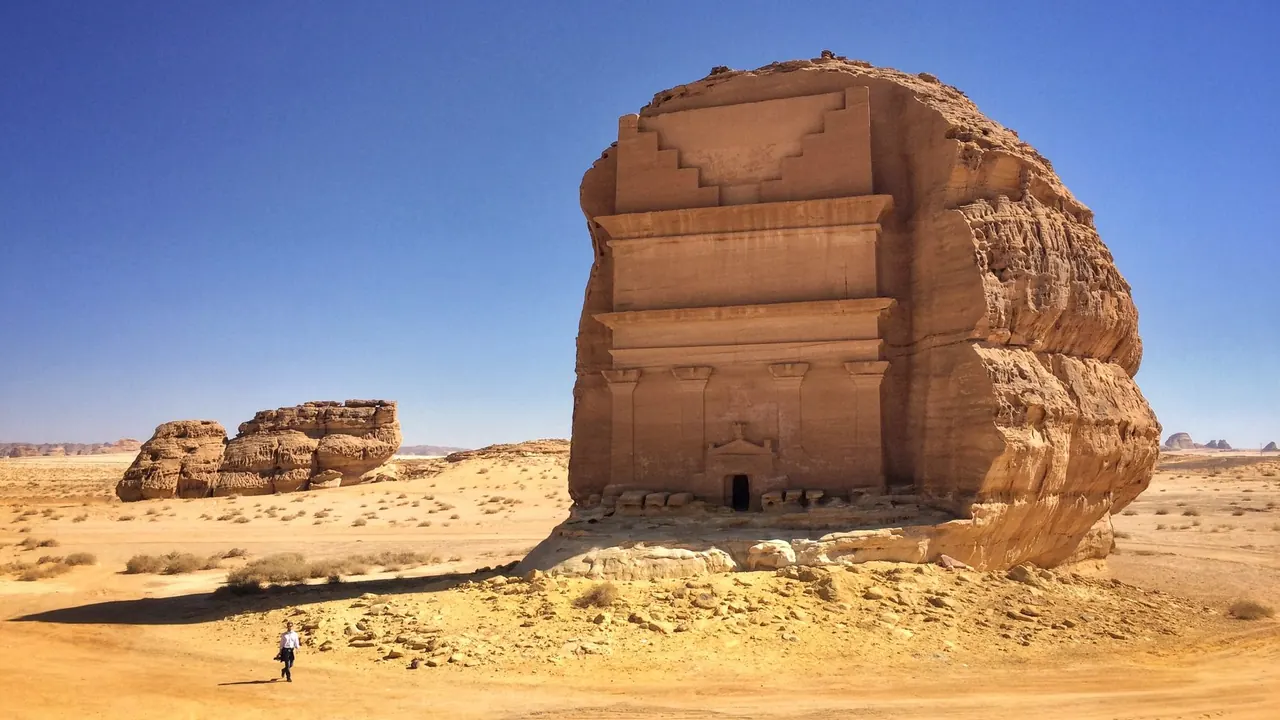
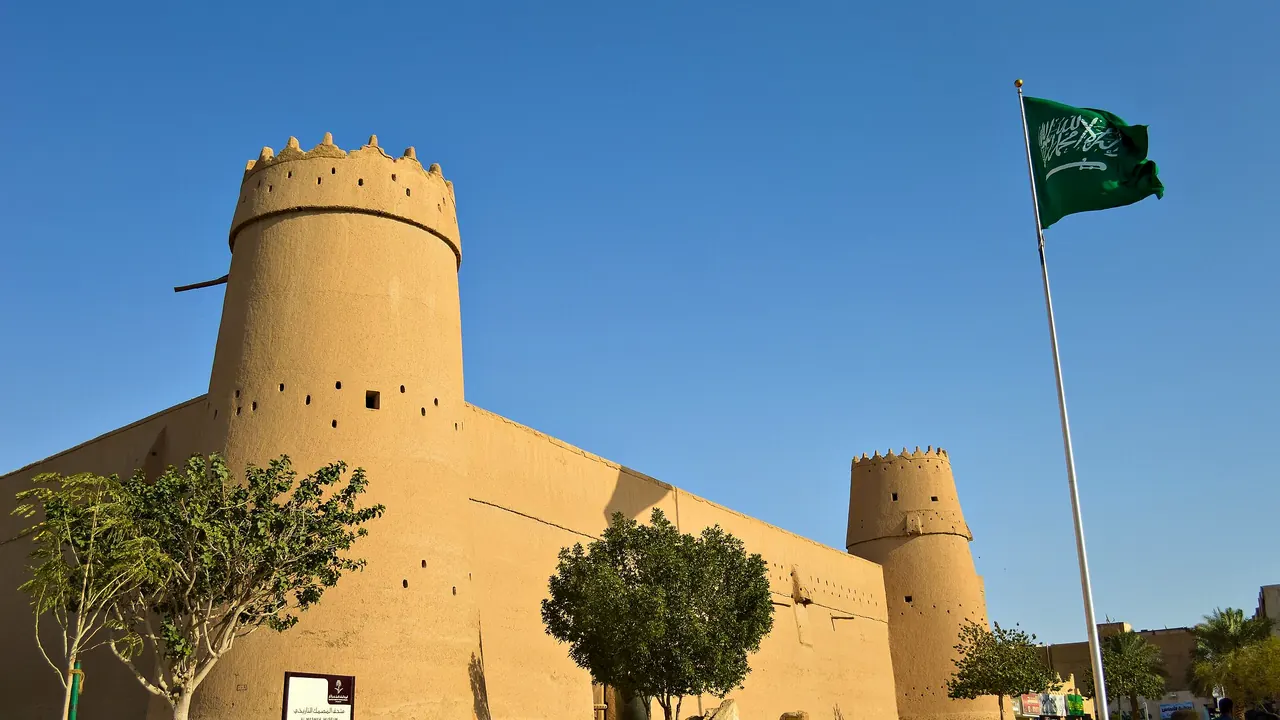
Photos: AlUla by Richard.hargas, CC BY-SA 4.0, cropped; Riyadh by Francisco Anzola, CC BY 2.0, cropped.
AlUla or Riyadh?
Our verdict in twelve categories, each scored against the same fixed benchmark cities, and the climate month by month, so you can choose for your trip.
Choose AlUla for
- nature and the outdoors
- wellness
- culture and sights
AlUla suits travellers who come for landscape and ancient history and are prepared to pay for them. The Nabataean tombs of Hegra, the sandstone canyons and some of the darkest night skies in the region fill a few days of guided visits, hiking and quiet resort time. It is best for couples and families with older children who want open space rather than a city.
Choose Riyadh for
- shopping
- food and drink
- prices
If you want more to do between the sights, Riyadh is the better choice. It has better food and far better shopping, and it is cheaper and easier to get around. Diriyah and the National Museum cover the history, and the coffee shops and entertainment zones stay busy late. It works for a short break, a stopover, or anyone who wants to see a Saudi city rather than the desert.
Scoreboard
Twelve categories on one fixed scale from 0 to 100. The shaded stretch is the gap between the two.
Your match
Pick a travel style or drag the sliders, and both match scores follow your weighting.
Too close to call, 2 points apart
Wins on nature and the outdoors and wellness with your weighting.
Wins on shopping and food and drink with your weighting.
What matters to you?
Category by category
What the scores mean for a trip.
Beaches & swimming
Neither city is anywhere near the water. AlUla lies far inland, with mountains between it and the Red Sea, and Riyadh is around 400km from the Gulf, so in both places swimming means a pool. The difference is the setting: AlUla's desert camps and resorts have pools set among the sandstone, while Riyadh also has water parks and hotel day passes, which give a family more choice.
Food & drink
Riyadh is the better place to eat, because eating out is the city's main way of spending an evening. Najdi platters of kabsa, mandi and jareesh sit alongside Lebanese, Yemeni, Turkish and South Asian kitchens, and the specialty coffee shops of Olaya give it a coffee culture AlUla cannot match.
In AlUla, dining mostly means your resort's restaurant or the terraces of the Old Town. Its strength is the oasis produce, dates and citrus from the farms, but the choice is narrow and some kitchens close outside the season.
Culture & sights
AlUla's ancient sites are on a different scale. Hegra's hundred-plus Nabataean tombs stand alone in open desert, and with the lion tombs of Dadan and the inscribed canyon walls of Jabal Ikmah they take you back to kingdoms far older than the Saudi state. The abandoned mud-brick Old Town completes the picture.
Riyadh's heritage is much younger and centres on the founding of the Saudi state, at At-Turaif in Diriyah, Masmak Fort and the Murabba Palace. Its advantage is the National Museum, a well-presented account of Arabian history with no real equivalent in AlUla.
Nightlife
Neither city has bars or clubs, so anyone looking for a drink or a dance floor should go elsewhere. What differs is the kind of evening.
AlUla's evenings are quiet: dinner, a walk through the lit lanes of the Old Town and stargazing at dark-sky sites outside town. Riyadh has a bit more going on, with coffee shops, dessert cafés, malls and entertainment zones busy past midnight, and the occasional alcohol-free club night.
Nature & outdoors
AlUla is one of the great desert landscapes of the region and offers far more to do outdoors. Sandstone cliffs, palm groves, Elephant Rock, the lava plateau of Harrat Uwayrid and the canyons of the Sharaan reserve are the setting for hikes, via ferrata routes, balloon flights and camel rides.
Around Riyadh, the outdoors comes down to one big excursion, the Edge of the World escarpment two hours away by four-wheel drive, plus dune driving and camps east of the city and the green corridor of Wadi Hanifah. These are a few good outings, not a reason to go.
Day trips
Neither city has much within reach, and their best outings are alike: old oasis settlements about two hours away across the desert. From AlUla these are Tayma, with its great stone well and walls, and Khaybar, with its fortress on a basalt outcrop, each a full guided day. From Riyadh the trip is to the restored mud-brick village of Ushaiger and the old Najdi quarter of Shaqra next to it, which fit easily into a single outing.
Good for families
Children are welcome in both, and in both the cooler months are the only sensible time to bring them. The difference is in what they will do. AlUla is an outdoor adventure for older children, with rock scrambling, ziplines, camel rides and the tombs of Hegra, but nothing built for younger ones.
Riyadh has what AlUla lacks: a zoo, plus indoor amusement parks and ice rinks inside the malls, which also give shelter from the heat. The catch is that almost everything needs a car or taxi.
Getting around
Neither is a walking city, but Riyadh is clearly easier to get around. A driverless metro runs along the main corridors and out to the airport, and ride-hailing apps cover the rest, so you can manage without hiring a car.
AlUla has no public transport in the usual sense. Its sights lie 20km or more apart along the valley, the archaeological sites are reached by ticketed shuttles, and everything else needs a hire car, a driver or a tour, so each day has to be planned around transport.
Shopping & style
Riyadh is a proper shopping city and AlUla is not. The large malls of the northern districts and the luxury floors of the Kingdom Centre carry international fashion, perfume houses sell oud and Arabian scents, and Souq Al Zal near the old centre sells carpets, daggers and coffee pots, busiest in the evening.
In AlUla the choice is a handful of craft and design shops in the Old Town selling weaving, pottery and local perfume, plus dates from the oasis farms to take home.
Affordability
Riyadh is the cheaper of the two, though neither is a bargain. Its hotels are priced for business travellers, but simple local and South Asian eateries, low metro fares and free or modest entry to the main museums and heritage sites keep costs down.
AlUla costs considerably more. Most rooms are in luxury resorts and tented camps, the main sites are seen on paid guided tours, and getting around means a hire car or a driver, so the bill grows quickly even before meals.
Live music & performing arts
Both put on most of their performances in a winter season and have little the rest of the year, so when you go matters more than which city you choose. AlUla's draw is Maraya, the mirror-clad concert hall in a desert canyon, along with music and traditional Saudi dance staged among the rocks. Riyadh holds big concerts in arenas and at large outdoor festivals, and it is where you can see the ardah, the Najdi sword dance with drums and poetry, at national celebrations.
Wellness & relaxation
AlUla is far better for unwinding. The desert silence, sunrise yoga, spas, pools set among the rocks and evenings by a fire under a dark sky make the whole stay restful, as long as you book a resort that offers them.
In Riyadh, wellness means a hotel spa, often with hammam-style treatments, in a hot city full of traffic. The quiet moments come from getting out of the city, to a desert camp or the palm groves around Diriyah on a winter evening.
When should you go?
Pick your month. The climate figures are measured averages, not a forecast.
AlUla in July
Riyadh in July
Daytime high, °C
Rainfall in the month, mm
Where the figures come from
AlUla has no rain gauge within 25 km of the centre, so its rainfall comes from a gridded climate dataset read at the city rather than from a gauge further away.
Temperature and rainfall are climate normals, averaged over the years shown. AlUla: 2010-2025 (rainfall 1991-2020) normals, Alula / Al ‘Ulá (23.7 km from centre). Riyadh: 1991-2020 normals, Riyadh (8.9 km from centre).
Both cities follow the same desert calendar. They are pleasant from November to March and scorching from May to September, when daytime highs reach about 43°C in each and time outside shrinks to the early morning and after dark. AlUla is slightly warmer in midwinter, at around 23°C in January, which is ideal for hiking and visiting the tombs, and it stays almost dry all year. By October and April both are already hot enough that the pool becomes part of each day.
Riyadh is a little cooler in midwinter, at about 21°C in January, and nights in the desert around it get cold. It also gets more of the region's rain, mostly in March and April, with around 24mm in April. The sun shines a lot in every month.
Which traveller are you?
For an outdoors trip, base yourself in AlUla and give it several days between October and April, setting out at first light and resting through the heat of midday. Riyadh offers one memorable desert excursion, not a whole trip outside.
On a shopping trip, stay in Riyadh and set aside a day or two for it. Use a ride-hailing app, because you will go from mall to mall by car. In AlUla, shopping is an hour's browse in the Old Town.
On a tight budget, Riyadh is the realistic choice, because you can see it on your own without a guide or a hire car. If you still want AlUla, make it a short, carefully planned extra rather than your base.
Before you go
| Measure | AlUla | Riyadh |
|---|---|---|
| Official language | Arabic | Arabic |
| Currency | Saudi Riyal (SAR) | Saudi Riyal (SAR) |
| Sockets | G60 Hz | G60 Hz |
| Driving side | Right | Right |
| Time zone | UTC+3 | UTC+3 |
| Emergency number | 112 or 911 | 112 or 911 |
| Elevation | 692 m | 612 m |
| Main airport | Al-Ula International Airport (ULH)24 km from centre8 non-stop destinations | King Khalid International Airport (RUH)36 km from centre117 non-stop destinations |
By the numbers
| Measure | AlUla | Riyadh |
|---|---|---|
| City population | 32,413 | 7,009,100 |
| People per km² | - | 3,898 |
| Museums within 10 km | 2 | 5 |
| UNESCO World Heritage sites within 50 km | 1 | 1 |
Where else could you go?
Every comparison below shares a destination with this one, so you can follow AlUla or Riyadh somewhere new.