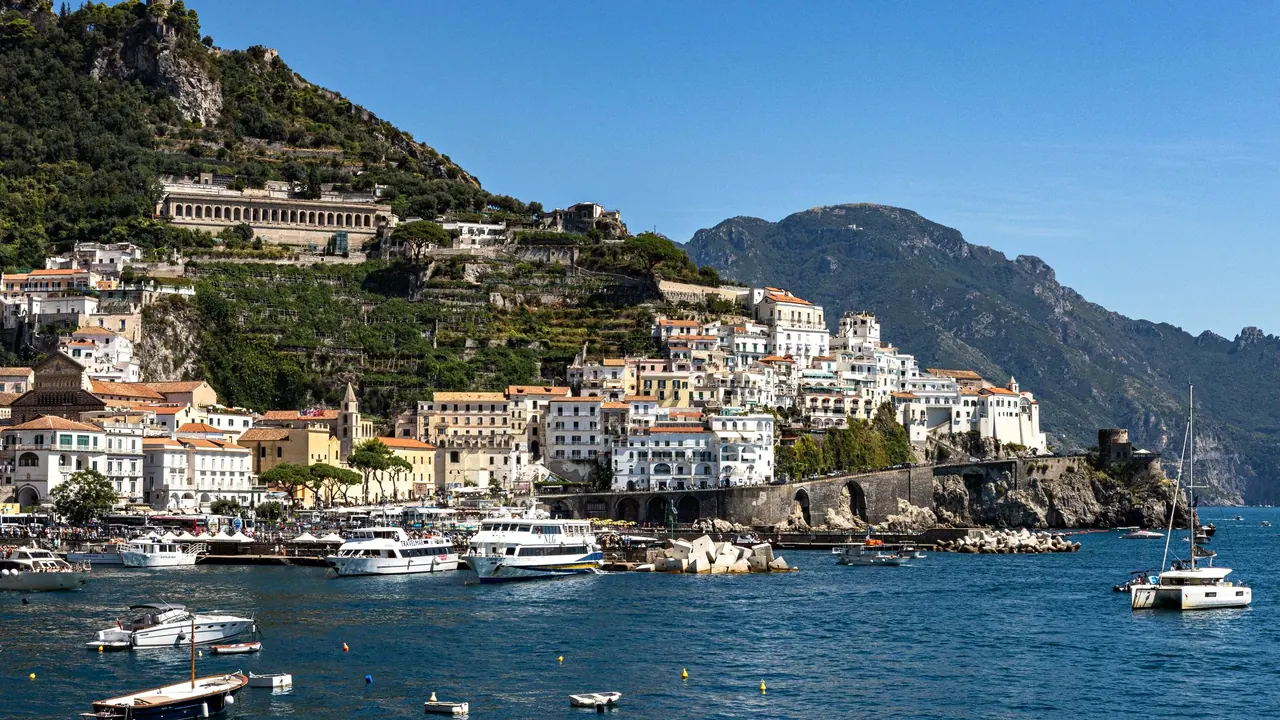
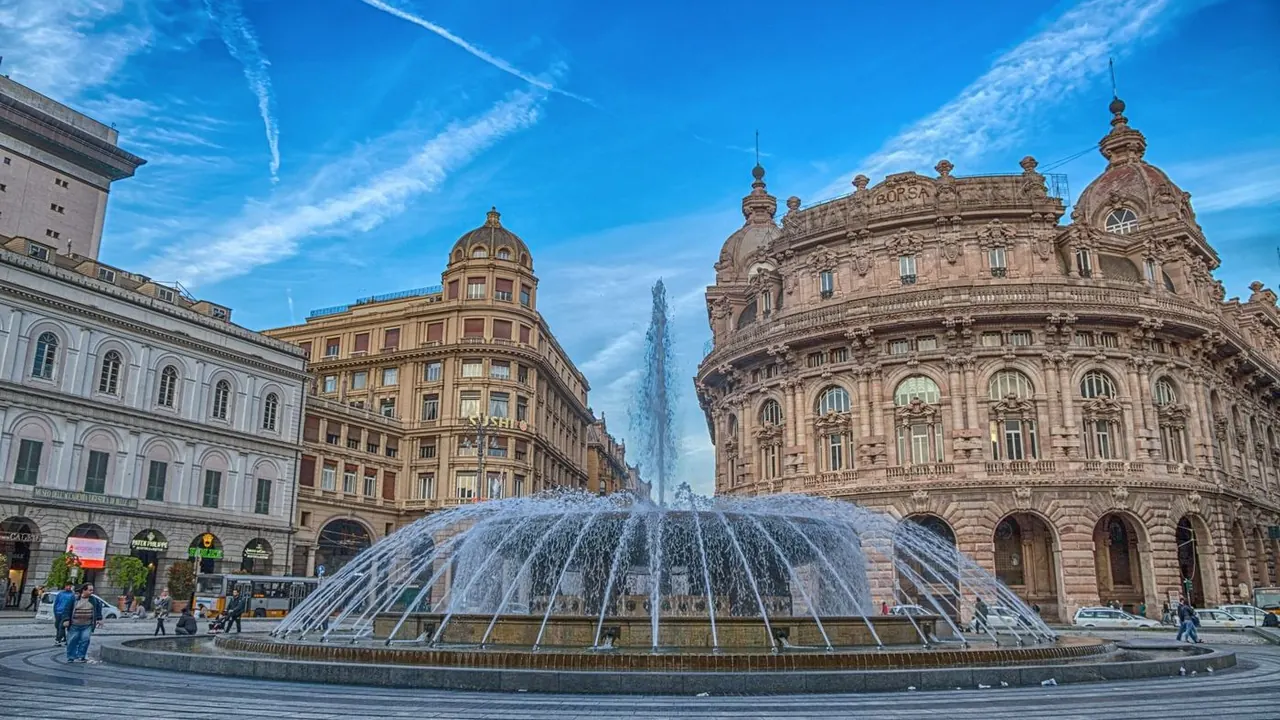
Photos: Amalfi by Oleksandra Zelena, Pexels License; Genoa by Faber1893, CC BY-SA 4.0, cropped.
Amalfi or Genoa?
Our verdict in twelve categories, each scored against the same fixed benchmark cities, and the climate month by month, so you can choose for your trip.
Choose Amalfi for
- day trips
- nature and the outdoors
- beaches
Amalfi suits travellers who come for the coast itself: cliff paths above the sea, swims from a boat in rocky coves, and Ravello, Positano and Capri within a ferry or bus ride. It is best for couples and walkers who are happy with quiet evenings and a small town, and who can live with high prices and a steep, crowded summer.
Choose Genoa for
- culture and sights
- prices
- families
Genoa is the better pick if you want a real city by the sea. It has a huge medieval old town, palace museums, some of Italy's most distinctive everyday food, an aquarium that keeps children busy, and trains that run along the Riviera all year. It also costs far less and has more going on after dark, though the coastline is less dramatic at the door.
Scoreboard
Twelve categories on one fixed scale from 0 to 100. The shaded stretch is the gap between the two.
Your match
Pick a travel style or drag the sliders, and both match scores follow your weighting.
Wins on day trips and nature and the outdoors with your weighting.
Wins on culture and sights and prices with your weighting.
What matters to you?
Category by category
What the scores mean for a trip.
Beaches & swimming
Both offer pebble swimming in clear water that warms to about 25°C in August, and neither is a sandy beach vacation. The difference is how you reach the better spots. In Amalfi, the town beach under the Duomo steps is packed with beach-club loungers, so the good swimming means walking to Atrani, taking the stairs or a shuttle to coves such as Santa Croce, or hiring a boat for the grottoes.
Genoa has more places to swim inside the city: the tiny cove at Boccadasse, the platforms along Corso Italia and the rocks below Nervi's promenade. The prettier bays at Camogli and Sestri Levante, and the longer sandy stretches at Varazze, are a train ride away rather than a boat ride.
Food & drink
Genoa eats much better. Oily focaccia at breakfast, pesto made where it was invented, pansoti in walnut sauce, and farinata and panissa sold by the slice in the old town's friggitorie make good meals easy and cheap. The Mercato Orientale shows the whole Ligurian larder under one roof.
Amalfi has its own distinctive ingredients, including terrace-grown sfusato lemons, colatura from Cetara and scialatielli with clams. But the town is small, and the piazza and seafront mostly cater to passing crowds. You have to go looking up the alleys for the careful cooking.
Culture & sights
These two are far apart for sightseeing. Amalfi's heritage comes from its maritime republic and is concentrated in a few places: the striped Duomo with its Constantinople bronze doors, the Chiostro del Paradiso, the old Arsenale and the paper museum up the valley. Most people have seen it all by lunchtime.
Genoa could fill several days. One of Europe's largest medieval quarters is overlooked by the UNESCO-listed palaces of the Strade Nuove, and Palazzo Rosso and Palazzo Bianco hold Van Dyck and Rubens. Add San Lorenzo, the Palazzo Ducale, the Lanterna and the Staglieno cemetery, and there is far more to see.
Nightlife
Neither is a clubbing destination, but Genoa at least has evenings that carry on. Students and locals crowd the small bars around Piazza delle Erbe for aperitivo, and summer moves the drinking to the Foce seafront and Corso Italia. Amalfi's night ends with dinner and a gelato on Piazza Duomo, and the town goes quiet once the last ferries leave.
Nature & outdoors
Both rank among Italy's finest coastal landscapes, and they differ in character. In Amalfi the scenery starts at your door. The Lattari mountains drop straight into the sea, the Valle delle Ferriere gorge begins behind the houses, and the Path of the Gods and the mule stairways to Ravello and Pontone are close at hand.
Genoa gives you more variety. A funicular takes you up to Righi and the ring of ridge forts, the Portofino park and the Cinque Terre are on the railway, and the Beigua Geopark adds mountain biking. Boats also head out from the harbour to watch whales and dolphins in the Pelagos Sanctuary.
Day trips
Both are superb bases for day trips, and Amalfi has a slight edge in how many famous places sit almost next door. Ravello's villa gardens are up the hill, Positano and Capri are a ferry ride away, and Paestum and Pompeii fit into a day. The drawback is the ferries, which mostly stop in winter, and the road, which clogs in summer.
Genoa's trips run along a railway, which makes them easier to rely on. Portofino and Camogli are under an hour away and the Cinque Terre about an hour and a half. Milan and Turin are close enough for a museum day, an inland option Amalfi cannot match.
Good for families
Genoa is far easier with children. The Porto Antico groups the large Aquarium, a science centre, the biosphere and the Galata submarine in one walkable area, and riding the funiculars and lifts is an outing in itself. Its steep, dark lanes are still hard with a pushchair.
Amalfi offers little for young children. It has no attractions made for them, a crowded pebble beach, stairs everywhere and winding buses. It works mainly for older children who swim confidently and will enjoy the sea caves and boat trips.
Getting around
Amalfi is a few minutes' walk end to end, and it is the hub for buses and ferries along its coast. In summer, though, buses pass full queues and the single cliff road turns into a slow line of traffic.
Genoa covers more ground with more ways of moving. Funiculars, a rack railway and public lifts climb the hills, a short metro line runs through the centre, and the coastal trains reach Nervi and the Riviera without trouble. In both places a car is more hassle than help.
Shopping & style
Amalfi's shopping fits on one street, where limoncello, lemon soap and painted ceramics repeat from shop to shop. The things worth buying are the town's own handmade cotton paper from the valley mills, majolica tiles and sandals made to measure.
Genoa gives you more to browse. The arcades of Via XX Settembre and the Galleria Mazzini cover the familiar Italian labels, and the old town has long-established shops selling candied fruit and pesto alongside workshops making silver filigree and coral. It is still a city for local food and crafts rather than a dedicated shopping trip.
Affordability
Here the gap is wide. Amalfi is among the dearest places to stay in Italy, since the steep coast leaves little room to build and much of what exists is luxury. Seafront meals, loungers and boat hire all add up. Its cheap local buses are the exception.
Genoa costs noticeably less. Central hotels undercut Italy's busiest cities, a slice of focaccia or farinata makes a very cheap lunch, and the funiculars cost little. Money goes faster only on day trips to Portofino and the smart Riviera resorts.
Live music & performing arts
Genoa has a real performing arts calendar. The Teatro Carlo Felice on Piazza De Ferrari stages opera, ballet and symphony concerts, the Teatro Nazionale runs a drama season in Italian, and the city remembers Paganini and its singer-songwriters in concerts and small clubs. Amalfi has no stage of its own, so it depends on church concerts, the Sant'Andrea processions and, in summer, the Ravello Festival on the Villa Rufolo terrace above the sea.
Wellness & relaxation
Neither has a bathing tradition, and in both the spas sit mostly inside upmarket hotels. Amalfi's calm comes from long terrace lunches, swims off the rocks and the hill hamlets in May and October, though the centre is noisy in high summer. Genoa's quiet corner is Nervi's promenade and villa gardens, and it has one thing Amalfi lacks: real thermal waters at Acqui Terme, a little over an hour away.
When should you go?
Pick your month. The climate figures are measured averages, not a forecast.
Amalfi in July
Genoa in July
Daytime high, °C
Rainfall in the month, mm
Where the figures come from
Amalfi's temperatures are measured 65 km from the centre, at Grazzanise.
Amalfi has no rain gauge within 25 km of the centre, so its rainfall comes from a gridded climate dataset read at the city rather than from a gauge further away.
Genoa has no rain gauge within 25 km of the centre, so its rainfall comes from a gridded climate dataset read at the city rather than from a gauge further away.
Genoa's sunshine is measured 80 km from the centre, at Capo Mele.
Temperature and rainfall are climate normals, averaged over the years shown. Amalfi: 1991-2020 normals, Grazzanise (64.7 km from centre). Genoa: 1991-2020 normals, Genova / Sestri (6.7 km from centre).
Both towns have dry, sunny summers and are warm enough to swim from June to September. Amalfi runs hotter. Afternoons reach about 31°C in July and August, which makes the stairways and exposed trails hard work, and the sea warms to around 26°C. It stays pleasant for swimming into October. Genoa peaks nearer 28°C, so walking the city is easier in high summer, but its sea cools a little sooner after September.
The two part ways in autumn. Genoa turns very wet from September, with October bringing about 212mm of rain, so late spring and early summer are its safest months. Amalfi's rain builds more gently and peaks in November at around 143mm, which makes May, June and early October its best balance of warmth, sea and space for walking. Both are mild but damp and short on sunshine in winter.
Which traveller are you?
On a culture and arts trip, Amalfi's striped Duomo and cloister fill half a day at most. Genoa is the clear choice, with the Rolli palaces on Via Garibaldi, the medieval caruggi, Staglieno's marble sculpture and opera at the Carlo Felice.
On a family trip with children, Amalfi is hard going, with stairways no pushchair can manage, a crowded pebble beach and winding cliff buses. Genoa works far better, since the Aquarium, the walk-through submarine and the funiculars make easy days out.
For an outdoors trip built around walking, Amalfi edges it. The Valle delle Ferriere starts behind the town and the Path of the Gods is a bus ride up. In Genoa a funicular reaches the ridge forts, but Portofino and the Cinque Terre need the train.
Before you go
| Measure | Amalfi | Genoa |
|---|---|---|
| Official language | Italian | Italian |
| Currency | Euro (EUR) | Euro (EUR) |
| Sockets | CFL230 V, 50 Hz | CFL230 V, 50 Hz |
| Driving side | Right | Right |
| Time zone | UTC+1, UTC+2 in summer | UTC+1, UTC+2 in summer |
| Emergency number | 112 | 112 |
| Elevation | 6 m | 20 m |
| Main airport | Naples International Airport (NAP)38 km from centre131 non-stop destinations | Genoa Cristoforo Colombo Airport (GOA)7 km from centre25 non-stop destinations |
| Public holidays this year | 13 days | 13 days |
By the numbers
| Measure | Amalfi | Genoa |
|---|---|---|
| City population | 4,729 | 558,745 |
| People per km² | 830 | 2,325 |
| Museums within 10 km | 8 | 51 |
| UNESCO World Heritage sites within 50 km | 5 | 1 |
| Swim season, months above 21 °C | 5 months | 4 months |
Where else could you go?
Every comparison below shares a destination with this one, so you can follow Amalfi or Genoa somewhere new.