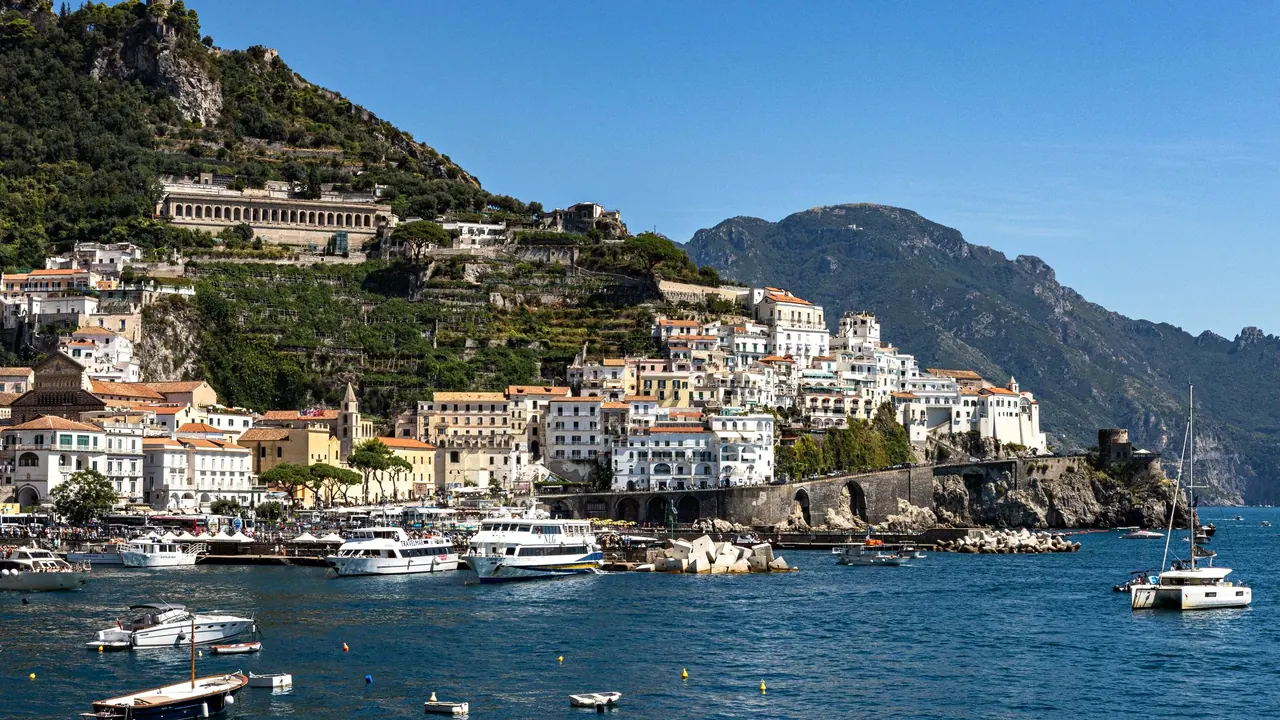
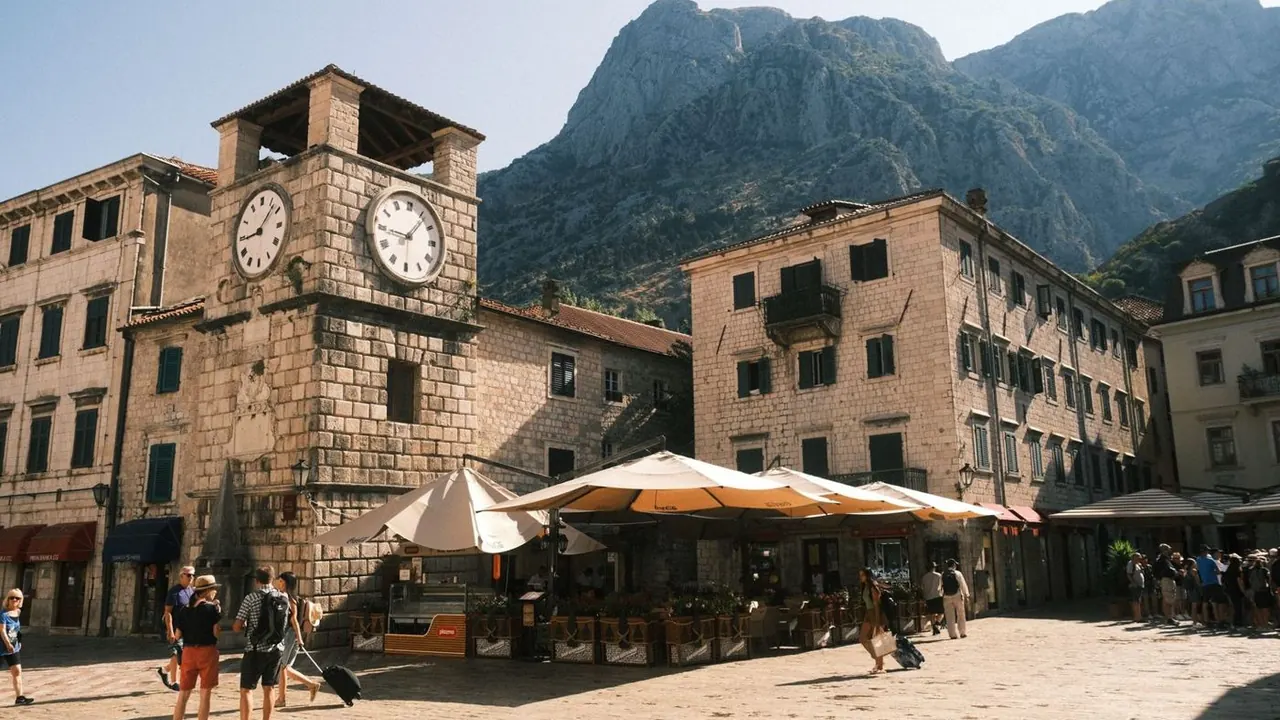
Photos: Amalfi by Oleksandra Zelena, Pexels License; Kotor by Muhammed Fatih Beki, Pexels License.
Amalfi or Kotor?
Our verdict in twelve categories, each scored against the same fixed benchmark cities, and the climate month by month, so you can choose for your trip.
Choose Amalfi for
- day trips
- shopping
- food and drink
Amalfi suits travellers who want to cover a lot of famous ground from one base and will pay for the setting. Ravello, Positano, Capri and the ruins of Pompeii are all within a day, the swimming starts at the bottom of the Duomo steps, and the cooking makes good use of the coast's lemons and anchovies. It rewards walkers and boat-trippers rather than night owls or anyone counting the cost.
Choose Kotor for
- prices
- culture and sights
- nightlife
Kotor is the better pick for a slower, cheaper stay built around one remarkable old town. Its walled lanes, cathedral and fortress climb give more to explore than Amalfi's half-day of sights, the evenings are a little livelier, and Budva's late bars are close if you want more. Expect to give up easy beach days in town and some of Amalfi's choice of day trips.
Scoreboard
Twelve categories on one fixed scale from 0 to 100. The shaded stretch is the gap between the two.
Your match
Pick a travel style or drag the sliders, and both match scores follow your weighting.
Too close to call, 2 points apart
Wins on day trips and shopping with your weighting.
Wins on prices and culture and sights with your weighting.
What matters to you?
Category by category
What the scores mean for a trip.
Beaches & swimming
Amalfi's sea starts where the town ends. The pebbles of Marina Grande lie just below the Duomo steps, packed with beach-club loungers in summer, and the open Tyrrhenian there is clear. Atrani's small beach is a ten-minute walk, and boats reach coves and grottoes the road never touches, so a swim fits easily between other plans.
Kotor's swimming is from jetties and concrete platforms along the enclosed inner bay, where the water is calm and warm but less clear. What it does have within reach is sand: Jaz and the Budva coves are about half an hour away, so a proper beach day there is an outing rather than part of the daily routine.
Food & drink
Amalfi has the more distinctive table. Its sfusato lemons, colatura from Cetara and scialatielli with clams give the cooking a clear identity, helped by hillside whites and reds from Furore and Tramonti.
Kotor's menus mix the bay's mussels, cuttlefish risotto and grilled fish with smoked Njegusi ham and a glass of dark Vranac, which is satisfying but narrower in range. Both towns share the same trap of tired terrace food on their main squares. In Amalfi the fix is the alleys and the valley, in Kotor the konobas along the shore at Dobrota, Prcanj and Perast.
Culture & sights
Kotor is the stronger place for sightseeing. The whole walled town is the attraction, with marble lanes, the Cathedral of St Tryphon from 1166, seafaring palazzi, the Maritime Museum and the walls zigzagging up to the fortress of St John for the view down the bay.
Amalfi's heritage is fine but brief: the striped Duomo with its Constantinople bronze doors, the Chiostro del Paradiso, the old Arsenale and the paper museum. Half a day covers it, after which most people turn to the coast.
Nightlife
Neither town is built for late nights, but Kotor goes further. A handful of bars inside the walls stay open late in summer, there is a small club scene, and Budva's seafront runs until dawn about half an hour away.
Amalfi's evening is dinner, then a gelato or a drink on Piazza Duomo, and it falls silent once the last buses and ferries leave. The nearest proper night out is in Salerno or Naples, which is a long way to go after dark.
Nature & outdoors
Both are outstanding settings where the mountains meet the sea, but the scenery works differently. Amalfi is an open coast of lemon terraces and cliff villages, with the Sentiero degli Dei looking out to Capri, the shaded Valle delle Ferriere behind town and mule stairways up to Ravello.
Kotor sits deep inside an enclosed, fjord-like bay under limestone walls over 1,000m high. The Ladder of Kotor and the hairpin road lead up into the beech woods of Lovcen, and Lake Skadar's wetlands add birdlife that Amalfi has no equivalent for. In both places summer heat makes spring and autumn the walking seasons.
Day trips
Amalfi has the more famous and varied list within an easy day. Ravello's villa gardens are a short bus ride up, Positano and Capri are a ferry away, and Pompeii, Herculaneum and the temples of Paestum are reachable with some planning. The catch is that ferries run mainly from spring to autumn.
Kotor's outings are good but fewer: baroque Perast and its island church, Herceg Novi, Budva and Sveti Stefan, and the old royal capital of Cetinje over Lovcen. Dubrovnik works as a long day, though the border crossing can drag in summer.
Good for families
Neither town is built around children, but Amalfi is the harder of the two with young ones. Where Kotor's old town is level, Amalfi rises in stairways from the seafront, so a pushchair soon becomes something to carry. Its beach is a narrow, busy pebble front with little room to spread out, and any outing to Ravello or Positano means the twisting cliff-road buses, which are hard on children prone to travel sickness. It suits older children who swim confidently best, with boat trips into the sea caves and walks up the valley.\n\nKotor is easier going for families.
Its car-free walled town is small enough that nobody gets lost, and the street cats often hold children's attention longer than the churches do. Families tend to stay along the shore, where the calm water of the bay makes swimming from the jetties easy, and the sandy beaches near Budva are a short drive away. The boat out to Perast's island church is the outing children enjoy most, while the fortress climb is best kept for the cooler hours.
Getting around
Both are easy on foot and awkward beyond, in different ways. Amalfi's centre involves a lot of steps, but it is the hub of its coast, so buses and seasonal ferries cover Ravello, Positano, Salerno and Capri and a car is more bother than help.
Kotor's walled town is flat and quick to cross, though the marble gets slippery in rain. Its buses run less often, so reaching Lovcen, the Lustica coves or several villages in one day usually means hiring a car or a driver. Summer brings a single jammed road to both.
Shopping & style
Amalfi has more worth carrying home. Its handmade cotton paper from the valley mills, hand-painted majolica, linen clothing and made-to-measure sandals stand out, even if the limoncello and lemon soap repeat from shop to shop along the main street.
Kotor's lanes run more to souvenirs and cat-themed trinkets, with silver filigree and lace as better finds. Its best buys are edible, such as Vranac, Njegusi ham and honey from the green market, and anyone after brands has to go to the Tivat marina.
Affordability
This is the widest gap between the two. Amalfi charges capital-city rates for sea-view rooms in summer, and meals on the piazza, loungers and boat hire all add up. Even staying in the hill villages and coming out of season only softens it.
Kotor is moderately priced for konoba meals, local wine, buses and the fortress walk. It only reaches resort prices inside the walls in July and August, and an apartment in Dobrota or Muo brings the cost down a lot.
Live music & performing arts
Neither has a theatre season, so this comes down to summer events. Amalfi's highlight is the Ravello Festival up the hill, with orchestral and chamber concerts on the Villa Rufolo terrace above the sea. Kotor offers a looser summer programme of recitals and choirs in its churches and squares, plus carnival and Boka Night, when decorated boats fill the bay.
Wellness & relaxation
Amalfi has the edge for rest, mainly thanks to its cliffside hotels, whose spas and pools set a quieter tone, and a day shaped by long shaded lunches and morning swims from the rocks. When the centre fills in summer, the hill hamlets offer an escape. Neither town has public baths or any bathing tradition.
In Kotor, spa treatments mean a resort hotel along the bay or at Tivat. The calm here is found in early mornings on the water and unhurried lunches in the shore villages, well away from the old town's crowded summer middays.
When should you go?
Pick your month. The climate figures are measured averages, not a forecast.
Amalfi in July
Kotor in July
Daytime high, °C
Rainfall in the month, mm
Where the figures come from
Amalfi's temperatures are measured 65 km from the centre, at Grazzanise.
Amalfi has no rain gauge within 25 km of the centre, so its rainfall comes from a gridded climate dataset read at the city rather than from a gauge further away.
Kotor has no rain gauge within 25 km of the centre, so its rainfall comes from a gridded climate dataset read at the city rather than from a gauge further away.
Kotor's sunshine is measured 42 km from the centre, at Podgorica-Grad.
Temperature and rainfall are climate normals, averaged over the years shown. Amalfi: 1991-2020 normals, Grazzanise (64.7 km from centre). Kotor: 1991-2020 normals, Tivat (4.2 km from centre).
The two follow almost the same curve through the summer. Both reach about 31°C in July and August, too hot for the fortress steps at Kotor or the exposed trails above Amalfi at midday, and the sea in both warms to about 26°C by August. Swimming is comfortable from June to September, and May and October are cooler but still workable. Spring and autumn are the best months for walking and sightseeing in either place, when days sit in the low twenties.
Where they part is rain. Amalfi has the drier summer and a milder wet season, while Kotor, hemmed in by its mountains, takes heavy rain from late autumn, peaking at about 202mm in November against 143mm on the Amalfi coast. Both see plenty of sunshine from May to August, but a winter trip is gloomier and wetter in Kotor, where the marble lanes also turn slippery.
Which traveller are you?
On a trip on a tight budget, Kotor is far easier. Private apartments in Dobrota or Muo, konoba meals and local buses keep costs moderate, while Amalfi ranks among Italy's dearest places to sleep and eat, with only its buses cheap.
For a culture and arts trip, Kotor gives more to explore. Its UNESCO-listed walled town, the twelfth-century cathedral, the Maritime Museum and the walls climbing to the fortress fill a couple of days, whereas Amalfi's Duomo and cloister take a morning.
On a beach and sun trip, Amalfi lets you swim straight from town at Marina Grande, walk to Atrani or take a boat to clear coves. In Kotor the inner bay offers concrete platforms, and real beaches mean a trip to Budva.
Before you go
| Measure | Amalfi | Kotor |
|---|---|---|
| Official language | Italian | Montenegrin |
| Currency | Euro (EUR) | Euro (EUR) |
| Sockets | CFL230 V, 50 Hz | CF230 V, 50 Hz |
| Driving side | Right | Right |
| Time zone | UTC+1, UTC+2 in summer | UTC+1, UTC+2 in summer |
| Emergency number | 112 | 112 |
| Elevation | 6 m | 10 m |
| Main airport | Naples International Airport (NAP)38 km from centre131 non-stop destinations | Tivat Airport (TIV)5 km from centre42 non-stop destinations |
| Public holidays this year | 13 days | - |
By the numbers
| Measure | Amalfi | Kotor |
|---|---|---|
| City population | 4,729 | 562 |
| People per km² | 830 | - |
| Museums within 10 km | 8 | 3 |
| UNESCO World Heritage sites within 50 km | 5 | 3 |
| Swim season, months above 21 °C | 5 months | 5 months |
Where else could you go?
Every comparison below shares a destination with this one, so you can follow Amalfi or Kotor somewhere new.