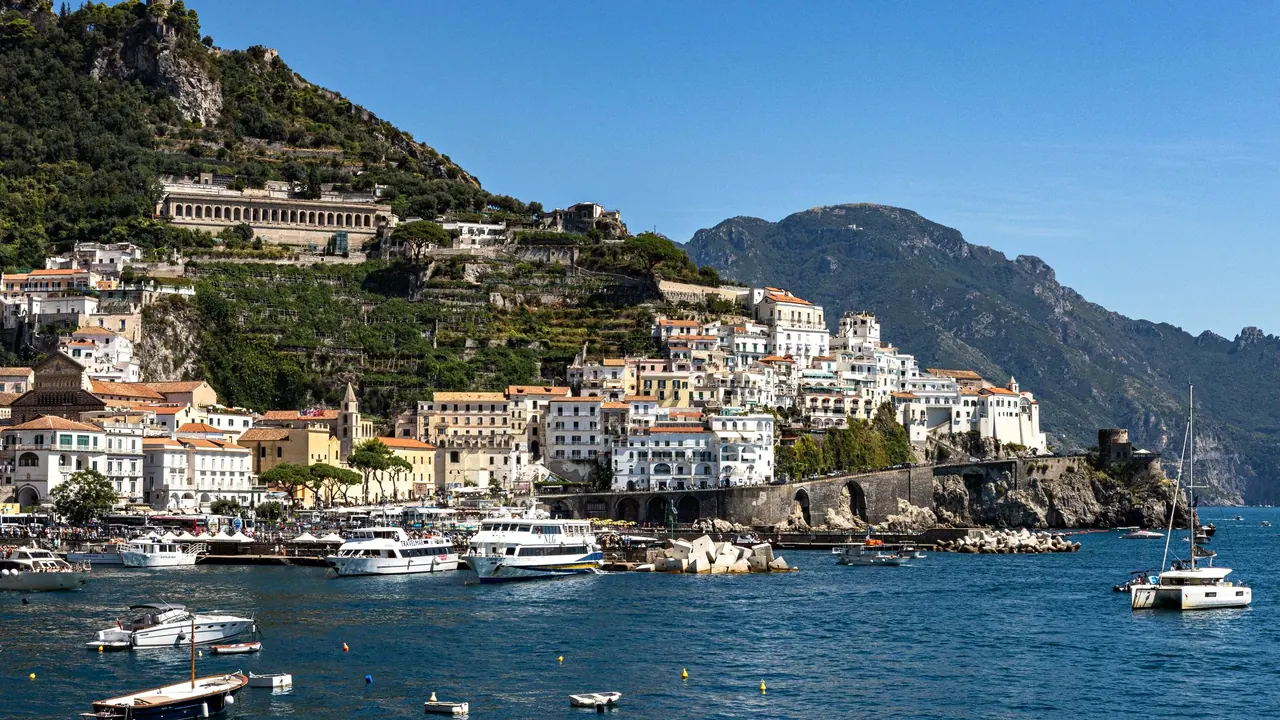
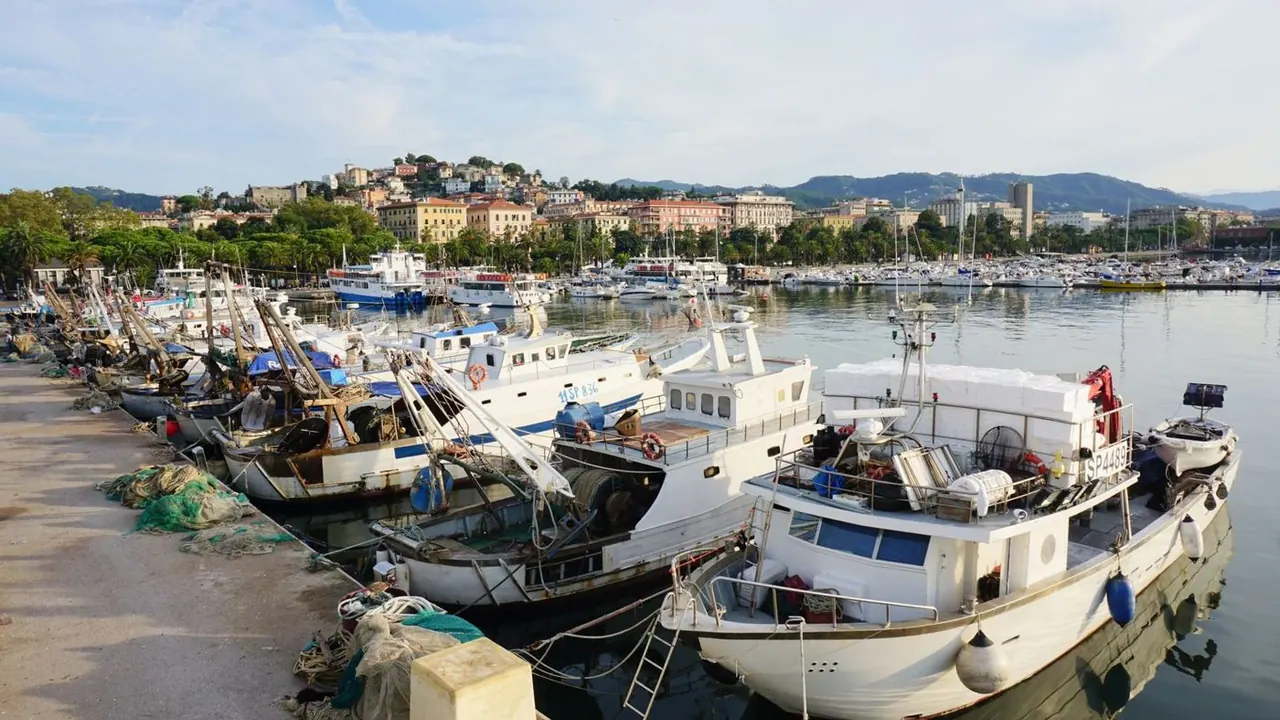
Photos: Amalfi by Oleksandra Zelena, Pexels License; La Spezia by Irina Balashova, Pexels License.
Amalfi or La Spezia?
Our verdict in twelve categories, each scored against the same fixed benchmark cities, and the climate month by month, so you can choose for your trip.
Choose Amalfi for
- beaches
- nature and the outdoors
- day trips
Amalfi is for travellers who want to wake up inside the postcard. You can swim from the town beach under the Duomo steps, take a boat to sea caves and walk the Path of the Gods, all without packing a bag. It suits couples and walkers who will pay for the setting and are happy with quiet evenings. Pushchairs, tight budgets and anyone who dislikes steps will struggle here.
Choose La Spezia for
- prices
- getting around
- families
La Spezia makes more sense as a base than as a destination in itself. It is a flat, ordinary working port, but the Cinque Terre are minutes away by train, Pisa and Lucca are within reach and rooms cost far less than on the coast. Families, travellers watching their money and anyone who wants better everyday food and a livelier aperitivo hour will find the trade-off worth it.
Scoreboard
Twelve categories on one fixed scale from 0 to 100. The shaded stretch is the gap between the two.
Your match
Pick a travel style or drag the sliders, and both match scores follow your weighting.
Wins on beaches and nature and the outdoors with your weighting.
Wins on prices and getting around with your weighting.
What matters to you?
Category by category
What the scores mean for a trip.
Beaches & swimming
The swimming is about equally good, but the beaches are in different places. Amalfi has its own pebble beach, Marina Grande, right on the front, packed with club loungers in summer. Atrani and the coves at Santa Croce and Duoglio are a short walk or boat ride further, so you can fit a swim in between other plans.
La Spezia's waterfront is a working port, so every beach day is an outing. In return you get more variety: sand and pebble at Lerici and San Terenzo, clear rocky water around Palmaria, and Monterosso's long sandy beach a train ride up the coast.
Food & drink
La Spezia eats better day to day. Farinata from wood ovens, mesciua soup, pesto on trofie and testaroli, and stuffed mussels from the ropes off Portovenere make a cheap, distinctive local repertoire. The Piazza Cavour market is there for fish and produce, and prices stay steady.
Amalfi's ingredients are wonderful: sfusato lemons, colatura from Cetara, scialatielli with clams, and limoncello after dinner. The trouble is a small town where the piazza and seafront cafés feed the day crowds, so a good meal means looking for the trattorias up the alleys.
Culture & sights
Neither place gives you more than a short spell of sightseeing, and the kind of history differs. Amalfi's is medieval and all in one cluster: the striped Duomo with its Constantinople bronze doors, the white-arched Chiostro del Paradiso and the old Arsenale of the maritime republic, covered in half a day.
La Spezia is a nineteenth-century naval city of arcaded streets and Liberty facades. Its attractions are museums rather than monuments: the early Italian paintings of the Museo Amedeo Lia, the naval museum and the Lunigiana stele statues in Castello San Giorgio.
Nightlife
Neither is a place for a big night out, but Amalfi is much the quieter of the two. After dinner there is little more than a stroll and a drink or a gelato in the square below the cathedral, plus a handful of bars in summer. Once the day-trippers have gone, the town empties. For clubs or late music you would have to go to Salerno or Naples.
La Spezia does better because it is a working city with people who live there, so there is real life in the early evening. The aperitivo hour fills the pedestrian streets of the centre and the seafront, and in summer people take their drinks across the gulf to the waterfront at Lerici. Late nights are still rare, and with the Cinque Terre paths waiting the next morning, few visitors stay out past midnight.
Nature & outdoors
Both places are built around dramatic coastline and are equally strong outdoors, but the terrain differs. Amalfi has a higher, wilder backdrop, with the Lattari mountains falling straight to the sea. The Path of the Gods above Positano, the waterfall gorge of the Valle delle Ferriere and the mule stairways up to Ravello all start close to town.
From La Spezia you get the vine-terraced Cinque Terre paths, with quieter ridge routes above the busy Sentiero Azzurro. The island loop on Palmaria and the pinewoods of Montemarcello are close by. For serious mountain hiking, the marble peaks of the Apuan Alps are about an hour inland, and diving in the gulf adds an underwater option that Amalfi's kayaks and sea caves don't quite match.
Day trips
Both are excellent bases, and what differs is mainly how you get out. From Amalfi, Ravello and Positano are close, Capri is a ferry ride away, and Paestum, Pompeii and Herculaneum fit into a full day. Most of this depends on seasonal ferries or a slow, crowded cliff road.
La Spezia's trips run on rails all year: the five Cinque Terre villages in minutes, then Pisa and Lucca in about an hour, and Florence in a long day. Portovenere, Lerici and walled Sarzana are a short bus ride away.
Good for families
Neither town has anything built for children, so a family stay in either depends on the sea and on how old the children are. Amalfi asks the most of them. School-age children who swim confidently will love a boat into the sea caves or the walk up the valley past waterfalls and the old paper mills, and the town feels safe and friendly. Even so, it rewards stamina more than it keeps children entertained.
La Spezia is the gentler choice and has more to fill the days. A boat out to Portovenere and Palmaria makes an easy outing, and the ship models and torpedoes at the naval museum hold some children's attention. Its limits show further afield, where the Cinque Terre villages mean steep lanes and crowded summer trains, better left until children can manage a long day on foot.
Getting around
La Spezia is much easier to move around from. The station, market and seafront are a short, flat walk apart, and regional trains run frequently along the coast and inland. Buses and seasonal ferries cover the gulf.
In Amalfi you can walk the tiny town, but there are steps at every turn. Everything beyond it depends on buses on one cliff road, which fill up in summer and drive past waiting queues, and on ferries that don't run in winter.
Shopping & style
Amalfi's souvenirs are crafts, while La Spezia's are mostly things to eat and drink. In Amalfi one main street climbs from Piazza Duomo, selling handmade cotton paper from the valley mills, painted majolica, linen and sandals made to measure, though a lot of the same stock turns up in shop after shop.
La Spezia's best buys are pesto, olive oil, Cinque Terre wine and Sciacchetrà. Via del Prione and Corso Cavour have ordinary chains and a few independent boutiques for everyday clothes. Neither town has fashion or luxury shopping.
Affordability
La Spezia costs far less. It is a mid-priced town, and many visitors stay there precisely because rooms are much cheaper than in the Cinque Terre villages. Trains, farinata and simple trattorias are all fair value, though trail passes and bathing establishments add up.
Amalfi is among the dearest places to stay in Italy, with sea-view rooms, piazza meals, loungers and boat hire all expensive. Staying in a hill village or coming in spring or autumn helps, but only up to a point.
Live music & performing arts
La Spezia has slightly more going on through the year. The Teatro Civico runs a season of theatre and concerts, and in summer there is a long-established jazz festival and open-air music in piazzas and castle courtyards around the gulf.
Amalfi itself has no stage, only church concerts and the Sant'Andrea processions. What it does have, a short ride up the hill, is the Ravello Festival in summer. Its concerts on the garden terrace of Villa Rufolo, high above the sea, are worth planning an evening around.
Wellness & relaxation
Neither has a bathing culture, and in both places rest comes from the slow pace rather than from spas. Amalfi's treatment rooms are in the cliffside luxury hotels and mostly reserved for guests, and the quiet is in the hill hamlets in May and October. La Spezia has the small thermal baths at Equi Terme an hour inland, and long, calm lunches in Tellaro or on Palmaria.
When should you go?
Pick your month. The climate figures are measured averages, not a forecast.
Amalfi in July
La Spezia in July
Daytime high, °C
Rainfall in the month, mm
Where the figures come from
Amalfi's temperatures are measured 65 km from the centre, at Grazzanise.
Amalfi has no rain gauge within 25 km of the centre, so its rainfall comes from a gridded climate dataset read at the city rather than from a gauge further away.
La Spezia's temperatures are measured 65 km from the centre, at Pisa / S. Giusto.
La Spezia has no rain gauge within 25 km of the centre, so its rainfall comes from a gridded climate dataset read at the city rather than from a gauge further away.
Temperature and rainfall are climate normals, averaged over the years shown. Amalfi: 1991-2020 normals, Grazzanise (64.7 km from centre). La Spezia: 1991-2020 normals, Pisa / S. Giusto (64.8 km from centre).
The two coasts follow almost the same year, with Amalfi a degree or two warmer and a little sunnier in most months. The sea is warm enough for proper swimming from June to September in both places. It peaks at about 26°C off Amalfi in August and is a degree cooler in the gulf. Amalfi's water stays pleasant well into October, while La Spezia's is noticeably fresher by then. July and August are hot, around 31°C at Amalfi and only slightly less in La Spezia, so the exposed cliff trails and Amalfi's endless stairs are hard work in the middle of the day.
For walking, April, May and late September are the best months in both places, warm and mostly dry, with May the driest and sunniest of the three. The rain comes back in September on both coasts. Amalfi's rain is spread more evenly through the winter, and its January is the wetter of the two. La Spezia gets the heavier autumn downpours, about 150mm a month in October and November. Winters are mild in both, a little cooler in La Spezia, with January highs of 13°C in Amalfi against 11°C.
Which traveller are you?
On a family trip with young children, La Spezia is much easier. Its flat centre and seafront gardens work with a pushchair, and San Terenzo and Lerici have shallow, sheltered beaches. In Amalfi you face constant stairways, crowded pebbles and winding buses that can make children carsick.
For a beach and sun trip, Amalfi has the edge. Marina Grande is right in town, Atrani and the coves are a short walk or boat ride away, and the sea is a touch warmer. From La Spezia every swim means a bus, train or boat out of the port.
On a trip on a tight budget, La Spezia wins clearly. Rooms cost well below Cinque Terre and Amalfi Coast levels, farinata and focaccia make cheap meals, and trains are inexpensive. Amalfi is among Italy's dearest places to stay, and only its local buses come cheap.
Before you go
| Measure | Amalfi | La Spezia |
|---|---|---|
| Official language | Italian | Italian |
| Currency | Euro (EUR) | Euro (EUR) |
| Sockets | CFL230 V, 50 Hz | CFL230 V, 50 Hz |
| Driving side | Right | Right |
| Time zone | UTC+1, UTC+2 in summer | UTC+1, UTC+2 in summer |
| Emergency number | 112 | 112 |
| Elevation | 6 m | 3 m |
| Main airport | Naples International Airport (NAP)38 km from centre131 non-stop destinations | Pisa International Airport (PSA)65 km from centre82 non-stop destinations |
| Public holidays this year | 13 days | 13 days |
By the numbers
| Measure | Amalfi | La Spezia |
|---|---|---|
| City population | 4,729 | 92,119 |
| People per km² | 830 | 1,792 |
| Museums within 10 km | 8 | 12 |
| UNESCO World Heritage sites within 50 km | 5 | 2 |
| Swim season, months above 21 °C | 5 months | 4 months |
Where else could you go?
Every comparison below shares a destination with this one, so you can follow Amalfi or La Spezia somewhere new.