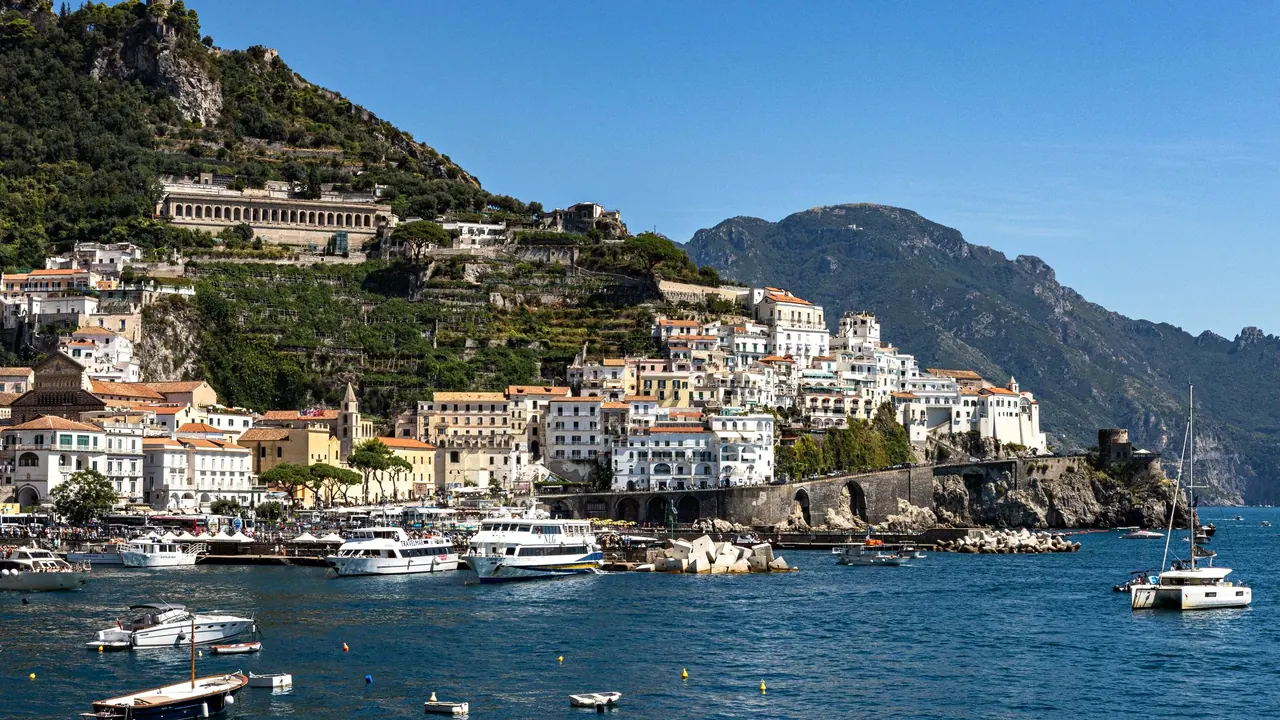
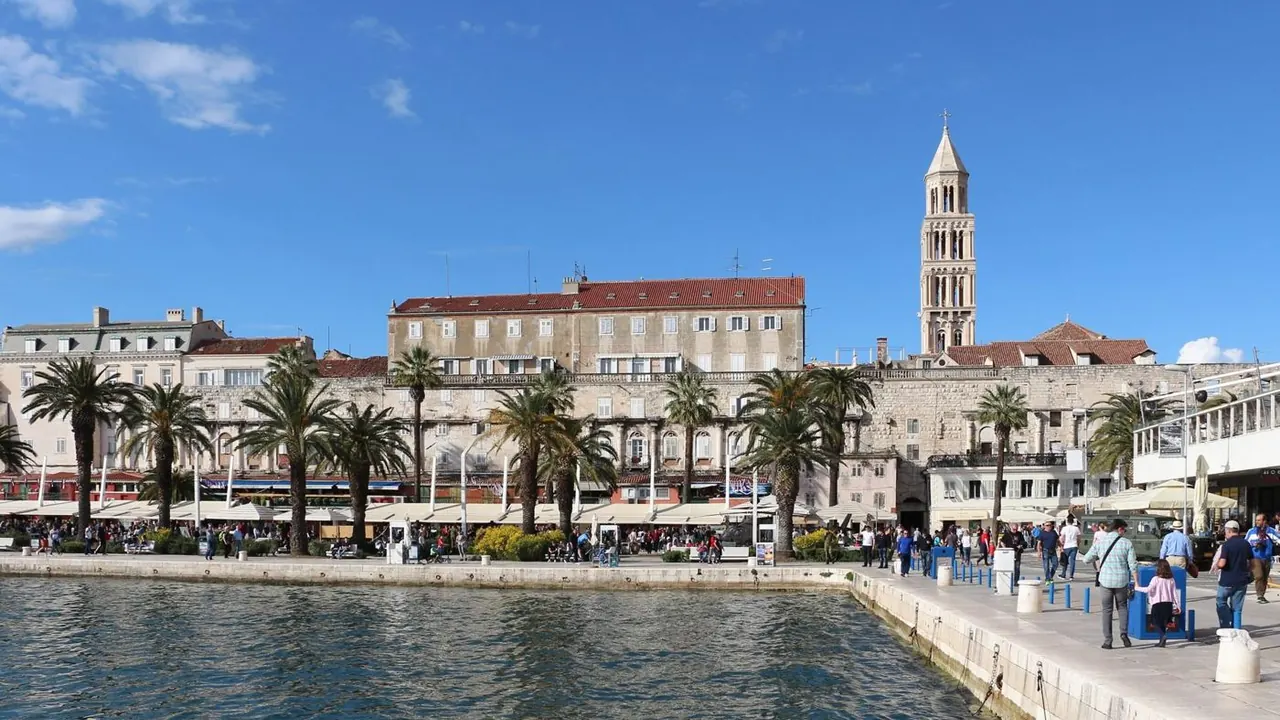
Photos: Amalfi by Oleksandra Zelena, Pexels License; Split by Bernard Gagnon, CC BY-SA 4.0, cropped.
Amalfi or Split?
Our verdict in twelve categories, each scored against the same fixed benchmark cities, and the climate month by month, so you can choose for your trip.
Choose Amalfi for
- day trips
- nature and the outdoors
- shopping
Amalfi suits travellers who come for the coast itself and plan to spend their days out of town. The cliffs, lemon terraces and the Path of the Gods are on the doorstep, and Ravello, Positano, Capri and Pompeii are all within a day. It works best for couples and walkers who are happy with quiet evenings and can absorb some of the highest prices in Italy.
Choose Split for
- nightlife
- culture and sights
- prices
Split is the better choice for anyone who wants a real city around them. A Roman palace still lived in as a neighbourhood, bars in its stone alleys on summer nights and a sandy, shallow bay a few minutes from the old town give it far more range. It is also easier on families and noticeably kinder to the budget.
Scoreboard
Twelve categories on one fixed scale from 0 to 100. The shaded stretch is the gap between the two.
Your match
Pick a travel style or drag the sliders, and both match scores follow your weighting.
Wins on day trips and nature and the outdoors with your weighting.
Wins on nightlife and culture and sights with your weighting.
What matters to you?
Category by category
What the scores mean for a trip.
Beaches & swimming
Split makes swimming part of the city. Bačvice, a shallow sandy bay by the harbour, is a short walk from the palace, and the pine-shaded coves around Marjan give quieter, deeper water. The islands of Brač, Šolta and Hvar add longer beaches a ferry ride away.
Amalfi's own beach is Marina Grande, a pebble strip under the Duomo mostly taken up by beach-club loungers in summer. The better swims are at Atrani or in coves reached by stairs or small boats, so going for a swim usually involves a little expedition.
Food & drink
Split has the broader table. Its fish market and the Pazar green market set the rhythm, and family konobas in Varoš serve black risotto, pašticada and peka with Plavac Mali or Pošip. Breakfast can be a burek from a bakery.
Amalfi's cooking is tighter and very local, with sfusato lemons, Cetara's colatura and scialatielli with clams. In a town this small the choice runs out quickly, though, and the piazza cafés are often ordinary, so the good meals take some seeking out in the alleys and up the valley.
Culture & sights
Split has the more substantial history to explore. Diocletian's Palace is a Roman complex people still live in, with a cathedral built into the emperor's mausoleum and vaulted halls below. The Meštrović Gallery on Marjan is worth a visit too, and the whole city is good for about two days.
Amalfi's heritage comes from its medieval maritime republic: the striped Duomo with its bronze doors from Constantinople, the white-arched Cloister of Paradise, the Arsenale and the paper museum. It is beautiful but brief, and most people finish it in a morning.
Nightlife
On a summer night Split has a real scene, with drinks on the Riva, small bars spilling into the palace stairways and clubs around Bačvice running into the early hours. From October it shrinks to a few bars where locals linger over wine.
Amalfi offers dinner, then a gelato or a glass on Piazza Duomo, and little after that. Once the last ferry leaves the town is asleep, and a proper night out means going to Salerno or Naples.
Nature & outdoors
Both sit where mountains meet the sea, and the difference is in what you do there. Amalfi is about walking a near-vertical coast: the Path of the Gods high above Positano, the waterfall gorge of the Valle delle Ferriere and stairways through lemon terraces, with kayaks for the sea caves.
Split spreads its outdoors over a wider area and offers more kinds of activity. Marjan's pine forest is on foot from the old town, Mosor and Biokovo offer serious ridge hikes, the Cetina canyon at Omiš has rafting and canyoning, and Krka's waterfalls and island sailing complete the list.
Day trips
Amalfi has the more famous places within reach. Ravello's villa gardens are just up the hill, Positano and Capri are a ferry ride away, and Paestum, Pompeii and Herculaneum fit into a long day. Getting anywhere is slow, though, on a crowded cliff road or ferries that stop out of season.
From Split the outings are less famous but simple to reach. Trogir and Šibenik have UNESCO-listed old towns, Salona and Klis Fortress are on the edge of the city, and Hvar and Brač are an easy hop by boat in summer.
Good for families
The first difference is the ground underfoot. Amalfi climbs almost entirely in stairways, so a pushchair is close to useless once you leave the seafront. Split's centre is level enough to cross on foot in a quarter of an hour, although the stepped, slippery lanes of the palace still favour a child carrier.
The beaches and transport widen the gap. Amalfi's one pebble strip is lined with rented loungers, and the alternative is a winding cliff bus that is hard on queasy stomachs, so the town rewards older, stronger swimmers who are keen on boats and grottoes more than it suits toddlers. In Split, Bačvice shelves gently enough for little ones to wade, and Marjan's pines are close by for shade and running about, all without needing a bus.
Getting around
Split's layout does more of the work for you. The palace, Varoš, the markets and Bačvice are within a short walk of one another, and the ferry port, bus station and railway all sit together at the harbour, so leaving town is straightforward.
Amalfi is tiny and walkable too, and its harbour is the bus and ferry hub of the coast. In summer, though, full buses pass by queues and the single cliff road clogs. In both towns, steps and polished stone make life hard for anyone with limited mobility.
Shopping & style
Neither is a shopping destination, and what you take home differs. Amalfi has small-scale crafts: handmade cotton paper from the valley, painted majolica and sandals made to measure, though the souvenir stock repeats along its one main street. Split has mainstream chains on Marmontova, and its best buys are food, mostly olive oil, honey and brandies from the Pazar market.
Affordability
Split costs noticeably less. It is pricey in July and August near the old town, but bakeries, markets, local buses and back-street konobas keep daily spending modest, and outside summer it is a reasonably priced city.
Amalfi is among the most expensive places to stay in Italy, with sea-view rooms priced like the dearest capitals and expensive loungers and boat hire. The cheap buses are its only bargain, and even in spring or autumn it never feels inexpensive.
Live music & performing arts
Split has a real stage. The 19th-century Croatian National Theatre runs opera and ballet through the season, the Summer Festival puts opera in the Peristyle, and klapa singers fill the palace's domed vestibule with unaccompanied harmonies.
Amalfi has no theatre or concert hall at all. Its great draw is the summer Ravello Festival up the hill, with concerts on the Villa Rufolo terrace above the sea, plus the processions and band music of the Sant'Andrea feast.
Wellness & relaxation
Neither town has a bathing tradition, but Split makes rest a little easier to find. Dalmatian fjaka, those long coffees on the Riva and empty afternoon streets, sets an unhurried pace, and Marjan's pine woods and the islands offer calm when the old town gets loud.
In Amalfi the spas belong to cliffside luxury hotels and are mostly for their own guests. Calm there comes from long terrace lunches and swims off the rocks, and in summer it is easier to find in the hill hamlets than in the crowded centre.
When should you go?
Pick your month. The climate figures are measured averages, not a forecast.
Amalfi in July
Split in July
Daytime high, °C
Rainfall in the month, mm
Where the figures come from
Amalfi's temperatures are measured 65 km from the centre, at Grazzanise.
Amalfi has no rain gauge within 25 km of the centre, so its rainfall comes from a gridded climate dataset read at the city rather than from a gauge further away.
Temperature and rainfall are climate normals, averaged over the years shown. Amalfi: 1991-2020 normals, Grazzanise (64.7 km from centre). Split: 1991-2020 normals, Split / Marjan (0.9 km from centre).
Amalfi is at its best in May and June, when the days are warm enough to enjoy the trails and the town and there is little rain. The sea is still cool in May, but from June to September it is fine for proper swimming and reaches about 26°C in August. July and August bring highs of around 31°C, which makes the stairways and exposed paths hard going. September is still good for the sea, but it is also when the rain starts to return, with about 85mm. From October to December the coast is properly wet, with the most rain in November at 143mm.
Split runs on much the same calendar, with the same midsummer heat and a sea about a degree cooler. The difference shows in autumn. Split cools sooner, so September, at about 25°C, is already comfortable for walking the old town and Marjan, and it gets more sunshine through the summer. Its winters are slightly colder than Amalfi's but noticeably drier, which makes it the easier of the two for a city visit out of season.
Which traveller are you?
For a food and nightlife trip, Split is the clear pick. Amalfi has its lemons and seafood pasta but falls quiet after dinner. Split adds konobas in Varoš, fish and green markets, and on summer nights the palace alleys and the clubs around Bačvice stay busy late.
On a family trip with children, Split is the gentler base. Amalfi's steep town, high prices and packed cliff buses weigh on a family. In Split you can rent an apartment in a quiet residential street, take a ferry to Brač or Šolta for the day and explore the Roman halls beneath the palace.
On an outdoors trip built around walking, Amalfi edges ahead. The Path of the Gods, the Valle delle Ferriere gorge and the mule stairways up to Ravello make exceptional coastal hiking. Split answers with more variety, from rafting the Cetina canyon to sailing among the islands.
Before you go
| Measure | Amalfi | Split |
|---|---|---|
| Official language | Italian | Croatian |
| Currency | Euro (EUR) | Euro (EUR) |
| Sockets | CFL230 V, 50 Hz | CF230 V, 50 Hz |
| Driving side | Right | Right |
| Time zone | UTC+1, UTC+2 in summer | UTC+1, UTC+2 in summer |
| Emergency number | 112 | 112 |
| Elevation | 6 m | 0 m |
| Main airport | Naples International Airport (NAP)38 km from centre131 non-stop destinations | Split Saint Jerome Airport (SPU)12 km from centre69 non-stop destinations |
| Public holidays this year | 13 days | 14 days |
By the numbers
| Measure | Amalfi | Split |
|---|---|---|
| City population | 4,729 | 160,577 |
| People per km² | 830 | - |
| Museums within 10 km | 8 | 11 |
| UNESCO World Heritage sites within 50 km | 5 | 4 |
| Swim season, months above 21 °C | 5 months | 4 months |
Where else could you go?
Every comparison below shares a destination with this one, so you can follow Amalfi or Split somewhere new.