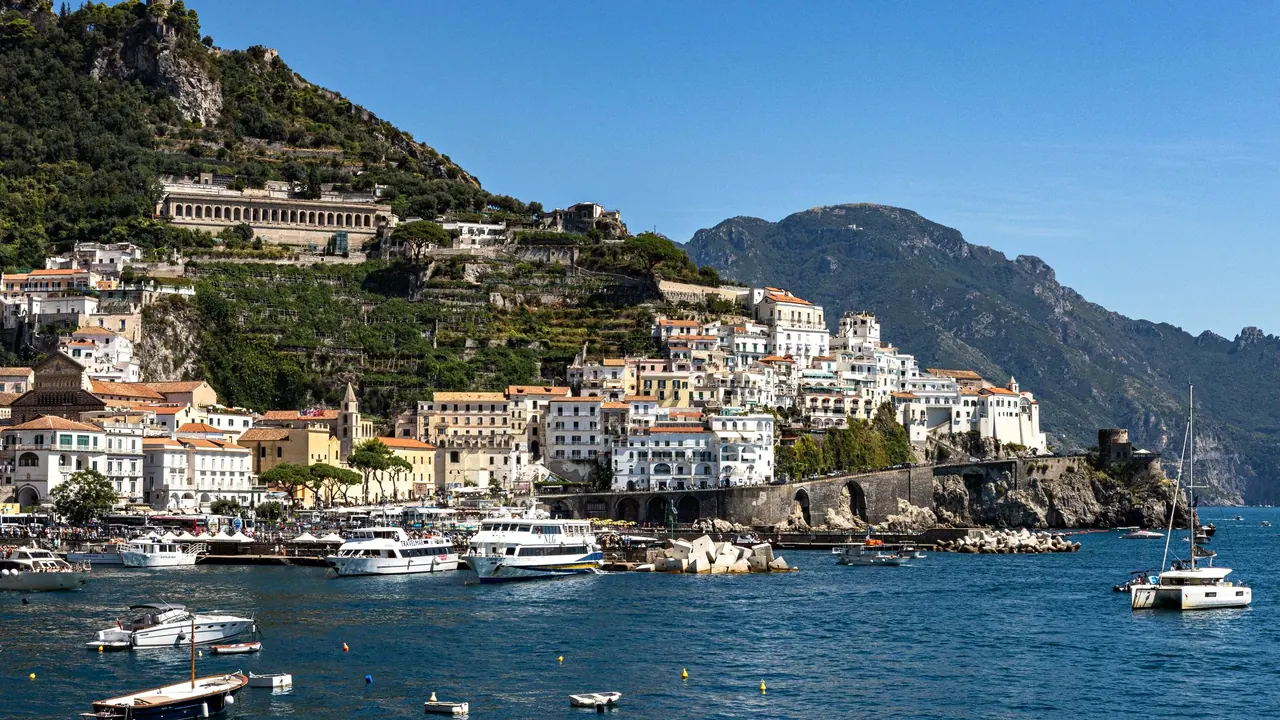
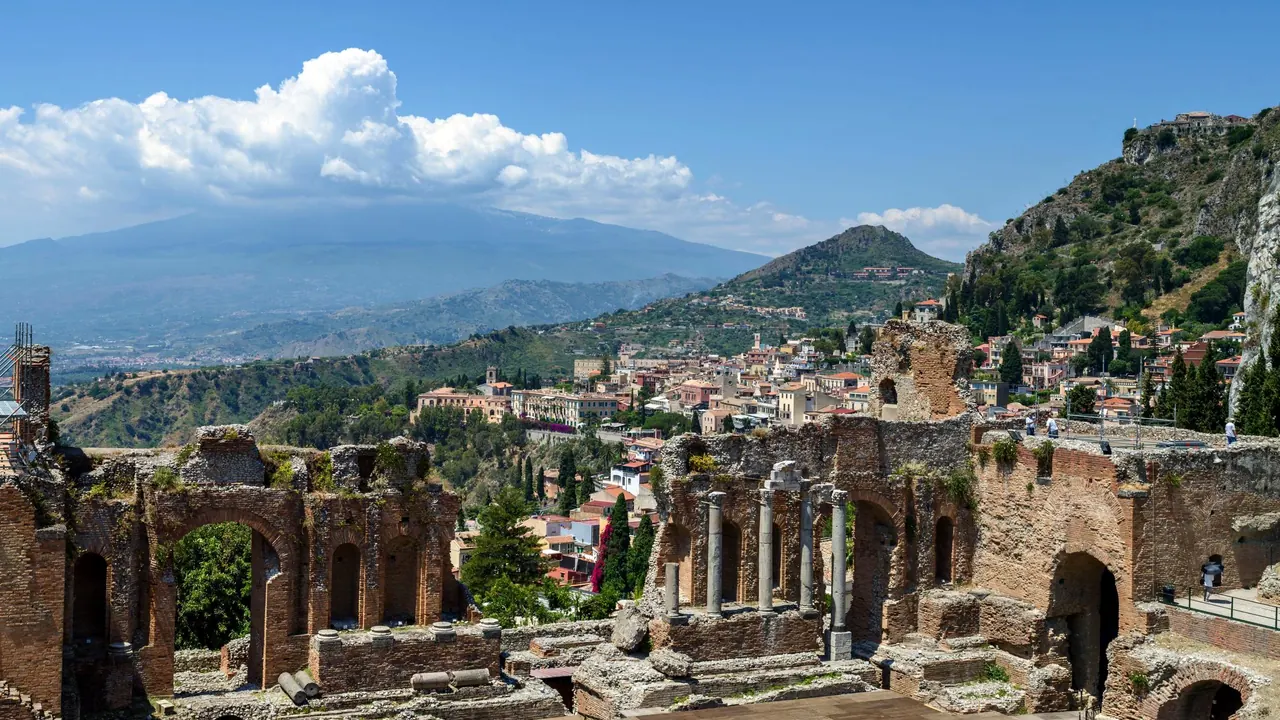
Photos: Amalfi by Oleksandra Zelena, Pexels License; Taormina by Reinhard Bruckner, Pexels License.
Amalfi or Taormina?
Our verdict in twelve categories, each scored against the same fixed benchmark cities, and the climate month by month, so you can choose for your trip.
Choose Amalfi for
- day trips
- nature and the outdoors
Amalfi suits walkers, and travellers who want a base for seeing a whole coast. Mule stairways climb from the town, the Path of the Gods runs high above Positano, and Ravello, Capri, Pompeii and Paestum can each be done in a day. Go knowing that the town is tiny, evenings are quiet, and it costs more than Taormina.
Choose Taormina for
- nightlife
- families
- wellness
For most other trips, Taormina is the better all-round choice. The town itself has more to see, above all the Greek theatre with Etna framed through its stage. It also has a richer Sicilian kitchen with Etna wines, a bit more going on after dinner, and opera and concerts in the theatre in summer. Families and travellers watching their budget will also find it easier, especially if they stay down in Giardini Naxos.
Scoreboard
Twelve categories on one fixed scale from 0 to 100. The shaded stretch is the gap between the two.
Your match
Pick a travel style or drag the sliders, and both match scores follow your weighting.
Wins on day trips and nature and the outdoors with your weighting.
Wins on nightlife and families with your weighting.
What matters to you?
Category by category
What the scores mean for a trip.
Beaches & swimming
Neither town has a long sandy beach, but Taormina gives swimmers more choice. Its own bays at Mazzarò and Isola Bella are pebbly too, but the water is clear enough for snorkelling. Longer stretches of sand and shingle at Giardini Naxos and Letojanni are a short bus ride away.
Amalfi's Marina Grande is right below the town, but in summer beach clubs fill almost all of it with loungers. For better swimming you walk to Atrani, take the stairs or a shuttle boat to coves such as Santa Croce, or hire a boat for the day.
Food & drink
Both kitchens rely on the sea, but Taormina's has more range and more character. Sicily gives it pasta alla Norma, swordfish, raw red prawns, arancini, and cannoli and cassata from the pastry shops. The volcanic Etna wines are among Italy's most interesting, and there is a top tier of refined cooking, often with a sea view.
Amalfi's cooking is narrower and built on its own lemons, anchovies and colatura, with scialatielli and seafood. It is good when you find the right trattoria in the alleys, but the places on the piazza and seafront are often only average.
Culture & sights
Taormina has one sight that outweighs anything in Amalfi: the Greek theatre, whose broken stage frames Etna and the coast. With the medieval palazzi and the Duomo along Corso Umberto, the town fills a day of slow walking.
Amalfi's heritage comes from its time as a maritime republic: the striped Duomo with its bronze doors from Constantinople, the Chiostro del Paradiso, the Arsenale and the paper museum in the valley. It is well worth seeing but takes about half a day, after which most visitors head for the coast.
Nightlife
Neither town is a place for clubs, but Taormina at least has a proper evening routine. There is aperitivo in Piazza IX Aprile, a stroll along the Corso, piano bars above the sea and, in summer, lounge bars that stay open late near Mazzarò and Giardini Naxos.
In Amalfi the evening ends with dinner and a drink or a gelato on Piazza Duomo, and the town falls silent after the last buses and ferries leave. For a real night out you have to go to Salerno or Naples.
Nature & outdoors
Both have superb landscapes, but of very different kinds. In Amalfi you walk straight from the door: lemon terraces, the shaded waterfall gorge of the Valle delle Ferriere, mule stairs up to Ravello, and the Path of the Gods above Positano. Kayaks reach sea caves such as the Emerald Grotto.
Taormina's landscape is volcanic. Etna, about an hour away, offers lava flows, the Silvestri craters, guided trips towards the summit and even skiing in winter. The basalt Alcantara gorges and the diving and snorkelling around Isola Bella make good shorter outings.
Day trips
Amalfi has more famous places close by. Ravello is a short bus ride up the hill and Positano half an hour away by ferry, and Capri, Pompeii, Herculaneum and the temples at Paestum all fit into a day. The catch is that ferries run mainly from spring to autumn and the coast road is slow in summer.
From Taormina the best outings take longer. Catania is about an hour away, Syracuse and Ortigia about two, and Noto needs an early start. Closer to town, Castelmola, Savoca and the wine villages on Etna's slopes make gentler days.
Good for families
The real difference for families is how much flat ground and sand lie within reach. Amalfi has almost none. The town climbs in stairways where a pushchair is useless, its one beach is a crowded strip of pebbles, and the packed, winding buses on the cliff road can make children carsick. Older children who swim confidently will still enjoy the boat trips, the sea caves and the walks up the valley.
Taormina is steep too, but it gives families more room. The pedestrian centre is safe, the ride down to Mazzarò by cable car is a treat in itself, and school-age children can snorkel at Isola Bella or see the craters on Etna. With toddlers, a base in Giardini Naxos brings sandier beaches and level streets.
Getting around
Both centres are small enough to walk, with steps everywhere. Taormina is better connected to the wider region. A cable car runs down to Mazzarò, and the station by the sea has trains and coaches to Catania and its airport, Messina and Syracuse, although Etna usually means a tour or a car.
Amalfi depends on buses and on ferries that run from spring to autumn. These work well in the quieter months but struggle in summer, when full buses pass queues and the one cliff road crawls. A car brings more trouble than freedom here.
Shopping & style
In both towns, shopping means one street with much of its stock aimed at visitors. Taormina's Corso Umberto has a little more variety: jewellers, coral and cameo dealers, lace, Sicilian ceramics such as moor's-head vases, and Bronte pistachio cream. Catania is close by for larger shops.
Amalfi's most distinctive buy is the handmade cotton paper from its valley, sold as notebooks and stationery. Painted majolica, linen and sandals made to measure are the other good finds.
Affordability
In summer a sea-view room in Amalfi costs about as much as one in Europe's dearest capitals, which makes it the more expensive of the two by some way. There is little space to build on, much of what exists is at the luxury end, and loungers, boat hire and meals on the piazza add up fast. The local buses are the only real bargain, though staying in the hill villages or coming in spring or autumn helps.
Taormina is the dearest place to stay in eastern Sicily, and Corso Umberto charges resort prices, but there are more ways to bring the cost down. Bakery snacks, granita and buses stay cheap, and sleeping in Giardini Naxos or Letojanni and coming up for the evening saves a good deal.
Live music & performing arts
At both towns the performances happen in summer, and Taormina's season is the bigger draw. The Greek theatre stages opera, ballet, concerts and international pop and rock acts with Etna behind the stage, and the long-running film festival adds to it.
Amalfi has no theatre or concert hall of its own. Its highlight is up the hill at the Ravello Festival, where orchestral and chamber concerts are held on the terrace of Villa Rufolo. In town, the feast of Sant'Andrea brings processions and band music.
Wellness & relaxation
Neither town has a public bathing tradition, so a spa day depends on the hotels, and Amalfi makes that harder. Its cliffside hotels keep their pools and treatment rooms mostly for people staying there. Unless you book one, rest comes from the sea and the pace of the day: a swim off the rocks before breakfast, then a lunch that runs well into the afternoon. In high summer the narrow centre fills up, and for quiet you climb to the hill hamlets or come in late spring or mid-autumn.
In Taormina, pampering is a bigger part of a stay. Its large hotels run good spas, with pools on terraces above the sea and treatments that use Etna's volcanic mud and local citrus and almond. Its crowded spell is shorter but more intense. In August, cruise passengers and day-trippers fill the Corso, while early summer and the end of September stay calm. Even on a busy day, the shaded Villa Comunale gardens give you a quiet corner.
When should you go?
Pick your month. The climate figures are measured averages, not a forecast.
Amalfi in July
Taormina in July
Daytime high, °C
Rainfall in the month, mm
Where the figures come from
Amalfi's temperatures are measured 65 km from the centre, at Grazzanise.
Amalfi has no rain gauge within 25 km of the centre, so its rainfall comes from a gridded climate dataset read at the city rather than from a gauge further away.
Taormina's temperatures are measured 45 km from the centre, at Messina.
Taormina has no rain gauge within 25 km of the centre, so its rainfall comes from a gridded climate dataset read at the city rather than from a gauge further away.
Temperature and rainfall are climate normals, averaged over the years shown. Amalfi: 1991-2020 normals, Grazzanise (64.7 km from centre). Taormina: 1991-2020 normals, Messina (45.1 km from centre).
The two towns have the same summer, with highs of 31°C in July and August. The sea is warm enough to swim in from June to October at both and reaches about 26°C at its peak. In that heat the trails and stepped lanes are hard going at midday, so May, June and late September into October are the best months for both walking and swimming. Taormina is the drier of the two in summer, with almost no rain in July and August, and it gets slightly more sunshine.
The bigger difference comes after summer. Amalfi gets wet earlier and harder, and November is its wettest month at 143mm. Taormina's autumn and winter rain is lighter, and its winter days stay a little milder, around 15°C in January against Amalfi's 13°C. That makes Taormina the more comfortable choice for a winter or early spring trip.
Which traveller are you?
For a food and nightlife trip, Taormina is the better pick. It has Sicilian cooking from pasta alla Norma to granita for breakfast, Etna wines on every list, and evenings of aperitivo and terrace bars. Amalfi goes quiet once the day visitors leave.
On a family trip with children, Taormina is easier, especially from a base in Giardini Naxos with its sand and flat streets. Children like the cable car, the granita and a day on Etna. In Amalfi, the stairways, packed buses and crowded pebble beach wear families down.
For an outdoors trip built around walking, Amalfi has the edge. The Valle delle Ferriere starts at the back of town, mule stairs climb to Ravello, and the Path of the Gods is a short bus ride away. Taormina's big outing, Etna, usually needs a guide or a car.
Before you go
| Measure | Amalfi | Taormina |
|---|---|---|
| Official language | Italian | Italian |
| Currency | Euro (EUR) | Euro (EUR) |
| Sockets | CFL230 V, 50 Hz | CFL230 V, 50 Hz |
| Driving side | Right | Right |
| Time zone | UTC+1, UTC+2 in summer | UTC+1, UTC+2 in summer |
| Emergency number | 112 | 112 |
| Elevation | 6 m | 204 m |
| Main airport | Naples International Airport (NAP)38 km from centre131 non-stop destinations | Catania-Fontanarossa Airport (CTA)47 km from centre96 non-stop destinations |
| Public holidays this year | 13 days | 13 days |
By the numbers
| Measure | Amalfi | Taormina |
|---|---|---|
| City population | 4,729 | 10,471 |
| People per km² | 830 | 799 |
| Museums within 10 km | 8 | 5 |
| UNESCO World Heritage sites within 50 km | 5 | 2 |
| Swim season, months above 21 °C | 5 months | 5 months |
Where else could you go?
Every comparison below shares a destination with this one, so you can follow Amalfi or Taormina somewhere new.
- Positanovs Amalfi
- Salernovs Amalfi
- Sorrentovs Amalfi
- Naplesvs Amalfi
- Cataniavs Taormina
- Syracuse, Sicilyvs Taormina